Edinburgh SEO Services: A Practical Guide To Local Search Mastery
Edinburgh presents a distinctive mix of historic districts, bustling city centre, and nearby commuter towns. For local businesses, visibility in Edinburgh’s search results hinges on a careful blend of technical health, district-relevant content, and credible local signals. Edinburgh SEO services should be grounded in a governance-led diffusion approach, ensuring that every asset travels with edge-context notes, Activation Maps, and auditable provenance as content disperses across Local Listings, Maps, Knowledge Panels, Discover, YouTube, Images, Voice, and storefront data. This Part 1 introduces the core principles, the Edinburgh context, and the practical steps to start building durable local visibility from day one. For governance-ready artefacts and activation paths, explore our Edinburgh Services hub at Edinburgh Services.
Why Local SEO In Edinburgh Matters
In a city renowned for tourism, education, and a thriving business scene, local search is often the first interaction a potential customer has with a business. People search for services near the Royal Mile, Leith, Stockbridge, Bruntsfield, or in comfort of a password-protected neighbourhood. Effective Edinburgh SEO begins with aligning digital experiences to real local journeys: fast-loading pages, clear navigation, district-specific content, and accurate business data. When design, content, and technical SEO work in concert, Edinburgh businesses benefit from higher click-through rates, stronger trust signals, and more proximity actions such as directions requests or local bookings. Our Edinburgh approach emphasises practical governance, enabling reliable diffusion across eight surfaces while maintaining authentic local signals.
Understanding Edinburgh's Local Intent Signals
Edinburgh’s audience searches with a strong sense of place. Districts such as Old Town, New Town, Leith, Murrayfield, and Bruntsfield each carry distinct user intents, landmarks, and service expectations. Local intent is not just about town-wide keywords; it’s about mapping user journeys to district realities, such as pre- and post-commute timing, event-season offerings around Edinburgh festivals, and neighbourhood-specific availability. Local SEO success relies on cohesive data across GBP, consistent NAP (Name, Address, Phone), and well-structured district pages that reflect real-world proximity to customers and visitors.
Core Components Of An Edinburgh SEO Programme
A robust Edinburgh SEO strategy integrates five core components, each designed to reinforce edge-context fidelity as content diffuses across eight surfaces. The following elements form the foundation:
- Technical SEO And Site Health: Clean crawlability, fast mobile performance, secure connections, and structured data that enable reliable diffusion across Local Listings, Maps, Knowledge Panels, Discover, YouTube, Images, Voice, and storefront data.
- On-Page Optimisation And Content Strategy: District-focused content clusters, optimised title tags, meta descriptions, headers, and schema that reflect Edinburgh’s local landmarks and neighbourhoods.
- Local SEO And GBP Optimisation: Policy-compliant GBP hygiene, accurate business data, neighbourhood posts, and district hours that mirror real-world operations.
- Content Activation And Diffusion Governance: Activation Maps and ROSI envelopes track diffusion edges, ensuring edge-context notes accompany translations and new formats as content diffuses across surfaces.
- Conversion Rate Optimisation And Measurement: Per-district dashboards that align proximity actions with conversions, enabling accountable ROI from Edinburgh markets.
Adopting these components within a governance framework helps Edinburgh businesses maintain diffusion health, manage localisation fidelity, and demonstrate tangible outcomes to stakeholders. For governance templates, Activation Maps, and ROSI envelopes, visit the Edinburgh Services hub.
Activation Maps And Edge Context In Edinburgh
Activation Maps define which asset carries each diffusion edge, from pillar pages to district landing pages and suburb assets. Edge-context notes travel with every edge to preserve localisation fidelity, including district hours, landmarks, and transport details. ROSI envelopes capture licensing and translation terms, enabling auditable diffusion as Edinburgh markets evolve. This governance layer supports eight-surface diffusion across Local Listings, Maps, Knowledge Panels, Discover, YouTube, Images, Voice, and storefront data, ensuring that signals remain coherent as content expands into Leith, Fettes, and beyond.
Getting Started In Edinburgh: A Practical 30-Day Plan
Begin with a pragmatic, governance-forward plan that anchors Edinburgh’s diffusion health. The following steps provide a concrete starting point:
- Baseline Audit: Assess GBP hygiene, NAP consistency, local citations, and district signals across Edinburgh’s key areas such as Old Town, Leith, and Stockbridge.
- District Mapping And Activation Paths: Define Edinburgh districts and establish pillar-to-suburb diffusion paths with Activation Maps. Attach edge-context notes for localisation fidelity.
- Content Clusters And Localised Pages: Create district landing pages and FAQs that reflect local journeys, landmarks, and hours of operation.
- Technical Health Sweep: Optimise speed, mobile usability, structured data, and accessibility to support diffusion health.
- Measurement Setup: Establish suburb-level dashboards that track proximity actions and conversions, and configure ROSI templates for content licensing and localisation.
For governance-ready assets and diffusion playbooks, see the Edinburgh Services hub and book a consultation through Edinburgh Services.
What Is Edinburgh SEO? A Local Guide To Edinburgh SEO Services
Edinburgh SEO requires a governance-forward approach that recognises Edinburgh’s distinctive neighbourhoods, landmarks, and daily rhythms. Local search becomes a reliable channel when content, technical health, and local signals diffuse coherently across eight surfaces: Local Listings, Maps, Knowledge Panels, Discover, YouTube, Images, Voice, and storefront data. This Part 2 elaborates Edinburgh-specific SEO foundations, grounded in edge-context fidelity and auditable diffusion. For governance-ready artefacts and diffusion playbooks, explore the Edinburgh Services hub at Edinburgh Services.
Why Edinburgh SEO Is Distinctive
Edinburgh is a city of layered history, university clusters, and a thriving visitor economy. Local searches reflect this complexity, with district-level queries tied to Old Town, New Town, Leith, Stockbridge, Bruntsfield, and surrounding neighbourhoods. Effective Edinburgh SEO translates city knowledge into locally relevant content, district-led landing pages, and robust local data that mirror real-world operations. Our approach emphasises edge-context fidelity so every diffusion edge carries localisation notes about hours, landmarks, and district-specific services, ensuring signals travel smoothly across eight surfaces.
Edinburgh Local Intent Signals
Users in Edinburgh search with a strong sense of place. Old Town queries often relate to heritage or services near the Royal Mile, while Leith searches may prioritise harbour-side offerings, and Morningside leans towards boutique or cafe experiences. Edinburgh landing pages should map these intents to district content, incorporate landmarks, and reflect local hours. GBP hygiene and consistent NAP across Edinburgh districts underpin credible proximity signals and reliable diffusion across eight surfaces.
Core Components Of An Edinburgh SEO Programme
A resilient Edinburgh programme combines five core components to reinforce edge-context fidelity as diffusion travels across surfaces. The elements below form the backbone of a practical Edinburgh SEO roadmap:
- Technical SEO And Site Health: Clean crawlability, fast mobile performance, secure connections, and structured data that support diffusion from pillar content to district and suburb assets.
- On-Page Optimisation And Content Strategy: District-focused content clusters, optimised title tags, meta descriptions, headers, and schema that reflect Edinburgh’s districts and landmarks.
- Local SEO And GBP Optimisation: GBP hygiene, precise business data, district hours, and neighbourhood posts that reflect real operations.
- Content Activation And Diffusion Governance: Activation Maps and ROSI envelopes ensure edge-context notes accompany translations and new formats as content diffuses across eight surfaces.
- Conversion Rate Optimisation And Measurement: Sub-district dashboards that align proximity actions with conversions, enabling accountable ROI from Edinburgh markets.
Adopting these components within a governance framework helps Edinburgh businesses maintain diffusion health, localisation fidelity, and stakeholder confidence. For governance-ready assets, Activation Maps, and ROSI envelopes, visit the Edinburgh Services hub.
Activation Maps And Edge Context In Edinburgh
Activation Maps designate which asset carries each diffusion edge, ensuring the correct district page or media propagates signals from pillar content to district and suburb assets. Edge-context notes travel with every edge to preserve hours, landmarks, and terminology. ROSI envelopes document licensing terms and localisation rules, enabling auditable diffusion across Local Listings, Maps, Knowledge Panels, Discover, YouTube, Images, Voice, and storefront data. This governance layer keeps Edinburgh diffusion scalable as markets evolve and new suburbs emerge.
Getting Started In Edinburgh: A Practical 30-Day Plan
Begin with a governance-forward plan that anchors Edinburgh’s diffusion health. The steps below establish baseline signals and practical activation paths for local growth:
- Baseline Audit: Assess GBP hygiene, NAP consistency, local citations, and district signals across Edinburgh’s key areas such as Old Town, Leith, and Stockbridge.
- District Mapping And Activation Paths: Define Edinburgh districts and establish pillar-to-suburb diffusion paths with Activation Maps. Attach edge-context notes to preserve localisation fidelity.
- Content Clusters And Localised Pages: Create district landing pages and FAQs that reflect local journeys, landmarks, and hours of operation.
- Technical Health Sweep: Optimise speed, mobile usability, structured data, and accessibility to support diffusion health.
- Measurement Setup: Establish suburb-level dashboards to track proximity actions and conversions, and configure ROSI templates for licensing and localisation.
For governance-ready artefacts, Activation Maps, and ROSI templates, visit the Edinburgh Services hub: Edinburgh Services.
Next Steps And A City-Scale Call To Action
Part 3 will translate the Edinburgh framework into concrete on-page templates and per-surface content formats tailored to Edinburgh’s districts. You’ll receive guidance on structuring pages for local intent, building activation paths between pillar content and district assets, and establishing dashboards that track proximity actions by district. For governance-ready assets, Activation Maps, and ROSI templates, visit the Edinburgh Services hub: Edinburgh Services.
Local Relevance In Edinburgh: Signals, Content, And Activation
Edinburgh’s local landscape is as distinctive as its skyline, blending historic districts with modern business hubs. Local relevance in Edinburgh hinges on credible data, district-aware content, and activation paths that move users from discovery to proximity actions. By aligning eight-surface diffusion with authentic Edinburgh signals—across Local Listings, Maps, Knowledge Panels, Discover, YouTube, Images, Voice, and storefront data—businesses can build durable visibility that resonates with residents, commuters, and visitors alike. This Part 3 expands Edinburgh-specific local signals, content strategy, and governance practices to help you sustain edge-context fidelity as content diffuses through Edinburgh’s neighbourhoods. For governance-ready artefacts and diffusion playbooks, explore our Edinburgh Services hub at Edinburgh Services.
Key Local Signals For Edinburgh Offices
Edinburgh audiences expect data that reflects real-world proximity. GBP hygiene and NAP consistency across Old Town, New Town, Leith, Stockbridge, and Bruntsfield underpin reliable proximity signals. District-specific hours, transport details, and landmark references should be embedded in every asset so diffusion edges carry authentic local context. Maintain regular GBP posts that highlight local events—such as festivals around the Royal Mile or university schedules—to reinforce topical relevance. Tie each signal to Activation Maps and ROSI envelopes to ensure auditable provenance as content diffuses across eight surfaces.
Beyond the obvious business data, consider local citations from Edinburgh directories, a consistent phone number format, and district-service area descriptors that help search engines understand where offerings are most relevant. Local reviews that reference Edinburgh experiences boost trust and influence click-through and conversion rates. Ensure all signals travel with edge-context notes describing hours, landmarks, and district-specific considerations so diffusion remains faithful across surfaces.
Evidence-Based Local Content Strategy
Develop content clusters that mirror Edinburgh’s districts andlearnt journeys. Create robust district landing pages for Old Town, Leith, New Town, Stockbridge, and Bruntsfield, each supported by district FAQs, landmarks, and hours of operation. Build pillar content around Edinburgh’s key services and events, then translate those assets into suburb-specific variants that reflect local language, terminology, and cultural cues. Attach edge-context notes to every diffusion edge so translations, dialects, and format changes preserve localisation fidelity as content diffuses to Maps, Knowledge Panels, Discover, and other surfaces. This disciplined approach helps maintain edge-context integrity while scaling eight-surface diffusion across Edinburgh’s diverse neighbourhoods.
To bolster credibility, publish case studies and neighbourhood profiles that demonstrate practical outcomes in Edinburgh. Use schema markup to describe LocalBusiness, services, hours, and location data, with edge-context notes that capture district nuances. Activation Maps should show how pillar content migrates to district pages and thence to suburb assets, ensuring signals remain coherent as Edinburgh evolves.
Activation Maps And Suburb Diffusion Governance In Edinburgh
Activation Maps identify which asset carries each diffusion edge, from pillar content to district landing pages and suburb assets. Edge-context notes travel with every edge to preserve hours, landmarks, and terminology, ensuring content remains faithful as it diffuses. ROSI envelopes document licensing and localisation rules, enabling auditable diffusion across Local Listings, Maps, Knowledge Panels, Discover, YouTube, Images, Voice, and storefront data. This governance layer supports Edinburgh’s diffusion health as markets evolve and new suburbs emerge, including emerging neighbourhoods on the periphery of the city centre.
Practical Edinburgh Implementation Plan
Begin with a governance-forward plan that anchors Edinburgh’s diffusion health. The steps below establish baseline signals and practical activation paths for local growth:
- Baseline Audit: Assess GBP hygiene, NAP consistency, local citations, and district signals across Edinburgh’s key areas such as Old Town, Leith, and Stockbridge.
- District Mapping And Activation Paths: Define Edinburgh districts and establish pillar-to-suburb diffusion paths with Activation Maps. Attach edge-context notes to preserve localisation fidelity.
- Content Clusters And Localised Pages: Create district landing pages and FAQs that reflect local journeys, landmarks, and hours of operation.
- Technical Health Sweep: Optimise speed, mobile usability, structured data, and accessibility to support diffusion health.
- Measurement Setup: Establish suburb-level dashboards to track proximity actions and conversions, and configure ROSI templates for licensing and localisation.
For governance-ready artefacts and diffusion playbooks, see the Edinburgh Services hub and book a consultation through Edinburgh Services.
Next Steps And Part 4 Preview
Part 4 will translate the Edinburgh framework into concrete on-page templates and per-surface content formats tailored to Edinburgh’s districts. You’ll receive guidance on structuring pages for local intent, building activation paths between pillar content and district assets, and establishing dashboards that track proximity actions by district. For governance-ready assets, Activation Maps, and ROSI templates, visit the Edinburgh Services hub: Edinburgh Services.
Core Components Of An Edinburgh SEO Programme
Edinburgh’s local search landscape requires a governance-forward diffusion approach that deliberately moves content from pillar assets into district and suburb-level pages while preserving authentic edge-context fidelity. This Part 4 concentrates on the five core components that underpin a durable Edinburgh SEO programme, ensuring signals travel reliably across Local Listings, Maps, Knowledge Panels, Discover, YouTube, Images, Voice, and storefront data. For governance-ready artefacts, Activation Maps, and localisation templates, visit the Edinburgh Services hub at Edinburgh Services.
Technical SEO And Site Health
Technical excellence is the foundation that enables eight-surface diffusion to function coherently. For Edinburgh, this means fast mobile experiences, robust security, accessible design, and crawlable architecture that supports pillar content as it diffuses to district and suburb assets. Core tasks include optimising core web vitals, ensuring clean URL structures, implementing structured data for LocalBusiness, and maintaining stable redirects to avoid diffusion drift. A governance lens ensures every technical decision is linked to Activation Maps and ROSI envelopes, so edge-context notes accompany changes as signals travel through Local Listings, Maps, Knowledge Panels, Discover, YouTube, Images, Voice, and storefront data. For practical governance templates, consult the Edinburgh Services hub.
On-Page Optimisation And Content Strategy
Edinburgh content should be organised around district-led clusters that reflect real journeys through Old Town, New Town, Leith, and surrounding neighbourhoods. Every page should feature clear local intent signals, optimised title tags, meta descriptions, headers, and schema that describe local offerings, landmarks, and hours. Create pillar content built around Edinburgh’s core services and events, then translate or adapt it for district pages with edge-context notes preserved on each diffusion edge. This disciplined approach supports eight-surface diffusion while maintaining fidelity to Edinburgh’s place-specific language and terminology. For governance resources and activation guidance, see the Edinburgh Services hub.
Local SEO And GBP Optimisation
GBP hygiene and NAP consistency are non-negotiable for Edinburgh, where district-level accuracy directly influences proximity signals. Local business data should be authoritative, with district hours, transport details, and landmark references embedded across assets. Regular GBP Posts that reflect Edinburgh events, university calendars, and local market rhythms help anchors signals in Old Town, Leith, Stockbridge, and beyond. Tie every GBP asset to Activation Maps and ROSI envelopes to guarantee auditable provenance as content diffuses across eight surfaces.
Content Activation And Diffusion Governance
Activation Maps determine which asset carries each diffusion edge, from pillar content to district landing pages and suburb assets. Edge-context notes travel with every edge to describe district hours, landmarks, and terminology. ROSI envelopes capture licensing and localisation rules, enabling auditable diffusion across Local Listings, Maps, Knowledge Panels, Discover, YouTube, Images, Voice, and storefront data. This governance layer is essential as Edinburgh scales diffusion into Leith, Murrayfield, and other suburbs, ensuring signals stay coherent and locally authentic across surfaces.
Conversion Rate Optimisation And Measurement
The ultimate measure of eight-surface diffusion is how proximity actions convert to tangible outcomes. Establish suburb-level dashboards to monitor directions requests, calls, bookings, and in-store visits, attributing those actions to the diffusion edges described in Activation Maps. Use GA4, GBP Insights, and Maps analytics to quantify performance by district, and ensure edge-context notes remain attached to every diffusion edge so currency, local policies, and regional terminology stay accurate as content expands. A robust governance setup ties conversions back to Activation Maps and ROSI envelopes, delivering a clear ROI narrative for Edinburgh stakeholders.
Implementation Considerations For Edinburgh Partners
To realise these five components, collaborate with a governance-minded partner who can provide Activation Maps, ROSI templates, and localisation notes for every diffusion edge. The Edinburgh Services hub offers templates, dashboards, and practical playbooks to help teams implement the framework consistently across districts such as Old Town, Southside, and beyond. For a local collaboration that understands Edinburgh’s rhythms, visit Edinburgh Services.
Read next: SEO in Edinburgh: the local playbook · SEO Edinburgh: local strategies that work
Local Keyword Research for Edinburgh
Local keyword research for Edinburgh involves more than simply listing city-wide terms. It requires understanding district-level intentions, landmark references, and the everyday rhythms that shape how people search in different parts of the city. A governance-minded approach ensures that keyword strategies are mapped to edge-context notes and Activation Maps, so every term travels with authentic localisation as content diffuses across Local Listings, Maps, Knowledge Panels, Discover, YouTube, Images, Voice, and storefront data. For governance-ready artefacts and diffusion playbooks, consult the Edinburgh Services hub at Edinburgh Services.
Why Localised Keywords Matter In Edinburgh
Edinburgh combines historic districts with modern commerce, student populations, and a steady stream of visitors for festivals and events. Localised keywords capture these realities: district-level queries such as Old Town or Leith, service-area descriptors like 'Edinburgh city centre cafe' or 'Stockbridge hairdresser near me', and event-driven terms tied to the calendar (the Edinburgh Festival Fringe, university term dates, or local market days). Incorporating district names, landmarks, and transport references into keyword themes enhances relevance and increases the likelihood of proximity actions. A disciplined approach also guards edge-context fidelity, ensuring that diffusion across eight surfaces retains district-specific meaning and terminology.
Keyword Clustering For Edinburgh Districts
Effective Edinburgh keyword research starts with district-level clusters. Create groups such as Old Town, New Town, Leith, Stockbridge, Bruntsfield, Murrayfield, and Southside, each cluster reflecting local intents, landmarks, and hours of operation. For each district cluster, identify core navigational terms (where to find, directions to, opening hours), transactional terms (bookings, reservations, quotes), and informational queries (history, tours, local services). Pair these with city-wide terms that signal authority (Edinburgh SEO services, Edinburgh digital marketing) to preserve a city-wide topic tree while enabling district-specific diffusion.
Data Sources And Methodology
Reliable Edinburgh keyword research blends several data streams. Google Search Console and Google Analytics provide performance signals for existing pages tied to Edinburgh districts. Keyword research tools such as Ahrefs, Semrush, and Moz reveal search volume, keyword difficulty, and competitive landscapes at district levels. Google Trends offers seasonality insights around Edinburgh events, while local directories and GBP insights shed light on regionally relevant terms. The governance framework requires tagging each keyword with an edge-context note that captures district relevance, language variants, and any licensing considerations for content. Activation Maps link each term to the corresponding district page or asset, sustaining edge fidelity as diffusion expands across surfaces.
Actionable Steps To Build District Keyword Clusters
- Audit Current Edinburgh Pages: Catalogue existing content across Old Town, Leith, and other districts to identify gaps in district coverage and local intent alignment.
- Generate District Keyword Inventories: Compile district-specific terms, prioritising those with strong local intent and plausible rankings given competition.
- Assess Seasonal And Event-Driven Terms: Map searches around Edinburgh festivals, university terms, and tourism peaks to content opportunities.
- Map Keywords To Content Assets: Attach each keyword to a district page, blog post, or FAQ with edge-context notes that preserve localisation fidelity.
- Plan Content Gaps And Refresh Cadence: Establish quarterly reviews to refresh district terms in response to local changes, events, and user behaviour.
Seasonality, Local Language, And Edge Context
Seasonality affects Edinburgh search behaviour. Festival seasons, university calendars, and tourism cycles influence which terms spike at different times. Local language and dialect nuances—such as occasional Scots phrases or district nicknames—should be captured in edge-context notes attached to each diffusion edge. This ensures that content diffusion respects local language variations and remains consistent with user expectations across eight surfaces.
Measuring Success And Next Steps
When district keyword clusters are in place, monitor performance through per-district dashboards that track organic visibility, click-through rates, and on-page engagement. Tie these signals to Activation Maps and ROSI envelopes so every keyword movement carries auditable provenance. Regularly review district-level data against governance KPIs to ensure edge-context fidelity is preserved as content diffuses across Local Listings, Maps, Knowledge Panels, Discover, YouTube, Images, Voice, and storefront data. For governance-ready resources, including Activation Maps and localisation notes, visit the Edinburgh Services hub.
Technical SEO And Site Performance In Edinburgh: Optimising For Edge Diffusion
Building on the local keyword insights from Part 5, Edinburgh-based businesses must couple district-focused content with a technically healthy website to enable reliable diffusion across eight surfaces: Local Listings, Maps, Knowledge Panels, Discover, YouTube, Images, Voice, and storefront data. This Part 6 focuses on the foundations of technical SEO and site performance for Edinburgh, detailing how fast, accessible, and well-structured sites underpin edge-context fidelity and durable local visibility. For governance-ready artefacts and diffusion playbooks, visit the Edinburgh Services hub at Edinburgh Services.
Foundational Technical SEO For Edinburgh Websites
Technical SEO acts as the chassis for eight-surface diffusion. In Edinburgh, this means designing a crawlable, well-structured site that mirrors district pages and supports seamless activation paths to suburb assets. Key priorities include a clean, hierarchical sitemap, precise robots.txt directives, and canonicalised URLs to prevent content drift between Old Town, Leith, and Stockbridge pages. Ensure that internal linking reflects district hierarchies, so users and search engines traverse from pillar content to district and suburb assets without friction. Maintain resilient redirects and a robust 301 strategy to protect diffusion edges when pages are updated or merged.
Core Web Vitals And Mobile Performance In Edinburgh
Core Web Vitals are no longer optional: they quantify the user experience that underpins proximity actions. In Edinburgh, optimise for Largest Contentful Paint (LCP) within 2.5 seconds on mobile networks common to city districts, maintain a First Input Delay (FID) under 100 milliseconds where possible, and minimise Cumulative Layout Shift (CLS) to preserve trust as users interact with district pages. Implement responsive typography, image optimisation, and lazy loading for media assets, especially across district hubs such as Old Town and New Town where visual content drives engagement. Regularly test performance across Edinburgh’s varying connectivity environments, ensuring diffusion edges remain fast and reliable as content diffuses to Maps, Knowledge Panels, and Discover surfaces.
Structured Data And Local Schema For Edinburgh
Structured data signals help search engines understand Edinburgh-specific assets and local intents. Implement LocalBusiness schemas with district-level attributes for Old Town, Leith, and other neighbourhoods where relevant. Use OpeningHours specifications that reflect district patterns and transport details that mirror real-world proximity. Consider Event schemas for festival periods, NewsArticle for local updates, and LocalBusiness variants to capture neighbourhood services. Attach edge-context notes to each diffusion edge so translations, dialects, and format changes preserve localisation fidelity as content diffuses across eight surfaces.
Hosting And Infrastructure For Edinburgh Market
A local Edinburgh operation should prioritise hosting arrangements that balance speed, reliability, and data governance. Choose hosting with UK data residency capabilities or EU-compliant data handling where appropriate, and deploy a Content Delivery Network (CDN) to reduce latency for Edinburgh residents and visitors across plugins, maps, and media. Implement robust caching budgets, image optimisation, and minification strategies to sustain fast rendering on mobile devices in district settings. Security is essential: enforce HTTPS, keep TLS certificates up to date, and monitor for vulnerabilities. Ensure incident response and disaster recovery plans are testable so diffusion edges never lose provenance when your site experiences outages.
Measuring Performance And Governance Readiness
Measurement translates technical health into business value. Set up per-district dashboards that track page speed, mobile usability, crawl errors, and structured data health. Tie proximity actions—directions requests, clicks to call, and map interactions—back to diffusion edges with auditable provenance via Activation Maps and ROSI envelopes. Use GA4 and Maps analytics to quantify performance by district, ensuring edge-context notes accompany every diffusion edge as content diffuses to eight surfaces. Regular governance cadences—monthly health checks and quarterly activation reviews—keep diffusion health aligned with Edinburgh’s local market dynamics and ROI expectations.
Implementation Checklist
- Technical Baseline Audit: Assess crawlability, indexation, and server response times for Edinburgh district pages and pillar content.
- Speed Optimisation Plan: Prioritise Core Web Vitals improvements and enable per-edge lazy loading for media assets across district hubs.
- Structured Data Rollout: Implement LocalBusiness and district-specific schemas with edge-context notes on each diffusion edge.
- Hosting And Security Strategy: Align hosting choices with GDPR considerations, UK data residency, and robust security practices.
- Governance Set-Up: Establish Activation Maps and ROSI envelopes, with a central repository for version control and changelogs.
- Dashboards For Edinburgh: Create suburb-level ROI dashboards to monitor proximity actions and conversions by district.
Next Steps And Edinburgh Services
Part 7 will translate these technical foundations into practical on-page templates and per-surface content formats tailored to Edinburgh’s districts. You’ll receive guidance on structuring district pages for local intent, building activation paths between pillar content and district assets, and establishing dashboards that track proximity actions by district. For governance-ready assets, Activation Maps, and ROSI templates, visit the Edinburgh Services hub: Edinburgh Services.
On-Page Optimisation And Content Strategy For Edinburgh SEO Services
With the technical health foundations in place, Edinburgh-based businesses progress to on-page optimisation and targeted content strategy. The goal is to align every page with district-aware intent, ensuring signals travel smoothly as content diffuses across Local Listings, Maps, Knowledge Panels, Discover, YouTube, Images, Voice, and storefront data. This Part 7 translates the governance-forward diffusion model into practical, Edinburgh-focused on-page templates and district activation playbooks. For governance-ready artefacts and activation paths, explore the Edinburgh Services hub at Edinburgh Services.
On-Page Optimisation: Core Principles For Edinburgh
Edinburgh’s local character demands precise on-page signals that reflect district identities while remaining scalable. Start with district-led title tags that combine service terms with the district name (for example, Edinburgh SEO services in Old Town). Craft meta descriptions that articulate tangible local benefits and include a clear call to action. Structure pages with logical H1, H2, and H3 hierarchies that mirror typical Edinburgh journeys—from city centre hubs to nearby neighbourhoods like Leith or Stockbridge. Implement LocalBusiness or Service schema with district-level attributes, including opening hours, address, and proximity language that mirrors real-world operations. Attach edge-context notes to diffusion edges so translations and local variations preserve fidelity as content diffuses across eight surfaces.
- District-Targeted Title Tags: Include district and Edinburgh in primary keywords to reinforce local relevance.
- Descriptive Meta Descriptions: Offer a succinct benefit statement and a local action, avoiding generic phrases.
- Clear Hierarchy: Use H1 for the page’s district focus, H2s for service pillars, and H3s for district-specific FAQs or landmarks.
- Localised Schema: Apply LocalBusiness or Service schema with district attributes and structured data for hours and location.
- Edge Context: Each diffusion edge carries notes about district terminology, hours, and landmarks to preserve fidelity as content diffuses.
Content Clusters And District Pages
Organise Edinburgh content into district-centric clusters that map to real journeys. Develop pillar pages that address broad Edinburgh SEO services and city-wide topics, then translate or tailor them into district-specific variants for Old Town, Leith, New Town, Stockbridge, Bruntsfield, and Murrayfield. Each district page should host FAQs, landmarks, hours of operation, and transport notes that mirror local routines. Build a spiderweb of internal links from pillar content to district pages and from district pages to suburb assets, preserving a coherent diffusion path across Local Listings, Maps, and other surfaces.
Content density should reflect local demand: Edinburgh festivals, university calendars, and tourism patterns create recurring opportunities for timely content such as event guides, campus-related services, and neighbourhood spotlights. Attach edge-context notes to every diffusion edge so that language variants, currency, and delivery nuances stay faithful as content diffuses across eight surfaces.
- Pillar Content: Comprehensive Edinburgh SEO guides that establish topical authority city-wide.
- District Landing Pages: Individual pages that reflect each district’s unique signals and services.
- FAQs And Local Guides: District FAQs addressing common proximity actions and local questions.
- Event and Landmark Content: Pages and media around Edinburgh’s heritage sites, festivals, and transport hubs.
Activation Maps And Edge Context In Practice
Activation Maps should designate which asset carries each diffusion edge, ensuring district pages, blogs, and media propagate signals coherently. Edge-context notes travel with every edge to describe district hours, landmarks, and terminology. ROSI envelopes capture licensing and localisation rules, enabling auditable diffusion across Local Listings, Maps, Knowledge Panels, Discover, YouTube, Images, Voice, and storefront data. This governance layer helps Edinburgh scale diffusion as districts evolve, ensuring signals stay authentic from Old Town to Leith and beyond.
Content Formats And Localisation Cadence
Edinburgh content should come in multiple formats to suit diverse surfaces and user preferences. Pair well-structured long-form guides with district-specific FAQs, microblog updates, and short-form video content that showcases local landmarks. Translation and localisation must be governed by edge-context notes so dialects, currency, and district terminology travel with every diffusion edge. Maintain a quarterly cadence for updates to translations, imagery, and video captions to keep eight-surface diffusion coherent as Edinburgh’s districts evolve. For governance-ready artefacts, Activation Maps, and localisation notes, visit the Edinburgh Services hub.
Measurement And Dashboards For On-Page And Content
Tracking on-page success requires district-level visibility. Set up dashboards that monitor organic visibility, click-through rates, engagement metrics, and proximity actions by district. Tie these signals to Activation Maps and ROSI envelopes so every diffusion edge carries auditable provenance. Use GA4, Google Search Console, and Maps analytics to quantify performance by district, then translate insights into refined content and activation paths. Regular governance cadences—monthly health checks and quarterly reviews—keep Edinburgh’s eight-surface diffusion healthy and aligned with local ROI expectations.
Next Steps And A Call To Action
Part 8 will translate these on-page and content strategies into district-specific keyword research and per-surface content formats. You’ll receive practical templates for district pages, activation paths between pillar content and district assets, and dashboards that measure proximity actions by district. For governance-ready assets, Activation Maps, and ROSI templates, visit the Edinburgh Services hub: Edinburgh Services.
Google Business Profile And Local Listings For Edinburgh SEO Services
In Edinburgh, the Google Business Profile (GBP) is a frontline asset for local discovery. When GBP hygiene is meticulous and data is consistently accurate, district-level signals—Old Town, Leith, New Town, Stockbridge, and beyond—become credible proximity cues that influence maps visibility, local packs, and voice search answers. This Part 8 focuses on GBP governance, local listings health, and practical steps to align Edinburgh’s GBP data with eight-surface diffusion across Local Listings, Maps, Knowledge Panels, Discover, YouTube, Images, Voice, and storefront data. For governance-ready artefacts and diffusion playbooks, explore the Edinburgh Services hub at Edinburgh Services.
Why GBP Matters In Edinburgh’s Local Ecosystem
Edinburgh’s economy blends tourism, education, and a dense mix of neighbourhoods. A well-maintained GBP listing helps residents and visitors discover services in real-time, understand opening hours around festival seasons, and access directions with confidence. GBP data acts as a trust signal; when hours, locations, and services align with district realities, proximity actions such as directions requests, calls, and bookings rise. Our governance-centric approach ensures every GBP update travels with edge-context notes, maintaining fidelity as diffusion expands from pillar content to district pages and suburb assets across eight surfaces.
GBP Hygiene: The Eight Cornerstones
Edinburgh GBP hygiene rests on eight concrete pillars: accurate Name, Address, and Phone (NAP); category precision; complete business attributes; high-quality photos; timely hours; consistent local posts; robust review management; and structured data that enriches knowledge panels and maps. District specificity matters. For Old Town-focused services, Leith harbour experiences, and Bruntsfield coffee specialties, GBP should reflect the respective district language, landmarks, and transport references. Activation Maps link GBP assets to district pages, while ROSI envelopes formalise translation rights and localisation rules to guard fidelity across surfaces.
Local Citations And NAP Consistency Across Edinburgh
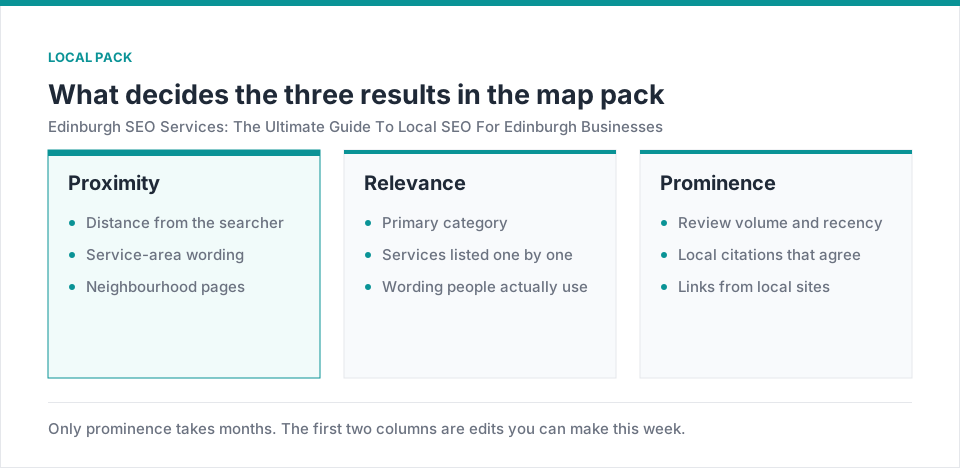
Local citations reinforce GBP signals by aligning business data with Edinburgh’s districts and popular directories. Maintain NAP consistency across GBP, local directories, and district landing pages. District hours and service areas should mirror real-world operations, particularly around university timetables, festival periods, and peak tourist seasons. Activation Maps ensure each district edge retains provenance as data diffuses to Maps, Knowledge Panels, Discover, and other surfaces, while ROSI envelopes capture licensing and localisation terms for every edge.
Activation Maps And Edge Context In Edinburgh GBP
Activation Maps determine which asset carries each diffusion edge, such as GBP data feeding district landing pages or the knowledge panel. Edge-context notes travel with every edge, detailing hours, landmarks, and transport details so that translations or format changes preserve localisation fidelity as content diffuses across eight surfaces. ROSI envelopes document licensing and localisation rules, enabling auditable diffusion across Local Listings, Maps, Knowledge Panels, Discover, YouTube, Images, Voice, and storefront data. This governance layer is essential as Edinburgh markets evolve and new suburbs emerge into the diffusion network.
A Practical 30-Day Plan For Edinburgh GBP And Local Listings
Kick off with governance-forward steps to stabilise GBP data and set diffusion foundations for district pages. The following sequence provides structure for Edinburgh teams:
- Baseline GBP Audit: Verify GBP hygiene, NAP consistency, category accuracy, and district signal alignment for Old Town, Leith, New Town, Stockbridge, and surrounding areas.
- District Activation Paths: Create Activation Maps that link GBP assets to district landing pages, ensuring edge-context notes reflect district hours, landmarks, and transport references.
- Post And Attribute Strategy: Establish GBP posts for major Edinburgh events and neighbourhood updates, and attach per-edge notes to preserve localisation fidelity as content diffuses.
- Reviews And Reputation: Implement a district-focused review strategy, respond publicly with edge-context notes about local nuances, and integrate feedback into activation paths.
- Measurement Setup: Build suburb-level dashboards tracking GBP impressions, interactions, directions requests, and conversions by district, tied to Activation Maps and ROSI templates.
For governance-ready artefacts, Activation Maps, and ROSI templates, visit the Edinburgh Services hub: Edinburgh Services.
Link Building And Digital PR For Edinburgh SEO Services
In Edinburgh, link building and digital PR are not about chasing volume; they are about building credible connections with trusted Edinburgh-origin domains that reinforce edge-context fidelity across eight diffusion surfaces: Local Listings, Maps, Knowledge Panels, Discover, YouTube, Images, Voice, and storefront data. This Part 9 focuses on practical, governance-minded approaches to acquiring high-quality local links and earning coverage that supports durable local visibility for Edinburgh businesses. For governance-ready artefacts and diffusion playbooks, visit the Edinburgh Services hub at Edinburgh Services.
Why Local Authority And Local Media Links Matter In Edinburgh
Authority links from Edinburgh-based institutions and credible local media anchors signals that your business is genuinely embedded in the city. Links from the City of Edinburgh Council, universities such as the University of Edinburgh and Heriot-Watt’s Edinburgh campus, and respected local business bodies help search engines understand where your business sits within Edinburgh’s local ecosystem. In addition, collaborations with Edinburgh Chamber of Commerce and local industry associations can yield editorial opportunities and event-driven link opportunities that are timely and relevant. These relationships, when properly governed, diffuse through eight surfaces with edge-context notes that preserve district nuances and hours of operation.
Ethical And Sustainable Link Building In Edinburgh
Adopt a governance-forward approach to link building to ensure long-term value and avoid penalties. The following practices help Edinburgh businesses build a clean profile that endures algorithm updates and local market changes:
- Focus on relevance: seek links from Edinburgh-based domains that closely relate to your service or industry and include edge-context notes on the linking page to preserve locality fidelity.
- Prioritise editorially earned links: secure placements in local news outlets, university publications, and trade journals through well-researched stories and expert commentary.
- Develop resource-driven content: create local case studies, district guides, and data visualisations that locals and journalists want to reference.
- Leverage events and partnerships: sponsor Edinburgh events or collaborate with campuses and community groups to earn co-authored content and event listings.
- Document licensing and localisation: attach ROSI envelopes for content usage and ensure edge-context notes travel with every diffusion edge to protect provenance across surfaces.
Edinburgh-Specific Digital PR Playbook
Turn Edinburgh insights into earned media that travels across eight diffusion surfaces. Key steps include:
- Angle discovery: identify city-focused stories that resonate with local audiences, such as university initiatives, cultural events, or neighbourhood success cases.
- Journalist and outlet mapping: assemble a targeted list of Edinburgh-based editors, reporters, and relevant local outlets including Edinburgh Evening News, The Scotsman, Edinburgh Live, and university communications channels.
- Asset preparation: provide data-backed visuals, district-specific quotes, and easily shareable media kits aligned with Activation Maps.
- Outreach protocol: craft personalised emails that demonstrate local relevance, with edge-context notes about district terminology, hours, and landmarks to aid reporters.
- Measurement plan: track earned placements, referral traffic, and uplift in brand visibility, attributing results to the diffusion path via Activation Maps and ROSI.
Examples of evergreen content to pitch include district profiles, local crime and safety guides, and seasonal guides tied to Edinburgh events. Embedded edge-context notes ensure translations and local variations travel with the diffusion edge as coverage extends to Knowledge Panels and Discover surfaces. For governance-ready assets, Activation Maps, and localisation notes, visit the Edinburgh Services hub.
Building A Local Link Acquisition Calendar
Plan link outreach around Edinburgh's distinctive rhythm: university calendars, festival periods, business conferences, and local market days. Create a quarterly calendar that pairs specific Edinburgh topics with appropriate outlets. For each outreach moment, attach edge-context notes describing the local context, expected anchors, and any licensing considerations. This calendar should tie to Activation Maps so every outreach activity diffuses with auditable provenance across Local Listings, Maps, Knowledge Panels, Discover, YouTube, Images, Voice, and storefront data.
Measurement, Attribution And Governance For Link Building
Track both the quality and the impact of local links. Core metrics include the number of active Edinburgh-focused links, domain authority of linking domains, and the proximity of the linking page to Edinburgh signals. Monitor referral traffic, on-site engagement, and conversions attributed to a diffusion edge from Activation Maps. Use a per-district lens to understand which Edinburgh areas generate the strongest value and adjust strategies accordingly. All link-building activities should be embedded in a governance framework that links each edge to ROSI envelopes, with edge-context notes travelling alongside every diffusion path to eight surfaces.
Regular governance cadences — monthly diffusion health checks and quarterly activation reviews — keep Edinburgh link-building efforts aligned with local market dynamics and ROI expectations. For governance-ready assets, Activation Maps, and ROSI templates, visit the Edinburgh Services hub.
Measurement, Reporting And Transparency In Edinburgh SEO Services
Accurate measurement is the backbone of governance-driven Edinburgh SEO. This Part 10 focuses on how to track proximity actions, quantify district-level impact, and maintain transparent reporting across eight diffusion surfaces. By tying dashboards, Activation Maps, and ROSI envelopes to auditable edge-context notes, Edinburgh businesses can demonstrate ongoing value to stakeholders while preserving localisation fidelity as content diffuses from pillar assets to district and suburban assets.
Per-Surface KPI Framework For Edinburgh
Measurement in Edinburgh should span all eight surfaces: Local Listings, Maps, Knowledge Panels, Discover, YouTube, Images, Voice, and storefront data. Each surface requires a tailored set of metrics that reflect local behaviours and proximity actions. Focus on metrics that capture intent-to-action journeys, such as directions requests, calls, map interactions, and booking or inquiry conversions at the district level (Old Town, Leith, Stockbridge, etc.). Integrate these metrics into district-d centred dashboards that tie back to Activation Maps and ROSI envelopes, ensuring edge-context notes accompany every diffusion edge for auditability and fidelity.
Sub-District Dashboards And ROI Attribution
Dashboards should be split by Edinburgh districts (Old Town, New Town, Leith, Murrayfield, Bruntsfield, etc.) and by surface. Each dashboard tracks proximity actions, engagement quality, and conversions, with a clear line of sight to ROI. Activation Maps map each diffusion edge to a district page or asset, while ROSI envelopes record licensing and localisation terms. This structure supports auditable diffusion, allowing stakeholders to see how district-focused content drives near-term actions and longer-term value, such as in-store visits or service bookings.
Reporting Cadence And Governance
Establish a disciplined reporting cadence that mirrors Edinburgh’s local decision-making cycles. Implement monthly diffusion-health checks to verify Activation Maps remain current, edge-context notes stay attached, and GBP data aligns with district pages. Schedule quarterly governance reviews to assess ROI, diffusion maturity, and any updates required to Activation Maps or ROSI templates. A central governance hub should host all artefacts, including versioned Activation Maps, ROSI envelopes, and localisation notes, ensuring that every diffusion edge retains auditable provenance across Local Listings, Maps, Knowledge Panels, Discover, YouTube, Images, Voice, and storefront data.
Data Privacy, Compliance And Transparency
Edinburgh organisations must balance vibrant local optimisation with GDPR compliance and accessibility standards. Ensure consent management, data retention policies, and accessibility checks are embedded in the measurement framework. Edge-context notes and diffusion provenance should remain compliant with licensing and localisation terms as content diffuses across eight surfaces. Publishing a clear governance narrative helps stakeholders understand how data is collected, processed, and acted upon, reinforcing trust and accountability throughout the Edinburgh diffusion network.
Practical Steps To Implement Measurement Maturity In Edinburgh
- Baseline Audit: Conduct a district-focused audit of Local Listings, GBP hygiene, local citations, and diffusion signals across Edinburgh’s key areas such as Old Town, Leith, and Stockbridge.
- Define District KPIs: Establish district-level metrics for proximity actions, engagement, and conversions across eight surfaces. Attach edge-context notes to every diffusion edge to preserve localisation fidelity.
- Dashboards And Data Pipelines: Build per-district dashboards that pull data from GA4, GBP Insights, and Maps analytics, with Activation Maps feeding provenance data into the dashboards.
- ROSI And Edge Context Documentation: Ensure every diffusion edge has an up-to-date ROSI envelope and localisation notes accessible in a central repository.
- Governance Cadence: Implement monthly health checks and quarterly activation reviews to keep diffusion health aligned with Edinburgh’s market dynamics.
For governance-ready artefacts, Activation Maps, and localisation notes, visit the Edinburgh Services hub: Edinburgh Services.
Timeline And ROI Expectations For Edinburgh SEO Projects
In Edinburgh, a governance-forward diffusion programme shapes how eight-surface signals travel from pillar content to district and suburb assets. This Part 11 translates the established Edinburgh diffusion framework into pragmatic timelines and ROI expectations, helping teams forecast outcomes, manage risk, and schedule governance milestones. Eight-surface diffusion—Local Listings, Maps, Knowledge Panels, Discover, YouTube, Images, Voice, and storefront data—remains the backbone, with Activation Maps, ROSI envelopes, and edge-context notes guiding every step. The Edinburgh Services hub at Edinburgh Services continues to be the central source for templates, dashboards, and governance playbooks that support these timelines.
Typical Timeline For Edinburgh SEO Diffusion
Project timelines in Edinburgh hinge on starting health, district breadth, and stakeholder alignment. A practical diffusion programme typically unfolds in four overlapping phases, each with clear deliverables and governance checks:
- Phase 0 — Discovery And Activation Map Setup (0–4 weeks): Complete baseline audits of GBP hygiene, NAP consistency, local citations, and district signals. Create or refine Activation Maps and attach initial edge-context notes to preserve local fidelity as content diffuses to district assets.
- Phase 1 — Core Optimisation And District Page Deployment (4–8 weeks): Implement technical improvements, publish district landing pages, and establish initial content clusters that reflect Old Town, Leith, Stockbridge, and other Edinburgh neighbourhoods. Align structured data to the district landscape and validate diffusion paths on eight surfaces.
- Phase 2 — Activation And Diffusion Roll-out (8–16 weeks): Grow pillar-to-district diffusion, publish FAQs and event-led content, and begin publishing GBP posts that reflect local rhythms and landmarks. Ensure all diffusion edges carry edge-context notes and ROSI terms for auditable provenance.
- Phase 3 — Diffusion Maturation And ROI Realisation (4–12 months): Scale diffusion across additional suburbs, refine dashboards, and consolidate ROI reporting by district. Expect more stable proximity actions, improved local SERP visibility, and measurable conversions linked to diffusion edges.
Note that if Edinburgh markets already exhibit strong local signals and well-maintained GBP data, a faster rollout is possible. Conversely, substantial technical debt or complex multi-district language requirements may extend timelines. The governance cadence remains essential throughout, ensuring Activation Maps and ROSI envelopes travel with every update.
Measuring ROI In Edinburgh
Return on investment in Edinburgh is expressed through proximity actions, local visibility, and conversions that migrate from discovery to tangible outcomes such as directions requests, calls, bookings, and store visits. To capture this, establish suburb-level dashboards that aggregate signals across Local Listings, Maps, Knowledge Panels, Discover, YouTube, Images, Voice, and storefront data. ROI is measured by comparing incremental value generated by diffusion against the diffusion costs, with auditable provenance provided by Activation Maps and ROSI envelopes.
Key metrics to track by district include:
- Proximity actions such as directions requests and click-to-call per district (Old Town, Leith, Stockbridge, etc.).
- Organic visibility changes on district-focused searches and local packs.
- Map interactions and GBP post engagement by district.
- In-store visits or bookings attributed to diffusion edges.
Typical patterns observed in well-governed Edinburgh projects show sustained uplift in district-level proximity actions after the Phase 2 diffusion roll-out, with gradual improvements in local SERP visibility and a clearer ROI signal as Phase 3 matures. The exact magnitude depends on baseline health, content depth, competition, and the fidelity of edge-context notes accompanying every diffusion edge.
Architecture Decision Framework For Edinburgh
Deciding whether to redesign, rebuild, or adopt a hybrid approach in Edinburgh hinges on architecture, diffusion maturity, and ROI risk. Use the following criteria to guide the choice:
- Architectural Fit: Does the current site structure support robust eight-surface diffusion, or are there bottlenecks that hinder diffusion paths to district and suburb assets?
- Technical Debt And Performance: Is the codebase stable enough to sustain fast mobile experiences and reliable structured data diffusion across eight surfaces?
- Localization Demands: Can the platform accommodate district-specific edge-context notes, translations, and per-edge governance without excessive rework?
- Time To Market: How quickly must changes go live to capitalise on Edinburgh’s local events and district rhythms?
- Migration Risk And ROI: What is the risk of losing rankings or diffusion provenance during migration, and can Activation Maps mitigate this risk?
Guidance in Edinburgh often favours a hybrid approach, enabling staged improvements that protect diffusion health while delivering essential architecture upgrades. For governance-ready assets, Activation Maps, and localisation notes, consult the Edinburgh Services hub.
Want the numbers behind this? The analytics guide shows how organic traffic and the queries GA4 hides are rebuilt in Semalt.
90-Day Action Plan For Edinburgh
The following phased plan translates the architecture decision framework into concrete actions. It balances governance, diffusion health, and ROI readiness within Edinburgh districts.
- Days 1–30 — Baseline And Activation: complete a baseline audit of Local Listings, GBP hygiene, and district signals. Establish a starter Activation Map linking pillar content to two to three Edinburgh districts. Attach initial edge-context notes to preserve localisation fidelity.
- Days 31–60 — Diffusion Pathways And District Pages: map activation paths for eight-surface diffusion, create district landing pages, and align on-page content with geo-targeted keywords. Implement ROSI envelopes for translations and licensing, and attach localisation notes to diffusion edges. Set up initial dashboards to monitor proximity actions by district.
- Days 61–90 — Governance Lock-in And First Diffusion Batch: publish the first batch of suburb assets (GBP posts, Maps descriptors, local FAQs) and validate diffusion health with quarterly governance reviews. Refine activation paths based on early user signals and ensure privacy, accessibility, and data governance practices remain robust.
For governance-ready artefacts, Activation Maps, and ROSI templates, visit the Edinburgh Services hub: Edinburgh Services.
Governance Cadence And Change Control
Maintaining eight-surface diffusion health relies on disciplined governance. Establish a monthly health check to ensure Activation Maps remain current and edge-context notes accompany every diffusion edge. Schedule quarterly activation reviews to refresh suburb overlays, validate data governance, and confirm ROI expectations against real performance. Centralise all governance artefacts in a repository that holds Activation Maps, ROSI templates, and localisation notes, enabling auditable provenance as Edinburgh markets evolve.
Engaging With Edinburgh Services And Next Steps
Part 12 will translate these governance principles into per-surface templates and practical rollout plans for Edinburgh districts. For governance-ready assets, Activation Maps, and ROSI templates, visit the Edinburgh Services hub: Edinburgh Services and book a local consultation to begin turning this blueprint into action.
Getting Started In Edinburgh: A Practical Blueprint
With Part 11 outlining timeline and ROI expectations, this instalment provides a practical, hands-on blueprint for Edinburgh teams ready to translate strategy into action. The aim is to establish a governance-forward diffusion starter kit that preserves edge-context fidelity as content travels from pillar assets to district and suburb pages across Local Listings, Maps, Knowledge Panels, Discover, YouTube, Images, Voice, and storefront data. The following steps, templates, and cadences are designed to help Edinburgh businesses begin confidently, while staying auditable and scalable for future growth. For governance-ready artefacts and diffusion playbooks, visit our Edinburgh Services hub at Edinburgh Services.
Immediate First Steps: From Baseline To Activation
Begin with a compact, governance-focused set of actions that establish the foundation for eight-surface diffusion in Edinburgh. Each step creates auditable provenance and clear ownership, enabling rapid progress without sacrificing localisation fidelity.
- Baseline Audit: Conduct a comprehensive health check of GBP hygiene, NAP consistency, local citations, and district signals across Edinburgh’s core areas such as Old Town, Leith, Stockbridge, and surrounding neighbourhoods.
- Activation Map Setup: Create initial Activation Maps that link pillar content to two or three Edinburgh districts. Attach edge-context notes to preserve district hours, landmarks, and transport details as signals diffuse.
- District Page Deployment: Publish district landing pages with locally relevant FAQs, landmarks, and hours of operation. Ensure each page has structured data that reflects real-world proximity in Edinburgh.
- Content Clusters And Localised Pages: Establish district-led content clusters (Old Town, Leith, New Town, Stockbridge, etc.) and map them to diffusion paths across eight surfaces.
- Governance Foundation: Set up a central repository for Activation Maps, ROSI envelopes, and localisation notes to support auditable diffusion from day one.
These steps are deliberately lightweight but rollout-ready, enabling teams to measure progress against the diffusion-edge framework introduced in Part 11. For governance-ready templates and starter artefacts, consult the Edinburgh Services hub.
Practical Template Pack: How To Build District-Focused Pages
Translate strategy into practical templates that teams can reuse across Edinburgh’s districts. The pack focuses on per-edge fidelity, local language cues, and activation-path consistency across eight surfaces.
- On-Page Templates: District landing page templates with local intents, landmarks, hours, FAQs, and a clear CTA path to proximity actions.
- Activation Map Templates: Versioned maps showing pillar-to-district diffusion and per-edge governance notes that travel with each diffusion edge.
- Edge-Context Note Library: A ready-to-use set of localisation notes describing district terminology, hours, transport references, and regional language variants.
- Localization Licensing (ROSI) Templates: Standardised terms for content licensing and translation across eight surfaces.
These templates ensure new content travels with provenance, reducing drift as diffusion expands into Leith, Morningside, and beyond. For governance-ready templates and activation guidance, refer to Edinburgh Services.
Governance Cadence: Roles, Rhythm, And Accountability
A disciplined governance cadence keeps diffusion health aligned with Edinburgh’s local market dynamics. Assign clear roles, establish regular cadences, and maintain auditable artefacts that travel with every diffusion edge.
- Diffusion Lead: Oversees Activation Maps, edge-context notes, and diffusion health across eight surfaces.
- Content Lead: Guides district content strategy, ensures localisation fidelity, and maintains district content calendars.
- Technical Owner: Maintains site health, structured data rollout, and diffusion-ready infrastructure.
- Governance Cadence: Monthly diffusion-health checks and quarterly activation reviews to refresh district overlays and validate ROI alignment.
Keeping governance lightweight yet robust reduces drift and makes ROI reviews straightforward for Edinburgh stakeholders. For artefacts and governance playbooks, visit Edinburgh Services.
Measurement Setup For Edinburgh: Dashboards, Metrics And Proximity Actions
Measurement anchors decision-making. Set up suburb-level dashboards that track proximity actions and conversions by district, while ensuring edge-context notes accompany each diffusion edge. Focus on eight-surface visibility with tailored metrics per surface, such as directions requests and map interactions for Local Listings, plus district-specific engagement for GBP posts and knowledge panels.
Recommended data sources include GA4, Google Search Console, GBP Insights, and Maps analytics. Ensure Activation Maps and ROSI envelopes provide provenance for every diffusion edge, so ROI can be accurately attributed at the district level across Old Town, Leith, Stockbridge, and surrounding areas.
Budgeting And ROI: The First 90 Days
Budgets should align with governance needs and diffusion maturity. In Edinburgh, plan for a staged investment that supports baseline health, district deployment, and early diffusion outcomes. Consider the following projections and milestones for the first 90 days:
- Baseline Investment: Allocate resources to GBP hygiene, NAP alignment, and district page setup.
- District Activation And Content Cadence: Fund the creation of district landing pages, FAQs, and activation-path content.
- Technical Health And Structured Data: Invest in core web vitals improvements and LocalBusiness schema rollouts for Edinburgh districts.
- Dashboards And Governance: Implement suburb-level ROI dashboards and set up Activation Maps and ROSI templates for auditable diffusion.
Monitoring progress against these steps will yield early indicators of diffusion health. By the end of the 90 days, Edinburgh teams should observe more consistent proximity actions by district and a clearer ROI narrative across eight surfaces. For governance-ready assets, Activation Maps, and localisation notes, visit Edinburgh Services.
ROI, Measurement, And Value From Edinburgh SEO Services
For Edinburgh businesses, return on investment from search optimisation hinges less on isolated keyword wins and more on disciplined measurement across eight diffusion surfaces. This final part of the Edinburgh SEO Services series translates governance-enabled diffusion into a practical, numbers-driven framework. By tying Activation Maps, ROSI envelopes, edge-context notes, and suburb dashboards to auditable outcomes, organisations can demonstrate tangible value from local visibility investments while preserving local fidelity as content diffuses through Local Listings, Maps, Knowledge Panels, Discover, YouTube, Images, Voice, and storefront data. For governance-ready artefacts and diffusion playbooks, visit our Edinburgh Services hub at Edinburgh Services.
Defining Edinburgh ROI In An Eight-Surface Diffusion Model
The ROI model starts with a clear equation: ROI = (Incremental Revenue Attributed To Diffusion – Diffusion Costs) ÷ Diffusion Costs. This structure makes diffusion-edge provenance central: every increment in revenue must be traceable to a diffusion edge that travels through Activation Maps and is documented in ROSI envelopes. In practice, this means capturing proximity actions (directions requests, calls, bookings) and tying them back to district-specific edges, such as Old Town, Leith, or Stockbridge, while accounting for seasonality around Edinburgh events and university terms. Edge-context notes ensure that currency, hours, and landmarks travel with every diffusion edge as content expands to eight surfaces.
Per-Surface Metrics And Attribution
Each diffusion surface requires a customised set of metrics to reflect how Edinburgh users interact with content. For Local Listings and GBP posts, track impressions, GBP interactions, and directions requests by district. For Maps, prioritise proximity signals, route requests, and click-to-call activity by neighbourhood. Knowledge Panels and Discover should surface engagement, click-through, and information-seeking behaviour tied to district topics. YouTube, Images, and Voice require view counts, media interactions, and voice-driven queries with edge-context notes that preserve district terminology. Storefront data must reflect conversions such as in-store visits or on-site bookings attributed to diffusion edges. All metrics should feed back into Activation Maps so edge provenance remains auditable across eight surfaces.
District-Level Attribution And Activation Maps
Activation Maps are the backbone of accountable diffusion. They indicate which asset carries each diffusion edge and how content migrates from pillar pages to district and suburb assets. In Edinburgh, attribution should be calculated at district level (Old Town, Leith, New Town, Stockbridge, Bruntsfield, Murrayfield, etc.) and rolled up to city-wide insights. ROSI envelopes attach licensing and localisation terms to every edge, ensuring edge-context notes accompany translations and formats as diffusion travels across Local Listings, Maps, Knowledge Panels, Discover, YouTube, Images, Voice, and storefront data. The governance framework must support continuous diffusion expansion while preserving authenticity for communities and landmarks that define Edinburgh’s local identity.
Practical Case Illustrations
Consider a small Edinburgh cafe chain expanding from Old Town to nearby Leith and Stockbridge. Baseline health might show modest local visibility, with diffusion edges carrying edge-context notes about opening hours and transport accessibility. After deploying district landing pages and activation paths, the diffusion edges deliver consistent GBP posts, district-specific FAQs, and neighbourhood media. Over subsequent months, proximity actions rise: more directions requests, more calls, and more bookings attributed to the diffusion edges connected through Activation Maps. The ROI dashboards reflect this uplift, with improved district performance contributing to a measurable city-wide uplift that justifies continued investment.
Dashboards, Cadence, And Reporting
Establish suburb-level dashboards that blend eight-surface visibility with district-specific KPIs. Monthly diffusion-health checks verify Activation Maps remain current, edge-context notes stay attached, and GBP data aligns with district pages. Quarterly governance reviews assess diffusion maturity, ROI, and any updates needed to Activation Maps or ROSI templates. A central governance hub should host all artefacts and provide version control, changelogs, and access controls for stakeholders across Edinburgh’s districts.
Operationalising The final Edinburgh ROI Blueprint
To translate ROI insights into sustained value, combine practical templates with governance discipline. Use district-focused on-page templates, Activation Map playbooks, and localisation notes to ensure diffusion edges remain faithful as content expands. Link diffusion outcomes to a well-structured annual road map, aligning Edinburgh-specific targets with city-wide authority. For governance-ready artefacts, Activation Maps, and ROSI templates, visit the Edinburgh Services hub: Edinburgh Services.