Why A Local SEO Expert In Edinburgh Matters
edinburghseo.org champions a practical, evidence-based approach to local search in Scotland's capital. Edinburgh presents a distinctive mix of heritage districts, university hubs, tourism hotspots, and a diverse business ecosystem. A dedicated local SEO expert understands how Edinburgh shoppers, residents, and visitors search differently from other UK cities, and how to translate those patterns into auditable, scalable growth. This part of the guide explains why engaging a specialised Edinburgh SEO partner matters, what a city-led, governance-forward programme looks like, and how two-locale thinking — Be-BeY city-wide spine topics feeding Ru-BeY suburb-depth pages — can stabilise and accelerate results across Edinburgh's neighbourhoods.
At edinburghseo.org we emphasise governance, transparency, and measurable outcomes. Local optimisation is not a single tactic but a validated process that aligns online signals with Edinburgh's real-world behaviours: suburban research patterns, seasonal tourism cycles, and the daily rhythm of a city that blends historic streets with modern businesses. A local expert helps ensure your online presence reflects where you operate, who you serve, and what matters most to Edinburgh customers—from Leith and Stockbridge to Morningside, Bruntsfield, and the Old Town.
What A Local Edinburgh SEO Expert Brings To Your Business
A genuine Edinburgh specialist starts with a granular understanding of the city's search landscape: which suburbs drive demand for your services, how residents compare options, and where tourists are likely to convert into inquiries. A local expert translates city-wide authority into suburb-specific credibility, using a two-locale framework that keeps Edinburgh's spine topics coherent while enabling depth activations in high-potential neighbourhoods. The aim is to connect user intent with your offerings through precise data, documented governance, and auditable ROI models.
Key benefits include clearer prioritisation of local keywords, optimised Google Business Profile health across multiple Edinburgh locations, and a content strategy that mirrors Edinburgh's distinct districts. This approach supports reliable visibility in Maps, Local Packs, and the Knowledge Panel, while ensuring regulators can follow the rationale behind every localisation decision.
Edinburgh’s Unique Local Signals And How They Drive Results
Edinburgh's appeal lies in its mix of student populations, historic tourism, and a dense central core surrounded by growing residential areas. Local signals that matter most include accurate NAP data for each Edinburgh location, optimised Google Business Profiles with service-area clarity, and suburb-focused content that answers frequently asked questions from residents and visitors alike. By aligning Be-BeY spine topics—city-wide services and evergreen guides—with Ru-BeY depth pages tailored to suburbs such as Leith, Fountainbridge, Corstorphine, and Portobello, you create a durable, navigable architecture that search engines can recognise and users can trust.
In practice, Edinburgh-focused local SEO relies on coherent signage across GBP health, Maps presence, and depth content. Suburb-depth proofs, FAQs, testimonials, and maps become signals of credibility because they demonstrate local knowledge and practical usefulness. A governance-forward programme also ensures that localisation decisions are auditable, with terminology locked across districts and localisation rationales documented for regulator reviews.
Two-Locale Governance For Edinburgh: Be-BeY To Ru-BeY
The two-locale model treats Be-BeY as the city-wide spine that anchors authority and evergreen guidance, while Ru-BeY delivers depth pages focused on neighbourhoods. In Edinburgh, this translates to hub pages about overarching services and city-wide guidance, plus suburb pages with proofs, FAQs, testimonials, and interactive maps. Region Templates control when depth content surfaces, ensuring you only reveal depth pages when readiness criteria are met. Translation Provenance keeps terminology consistent across districts, and ROSI traces provide auditable records of localisation decisions for governance and compliance needs.
A well-planned Edinburgh rollout uses parity dashboards to compare Be-BeY visibility with Ru-BeY engagement, helping leaders understand how city-wide topics translate into local actions and conversions. The governance framework supports regulator-ready reporting while enabling scalable growth as you expand to additional Edinburgh suburbs or other Scottish markets.
Starting Points For Edinburgh Businesses
If you’re evaluating an Edinburgh SEO partner, begin with a discovery that benchmarks GBP health, local presence, and technical health across your Edinburgh footprint. Look for a partner who can articulate a Be-BeY to Ru-BeY path, delivering city-wide themes that feed suburb-depth proofs, region-aware activations, and regulator-ready governance artefacts. For practical guidance and an auditable framework, explore our Services page or contact Edinburgh SEO to schedule a discovery tailored to your market and resources. This governance-forward approach enables auditable growth and durable local visibility across Edinburgh’s diverse suburbs.
In addition to the core signals, you should expect clear ROI narratives that link local actions to business outcomes, with transparent dashboards, ROSI traces, and Translation Provenance notes that lock terminology as you scale.
Next Steps For Edinburgh Businesses
Take the first step by requesting a discovery that maps Be-BeY spine topics to Ru-BeY suburb-depth pages. A regulator-ready governance package should accompany the proposal, detailing Region Templates gating, Translation Provenance glossary control, and ROSI-traced localisation decisions. For practical examples and Edinburgh-specific guidance, visit our Services page or contact Edinburgh SEO to schedule a tailored discovery focused on your market and resources. This governance-forward approach provides auditable growth and durable local visibility across Edinburgh's diverse suburbs.
In addition to the core signals, you should expect clear ROI narratives that link local actions to business outcomes, with transparent dashboards, ROSI traces, and Translation Provenance notes that lock terminology as you scale.
Local SEO Essentials For Edinburgh Businesses
Edinburgh's local market blends historic streets with a modern, service-led economy. A disciplined local SEO programme recognises Edinburgh's distinctive districts — from Leith and Portobello to the New Town, Stockbridge, and Morningside — and translates city-wide authority into suburb-specific credibility. At edinburghseo.org we champion a governance-driven approach to Local SEO that ties activity to auditable ROI, ensuring that every local activation is justified and measurable. This part focuses on the practical essentials you need to establish a robust Edinburgh footprint before expanding to neighbouring neighbourhoods or broader campaigns.
Why Local SEO Is Essential In Edinburgh
In Edinburgh, proximity still drives demand. Residents search for trusted local providers within their own postcode or district, while visitors rely on Maps and local knowledge during peak seasons. A well-structured Edinburgh local SEO programme aligns city-wide themes — such as core services and evergreen guides — with suburb-focused assets, enabling depth activations in high-potential areas without losing the coherence of the main spine. The governance lens we apply ensures that localisation is transparent, auditable, and scalable, so leaders can track how Edinburgh-specific signals contribute to tangible outcomes.
Key practitioner outcomes include stronger Maps visibility, more accurate GBP health across locations, and content that answers the questions Edinburgh customers ask in Leith, Portobello, and beyond. This careful balance between Be-BeY spine topics and Ru-BeY suburb-depths creates a navigable information architecture that search engines recognise and users trust.
Edinburgh's Local Signals And How They Drive Results
Edinburgh’s appeal rests on a mix of university audiences, historic tourism, and a dense central core surrounded by growing residential areas. Local signals that consistently influence visibility include accurate NAP data for each Edinburgh location, optimised Google Business Profiles with clear service-area definitions, and suburb-focused content that directly answers local questions. By aligning Be-BeY spine topics with Ru-BeY depth pages covering areas such as Leith, Fountainbridge, Corstorphine, and Portobello, you create a durable architecture that search engines recognise and users rely on. A governance-forward programme ensures localisation decisions are auditable and regulator-ready.
In practice, Edinburgh-focused local SEO translates GBP health and Maps presence into depth-structured content. Suburb-specific proofs, FAQs, testimonials, and maps become signals of credible local knowledge, while Region Templates help govern when depth content surfaces. Translation Provenance keeps terminology consistent across districts, and ROSI traces provide auditable records of localisation decisions for governance and compliance needs.
Two-Locale Governance For Edinburgh: Be-BeY To Ru-BeY
The Be-BeY spine represents Edinburgh-wide authority, guiding evergreen topics and city-wide services. Ru-BeY delivers depth pages focused on neighbourhoods, with proofs, FAQs, testimonials, and interactive maps. Region Templates regulate when depth content surfaces to keep Edinburgh's architecture coherent and regulator-friendly. Translation Provenance ensures consistent terminology across districts, while ROSI traces document localisation decisions for audits and governance reviews. This structure supports scalable growth as you expand to more Edinburgh suburbs or adjacent markets.
A practical Edinburgh rollout uses parity dashboards to compare city-wide visibility (Be-BeY) with suburb engagement (Ru-BeY), helping leaders understand how Edinburgh-wide topics translate into local actions and conversions.
Starting Points For Edinburgh Businesses
If you're evaluating an Edinburgh SEO partner, begin with a discovery that benchmarks GBP health, local presence, and technical health across your Edinburgh footprint. Look for a partner who can articulate a Be-BeY to Ru-BeY path, delivering city-wide themes that feed suburb-depth proofs, region-aware activations, and regulator-ready governance artefacts. For practical guidance and an auditable framework, explore our Services page or contact Edinburgh SEO to schedule a tailored discovery focused on your market and resources. This governance-forward approach enables auditable growth and durable local visibility across Edinburgh's diverse suburbs.
In addition to the core signals, you should expect clear ROI narratives that link local actions to business outcomes, with transparent dashboards, ROSI traces, and Translation Provenance notes that lock terminology as you scale.
Next Steps For Edinburgh Businesses
Take the first step by requesting a discovery that maps Be-BeY spine topics to Ru-BeY suburb-depth pages. A regulator-ready governance package should accompany the proposal, detailing Region Templates gating, Translation Provenance glossary control, and ROSI-traced localisation decisions. For practical examples and Edinburgh-specific guidance, visit our Services page or contact Edinburgh SEO to schedule a tailored discovery focused on your market and resources. This governance-forward approach enables auditable growth and durable local visibility across Edinburgh's diverse suburbs.
In addition to the core signals, you should expect clear ROI narratives that link local actions to business outcomes, with transparent dashboards, ROSI traces, and Translation Provenance notes that lock terminology as you scale.
Local Keyword Research For Edinburgh
Edinburgh’s local search landscape demands a deliberate, Edinburgh-first keyword strategy that respects the city’s distinctive districts while reinforcing city-wide authority. In the Be-BeY to Ru-BeY governance model, Be-BeY spine topics establish top-tier credibility for Edinburgh-wide services and evergreen guides, while Ru-BeY depth pages address suburb-level intent with precise geo-targeting. This part outlines practical, auditable steps to identify Edinburgh-focused keywords that capture local demand, support Maps visibility, and translate into measurable inquiries across Leith, Old Town, Stockbridge, and beyond.
1) Local Keyword Research And Suburb Targeting
Adopt a two-layer keyword framework tuned for Edinburgh. Be-BeY spine terms secure city-wide authority over essential services and evergreen topics, while Ru-BeY depth pages target suburb-level intent with proofs, FAQs, testimonials, and geo-targeted maps. For example, city-wide targets include edinburgh seo services, edinburgh local seo, and seo expert edinburgh. Suburb-level targets might include Leith seo, Portobello map services, Stockbridge local plumber, and Morningside private tutor Edinburgh. Translation Localisation anchors terminology for consistency across neighbourhoods, and ROSI traces document localisation rationales for regulator-ready audits.
Identify Be-BeY spine keywords representing Edinburgh-wide services and evergreen topics.
Develop Ru-BeY depth pages for priority neighbourhoods with proofs, FAQs, testimonials, and geo-targeted maps.
Link depth pages to spine topics to preserve authority transfer and coherent navigation.
2) Local SERP Landscape And Edinburgh Competitive Intelligence
Edinburgh’s local SERPs are shaped by GBP health, Maps prominence, and the completeness of suburb-focused content. Analyse top results for core Edinburgh districts such as Old Town, New Town, Leith, Stockbridge, and Bruntsfield. Map keyword rankings by district, identify competitors’ depth pages, and note which queries trigger local packs or knowledge panels. Use these insights to prioritise depth activations that answer underserved questions and to reinforce Be-BeY hubs without creating content drift.
Catalogue top Edinburgh local queries by district, including service-area queries and visit-intent phrases.
Benchmark competitor depth pages and GBP health across the Edinburgh footprint.
Prioritise depth activations in high-potential areas with strong cross-links from Be-BeY hubs.
3) The Edinburgh Ru-BeY Depth Page Strategy
Depth pages should be built around user needs in specific Edinburgh neighbourhoods. Create proofs such as local case studies, testimonials, and maps that demonstrate service availability. FAQ sections should cover common local questions, including area-served ranges and neighbourhood-specific considerations. Use Region Templates to gate depth activations so that mainstream content remains defined by Be-BeY spine topics. Translation Localisation locks terminology to prevent drift as you expand to new districts. ROSI traces document localisation decisions for governance and auditing needs.
Develop neighbourhood-targeted depth pages with geo-targeted metadata and per-location schema.
Link depth pages to Be-BeY hub topics to preserve authority transfer and coherent navigation.
Publish neighbourhood-specific proofs, FAQs, testimonials, and maps to accelerate trust and action.
4) Content Mapping And Internal Linking
Design a hub-and-spoke, breadcrumb-friendly structure that connects Edinburgh-wide topics with neighbourhood depth pages. Place Be-BeY hubs at the top of navigation and ensure every depth page links back to relevant hub content. Build cross-links between depth pages of adjacent districts to surface related local questions and maintain topical momentum for users and search engines alike. Translation Localisation and ROSI traces should accompany the linking decisions to sustain regulator-ready governance.
Establish a canonical Be-BeY hub structure with clear neighbourhood anchors.
Link depth pages to multiple Be-BeY topics and adjacent suburb pages to improve discovery and navigation.
Annotate links with structured data where appropriate to support crawlability and user experience.
5) Local Citations And Directory Strategy For Edinburgh
Local citations reinforce Edinburgh proximity beyond the website. Prioritise credible Edinburgh-focused directories and ensure NAP consistency for each location. Map citations to the most relevant Be-BeY hub pages or Ru-BeY depth pages to maximise crawlability and user trust. Translation Localisation maintains glossary consistency across neighbourhoods, and ROSI traces document localisation decisions to support regulator-ready governance as you scale within Edinburgh and beyond.
Audit existing Edinburgh citations for accuracy and consistency; remove duplicates.
Acquire Edinburgh-centric citations from credible directories and neighbourhood portals that allow links to hub or depth pages.
Link citations to the appropriate depth or hub pages to reinforce proximity signals and navigational clarity.
Technical SEO Foundations For Edinburgh Websites
In Edinburgh, a disciplined two-locale governance approach ensures city-wide Be-BeY authority feeds suburb-level credibility. This section translates Be-BeY spine topics — Edinburgh-wide services and evergreen guides — into Ru-BeY suburb-depth pages, each enriched with locally tailored proofs, FAQs, and maps. The objective is auditable, scalable technical SEO that preserves the city’s character while delivering measurable improvements in local visibility, Maps prominence, and user experience across Be-BeY and Ru-BeY surfaces in Leith, Old Town, Stockbridge, and beyond.
Step 1: Discovery And Baseline Technical Audit Across The Edinburgh Footprint
Begin with a structured discovery that inventories per-location performance, crawlability, and indexing status. Validate Core Web Vitals for hub and priority suburb pages, ensuring foundational signals are steady before deeper activations. Map Be-BeY spine topics to Ru-BeY suburb-depth pages to confirm signal flow, so city-wide authority strengthens local credibility. Translation Provenance locks terminology across districts, and ROSI traces document localisation decisions for regulator-ready governance from day one.
Catalogue per-location Core Web Vitals and page-speed metrics, setting Edinburgh-specific thresholds aligned to user expectations.
Audit crawl paths, canonical usage, and indexing status to prevent content drift between Be-BeY hubs and Ru-BeY depths.
Validate sitemaps to include both city-wide hub pages and suburb-depth pages, ensuring timely indexing and surface relevance.
Document localisation decisions with ROSI traces and lock terminology via Translation Provenance notes.
Step 2: Speed And Performance Optimization At Suburb Scale
Depth activations across Edinburgh require fast, reliable experiences. Prioritise per-location hosting optimisations, image optimisation (for example, modern formats like WebP), and regional caching tuned to Edinburgh traffic patterns. Minimise render-blocking resources on depth pages and ensure critical above-the-fold CSS is delivered promptly. Region Templates govern the rollout of depth surfaces to protect site performance as the city expands across its districts.
Apply per-location hosting optimisations and image optimisations to reduce latency for suburb pages.
Implement regional caching and efficient resource delivery to sustain fast experiences in busy areas such as the Old Town and Leith.
Monitor Core Web Vitals by suburb and adjust resource prioritisation to maintain strong LCP and CLS metrics.
Step 3: Crawlability, Indexation, And Canonical Strategy For Two-Locale Content
Managing crawlability and indexation across Be-BeY and Ru-BeY requires a disciplined approach to canonical tagging, pagination, and locale-aware signals. Use canonical tags to anchor Edinburgh-wide content while allowing suburb-depth pages to surface when signals justify it. Implement region-aware hreflang considerations where applicable to help search engines present the correct locale version, and keep a single, up-to-date sitemap that reflects both hub and depth surfaces. Translation Provenance locks terminology and ROSI traces document localisation decisions for governance and auditing needs.
Adopt a clear canonical strategy that preserves Edinburgh-wide authority while permitting suburb-depth pages to surface for local intent.
Maintain a robust internal linking structure that guides users from Be-BeY hubs to Ru-BeY depth pages and back, preserving topical momentum across surfaces.
Keep region-aware metadata and per-location schema up to date to declare geography clearly and support crawlability.
Step 4: Per-Location Schema And Localization Governance
Structured data is the trusted language that communicates geography to search engines. Apply per-location LocalBusiness markup, hasMap, and areaServed to hub and depth pages so geography is explicit. Suburb-depth proofs, FAQs, and maps should be integrated into depth surfaces with consistent terminology. ROSI traces document localisation decisions, while Translation Provenance ensures glossary consistency as Edinburgh expands to new suburbs or languages. These governance artefacts safeguard regulator-ready reporting and enable scalable expansion without semantic drift.
Attach per-location LocalBusiness schema to hub and depth pages to declare geography clearly.
Use hasMap and areaServed to depict service areas relevant to each Edinburgh suburb cluster.
Publish localized proofs and maps within depth pages to reinforce proximity signals and click-through potential.
Step 5: Ongoing Monitoring, Governance, And Regulatory Readiness
Technical SEO in Edinburgh must be a living programme. Establish a governance cadence that includes weekly GBP health checks, monthly depth audits by suburb, and quarterly governance reviews covering Region Templates gating and localisation artefacts. Build parity dashboards that display Be-BeY spine signals beside Ru-BeY depth engagement, allowing leadership to replay activation sequences and validate ROI as Edinburgh expands. Maintain ROSI traces for localisation decisions and Translation Provenance notes to lock terminology across districts. These practices ensure regulator-ready documentation and clear visibility into how locality signals translate into suburb conversions.
To explore Edinburgh-focused technical SEO services or start a discovery that maps Be-BeY spine topics to Ru-BeY suburb-depth pages, visit our Services page or contact Edinburgh SEO to tailor a Edinburgh footprint plan that aligns with your budget and growth targets.
Local Citations And Directory Strategy For Edinburgh
Local citations extend Edinburgh proximity beyond what sits on your site, creating a trusted external footprint that reinforces authority in Maps, Local Packs, and Knowledge Panels. Within the Be-BeY to Ru-BeY governance framework, a disciplined approach aligns city-wide credibility with suburb-level proofs, ensuring consistency, auditability, and scalable growth across Edinburgh’s diverse neighbourhoods.
This part outlines a practical, regulator-ready blueprint for building and managing Edinburgh-focused citations, prioritising accuracy, relevance, and readability. By linking citations to Be-BeY hubs and Ru-BeY depth pages, you create a navigable, local-first ecosystem that search engines and users can rely on when deciding whom to trust in Leith, Portobello, the New Town, and beyond.
1) Audit Existing Edinburgh Citations
Begin with a comprehensive census of current Edinburgh citations. Check name, address, phone, and category accuracy across all active listings. Identify duplicates and reconcile differences between GBP-linked locations and external directory entries. A clean, city-wide citation foundation ensures consistent signals that Maps and local search systems recognise and trust.
Compile all Edinburgh-facing citations by location, staging them for per-suburb evaluation.
Match each listing to the correct Be-BeY hub or Ru-BeY depth page to maintain navigational coherence.
Remove duplicates, standardise formatting, and correct invalid categories that could dilute relevance.
Read next: SEO marketing in Edinburgh: a local guide · Edinburgh SEO company: how they work
2) Acquire Edinburgh-Centric Citations
Prioritise directories that demonstrate Edinburgh relevance—local business associations, neighbourhood portals, Edinburgh press outlets, and Scottish trade bodies. Seek listings that offer live links to Be-BeY hub pages or Ru-BeY depth pages, improving click-through and authority transfer. Ensure new citations reflect the specific suburb you serve, so signals stay coherent and navigable for residents and visitors alike.
Target Edinburgh-focused directories with editorial standards and credible readership.
Prefer listings that permit links to Be-BeY or Ru-BeY pages that mirror your local footprint.
Capture evidence of outreach outcomes to support regulator-ready governance documentation.
3) Link Citations To Appropriate Depth Or Hub Pages
Each citation should point to the most relevant Edinburgh page. If a listing references city-wide services, link to the Be-BeY hub. If it highlights local proofs or maps, connect to the corresponding Ru-BeY depth page. This alignment preserves topical authority and guides users from external sources directly into suburb-specific information, strengthening overall engagement.
Map citation targets to Be-BeY hubs for city-wide signals and to Ru-BeY depth pages for local credibility.
Maintain a consistent anchor text strategy that mirrors your on-site taxonomy across Be-BeY and Ru-BeY surfaces.
Document each linking decision within ROSI traces to support governance auditing.
4) Governance, Translation Provenance, And ROSI Traces
Regulator-ready governance requires a provenance trail for every citation strategy. Tie localisation decisions to Translation Provenance notes that lock district-specific terminology, and use ROSI traces to capture localisation rationales and outcomes. This architecture ensures that as Edinburgh expands to new suburbs or language variants, terminology remains stable and auditable across Be-BeY and Ru-BeY surfaces.
Link each citation tactic to a formal localisation note, reducing drift across districts.
Record outreach decisions and outcomes with ROSI traces to support governance reviews.
Maintain a glossary of Edinburgh-coverage terms to ensure consistent messaging city-wide and locally.
5) Ongoing Monitoring, ROI Storytelling, And Scale
Track citation growth and map referrals to Be-BeY hubs or Ru-BeY depth pages. Use parity dashboards to compare Be-BeY spine signals with Ru-BeY depth engagement by location, ensuring governance can audit ROI. Regular reviews keep Edinburgh’s citations aligned with local intent and business objectives, while supporting regulator-ready reporting for expansion into neighbouring markets.
Monitor citation growth, NAP consistency, and GBP health across Edinburgh districts.
Analyse referral traffic to hub and depth pages to quantify return on local signals.
Report with ROSI traces and Translation Provenance notes to maintain auditability and glossary control.
Content Strategy For Edinburgh Audiences
Edinburgh’s two-locale Be-BeY to Ru-BeY governance provides a robust framework for translating city-wide authority into suburb-specific credibility. This part concentrates on ROI, budgeting, and pricing models that support auditable growth for Edinburgh-based SEO programmes. With Be-BeY spine topics underpinning evergreen guidance and Ru-BeY depth pages delivering locality proofs, the strategy aligns budget decisions with measurable outcomes and regulator-ready governance. The aim is to ensure content decisions in Leith, Old Town, Stockbridge, and surrounding districts are purposeful, testable, and scalable.
1) Framing ROI In A Be-BeY To Ru-BeY Framework
ROI in this two-locale model begins with a clear signal flow from Be-BeY spine topics to Ru-BeY depth pages and a guarantee that every local action can be traced back to city-wide authority. A regulator-ready ROI narrative anchors on GBP health, Maps visibility, and depth-page engagement, while ROSI traces document localisation decisions and Translation Provenance notes lock terminology across districts. The approach ensures auditability, repeatability, and scalable growth as Edinburgh expands into additional suburbs and, potentially, adjacent markets.
Define Be-BeY anchors for awareness and city-wide authority, such as Edinburgh-wide services and evergreen guides, before allocating any depth activations.
Define Ru-BeY depth metrics for suburb engagement, including depth visits, proofs usage, FAQs access, and map interactions by district.
Create an ROI attribution model that links Be-BeY awareness to Ru-BeY local conversions, supported by ROSI traces and Translation Provenance notes.
2) Budgeting For Edinburgh SEO Campaigns
Budgeting for a two-locale Edinburgh rollout requires disciplined planning: establish a city-wide baseline that builds GBP health, Maps visibility, and governance artefacts, then allocate targeted funds to suburb-depth activations where demand justifies it. The budget should cover governance overhead, technical health improvements, depth-page production, GBP maintenance, and ongoing CRO optimisations. Structure it to support phased rollouts with gating criteria, ROSI tracking, and Translation Provenance notes so you can audit investments and adjust course as needed. The objective is predictable spend with auditable ROI across Edinburgh’s districts.
Be-BeY to Ru-BeY budgeting helps leadership understand the incremental value of depth pages and how suburb activations drive tangible outcomes. A well-designed budget provides a clear path to profitability, with predictable cost per lead, cost per acquisition, and a transparent plan for scaling as Edinburgh’s neighbourhoods mature.
Baseline Be-BeY spend to establish city-wide credibility and governance readiness.
Ru-BeY allocations for priority suburbs with proofs, FAQs, testimonials, and maps.
Budget for Region Templates gating and Translation Provenance governance as you scale.
3) Pricing Models For Edinburgh Projects
Pricing should reflect two-locale work: Be-BeY city-wide spine with Ru-BeY suburb-depth activations. Consider pricing structures such as monthly retainers, milestone-based engagements, or hybrid models with performance incentives. Each pricing plan should come with governance artefacts: Region Templates gating, Translation Provenance locks, and ROSI tracing responsibilities. Transparent pricing supports forecasting ROI and ensures flexibility as you expand to new suburbs or markets.
To maintain stakeholder confidence, propose a regulator-friendly framework that maps pricing to Be-BeY and Ru-BeY deliverables, including service-level agreements for GBP health, Maps signal accuracy, and depth-activation cadence. The pricing construct should be easy to audit, with clear change-control processes and documentation that travels with each engagement.
4) Measuring ROI With Parity Dashboards
Parity dashboards become Edinburgh’s regular heartbeat for two-locale growth. They juxtapose Be-BeY spine health against Ru-BeY depth engagement by suburb, showing performance across GBP health, Maps impressions, depth-page visits, proofs usage, and local enquiry conversions. ROI attribution should credit Be-BeY for awareness and Ru-BeY for local conversions, with ROSI traces and Translation Provenance notes underpinning the audit trail. Regular cadence—weekly GBP checks, monthly depth audits, quarterly governance reviews—keeps leadership informed and ready to adjust strategy when results drift from plan.
5) A Practical 90-Day Rollout Plan
Deliver a compact, regulator-ready 90-day plan that links budgeting to Be-BeY spine activations and Ru-BeY depth deployments. Begin with discovery and Be-BeY mapping, then launch the first wave of suburb-depth pages for high-potential districts with proofs, FAQs, and maps. Gate depth activations using Region Templates, populate parity dashboards with Be-BeY and Ru-BeY signals, and document localisation decisions with ROSI traces and Translation Provenance notes. This plan creates auditable progress and sets the foundation for scalable expansion across Edinburgh’s districts.
Days 1–30: Discovery, GBP baseline, and Be-BeY topic mapping for Edinburgh clusters.
Days 31–60: Launch initial Ru-BeY depth pages for priority suburbs with proofs and maps.
Days 61–90: Region Templates gating activated for depth content; parity dashboards populated; governance reviews scheduled.
To explore Edinburgh-specific ROI modelling, budgeting, and pricing with an expert, visit our Services page or contact Edinburgh SEO to arrange a tailored discovery. A regulator-ready pricing framework and auditable ROI story help you plan with confidence as you scale across Edinburgh's suburbs.
Content Strategy For Edinburgh Audiences
Edinburgh’s two-locale Be-BeY to Ru-BeY governance framework calls for a content strategy that not only asserts city-wide authority but also proves deep local relevance. This part focuses on building locally resonant content that establishes topical credibility, reflects Edinburgh’s distinct neighbourhoods, and attracts qualified traffic from both residents and visitors. By anchoring Be-BeY spines with Ru-BeY depth pages, you create a scalable, regulator-ready content machine that surfaces the right information at the right time across Edinburgh’s diverse districts.
1) Align Be-BeY Spines With Ru-BeY Depth Pages
Begin with city-wide Be-BeY topics that establish broad authority for Edinburgh—and evergreen guides that residents repeatedly consult. Each Be-BeY hub should clearly map to one or more Ru-BeY depth pages that dive into suburb-specific credibility. Region Templates govern when depth content surfaces, ensuring the user journey remains coherent and regulator-ready as you expand into Leith, Portobello, Stockbridge, and beyond. Translation Provenance locks terminology so that Edinburgh’s districts share a uniform vocabulary, while ROSI traces capture localisation rationale for governance audits.
Define Be-BeY anchors representing Edinburgh-wide services and evergreen topics that set the city-wide authority baseline.
Identify priority suburbs and outline Ru-BeY depth pages featuring proofs, FAQs, testimonials, and maps.
Link depth pages back to Be-BeY hubs to preserve navigation clarity and authority transfer.
2) Suburb-Depth Content That Converts
Depth content should address real local needs. For Edinburgh, craft proofs (local case studies and testimonials), FAQs tailored to districts (area-served definitions, habitual questions about services in Leith or Morningside), and interactive maps showing availability. Each depth page should reinforce the Be-BeY hub topic while offering practical, locality-specific value. Ensure internal links from depth pages to related Be-BeY topics maintain topical momentum and improve navigability across Edinburgh’s footprint.
Develop suburb-targeted depth pages with per-location metadata and location schema.
Incorporate proofs, FAQs, and testimonials that reflect Edinburgh’s local realities.
Link depth pages to Be-BeY hubs and to adjacent suburb pages to surface related questions and solutions.
3) Local Content Calendar And Seasonal Relevance
Edinburgh operates on a dynamic calendar: university terms, festivals, tourism peaks, and local markets. Align Be-BeY evergreen content with seasonally relevant Ru-BeY depth pages so that city-wide guidance supports timely, neighbourhood-specific needs. Region Templates should gate content surfaces to ensure depth activations appear when demand is most pressing, while Translation Provenance keeps seasonal terminology consistent across districts. Regularly refresh proofs and FAQs to reflect current events, opening conversations with new audiences at the right moments.
Plan content around Edinburgh’s key events and academic cycles to maximise local relevance.
Update depth pages with seasonally appropriate proofs and maps to reflect current accessibility and availability.
Synchronise Be-BeY hub content with depth activations to maintain a coherent city-wide and neighbourhood narrative.
4) Content Formats That Drive Edinburgh Engagement
Mix formats to serve Edinburgh’s diverse audiences. Use comprehensive guides for Be-BeY topics, suburb-specific proofs on Ru-BeY pages, and interactive maps that help users visualize service availability. Consider checklists for local service readiness, district event roundups, and local testimonials to foster trust. Pair content with local language nuances and Edinburgh landmarks to strengthen relevance and shareability.
Publish Be-BeY hub guides with clear, evergreen relevance for all Edinburgh locations.
Produce suburb-proof pages featuring maps, FAQs, testimonials, and proofs that demonstrate practical usefulness.
Utilise multimedia and interactive elements to enhance engagement and dwell time on depth pages.
5) Internal Linking And Information Architecture
Design a robust hub-and-spoke structure that supports discoverability and navigational clarity. Be-BeY hubs sit at the top of navigation, with Ru-BeY depth pages tightly interlinked to relevant Be-BeY topics and to adjacent suburbs. Use breadcrumbs to reinforce the city-wide to neighbourhood journey and ensure links are bidirectional where appropriate to preserve topical momentum. Document linking decisions with ROSI traces and Translation Provenance notes to support regulator-ready governance as you scale.
Establish a clear Be-BeY hub map and connect it to suburb-depth pages with intentional cross-links.
Cross-link depth pages across adjacent suburbs to surface related local questions and solutions.
Annotate internal links with structured data where feasible to improve crawlability and user experience.
6) Governance, Localization, And ROI Tracking
The governance framework should underpin content decisions. Tie Translation Provenance notes to glossary decisions that lock terminology across Edinburgh’s districts, and use ROSI traces to document localisation rationales for each depth activation. Parity dashboards should reflect Be-BeY spine health alongside Ru-BeY depth engagement by suburb, enabling regulators and leaders to see how city-wide topics translate into local results. Establish a regular cadence of content audits, ROI reviews, and gating updates to ensure sustainable growth as Edinburgh expands to new neighbourhoods.
7) A Practical 90-Day Content Rollout Plan
Implement a pragmatic 90-day plan that ties Be-BeY content production to Ru-BeY depth activations in the most strategic Edinburgh suburbs. Start with discovery and Be-BeY topic mapping, then launch initial Ru-BeY depth pages for high-potential districts with proofs, FAQs, and maps. Gate depth activations via Region Templates, and populate parity dashboards that compare Be-BeY and Ru-BeY signals by location. Capture localisation decisions with ROSI traces and Translation Provenance notes to maintain regulator-ready governance from day one.
Days 1–30: Discovery, GBP health baseline, and Be-BeY topic catalog finalisation for Edinburgh clusters.
Days 31–60: Launch initial Ru-BeY depth pages for priority suburbs with proofs, FAQs, testimonials, and maps.
Days 61–90: Region Templates gating activated for depth content; parity dashboards populated; governance reviews scheduled.
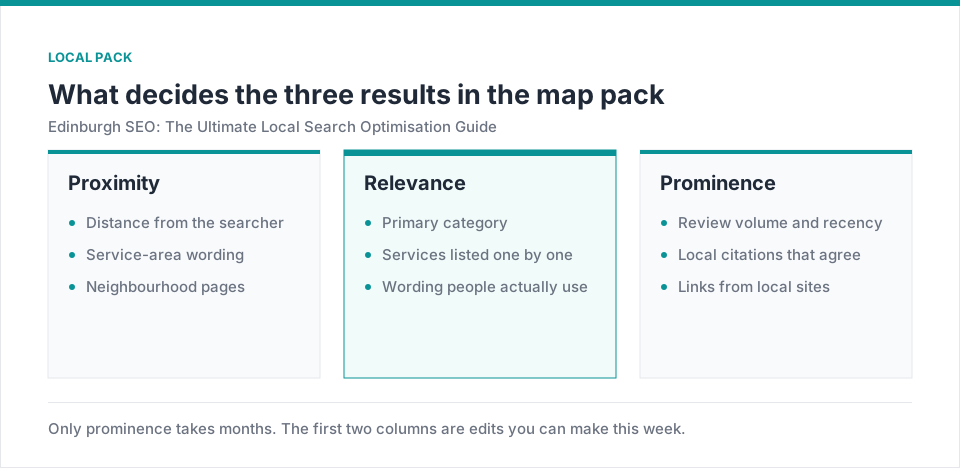
The three signal groups behind the map pack. Proximity and relevance are set by how the profile and the pages are written; prominence is earned over time.
Ready to translate Edinburgh’s content strategy into measurable results? Explore our Services page or contact Edinburgh SEO to tailor a two-locale content plan that aligns with your market, budgets, and growth targets. The Be-BeY to Ru-BeY governance framework is designed to scale within Edinburgh and beyond, ensuring durable local relevance and auditable ROI across neighbourhoods.
Link Building And Digital PR For Edinburgh
In Edinburgh’s two-locale approach, where Be-BeY spine topics establish city-wide authority and Ru-BeY depth pages prove local credibility, link-building and digital PR play a pivotal role. Quality local backlinks not only enhance authority but also reinforce proximity signals that influence Maps visibility, local packs, and suburb-specific engagement. This part translates Edinburgh’s governance framework into practical, auditable strategies for earning credible links from Edinburgh‑centric outlets, partner organisations, and community platforms, while keeping regulatory considerations front and centre.
Local Link Building Foundations For Edinburgh
Start with a per-location foundation that respects Be-BeY to Ru-BeY alignment. Prioritise links from Edinburgh-focused directories, business associations, and reputable neighbourhood outlets that can directly connect to your hub or depth pages. Ensure consistent NAP data across locations and map citations to the Be-BeY city-wide topic pages or Ru-BeY suburb-depth pages where relevant. Document each outreach effort with ROSI traces and Translation Provenance notes to support regulator-ready governance as you scale across Leith, Portobello, New Town, and beyond.
Audit and secure Edinburgh-centric citations that point to Be-BeY hubs when family of services is city-wide.
Acquire credible links from Edinburgh business associations, council-affiliated portals, and local trade bodies that permit per-location or per-suburb linking.
Anchor external links to the most relevant on-site depth pages, maintaining a clear signal path from external sources into suburb proofs and maps.
Record outreach outcomes with ROSI traces and lock terminology through Translation Provenance notes to sustain governance integrity.
Digital PR Campaigns That Build Local Authority
Digital PR in Edinburgh should elevate city-wide themes while delivering high-quality, locally relevant placements. Craft stories about community initiatives, university collaborations, and neighbourhood improvements that naturally earn editorial links to hub or depth pages. Target Edinburgh press, regional business journals, tourism boards, and cultural organisations that publish content with robust readership and authority. Each campaign should align with Region Templates governance, surfacing depth content only when readiness criteria are met and ensuring translations and terminology stay consistent across districts.
Develop PR stories around Edinburgh events, campus partnerships, and neighbourhood success cases that merit backlinks to Be-BeY or Ru-BeY pages.
Coordinate with local media and community sites to secure editorial mentions and contextual links that strengthen proximity signals.
Document outreach plans, coverage outcomes, and link targets within ROSI traces for auditability.
Link-Building Tactics Aligned With Be-BeY To Ru-BeY
Adopt a hub-and-spoke mindset: Be-BeY content acts as the hub for Edinburgh-wide topics, while Ru-BeY pages serve as spokes that attract district-specific mentions. Outreach should prioritise quality over quantity, with a focus on relevance and editorial integrity. Leverage regional partnerships with universities, cultural organisations, and local businesses to acquire natural backlinks that are durable and resistant to algorithmic fluctuations. Each link should be traceable to a Be-BeY or Ru-BeY page, strengthening the overall information architecture and improving user signals across Edinburgh’s footprint.
Target high-authority Edinburgh outlets that offer contextual links to Be-BeY hubs or Ru-BeY depth pages.
Foster partnerships with local organisations to secure long-term editorial collaborations and recurring link opportunities.
Maintain a disciplined linking calendar that aligns with Region Templates gating to avoid premature surface exposure.
Anchor Text Strategy And Risk Management
Avoid over-optimised anchor text by prioritising natural language and locality-specific terms. Use a balanced mix of brand anchors, Be-BeY topic anchors, and suburb-specific phrases that naturally reflect the linked content. Monitor anchor distributions regularly to prevent over-concentration on any single term, which could trigger ranking penalties. Keep a registry of linking partners and ensure every backlink aligns with editorial guidelines and governance artefacts. ROSI traces and Translation Provenance notes should accompany anchor decisions to preserve regulator-ready accountability as Edinburgh expands.
Maintain a diverse anchor text mix that mirrors user intent and district relevance.
Document every external linking decision with governance artefacts and audit trails.
Measuring Impact, ROI And Governance For Edinburgh Links
Link activity should feed into parity dashboards that juxtapose Be-BeY spine signals with Ru-BeY depth engagement. Track GBP health, Maps visibility, depth-page visits, and local conversions to determine the contribution of backlinks to actual outcomes. Use ROSI traces to document localisation decisions and Translation Provenance notes to lock local terminology across Edinburgh’s districts. Regular governance reviews ensure link-building activities remain auditable, compliant, and aligned with ROI targets as the Edinburgh footprint grows.
For a practical starting point, combine link-building progress with a regulator-ready reporting pack and an onboarding plan for a dedicated Edinburgh SEO partner. Visit our Services page to explore Edinburgh-focused offerings or contact Edinburgh SEO to schedule a tailored discovery that aligns link strategy with your local growth targets.
Measuring Success: KPIs, Reporting & Analytics
Edinburgh’s two-locale Be-BeY to Ru-BeY framework requires a measurement approach that validates city-wide authority while proving neighbourhood impact. This part defines a practical, auditable KPI taxonomy, explains how to instrument data sources across Be-BeY and Ru-BeY surfaces, and describes governance-ready reporting that supports decision-making and regulator-friendly audits. The aim is to make every Edinburgh action traceable to outcomes, from GBP health to suburb-level conversions, in a way that scales with growth across the capital’s districts.
1) Core KPI Categories For Be-BeY To Ru-BeY
Establish three complementary KPI families that capture different layers of the Edinburgh footprint. Be-BeY metrics measure city-wide authority, governance health, and overall topical credibility. Ru-BeY metrics quantify neighbourhood engagement, proof utilisation, and local intent signals. ROI metrics connect Be-BeY awareness to Ru-BeY conversions, creating a complete view of how locality signals translate into real business value.
Be-BeY visibility: GBP health, Maps impressions, and city-wide search visibility for Edinburgh-wide topics.
Ru-BeY engagement: depth-page visits by suburb, FAQs access, proofs usage, and map interactions.
ROI attribution: cross-surface crediting that ties Be-BeY awareness to Ru-BeY local conversions, supported by ROSI traces.
2) Data Architecture And Data Quality
The Edinburgh programme requires a robust data layer that ingests signals from GBP, Maps, analytics, CRM inquiries, and lead-gen forms. Implement per-location data partitions so Be-BeY and Ru-BeY metrics can be analysed side by side without data contamination. Establish data quality gates, including consistent NAP/GBP data, reliable event tracking, and regular reconciliation between on-site conversions and offline outcomes. Translation Provenance notes lock terminology across districts, while ROSI traces provide an auditable trail of localisation decisions that feed ROI calculations.
Create per-location data partitions for Edinburgh clusters (e.g., Leith, Old Town, Stockbridge).
Standardise event and conversion tracking across Be-BeY and Ru-BeY surfaces.
Maintain governance artefacts (Translation Provenance, ROSI traces) to support regulator-ready reporting.
3) Frequency And Cadence Of Reporting
Define a rhythm that balances timeliness with stability. Weekly GBP health and local signal checks keep Be-BeY topics aligned with real-world proximity. Monthly depth-audits by suburb verify RU-BeY activations, proofs usage, and map engagement. Quarterly governance reviews assess gating criteria, translations, and ROI performance. This cadence creates a predictable governance cycle that supports rapid iteration while maintaining regulatory readiness.
Weekly: GBP health, Maps visibility, and any critical signalled drift by locale.
Monthly: Depth-page engagement, proofs usage, FAQs popularity, and per-suburb ROI signals.
Quarterly: Governance review, Region Templates gating status, and ROSI trace audits.
4) ROI Modelling And Attribution
ROI modelling should attribute outcomes to both Be-BeY and Ru-BeY surfaces. Use a two-layer attribution model where Be-BeY contributes to awareness-driven metrics (GBP health, visibility, authority), and Ru-BeY drives local conversions (inquiries, bookings, service requests). ROSI traces anchor localisation decisions, while Translation Provenance notes lock terminology across districts. Present ROI in familiar business terms such as cost per lead, cost per acquisition, and lifetime value, with visibility into how regional activations lift overall Edinburgh performance.
Define attribution windows that reflect Edinburgh’s seasonal and behavioural patterns.
Segment ROI by suburb to identify high-impact depth activations.
Provide regulator-ready ROI reports with ROSI traces and glossary locks.
5) A Practical Edinburgh 90-Day SEO Reporting Plan
Implement a concise 90-day plan to establish measurement foundations and demonstrate early value. Week 1–3 focuses on data foundation: GBP health baselines, per-location tagging, and Be-BeY to Ru-BeY mapping. Week 4–8 introduces initial parity dashboards and a first wave of suburb-depth pages with proofs and maps. Week 9–12 expands Region Templates gating and completes ROSI tracing documentation. This rollout yields auditable dashboards, clear ROI narratives, and regulator-ready governance from day one.
Weeks 1–3: Data foundation, GBP health baseline, locale tagging, and spine-to-depth mapping.
Weeks 4–8: Launch initial Ru-BeY depth pages; parity dashboards populated; proofs and maps published.
Weeks 9–12: Region Templates gating activation; ROSI traces documented; governance reviews scheduled.
Budgeting And Hiring For Edinburgh SEO
Within the Edinburgh two-locale governance framework, budgeting and resourcing are not afterthoughts—they are design vectors that determine how Be-BeY city-wide authority translates into Ru-BeY neighbourhood depth with auditable ROI. This part lays out practical budgeting approaches, contract models common in the UK, and what to expect when selecting an Edinburgh-based partner or building an in-house capability. The aim is a transparent, regulator-ready plan that scales from Leith to Morningside while preserving signal parity between Be-BeY and Ru-BeY surfaces.
1) Defining Your Edinburgh Budget Within A Be-BeY To Ru-BeY Framework
Start with a city-wide baseline that ensures GBP health, Maps visibility, and governance artefacts are in place. Then allocate disciplined funds to suburb-depth activations where demand justifies it. The governing principle is auditable spending: every Be-BeY initiative should have a mapped Ru-BeY consequence and a clear ROI trajectory. Translation Provenance notes lock terminology across districts, while ROSI traces capture localisation decisions for regulator-ready reporting. This upfront mapping reduces waste and improves forecasting accuracy as Edinburgh expands to new suburbs.
Establish a Be-BeY baseline budget for Edinburgh-wide authority: GBP health, Maps health, and governance artefacts.
Define per-suburb Ru-BeY allocations aligned to demonstrated demand, proofs, and depth readiness.
Attach ROSI traces and Translation Provenance notes to every budget line to support auditability.
2) Pricing Models For Edinburgh Projects
In Edinburgh, pricing models should reflect two-locale scope. Typical approaches include monthly retainers, milestone-based engagements, and hybrid models that couple fixed commitments with performance incentives. A regulator-ready contract delineates Be-BeY and Ru-BeY deliverables, Region Templates gating, Translation Provenance locks, and ROSI tracing responsibilities. Ensure the pricing narrative ties directly to governance artefacts and auditable ROI, so stakeholders can forecast cost per lead and cost per acquisition with clarity.
Retainer-based plans for ongoing Be-BeY and recurring Ru-BeY activations.
Milestone-based options for depth-page launches and governance gating events.
Hybrid models that add performance-based incentives aligned to suburb-level outcomes.
3) ROI And Measurement At Edinburgh Scale
Craft an attribution framework that credits Be-BeY for city-wide awareness and Ru-BeY for local conversions. Use parity dashboards to juxtapose spine signals against depth engagement by suburb, tracking GBP health, Maps impressions, depth- page visits, proofs usage, and local inquiries. ROSI traces and Translation Provenance notes provide an auditable audit trail for governance reviews. Define ROI metrics in business terms—cost per lead, cost per acquisition, and estimated lifetime value—so finance and marketing teams speak the same language from day one.
Be-BeY metrics: city-wide search visibility, GBP health, and governance health indicators.
Ru-BeY metrics: suburb-depth visits, proofs usage, and map interactions by location.
Want the numbers behind this? The analytics guide shows how organic traffic and the queries GA4 hides are rebuilt in Semalt.
ROI attribution: cross-surface crediting that links Be-BeY awareness to Ru-BeY local conversions.
4) Resource Planning: In-House Teams Vs Partner Agencies
Decide whether to build in-house capability, partner with a local Edinburgh agency, or adopt a hybrid model. In-house teams offer control and long-term sustainability, but require investment in tooling, training, and governance. A local agency brings immediate capability, a track record in Edinburgh markets, and governance artefacts ready to audit. A hybrid approach can blend strategic oversight with expert execution in high-growth suburbs, while ensuring Region Templates, Translation Provenance, and ROSI traces are consistently applied across surfaces.
Create a clear ownership map: Be-BeY lead, Ru-BeY regional leads, and a governance custodian for ROSI and Translation Provenance.
Define required capabilities: technical SEO, content strategy, link building, and digital PR with local relevance.
Establish an onboarding plan for external partners to align with Edinburgh’s two-locale framework from day one.
5) A Practical 90-Day Rollout Plan You Can Use
Translate budgeting and staffing decisions into a concrete rollout. Week 1–4 focuses on discovery, Be-BeY topic mapping, and governance setup. Week 5–8 launches initial Ru-BeY depth pages for priority suburbs, with proofs, FAQs, and maps attached to Be-BeY hub topics. Week 9–12 tightens gating via Region Templates, populates parity dashboards, and documents localisation decisions with Translation Provenance notes and ROSI traces. The outcome is auditable maturity: a scalable, regulator-ready plan that creates early value in Edinburgh’s strongest suburbs and a clear path to expansion.
Weeks 1–4: Discovery, GBP baseline, Be-BeY mapping, and governance charter.
Weeks 5–8: First Ru-BeY depth pages for high-potential suburbs; proofs and maps published.
Weeks 9–12: Region Templates gating activated; parity dashboards finalised; governance reviews scheduled.
Choosing The Right Edinburgh SEO Partner
edinburghseo.org champions a governance‑driven, evidence‑based approach to local search in Scotland’s capital. The two‑locale model — Be‑BeY city‑wide spine topics feeding Ru‑BeY suburb‑depth pages — is not just a collection of tactics. It is a scalable framework that aligns Edinburgh’s distinctive neighbourhoods with auditable ROI. This part of the guide focuses on how to select an Edinburgh SEO partner who can deliver regulator‑ready governance, measurable outcomes, and the discipline needed to expand from Leith and Portobello to every corner of the city and beyond. A strong partner will articulate how Be‑BeY and Ru‑BeY interact, show how depth content is gated, and provide a transparent plan for regional growth that remains faithful to Edinburgh’s unique geography and takings patterns.
What To Demand In Your Edinburgh Partner Proposal
In a two‑locale rollout, the right Edinburgh partner should present a clear mapping from Be‑BeY spine topics to Ru‑BeY suburb‑depth pages, with governance artefacts and auditable ROI. Expect a proposal to describe how city‑wide authority translates into credible, localised content and how depth activations surface only when readiness criteria are met. Regional governance must be documented, and localisation decisions should be traceable for regulator reviews. The proposal should demonstrate how Edinburgh signals flow through GBP health, Maps presence, and depth engagement to produce observable outcomes in target suburbs such as Leith, Stockbridge, and Morningside.
Be‑BeY spine topic catalogue with mapped Ru‑BeY depth priorities for Edinburgh clusters.
Region Templates gating criteria and live gating status dashboards to control depth surface timing.
Translation Provenance notes that lock terminology across districts and languages.
ROSI traces documenting localisation rationales for regulator‑ready governance.
Per‑location GBP health reports, Maps signals, and depth activation readiness by suburb.
The Governance Arsenal: Region Templates, Translation Provenance, And ROSI Traces
A mature Edinburgh partner shows how Region Templates control when depth content surfaces, how Translation Provenance locks terminology across districts, and how ROSI traces document localisation decisions for audits. The ideal partner provides a regulator‑ready governance package that clearly demonstrates signal parity between Be‑BeY and Ru‑BeY surfaces. This framework ensures Edinburgh’s numerous suburbs remain coherent, scalable, and auditable as you expand to additional neighbourhoods or even markets beyond Scotland.
In practice, you should see parity dashboards that juxtapose Be‑BeY city‑wide visibility with Ru‑BeY suburb engagement. The dashboards should be easy to understand for senior stakeholders and printable for governance reviews. Expect a transparent pricing model, a defined escalation path, and documentation that travels with every deployment to support ongoing audits.
Sydney Market Nuances: Local Vs Global SEO Considerations
For Edinburgh clients seeking cross‑market capability or learning from nearby success stories, Sydney offers a practical blueprint. A two‑locale approach in a global city requires careful gating of depth content, consistent Region Templates, and robust localisation governance as you expand. The Sydney example demonstrates how Be‑BeY spine topics can anchor city‑wide authority while Ru‑BeY depth pages surface in high‑potential suburbs such as Surry Hills or Bondi, subject to readiness criteria. Translation Provenance ensures glossary consistency across languages, and ROSI traces provide auditable records of localisation decisions for governance reviews. In short, a partner with Sydney‑level discipline can scale Edinburgh efforts while preserving local nuance and regulator‑readiness.
- Be‑BeY spine topics anchor authority for Edinburgh‑wide services and evergreen guides, with the option to extend to other markets.
- Ru‑BeY depth pages surface for suburbs with meaningful demand, such as Leith, Portobello, and New Town, and can be extended to adjacent suburbs as data supports.
- Gate depth activations with Region Templates to protect signal parity during expansion.
Practical Vendor Evaluation Checklist
When assessing potential Edinburgh partners, request concrete evidence of governance maturity, data fidelity, and delivery discipline aligned with the Be‑BeY to Ru‑BeY framework. A robust vendor package should include a Be‑BeY spine topic catalog, Ru‑BeY suburb‑depth page outlines, and a Region Templates gating matrix. Translation Provenance and ROSI traces must accompany localisation decisions. Per‑location GBP health reports, Maps signal data, and a clear ROI model linking suburb conversions to city‑wide themes should be standard deliverables.
Describe how you would map Be‑BeY spine topics to Ru‑BeY suburb‑depth pages, including gating criteria and glossary controls.
Present Region Templates gating criteria and a live gating status dashboard.
Provide Translation Provenance documentation and a sampled ROSI trace for localisation decisions.
Show per‑location GBP health, hasMap usage, and areaServed signals aligned to depth activation.
Include a parity dashboard example that compares Be‑BeY and Ru‑BeY signals across multiple suburbs.
Onboarding And Implementation Plan
Present a practical 90‑day rollout that binds governance artefacts to delivery milestones. Start with discovery and Be‑BeY topic mapping, then launch the first wave of suburb‑depth pages for high‑potential districts with proofs, FAQs, and maps. Gate depth activations using Region Templates, populate parity dashboards with Be‑BeY and Ru‑BeY signals, and document localisation decisions with Translation Provenance notes and ROSI traces. The plan should produce regulator‑ready reporting from day one and establish a repeatable pattern for future expansions.
Days 1–30: Discovery, GBP baseline, and Be‑BeY topic mapping for Edinburgh clusters.
Days 31–60: Launch initial Ru‑BeY depth pages for priority suburbs with proofs, FAQs, testimonials, and maps.
Days 61–90: Region Templates gating activated; parity dashboards populated; governance reviews scheduled.
To begin a conversation about selecting an Edinburgh SEO partner or to schedule a tailored discovery aligned to your Edinburgh footprint, visit our Services page or contact Edinburgh SEO. The Be‑BeY to Ru‑BeY governance model is designed to scale across Edinburgh’s suburbs and beyond, with auditable ROI and regulator‑ready governance as standard practice.
Local SEO for Small Businesses in Edinburgh: Quick Wins
Edinburgh is a city of diverse neighbourhoods, from the historic Old Town to the vibrant shores of Leith. For small businesses, a pragmatic two-locale mindset—Be-BeY city-wide spine topics feeding Ru-BeY suburb-depth pages—translates into rapid, auditable wins without losing long-term structure. This part focuses on practical, Edinburgh-specific quick wins you can implement now to improve visibility in local search, capture more Edinburgh-based inquiries, and build a foundation that scales as you grow through the city and beyond.
1) Optimise Google Business Profile (GBP) Health Across Edinburgh
A strong GBP presence is the fastest route to improved visibility in Maps and Local Packs for Edinburgh-based searches. Begin with a per-location audit to ensure each Edinburgh location has a verified GBP profile with consistent NAP (name, address, phone), accurate business categories, and up-to-date hours. For multi-location shops or service-area businesses, define clear service areas and add location-specific attributes where relevant. Regularly post updates about promotions, events, or changes in service to keep profiles fresh. Use the Translation Provenance approach to standardise terminology across districts, preventing drift when you expand to Leith, Portobello, or New Town.
Verify every Edinburgh location in GBP and confirm NAP consistency across directories.
Add location-specific information: hours, services, and concise FAQs tailored to each district.
Publish weekly GBP posts highlighting local events or promotions to boost engagement.
2) Build Robust Local Citations And NAP Consistency
Citations extend your Edinburgh footprint beyond your site. Start with core Edinburgh-focused directories, chamber of commerce listings, and neighbourhood portals that allow links to Be-BeY hub pages or Ru-BeY depth pages. Ensure NAP data is identical across all listings and that each suburb has a logical connection to the relevant depth content. Document localisation decisions so governance artefacts are in place for regulator-ready reporting. A consistent citation profile improves Maps confidence and can lift local search visibility for Leith, Morningside, and Bruntsfield alike.
Audit current Edinburgh citations for accuracy and duplicates; standardise formatting.
Acquire Edinburgh-centric listings that permit links to Be-BeY or Ru-BeY pages reflecting your local footprint.
Link citations to the most relevant Be-BeY hub or Ru-BeY depth page to reinforce proximity signals.
3) Quick On-Page Optimisation With Edinburgh Localisation In Mind
On-page elements should reflect Edinburgh-specific intent while remaining faithful to city-wide Be-BeY topics. optimise title tags, meta descriptions, headings, and content with Edinburgh modifiers (for example, Edinburgh shop, Leith café, Portobello bakery). Include per-location schema like LocalBusiness, hasMap, and areaServed to express geography clearly. Ensure internal linking reinforces the Be-BeY to Ru-BeY architecture, so a local depth page about a Leith coffee shop sits logically beneath the Edinburgh-wide Be-BeY hub on coffee and hospitality topics.
Incorporate suburb-specific keywords naturally into titles and headers without keyword stuffing.
Apply per-location LocalBusiness schema and maps-linked markup to depth pages.
Strengthen internal links from Be-BeY hubs to Ru-BeY depth pages that answer local questions.
4) Leverage Reviews And Reputation In Edinburgh
Reviews are a local currency in Edinburgh. Proactively request reviews from customers in each district and respond promptly to reflect good customer service. Highlight local proofs and testimonials on depth pages to strengthen credibility for Leith, Portobello, or New Town visitors. A Governance approach ensures your review management processes are auditable, with a consistent tone and terminology across districts, supported by Translation Provenance notes to maintain a uniform narrative.
Implement a simple review collection workflow per location with permissions and templates for responses.
Showcase local-proof testimonials on Ru-BeY pages to build trust with nearby customers.
Maintain a standard response protocol that protects brand voice city-wide and locally.
5) Quick Technical Health Wins For Edinburgh Local Pages
Technical speed and mobile usability matter for Edinburgh’s local seekers, many of whom search on phones while moving around the city. Optimise Core Web Vitals, enable lazy loading for images on depth pages, and ensure per-location pages load quickly even on slower connections. Use Region Templates to gate depth content and prevent performance bottlenecks as you scale across districts. This helps maintain a stable user experience while expanding your Edinburgh footprint.
Audit per-location page speed and optimise images, scripts, and CSS for faster loads.
Ensure mobile-first design and accessible navigation across Edinburgh pages.
Validate structured data and per-location schema for GBP and local maps.