Introduction: Why A Local SEO Company In Edinburgh Matters
Edinburgh, the capital of Scotland, presents a compelling mix of historic districts, modern neighbourhoods, and a thriving visitor economy. For local businesses—from boutique hotels and cafés to law firms and tradespeople—the path to growth increasingly runs through local search. Consumers in Edinburgh routinely start their buying journeys with near-me queries like “plumbers near me in Edinburgh” or “best coffee in Old Town,” making proximity, trust, and relevance the decisive signals in the search results. A dedicated Edinburgh SEO partner understands not only search engine algorithms, but also the city’s unique geography, footfall patterns, and seasonal rhythms that shape local demand. This Part 1 outlines why choosing a local expert matters, what a reputable Edinburgh-based agency brings to the table, and how the journey begins with a practical, Edinburgh-first mindset. At edinburghseo.org, we blend technical rigour with real‑world market knowledge to translate Edinburgh’s business goals into durable search momentum.
The Edinburgh Local Search Landscape
Edinburgh’s local search ecosystem is as varied as its streets. The Old Town’s narrow lanes, the elegant grid of the New Town, and the sprawling portside neighbourhoods of Leith each generate different local intents. Service demand is tightly tied to district identity: a legal practice in the city centre will compete with nearby providers on factors such as proximity, accessibility, and reputation, while hospitality and tourism businesses must respond rapidly to seasonal fluctuations and event-driven demand. A local SEO company in Edinburgh recognises these distinctions and organises signals around district-level relevance, ensuring content and technical signals reflect real-world experiences. This approach strengthens not only rankings but also grows qualified traffic, calls, bookings, and footfall into physical locations.
What An Edinburgh‑Focused Partner Delivers
A reputable Edinburgh SEO partner brings clarity, accountability, and outcomes. You should expect a clear discovery phase, a pragmatic strategy aligned to Edinburgh’s districts, and a transparent execution plan that scales. The aim is to convert local intent into tangible results while maintaining governance and regulatory readiness. Edinburgh-focused agencies prioritise:
- Local Understanding With Global Best Practices: A balance of city-specific knowledge and proven optimisation methods that translate into durable momentum across four surfaces: on-page assets, knowledge experiences, proximity-driven panels, and local packs.
- Transparent Reporting And Governance: Regular, auditable updates that demonstrate progress to stakeholders and regulatory bodies, with clear signal provenance attached to major assets.
- Practical Timelines And Scalable Roadmaps: A pragmatic, Edinburgh-first roadmap that starts with high-impact districts and expands methodically as momentum grows.
Starting The Edinburgh Programme
Launching in Edinburgh requires a grounded plan that respects the city’s geography and business goals. A typical starting point is a district audit that highlights current visibility gaps, content opportunities, and technical health. From there, you define quick wins—such as optimising Google Business Profile for district-level features, aligning NAP across directories, and refreshing suburb landing pages—while laying the foundations for longer‑term signal growth across all four surfaces. Our Edinburgh hub provides templates, governance artefacts, and onboarding routes via the contact page to tailor a local-first programme that fits your organisation’s risk tolerance and growth ambitions.
Why Choose A Local Edinburgh SEO Partner
Local SEO is not a one-size-fits-all exercise. Edinburgh’s diversity means that state‑of‑the‑art technical health, authentic local signals, and meaningful content must be customised to district realities. A trusted Edinburgh agency will:
- Demonstrate Local Authority: Deep knowledge of Edinburgh’s markets and customer journeys, from Old Town footfall patterns to Leith’s harbour-side appetite for services and experiences.
- Offer Transparent Collaboration: Regular reviews, live dashboards, and clear decisions that stakeholders can comprehend and challenge if needed.
- Deliver Measurable Outcomes: A trackable path from discovery to conversion with measurable signals such as Calls, Inquiries, Bookings, and Store Visits.
What You’ll Take Away From Part 1
- A clear case for engaging a local Edinburgh SEO partner to navigate city-specific dynamics and competition.
- Understanding of how local signals across four surfaces translate into durable visibility for Edinburgh businesses.
- A practical starter plan to begin Edinburgh-focused optimisation via the edinburghseo.org services and onboarding routes.
- Confidence to pursue regulator-friendly governance and transparent reporting as momentum scales across districts.
To begin applying these Edinburgh tactics, explore our Edinburgh hub at edinburghseo.org/services and initiate a tailored programme through the contact page. Foundational guidance from industry authorities remains relevant: Google's SEO Starter Guide and Moz: What Is SEO?.
Defining A Trusted Edinburgh SEO Partner
In Edinburgh, selecting a trusted SEO partner means committing to a collaborative, governance-forward approach that mirrors the city’s unique districts and business rhythms. This Part 2 builds on Part 1 by detailing what a reputable Edinburgh-based agency should bring to the table, how they operate, and the practical expectations that keep campaigns transparent, measurable, and compliant with local standards. The right partner will translate Edinburgh’s cityscape into durable search momentum across the four surfaces of the Canonical Local Topic Footprint (CLTF): Web Pages, Knowledge Experiences, Maps-like Panels, and Local Packs. For ongoing collaboration, you can explore our Edinburgh services hub at edinburghseo.org/services and begin conversations through the contact page.
What A Trusted Edinburgh Partner Delivers
A credible Edinburgh SEO partner blends deep local knowledge with nationally proven methodologies. You should expect a transparent, auditable workflow that turns Edinburgh’s district signals into durable visibility across four surfaces. Core deliverables include:
- Local Market Insight: In-depth familiarity with Old Town, New Town, Leith, and other districts, including commuter patterns and seasonal demand cycles.
- Governance And Transparency: Regular, straightforward reporting with explicit signal provenance attached to major assets and milestones.
- Pragmatic Roadmaps And Timelines: Edinburgh-first roadmaps that scale sensibly as momentum grows, with clear checkpoints for governance reviews.
- Regulatory And Compliance Readiness: Documentation and dashboards designed for auditability by stakeholders and local regulators.
Effective Edinburgh partnerships emphasise collaboration, clear decision rights, and practical milestones. The aim is to turn local intent into predictable outcomes, such as increased inquiries, bookings, and footfall, while maintaining governance discipline that supports transparent reporting to boards and regulators.
Onboarding And Discovery For Edinburgh
The onboarding process should start with a district footprint and a discovery workshop to identify Edinburgh suburbs with the strongest near-term potential. Expect a district-wide audit that covers current visibility, content opportunities, technical health, and Google Business Profile readiness. Deliverables should include a pragmatic Edinburgh-first strategy, a governance artefact bundle attached to major assets (TL notes, LF depth, CDS trails), and an easy-to-navigate onboarding path via the Edinburgh services hub and the contact page.
Early governance artefacts enable auditable momentum, letting you see how signals propagate from district pages to Knowledge Experiences, GBP, and Local Packs. A credible partner also provides practical templates and dashboards that your team can adopt and adapt as Edinburgh’s districts evolve.
Governance, Reporting, And Accountability
A trusted Edinburgh partner builds a governance framework that supports accountability and regulatory-readiness. Attach TL notes (local rationale), LF depth (neighbourhood texture), and CDS trails (signal lineage) to major assets so decisions are traceable as districts change. Regular dashboards should provide a concise, stakeholder-friendly view of momentum across the four surfaces, with subgroup views for Old Town, Leith, and other clusters. External references from widely accepted authorities—such as Google’s guidance on local signals and Moz’s SEO primers—underpin practical work, while Edinburgh-specific templates in the Edinburgh hub ensure consistency and compliance across campaigns.
Governance is not about bureaucracy for its own sake. It creates clarity in priorities, enables audit trails for regulators, and helps teams forecast outcomes with greater confidence. A strong partner will also offer scalable processes that your internal team can adopt, ensuring continuity beyond any single campaign.
Next Steps And Practical Next Steps
Working with a trusted Edinburgh partner means adopting a collaborative cadence rather than running a one-off project. Start with a district footprint and a pragmatic CLTF spine for 1–3 core Edinburgh districts, attaching governance artefacts to major assets. Set up per-district dashboards to monitor momentum across four surfaces and establish regular governance reviews. Access templates and onboarding resources in the Edinburgh hub, and initiate conversations via the contact page to tailor a district-first programme for your business.
Key external references for best practice include Google’s local signals guidance and Moz’s What Is SEO?. See Google’s SEO Starter Guide and Moz: What Is SEO?. The Edinburgh hub houses governance artefacts and dashboards to standardise reporting as districts scale.
Core services you should expect from an Edinburgh SEO agency
Edinburgh businesses seeking durable visibility require a focused, governance‑forward set of SEO services. A reputable Edinburgh‑based partner aligns technical health, content strategy, local signals, and measurement to drive momentum across the four surfaces used in Canonical Local Topic Footprint (Web Pages, Knowledge Experiences, Maps‑like Panels, and Local Packs). This Part 3 outlines the essential service areas you should demand, with practical expectations and artefacts that support transparent governance. Discover how the Edinburgh hub at edinburghseo.org/services can scaffold a district‑focused programme through the contact page, while external references such as Google's SEO Starter Guide and Moz: What Is SEO? provide grounding in industry best practice.
1) Technical SEO Audit And Health Check
A comprehensive baseline assessment to identify Edinburgh‑specific technical optimisations, covering crawlability, indexation, site architecture, and Core Web Vitals. The aim is to establish a reliable platform for four‑surface momentum that supports scalable growth and regulator‑friendly reporting.
2) Keyword Research And Local Intent Mapping
Identify Edinburgh‑specific terms and geo modifiers that reflect how residents and visitors search by district. Map terms to district landing pages and Knowledge Experiences to ensure content aligns with real local queries and seasonal patterns.
3) On‑Page Optimisation And Internal Linking
optimise meta titles, descriptions, header structures, and internal links to reinforce district relevance. Local signals are strengthened through careful anchor phrasing, district qualifiers in H2s, and purposeful interlinking between district pages and Knowledge Experiences, ensuring a cohesive journey from discovery to conversion.
4) Content Strategy And Local Content
Develop a structured content calendar that prioritises suburb landing pages, district guides, FAQs, and Knowledge Experiences geared to Edinburgh's neighbourhoods. Content should address authentic local needs, support topical authority, and feed propulsion across Web Pages, Knowledge Experiences, Maps‑like Panels, and Local Packs with regulator‑friendly governance attached to major assets.
5) Local SEO, GBP Governance, And Citations
Manage Google Business Profile with district highlights, maintain NAP consistency across Edinburgh directories, cultivate authentic reviews, and curate local citations to strengthen Local Packs and Maps‑like Panels. Governance artefacts accompany major assets to ensure signal provenance and auditable momentum as districts evolve.
6) Link Building And Digital PR With Local Authority
Adopt ethical outreach and Edinburgh‑specific partnerships to earn high‑quality local links that reinforce proximity and trust signals across surfaces. A disciplined approach avoids risky practices while delivering durable authority and local relevance.
7) Reporting, Governance, And Compliance
Establish transparent dashboards that aggregate per‑suburb momentum across four surfaces, attach TL notes, LF depth, and CDS trails to major assets, and run regular governance reviews. WhatIf Momentum gates should preflight new assets to ensure local relevance and surface balance before publishing.
Practical Next Steps
To translate these core services into action, initiate a discovery with our Edinburgh team, audit current signals, and establish a district footprint with a CLTF spine for 1–3 core suburbs. Attach governance artefacts to major assets, set up per‑suburb dashboards, and begin 4‑surface momentum tracking. Access Edinburgh templates and onboarding resources via the Edinburgh hub and start conversations through the contact page to tailor a district‑first programme for your business.
External references that continue to inform best practice include Google's SEO Starter Guide and Moz: What Is SEO?. For Edinburgh‑specific templates and onboarding, explore our Edinburgh hub at edinburghseo.org/services and connect via the contact page.
Local SEO Foundations For Edinburgh Businesses
Local visibility is the bedrock of Edinburgh’s competitive market. This Part 4, following the discovery of Part 1–3, drills into the practical, Edinburgh-first foundations that support durable four-surface momentum: Web Pages, Knowledge Experiences, Maps-like Panels, and Local Packs. The aim is to establish a predictable, regulator-friendly baseline for local signals, enabling you to attract higher-quality nearby inquiries, bookings, and footfall across Edinburgh’s distinctive districts—from Old Town to Leith and the expanding suburban edges. The Edinburgh hub at edinburghseo.org/services provides templates and governance artefacts to accelerate onboarding via the contact page, ensuring a district-focused start aligns with your organisational goals.
Local Listings, NAP Consistency, And Edinburgh Landing Pages
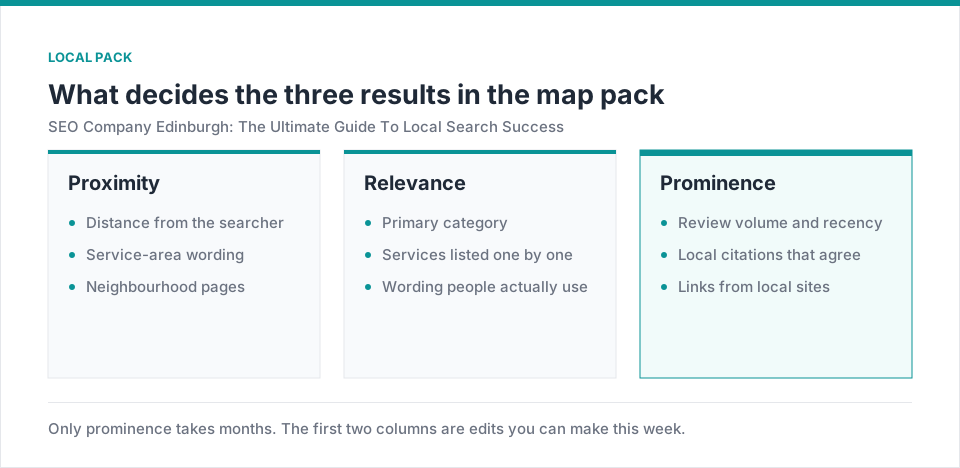
Consistency of Name, Address, and Phone (NAP) across all Edinburgh business listings is non-negotiable. When potential customers search for nearby services, inconsistent NAP data fragments trust and can erode rankings across four surfaces. Start with a district-aware baseline: ensure core Edinburgh pages reflect the precise service area and district qualifiers, and align NAP across primary directories, maps listings, and the Google Business Profile (GBP). Suburb landing pages should mirror district realities, with clear calls to action tailored to each neighbourhood. A governance framework attaches signal provenance to major assets, making momentum auditable as districts evolve.
Google Business Profile Governance And Local Reviews
Your GBP is a living hub for Edinburgh signals. Complete every field with local context, upload accurate photos, keep operating hours aligned with district patterns, and post updates that reflect Edinburgh’s seasonal rhythms and events. Practice regular review management: respond promptly to new reviews, prioritise helpful feedback, and encourage satisfied customers to share their experiences in district-specific contexts. A well-maintained GBP enhances proximity signals and supports local packs, making it easier for nearby customers to convert from discovery to action. Attach governance artefacts to GBP assets so decisions are traceable for stakeholders and regulators.
Local Landing Pages And Suburb Content Strategy
Edinburgh’s districts deserve dedicated pages that capture the local context, service scope, and proximity cues. Develop suburb landing pages that address common district questions, showcase local testimonials, and provide geo-targeted CTAs (e.g., book a consult in Leith or schedule a survey in Stockbridge). Interlink these landing pages with Knowledge Experiences—FAQs, how-tos, and district guides—that reinforce topical authority and help users navigate across surfaces. Apply LocalBusiness or Service schema with local parameters to strengthen semantic signals, and attach TL notes, LF depth, and CDS trails to major assets for auditable signal lineage as districts expand.
Citations, Local Directories, And Brand Consistency
Beyond GBP, reliable Edinburgh citations from well-regarded local directories contribute to proximity credibility. Maintain consistent business details across Edinburgh-centric directories and ensure every citation links back to the corresponding district landing page. Where possible, prioritise directories with established Edinburgh audiences or districted relevance, and regularly audit for duplicates and outdated information. A disciplined approach to citations supports four-surface momentum by expanding the reach of district signals while preserving signal provenance through governance artefacts attached to major assets.
Review Management, Reputation, And Customer Trust
Proactive reputation management strengthens local trust across Edinburgh. Encourage authentic reviews from customers in each district, monitor sentiment, and implement timely responses that reflect local context. Highlight positive experiences from specific districts in Knowledge Experiences and ensure responses demonstrate empathy and efficiency. Collectively, review management influences Local Packs performance, GBP engagement, and landing-page conversions by reinforcing proximity credibility and service reliability. Attach governance artefacts to review-related assets so momentum remains auditable for both internal teams and regulators.
Read next: Edinburgh SEO company: how they work · SEO marketing in Edinburgh: a local guide
Measurement And Regulator-Friendly Reporting
Base measurement on district-level momentum across the four surfaces. Track landing-page engagement, Knowledge Experience interactions, proximity actions from Maps-like Panels, and GBP performance within Local Packs. Use WhatIf Momentum gates before new district assets go live to ensure locale relevance and surface balance. Maintain dashboards in the Edinburgh hub, with per-district filters ( Old Town, New Town, Leith, and surrounding suburbs ) to illustrate momentum, ROI, and regulatory readiness. Attach TL notes, LF depth, and CDS trails to major assets to ensure an auditable history of decisions as Edinburgh grows.
External references that underpin these practices include Google’s SEO Starter Guide and Moz’s What Is SEO? See Google's SEO Starter Guide and Moz: What Is SEO?. For Edinburgh-specific templates and onboarding, explore our Edinburgh hub at edinburghseo.org/services and connect via the contact page.
The SEO Audit: What To Expect From A Local Edinburgh Assessment
Edinburgh’s local search landscape is district-dense rather than a single city-wide frontier. A local Edinburgh assessment begins with a comprehensive audit to establish a baseline for four-surface momentum: Web Pages, Knowledge Experiences, Maps-like Panels, and Local Packs. By diagnosing district nuances, content gaps, technical health, and signal governance early, businesses can prioritise actions that deliver measurable momentum while maintaining regulator-friendly reporting. The Edinburgh hub at edinburghseo.org hosts templates, governance artefacts, and onboarding routes via the contact page to accelerate a district‑first programme tailored to your goals.
Scope Of An Edinburgh Audit
The audit examines signals across the four surfaces that define Canonical Local Topic Footprint (CLTF):
- Web Pages: Page-level relevance, district-accurate landing pages, and clear service scopes aligned to local intent.
- Knowledge Experiences: FAQs, how‑to guides, and district‑specific guides that demonstrate topical authority.
- Maps‑Like Panels: Local knowledge panels, proximity cues, and structured data that support discovery near each district.
- Local Packs: Google Business Profile (GBP) signals, reviews, and proximity-driven assets that influence near‑me results.
Audit Components You Should Expect
A credible Edinburgh audit follows a disciplined, governance‑forward approach. The audit components typically include a technical baseline, content and keyword assessment, local signal validation, and competitive context. Each component yields actionable insights, with artefacts attached to major assets to preserve signal provenance as Edinburgh’s districts evolve.
- Technical SEO Health: Crawlability, indexation, site architecture, Core Web Vitals, and mobile performance, all assessed through the lens of Edinburgh’s district layout.
- Content And Keyword Coverage: Evaluation of district landing pages, Knowledge Experiences, and content gaps mapped to local queries and seasonal patterns.
- Local Signals And GBP Governance: GBP completeness, post cadence, photos, hours by district, and event-driven updates; NAP consistency across Edinburgh directories and local citations.
- Local Citations And Directory Health: Accuracy, duplications, and proximity relevance across Edinburgh-centric directories and maps listings.
- Competitive Benchmarking: Local rivals by district, surface-by-surface activity, and proximity-based opportunities for Edinburgh growth.
What The Audit Delivers
The audit outcome is a practical report that translates Edinburgh’s district realities into a clear action plan. Expect governance artefacts attached to major assets, district-specific dashboards, and a prioritised list of recommendations that cover quick wins, mid-term improvements, and longer-term architectural changes. The deliverables are designed to be regulator-friendly and auditable, with explicit signal provenance attached to each asset so momentum remains transparent as the city evolves.
Alongside the written report, you’ll receive a district footprint and CLTF spine that connects four-surface momentum to district goals. This framework underpins future onboarding, governance reviews, and continuous optimisation as Edinburgh’s markets shift with seasonality, events, and demographic changes.
Timeline, Cadence, And Next Steps
Most Edinburgh audits follow a staged cadence. Initial findings are typically delivered within 2–4 weeks, followed by a detailed 6–8 week validation phase as district assets are adjusted and new signals are introduced. Governance artefacts such as TL notes, LF depth, and CDS trails accompany major assets to preserve audit trails for regulators. The Edinburgh hub provides onboarding templates and dashboards to track momentum across all four surfaces, with a clear path to scalable district‑first implementation via the contact page.
External Guidance And Where To Start
External references help ground audit practices in industry standards. The Google SEO Starter Guide offers practical foundations for local optimisation, while Moz’s What Is SEO? provides a broader context for search quality and relevance. For Edinburgh-specific playbooks, the edinburghseo.org services hub contains governance artefacts and onboarding templates designed to align with local expectations. Start your audit by exploring the Edinburgh services hub and booking a discovery through the contact page.
Key references: Google's SEO Starter Guide and Moz: What Is SEO?.
Keyword Research For Edinburgh: Capturing Local Intent
Edinburgh’s local search ecosystem is district-dense, with demand rippling through Old Town, New Town, Leith, Stockbridge, and the city’s expanding suburban edges. This Part 6 focuses on turning Edinburgh-specific, locality-driven queries into durable momentum across the four surfaces of Canonical Local Topic Footprint (Web Pages, Knowledge Experiences, Maps-like Panels, and Local Packs). A disciplined keyword strategy anchors content, technical, and local signals to genuine neighbourhood needs, enabling meaningful inquiries, bookings, and footfall. The Edinburgh hub at edinburghseo.org/services hosts templates and governance artefacts to accelerate district-focused keyword planning and onboarding via the contact page.
The Edinburgh Keyword Research Mindset
The core premiss is proximity-first. In Edinburgh, searchers combine service needs with district qualifiers, such as Edinburgh city centre boiler repair, Leith electricians near me, or Stockbridge roofers. A robust Edinburgh keyword plan blends traditional metrics (volume, difficulty) with local intent signals (district names, event seasons, commuter routes) to surface terms that convert. To scale reliably, map every term to a CLTF surface, ensuring that Web Pages, Knowledge Experiences, Maps-like Panels, and Local Packs each have a clear, district-tailored role. This approach supports regulator-friendly reporting by making signal provenance explicit from discovery through to conversion.
Baseline Footprint: Edinburgh District Clusters
Begin with a district-by-district baseline. Core clusters include City Centre, Old Town, New Town, Leith, and Leith Links, plus nearby suburbs such as Morningside, Granton, and Corstorphine. For each district, identify primary services, typical queries, and seasonal patterns. Create a district landing page blueprint and a Knowledge Experiences plan that addresses the most common questions residents and visitors ask about each area. Attach governance artefacts to major assets to preserve signal provenance as Edinburgh’s districts evolve.
Mapping Terms To CLTF Surfaces
Each keyword should have a home on one of the four surfaces. For example, transactional terms with district qualifiers belong on Web Pages and Local Packs; informational and FAQ-led terms are primed for Knowledge Experiences; proximity prompts appear in Maps-like Panels. This cross-surface coherence strengthens discovery, learning, and proximity actions, while governance artefacts (TL notes, LF depth, CDS trails) provide auditable provenance as Edinburgh expands. Use the Edinburgh hub to access templates that tie district terms to landing pages, knowledge assets, GBP signals, and local citations.
90-Day Edinburgh Keyword Plan: Cycle By Cycle
Cycle 1 (Weeks 1–4): Establish 1–3 core Edinburgh districts, publish starter district landing pages, and seed foundational Knowledge Experiences tied to those districts. Attach TL notes, LF depth, and CDS trails to assets to build auditable momentum. Cycle 2 (Weeks 5–8): Expand to additional districts and depths, enrich Knowledge Experiences with practical guides, and strengthen inter-surface linking for district coherence. Cycle 3 (Weeks 9–12): Scale to more suburbs, deepen schema coverage, and implement WhatIf Momentum gates to preflight new terms against local relevance and surface balance. The Edinburgh hub hosts dashboards and templates to monitor progress across surfaces and districts.
Tools And Data Sources For Edinburgh Keyword Research
Combine mainstream SEO tools with Edinburgh-specific signals. Useful sources include Google Keyword Planner for district volume and competition, Google Trends for seasonal Edinburgh patterns, Moz and Ahrefs for difficulty and SERP context, and GBP/Maps data to validate proximity signals. Supplement with local search insights from GBP performance and district queries to validate relevance. Attach governance artefacts to benchmarking datasets to keep momentum auditable as Edinburgh expands.
- Google Keyword Planner for district term volume and competition.
- Google Trends to track seasonality across Edinburgh districts.
- Moz and Ahrefs for keyword difficulty and SERP context.
- GBP performance data and Maps queries to validate proximity signals.
Governance, Onboarding, And district-First Strategy
Attach governance artefacts to all major keyword assets: TL notes (local rationale), LF depth (neighbourhood texture), and CDS trails (signal lineage). Onboarding resources, templates, and dashboards live in the Edinburgh hub, accessible via edinburghseo.org/services, with onboarding routed through the contact page. This governance backbone ensures auditable momentum as Edinburgh’s districts evolve and new suburbs come online.
Next Steps: Practical Actions You Can Take
Start with a district footprint and a CLTF spine for 1–3 core Edinburgh districts, attach governance artefacts to major assets, and establish per-district dashboards to monitor momentum across four surfaces. Use the Edinburgh hub for templates and onboarding routes via the contact page to tailor a district-first programme. For grounding references, consult Google’s SEO Starter Guide and Moz: What Is SEO? as they remain relevant to Edinburgh-specific playbooks and governance practices.
On-Page Optimisation For Edinburgh Audiences
In Edinburgh, page-level optimisations are the frontline signal for local intent. This Part 7 focuses on practical on-page techniques that align with the four-surface momentum model (Web Pages, Knowledge Experiences, Maps-like Panels, Local Packs) while reflecting Edinburgh’s distinctive districts, from the Old Town to Leith. A well-constructed page framework boosts relevance, improves crawl efficiency, and supports regulator-friendly reporting. The Edinburgh hub at edinburghseo.org/services hosts templates and governance artefacts to accelerate district-first execution via the contact page.
1) Meta Titles And Page Titles For Edinburgh Audiences
Meta titles should combine the service, district qualifier, and city reference in a concise format that recognises Edinburgh’s local intent. Place the district at the front when proximity is a critical driver (e.g., "Leith Electricians — Edinburgh Near Me | Your Service Name"). Keep to 50–60 characters to avoid truncation in search results. On-page titles should mirror H1 and include district identifiers to reinforce locality. Maintain consistency across pages to reinforce the Edinburgh-first signal footprint across the CLTF surfaces.
- District-First Formatting: Prioritise district qualifiers in the title when appropriate for near-me intent.
- Length And Clarity: Use concise phrasing, avoiding keyword stuffing or repetition.
- Brand Consistency: Include the brand name where it adds clarity and trust.
- A/B Testing: Test variations for local click-through improvements over time.
- Regulator Readiness: Ensure title signals align with district and service disclosures for auditable momentum.
2) Meta Descriptions That Drive Edinburgh Clicks
Meta descriptions should clearly articulate what the page offers and why it matters to Edinburgh residents or visitors. Include a local benefit, a distinctive district cue, and a compelling CTA. Aim for 140–160 characters to maximise full visibility in SERPs. Avoid duplicating descriptions across pages; tailor to the district and service combination while keeping a regulator-friendly tone.
- Local Relevance: Mention the district and service succinctly.
- Value Proposition: State a concrete benefit or outcome.
- Clear CTA: Invite a next step such as a booking, call, or guide download.
- Unique Variants: Avoid boilerplate boilerplate; create district-specific copy.
3) Header Structure And Content Architecture
Use a logical header hierarchy that mirrors user journeys. H1 is reserved for the page title. H2 sections cover the core topics, with H3s used for sub-claims or steps within those topics. For Edinburgh, incorporate district qualifiers in H2s to reinforce locality signals without compromising readability. A well-structured page improves crawlability and user comprehension across four surfaces, helping users move from discovery to action in a seamless way.
- Consistent H-Pattern: H2 for main sections, H3 for subsections, with district references where appropriate.
- Readable Subheadings: Use descriptive, benefit-led language to guide readers.
- Skimmable Content: Short paragraphs and clear lists to support mobile users.
4) Internal Linking And URL Hierarchy
Strategically interlink district landing pages with Knowledge Experiences, GBP resources, and suburb guides. A clean URL hierarchy reinforces locality signals and enables per-district navigation that aligns with Edinburgh’s geography. Ensure URLs remain descriptive and stable, avoiding unnecessary parameters that complicate crawls. Internal links should be contextually relevant and support a logical journey from discovery to action.
- District Landing Pages: Link to related suburb pages and knowledge assets.
- Cross-Surface Connections: Connect Web Pages with Knowledge Experiences and GBP entries where relevant.
- Anchor Text Strategy: Use district names and service terms that users search for.
5) Schema Markup And Rich Results For Local Edinburgh Signals
Implement LocalBusiness or Service schema on district pages to surface proximity and services in search results. Include address, service area (areas served by district), opening hours, and contact details. Add FAQPage schema for frequently asked Edinburgh-specific questions as part of Knowledge Experiences. Structured data helps search engines understand local intent and improves eligibility for rich results across the four surfaces.
Attach governance artefacts to major assets so signal provenance is maintained for regulators and stakeholders, ensuring auditable momentum as Edinburgh’s districts evolve.
6) Content Quality, Local Relevance, And Authority
Content should be written for real Edinburgh readers, addressing district-specific questions, challenges, and opportunities. Prioritise practical guidance, local case studies, and hands-on tips that demonstrate expertise and trust. Maintain depth without drifting into generic guidance. Quality content supports the four surfaces by delivering timely information that sustains engagement and conversions in district contexts.
- Localised Case Studies: Include district-relevant examples where possible.
- Evidence Of Expertise: Cite local data, routines, and seasonal patterns relevant to Edinburgh.
- Clear CTAs: Encourage initiations such as a free consultation or an audit via the contact page.
Practical On-Page Checklist For Edinburgh Campaigns
- Audit page titles and meta descriptions for district relevance and clarity.
- Validate header structure with district qualifiers in H2s where appropriate.
- Strengthen internal links between district pages and Knowledge Experiences.
- Implement LocalBusiness/Service schema and FAQPage where applicable.
- Monitor and improve page speed and mobile usability across Edinburgh districts.
For ongoing Edinburgh-focused optimisation, explore the Edinburgh services hub at edinburghseo.org/services and initiate a tailored programme through the contact page. Foundational guidance from Google and Moz continues to underpin best practices: Google's SEO Starter Guide and Moz: What Is SEO?.
Technical Optimisation Fundamentals For Edinburgh SEO Momentum
Four-surface momentum for Edinburgh businesses rests on a solid technical foundation. This Part 8 focuses on the essential optimisation fundamentals that enable reliable discovery, learning, proximity actions, and conversions across Web Pages, Knowledge Experiences, Maps-like Panels, and Local Packs. By addressing speed, crawlability, indexing, schema, and canonical governance, Edinburgh-based campaigns can maintain regulator-friendly reporting while building durable visibility in districts from Old Town to Leith and beyond. Access practical Edinburgh templates, governance artefacts, and onboarding routes through the Edinburgh hub at edinburghseo.org/services and start conversations via the contact page. External references such as Google's SEO Starter Guide and Moz's What Is SEO? remain relevant anchors for best practice.
1) Page Speed And Core Web Vitals In Edinburgh
Speed is not a vanity metric; it is a local legitimacy signal. In Edinburgh, where proximity and quick access to information drive conversion, Core Web Vitals provide a framework to measure user experience at scale across multiple districts. LCP (Largest Contentful Paint) should ideally be under 2.5 seconds on mobile and desktop, CLS (Cumulative Layout Shift) must remain under 0.1, and FID (First Input Delay) should be minimised even on district landing pages with rich, interactive knowledge assets. Practical optimisations include image compression tailored to district content, modern image formats (WebP where supported), font-display strategies, and prioritized loading for critical scripts.
In addition to per-page speed, Edinburgh campaigns should monitor CLS and LCP at district granularity, ensuring that a surge of traffic to Old Town, Leith, or Stockbridge pages does not degrade experience for nearby users. Regular Lighthouse audits, combined with Google PageSpeed Insights data, help governance artefacts reflect real-world performance and support regulator-friendly reporting across four surfaces.
- Image Optimisation: Use efficient formats and adaptive compression to balance quality and size for district content.
- Resource Prioritisation: Inline critical CSS, defer non-essential JavaScript, and load maps or interactive elements after initial paint.
- Caching And CDNs: Implement strategic caching, and consider a CDN closer to Edinburgh users to reduce latency.
- Mobile-First Considerations: Ensure responsive images and layout stability on devices common in Edinburgh commuter patterns.
2) Crawlability And Indexation For Local Signals
Technical health hinges on being discoverable. Crawlability ensures search engines can access district landing pages, Knowledge Experiences, and GBP signals, while deliberate indexation controls prevent over-crawling in high-volume sites. A peturbation in Edinburgh's district pages can ripple across four surfaces, so maintain a clean robots.txt, a well-structured XML sitemap, and a coherent URL hierarchy that favours district-based groupings over random parameter strings. Regularly audit for orphaned pages and 404s, and implement evergreen redirects where district pages mature into better-structured assets.
Regulator-friendly governance benefits from a clear signal provenance trail. Attach TL notes, LF depth, and CDS trails to major assets so that district-driven changes remain auditable as Edinburgh evolves. Pair crawlability with a sitemap that highlights district pages, Knowledge Experiences, and Local Packs entrances to streamline discovery and indexation across surfaces.
3) Canonicalisation And Duplicate Content Across Districts
In a city with many closely related districts, duplicate or near-duplicate content risks confusing search engines and diluting signals. Deploy canonical tags to establish a single authoritative version of district landing pages where appropriate, while using self-contained, district-specific variations on pages where proximity and local intent justify unique content. For example, a Leith landing page should remain distinct from Old Town content, even when services overlap. Use canonicalisation to consolidate signals and to preserve governance provenance, enabling regulator-friendly reporting that clearly traces the origin of each surface activation.
When multiple district pages share the same service categories, consider consolidating non-critical duplications into knowledge assets or district guides rather than duplicating core services across pages. Attach governance artefacts to canonical decisions so stakeholders can review choices in a transparent, auditable manner.
4) Structured Data And Local Schema For Edinburgh
Structured data is the bridge between Edinburgh’s local intent and machine understanding. Implement LocalBusiness or Service schema with district coverage (Area Served), opening hours by district, and contact details. Enhance Knowledge Experiences with FAQPage schema for district-specific questions and event schemas to capture local happenings across Edinburgh’s districts. Ensure that each major asset, from a landing page to a knowledge article, includes contextualised schema so search engines can surface proximity signals accurately in four surfaces.
Governance artefacts should accompany schema implementations to preserve signal provenance. This enables regulators to trace the lineage of a district activation from initial seed terms to four-surface momentum, a critical feature for Edinburgh campaigns that must demonstrate compliant, auditable practices.
5) Measurement, Dashboards, And Regulator-Friendly Reporting
Measurement for Edinburgh campaigns should tie surface-level momentum to district outcomes. Core dashboards should synthesise Web Pages engagement, Knowledge Experiences interactions, Maps-like Panel proximity actions, and Local Pack performance. Attach TL notes, LF depth, and CDS trails to major assets to create auditable signal provenance. WhatIf Momentum gates help preflight new district assets, ensuring locale relevance before publishing. Regular governance reviews provide a transparent, regulator-friendly history of decisions as Edinburgh’s districts evolve and expand.
Begin with per-district dashboards in the Edinburgh hub, then layer in cross-surface attribution to reveal how district signals drive inquiries, bookings, and footfall. External references such as Google’s SEO Starter Guide and Moz’s What Is SEO? remain useful anchors for ongoing governance and measurement discipline.
Content Strategy: Engaging Edinburgh Audiences And Converting Visitors
Edinburgh’s district diversity demands a content strategy that speaks to local realities while connecting with a city-wide audience. This Part 9 focuses on shaping a practical, Edinburgh-first content plan that sustains four-surface momentum across Web Pages, Knowledge Experiences, Maps-like Panels, and Local Packs. A disciplined approach to topic selection, formats, and governance ensures content resonates with residents, commuters, and visitors, while delivering measurable conversions and regulator-friendly reporting. The Edinburgh hub at edinburghseo.org/services contains ready-to-use templates and governance artefacts to accelerate district-focused execution, and the onboarding path via the contact page helps you tailor the programme to your business needs.
Why Edinburgh-Specific Content Matters
Generic, city-wide content often fails to capture the nuances of Edinburgh’s neighbourhoods. District-level content signals proximity, relevance, and trust. By organising content around district landing pages, knowledge assets, and local-pack signals, you create a coherent journey from discovery to action. This alignment also supports regulator-friendly reporting by making signal provenance explicit from the outset. Use the four-surface framework to ensure content serves distinct purposes: selling services on Web Pages, educating through Knowledge Experiences, guiding with Maps-like Panels, and converting via Local Packs.
1) Suburb Landing Pages: District Relevance And Conversion
Begin with a core set of district landing pages that reflect Edinburgh’s most critical zones—Old Town, New Town, Leith, Stockbridge—and other growth suburbs. Each page should clearly state the service scope, proximity benefits, and district-specific CTAs (for example, booking a consult in Leith or scheduling a service visit in Stockbridge). Structure content to answer common district-specific questions, incorporate local testimonials, and tie into Knowledge Experiences for deeper engagement. Attach governance artefacts to major assets to preserve signal provenance as districts evolve.
- District-Focused CTAs: Direct, district-specific calls to action that align with local intent.
- Localized FAQs: Address frequent district questions to nurture trust early in the journey.
- Inter-District Linking: Connect district pages to relevant Knowledge Experiences and GBP assets for cohesion.
2) Knowledge Experiences: FAQs, How-Tos And Local Guides
Knowledge Experiences should unfold as practical, district-relevant resources. Think of district FAQs, how-to guides tailored to local services, and step-by-step checklists for seasonal needs (for example, preparing homes for Edinburgh’s climate or peak periods in various districts). Layer these assets with schema markup to improve visibility in rich results and nearby searches. Governance artefacts attached to each Knowledge Experience ensure traceability of content decisions and allow regulators to see how local intent is being addressed across four surfaces.
3) Local Content Calendars And Event-Driven Narratives
Edinburgh experiences seasonality and events that shape local demand. Build a content calendar that anticipates these patterns with district-friendly topics, guides, and checklists. Event-driven content should be timely, accurate, and useful for residents and visitors alike. Link these narratives to the four surfaces through internal cross-links and clearly defined schema so that search engines understand the intent and relevance behind each piece.
4) Content Governance: TL Notes, LF Depth, And CDS Trails
Attach governance artefacts to major content assets to preserve an auditable history of decisions. TL notes explain the local rationale for content choices, LF depth captures neighbourhood texture and nuance, and CDS trails document signal lineage across updates. This governance discipline supports regulator-friendly reporting and ensures that content changes remain accountable as Edinburgh’s districts evolve. Use these artefacts to guide future optimisations and to demonstrate the causal link between content and momentum across four surfaces.
90-Day Content Plan For Edinburgh
- Cycle 1 (Weeks 1-4): Publish 1–3 district landing pages for core Edinburgh zones, launch initial Knowledge Experiences, and refresh GBP with district-focused posts. Attach governance artefacts to every major asset to establish auditable momentum.
- Cycle 2 (Weeks 5-8): Expand to additional districts, publish more Knowledge Experiences, and strengthen inter-surface links to reinforce proximity signals.
- Cycle 3 (Weeks 9-12): Scale to surrounding suburbs, deepen schema coverage, and implement WhatIf Momentum gates to preflight new content against local relevance and surface balance.
To support Edinburgh-focused content initiatives, access templates and governance artefacts in the Edinburgh hub at edinburghseo.org/services and begin onboarding through the contact page. For grounding best practices, consult Google's SEO Starter Guide and Moz: What Is SEO?.
Link Building And Local Authority Growth In Edinburgh
Link building is a core lever for Edinburgh businesses seeking durable local visibility. This part outlines how ethical, Edinburgh-centred partnerships with local authorities, business groups, and community organisations feed the four-surface momentum: Web Pages, Knowledge Experiences, Maps-like Panels, and Local Packs. By treating local relationships as assets and attaching governance artefacts to major links, campaigns stay regulator-ready and auditable as neighbourhoods evolve. The edinburghseo.org services hub provides templates, dashboards, and onboarding routes to plan, track, and report on Edinburgh-specific link-building activity.
Why Local Authority Growth Matters In Edinburgh
Local authorities and partner organisations exert substantial influence over local search perception. Councils, universities, chambers of commerce, and BID networks publish resources, events, and guides that naturally attract links. For Edinburgh, a strategic approach aligns link-building with district priorities such as Old Town heritage, Leith harbour developments, and peri-urban growth areas. The result is not only higher rankings but more trusted, locally relevant signals across four surfaces. Governance artefacts attached to links ensure momentum is auditable as districts evolve.
- Local Partnership Mapping: Identify councils, universities, business groups, and community bodies in Edinburgh that publish resources relevant to your services.
- Content Collaboration Opportunities: Co-authored guides, local event pages, and district-focused resources that communities reference.
- Ethical Outreach And Compliance: Prioritise consent-driven, value-forward engagements rather than mass outreach.
Ethical Link-Building With Edinburgh Partners
Edinburgh-specific outreach should be founded on genuine relationships, not link networks. Begin with relationships with local authorities, educational institutions, and business bodies that publish credible resources. Invitations to contribute expert commentary on local policy topics, co-authored guides, or joint events demonstrate authority and proximity. Momentum is more meaningful when links come from district-relevant domains rather than broad national sites. Governance artefacts attached to each partnership help maintain provenance and regulator-ready auditability.
- Council And Public Sector Links: Seek endorsements, citations in local portals, or co-authored content on local services.
- Chamber Of Commerce And BID Collaborations: Partner on events, local economic reports, and district guides that Edinburgh residents consult.
- Local Education And Research Institutions: Create knowledge assets with universities or colleges, linking to relevant service pages.
Quality Over Quantity: Edinburgh-Style Link Strategy
In dense city markets like Edinburgh, quality links from trusted, locally relevant domains outperform large volumes of generic links. Plan a phased programme: start with high-value partners within each district, then expand to district-corridor collaborations that align with service offerings. Document signal provenance through TL notes, LF depth, and CDS trails attached to major assets, ensuring regulator-friendly reporting as districts mature.
Want the numbers behind this? The analytics guide shows how organic traffic and the queries GA4 hides are rebuilt in Semalt.
Citations, Local Directories, And District Branding
Beyond formal partnerships, secure high-quality local citations from Edinburgh-centric directories, business listings, and district media outlets. Ensure NAP consistency and link to district landing pages or Knowledge Experiences to reinforce proximity signals. Regular audits for duplicates, outdated information, and broken links are essential. Local directories with Edinburgh reach strengthen proximity signals and complement GBP and Maps-like Panels, contributing to four-surface momentum while maintaining signal provenance through governance artefacts attached to major assets.
- Citation Hygiene: Audit Edinburgh directories for consistency and remove duplicates.
- District-Linked Citations: Use citations that point to district landing pages or knowledge assets to reinforce locality.
Measurement And Compliance For Edinburgh Link-Building
Apply regulator-friendly governance to all link efforts. Track link-quality indicators, anchor-text relevance to district topics, and the contribution of links to momentum across Web Pages, Knowledge Experiences, Maps-like Panels, and Local Packs. Attach TL notes, LF depth, and CDS trails to major assets to document signal lineage. Use dashboards in the Edinburgh hub to monitor per-district link velocity, with regular governance reviews to ensure compliance and impact. WhatIf Momentum gates preflight new partnerships to ensure alignment with local intent and surface balance before publication.
Local Listings, Reviews, And Reputation Management
In Edinburgh, accurate local listings and responsive reputation management form the foundation of trusted, proximity-driven customer engagement. When potential clients search for nearby services, the first impression often comes from consistent NAP (Name, Address, Phone) data, credible reviews, and a well-structured Google Business Profile (GBP). This Part 11 focuses on turning local listings into durable momentum across the four surfaces of Canonical Local Topic Footprint (Web Pages, Knowledge Experiences, Maps‑like Panels, and Local Packs). The Edinburgh hub at edinburghseo.org/services provides governance artefacts and onboarding routes to help you establish regulator‑friendly, district‑first signals that translate into inquiries, bookings, and footfall.
Local Listings And NAP Consistency
Consistency across Edinburgh directories, maps listings, and GBP is non‑negotiable. A district‑aware baseline should verify that the exact business name, street address, phone number, and service area are uniform on core platforms. In practice, that means a validated GBP with district qualifiers where proximity matters, an up‑to‑date NAP in essential directories, and alignment of these signals with district landing pages. Regular data hygiene exercises identify duplicates, outdated addresses, or mismatched phone numbers that erode trust and fragment signals across four surfaces. Governance artefacts attached to major assets ensure every update has provenance for regulators and stakeholders.
- District-Specific Listings: Ensure district modifiers appear where they add value for proximity or local intent, such as Leith or Old Town in GBP and primary directories.
- NAP Hygiene: Audit core directories quarterly to prevent duplicates and ensure consistency across platforms.
- Landing Page Alignment: Mirror district identifiers and service areas on landing pages to reinforce locality signals.
Google Business Profile Governance
A well‑governed GBP acts as a real‑time loyalty hub for Edinburgh locals and visitors. Keep directory information consistent, publish timely posts about district events, update hours by district patterns, and curate attractive photos that showcase local landmarks. Enable and answer GBP Q&As that address common Edinburgh‑specific questions, such as service availability in seasonal windows or district service windows during events. Regular GBP activity signals relevance and proximity, reinforcing Local Packs and Maps‑like Panels across Edinburgh districts. Attach governance artefacts to GBP assets to document decisions and maintain audit trails for regulators.
- Post Cadence: Schedule district‑focused updates tied to local events, weather, and seasonal demands.
- Hours And Special Schedules: Reflect district patterns to avoid misalignment with customer expectations.
- Photos And Virtual Tours: Curate imagery featuring district landmarks to strengthen trust and recognition.
Review Management And Reputation
Reviews shape Edinburgh buyers’ confidence and influence proximity actions. Implement a proactive review program that encourages authentic local feedback from customers across Old Town, Leith, Stockbridge, and other districts. Respond promptly, professionally, and with district‑specific context to demonstrate attentiveness and local knowledge. Distinguish between positive feedback to reinforce strengths and constructive criticism to outline actionable improvements. Regularly monitor sentiment trends and identify recurring themes tied to district experiences, then feed these insights back into Knowledge Experiences and landing pages to close the loop between feedback and content updates. Attach governance artefacts to review-related assets so momentum remains auditable for regulators and internal stakeholders.
- Response Protocol: Standardise responses by district tone and service area for consistency and trust.
- Sentiment Monitoring: Track sentiment by district to surface local opportunities or risk signals quickly.
- Encouraging Reviews: Promote reviews ethically, focusing on verified customers and district relevance in prompts.
Citations And Local Directories
Beyond GBP, authentic local citations from Edinburgh directories, business associations, and district media outlets extend the reach of proximity signals. Maintain consistency between NAP data and district landing pages, and prioritise directories with strong Edinburgh reach or district relevance. Regularly audit for duplicates, outdated listings, and broken links; remove or merge duplicates to prevent signal dilution. Links from high‑quality, Edinburgh‑centric sources bolster Local Packs and Maps‑like Panels, while governance artefacts ensure signal provenance remains auditable as districts evolve.
- Citation Hygiene: Regularly verify listing accuracy and remove duplicates across Edinburgh directories.
- District‑Linked Citing: Prefer citations that point to district landing pages or Knowledge Experiences to strengthen locality signals.
- Diversity Of Sources: Balance citations across official, educational, and local media domains to build authority while maintaining relevance.
Measurement, Dashboards, And Regulator‑Friendly Reporting
Measurement should demonstrate how local listings, reviews, and reputation activities translate into tangible outcomes. Build per‑district dashboards that aggregate momentum across four surfaces, showing how accurate listings and positive reviews drive inquiries, bookings, and footfall. Attach TL notes (local rationale), LF depth (neighbourhood texture), and CDS trails (signal lineage) to major assets to create auditable histories for regulators. Implement WhatIf Momentum gates for new listings or review initiatives to confirm local relevance and surface balance before publishing. Regular governance reviews keep reporting transparent and scalable as Edinburgh’s districts mature.
- Per‑District KPIs: Track listing accuracy, review velocity, and sentiment by district to reveal local momentum.
- WhatIf Momentum Gates: Preflight new listings and review campaigns to maintain balance across surfaces.
- Regulator‑Ready Reporting: Provide auditable dashboards and asset provenance for governance and compliance.
External references that continue to inform best practice include Google's SEO Starter Guide and Moz's What Is SEO? See Google's SEO Starter Guide and Moz: What Is SEO?. For Edinburgh‑specific templates and onboarding, explore our Edinburgh hub at edinburghseo.org/services and connect via the contact page.
Case Studies And Examples In The Glasgow Context
These Glasgow-focused case studies illustrate how a district-first, four-surface momentum approach can translate local signals into durable visibility. While the Edinburgh-based hub remains the primary reference point for our four-surface framework, Glasgow offers practical demonstrations of how district relevance, governance artefacts, and per-suburb measurement drive inquiries, bookings, and footfall. See how City Centre, West End, Southside, and surrounding suburbs respond to district-led optimisation, and how these patterns can inform a scalable Edinburgh strategy via edinburghseo.org/services and onboarding through the contact page.
Case Study A: City Centre Professional Services
A professional services firm located in Glasgow City Centre implemented a district landing page for City Centre, enhanced Knowledge Experiences with district-specific FAQs and local guides, and refreshed Google Business Profile (GBP) activity with timely posts. By aligning these assets to four-surface momentum, the firm achieved a noticeable uplift in organic visibility for core City Centre queries, improved call-to-action responsiveness, and a measurable rise in qualified inquiries by roughly 28% within 12 weeks. Governance artefacts attached to major assets preserved signal provenance for regulator-ready reporting, while per-suburb dashboards offered visibility into momentum across surfaces and district clusters.
Case Study B: West End Home Services Expansion
A Glasgow home services provider extended from a central base into the West End and nearby suburbs. Suburb landing pages were created to reflect local needs, accompanied by district-tailored Knowledge Experiences and Local FAQ assets. GBP activity received consistent updates, and authentic reviews from West End customers were actively managed to bolster credibility. The result was a 35–42% uplift in proximity-driven inquiries and a measurable increase in in-store visits, supported by regulator-ready governance reporting that demonstrated auditable momentum across the four surfaces.
Case Study C: Southside Retail And Local Pack Activation
A retail-focused Glasgow client targeted Southside clusters with district landing pages and Maps-like Panels that showcased service-area visuals and directions. Local knowledge assets, including seasonal buying guides and district-specific checklists, were linked to GBP and Local Packs signals. The outcome was a notable increase in Maps-clicks and proximity conversions, with per-suburb dashboards illustrating momentum balance across surfaces. The approach emphasised signal provenance to sustain regulator-ready reporting as Southside expanded.
Case Study D: Multi-Suburb Enterprise Rollout
An enterprise-scale Glasgow client deployed a CLTF spine across City Centre, West End, Southside, and East End, supported by extensive Knowledge Experiences and a robust Local Packs strategy. Each suburb received tailored landing pages, FAQs, and interconnected knowledge assets, with governance artefacts enabling auditable momentum. The rollout delivered a meaningful uplift in overall organic visibility and a favourable shift in ROI narratives, translated into regulator-ready dashboards that tracked per-suburb momentum across the four surfaces.
What These Case Studies Tell Us
- Across City Centre, West End, Southside, and East End, a district-first approach translates local intent into durable momentum across four surfaces.
- Signal provenance attached to major assets ensures regulator-ready audit trails as districts evolve.
- Per-suburb dashboards provide transparent measurement and ROI storytelling that clarifies how four-surface momentum translates into inquiries, bookings, and footfall.
- Governance artefacts should accompany all major assets, supporting scalable, auditable reporting as districts expand.
To apply these Glasgow lessons to your Edinburgh strategy, use the Edinburgh hub at edinburghseo.org/services and begin onboarding via the contact page. For grounding best practices, consult Google’s SEO Starter Guide and Moz: What Is SEO? as referenced resources, then adapt them to your Edinburgh district-focused templates within the Edinburgh hub.
Choosing The Right Edinburgh SEO Partner: Questions, Pricing, And Partnership Terms
Selecting an Edinburgh-based SEO partner is more than choosing a vendor; it is establishing a collaborative foundation for your four-surface momentum. This Part 13 builds on the Edinburgh-focused framework outlined in earlier sections, shifting focus to how you evaluate proposals, understand pricing, and align on partnership terms that support regulator-friendly governance. The goal is to secure a partner who speaks your language, understands Edinburgh’s district dynamics, and can translate local intent into durable visibility across Web Pages, Knowledge Experiences, Maps-like Panels, and Local Packs. Access practical onboarding resources via the Edinburgh hub at edinburghseo.org/services and start conversations through the contact page to tailor a district-first programme for your business.
Collaborative Onboarding And Discovery
The onboarding phase sets the tone for Edinburgh success. Expect a structured discovery that captures your district footprint, service scope, and target customer journeys. A credible Edinburgh partner documents TL notes (local rationale), LF depth (neighbourhood texture), and CDS trails (signal lineage) attached to major assets, creating an auditable ladder from discovery to four-surface momentum. The outcome should be a clearly scoped project with defined milestones, a transparent budget, and dashboards that map momentum by district from Day One. Onboarding culminates in a shared scope that aligns with governance requirements and regulatory expectations.
Key Questions To Ask An Edinburgh SEO Partner
- What Is Your Edinburgh-Focused Experience? Describe prior district-first campaigns in Edinburgh or similar markets and quantify outcomes across the four surfaces. A proven track record in local SEO signals credibility and reduces onboarding risk.
- How Do You Demonstrate Results? Request live dashboards, case studies, and a transparent attribution model that ties momentum to district signals, inquiries, and conversions.
- What Governance Do You Bring? Understand the cadence of reporting, what governance artefacts will be attached to major assets (TL notes, LF depth, CDS trails), and how regulators will view the audit trail.
- How Do You Align With Our District Footprint? See if the proposed CLTF spine and district pages map clearly to Old Town, Leith, New Town, and other Edinburgh clusters you target.
- What Is Your Onboarding Timeline? Get a realistic schedule for district footprint finalisation, starter assets, and initial four-surface momentum demonstrations.
- How Do You Price And What Is Included? Clarify what is included in monthly retainers vs. project work, what governance dashboards cover, and how work scales with district breadth.
- What Are Your SLAs And Support Models? Confirm response times, deliverable cadence, and channels for urgent technical or content questions.
- How Do You Handle Compliance And Privacy? Ensure data handling aligns with GDPR and local regulatory expectations, with auditable reporting ready for regulators.
- What Happens At Renewal Or Termination? Understand data ownership, asset handover, and transition support to minimise disruption.
Pricing Models You May Encounter
Edinburgh SEO pricing varies by scope, district breadth, and four-surface activation depth. Expect guidance around three practical bands, each scalable as your district footprint grows. Always request a detailed proposal that links budget to the CLTF surfaces and district goals, with explicit governance artefacts attached to major assets.
- Starter/Local Baseline (1–3 core districts): A smaller, predictable monthly investment with foundational four-surface momentum, essential district landing pages, and baseline dashboards. Typical ranges vary by agency and scope, but the emphasis is on predictable governance and regulator-ready reporting.
- Growth/Expanded District Coverage (4–8 districts): Increased content assets, expanded Knowledge Experiences, enhanced GBP governance, and richer cross-surface interlinking. Pricing scales with district breadth and governance complexity.
- Enterprise/Full-City Or Multi-Cluster Campaigns (9+ districts): Comprehensive, district-wide strategy across all surfaces, advanced analytics, WhatIf Momentum gates, and sophisticated governance artefacts. Higher investment reflects the scale and regulatory transparency required for large portfolios.
Notes: pricing is highly variable based on market, asset depth, and the level of governance you require. A reputable Edinburgh partner will provide a transparent, itemised proposal and the rationale for each line item, with clear projected outcomes tied to district momentum.
Contract Terms, SLAs, And Exit Provisions
- Engagement Term: Define initial term (e.g., 12 months) with renewal options and exit clauses that protect both parties. Ensure predictable cadence and budget review points.
- Deliverables And Milestones: Document a concrete milestone plan aligned to district footprints, with explicit acceptance criteria for each surface activation.
- Pricing And Increases: Clarify price change mechanisms, billing cycles, and what constitutes scope expansion that justifies rate adjustments.
- Data Ownership And Access: Specify ownership of assets, access to dashboards, and rights to export data upon termination.
- Regulatory And Compliance Readiness: Establish how governance artefacts support regulator-ready reporting and audit trails across CLTF surfaces.
- Intellectual Property And Content Rights: Define usage rights for content created during the engagement and any reusable assets for future campaigns.
- Exit Strategy And Transition Support: Plan for smooth handover of assets, knowledge transfer, and continuity of performance post-engagement.
Onboarding Checklists And Practical Next Steps
- Prepare District Footprint: Confirm target districts, service scope, and initial four-surface priorities for your Edinburgh strategy.
- Request Governance Artefacts: Ensure TL notes, LF depth, and CDS trails are attached to major assets from day one.
- Agree On Dashboards: Define per-district dashboards with filters for Old Town, Leith, New Town, and surrounding suburbs.
- Set Milestones: Establish quick wins in the first 90 days and longer-term milestones for four-surface momentum.
- Confirm Access And Transparency: Ensure you will have ongoing access to performance data and regulator-ready reporting artifacts.
For a district-first start, explore the Edinburgh hub for templates and onboarding resources, and initiate a conversation via the contact page. External references remain valuable anchors: Google's SEO Starter Guide and Moz: What Is SEO?.