Why An Edinburgh SEO Company Is Essential
Edinburgh is a city of serious commercial ambition, a thriving tourism hub, and a university-rich ecosystem that generates a distinctive local search landscape. For businesses based in or serving Edinburgh, partnering with a specialised Edinburgh SEO company can unlock visibility that genuinely translates into inquiries, bookings, and revenue. A local expert not only understands the broader mechanics of search engine optimisation, but also the quirks of Edinburgh’s marketplaces, streets, and customer behaviours – from the fanfare around the Royal Mile to the practical needs of nearby tradespeople and service providers. The aim is durable online visibility that scales with the city’s growth, while preserving the authenticity of Edinburgh’s locale signals across all six signal surfaces that matter in local search today.
Edinburghseo.org positions itself as a dedicated partner for Edinburgh businesses. The site embodies a practical, results-driven approach built on local knowledge, transparent reporting, and governance-informed growth. By combining technical prowess with a rich understanding of Edinburgh’s consumer mindset, an Edinburgh SEO company can deliver sustainable improvements in organic visibility, map presence, and local trust signals. This Part 1 sets the stage for why Edinburgh deserves a dedicated partner, what a local SEO programme typically includes, and how to begin the journey with a regulator-ready mindset that emphasises accountability and measurable outcomes.
The Local Advantage: Why Edinburgh Needs Local SEO Expertise
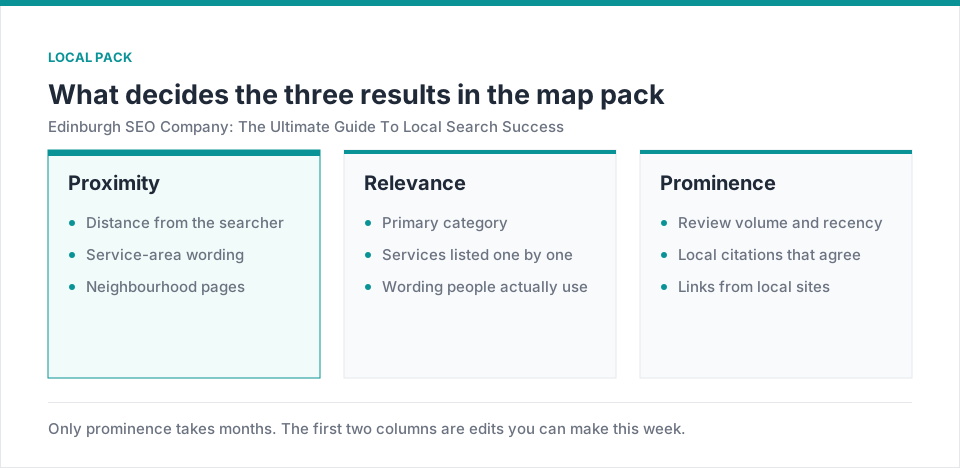
Local intent dominates many Edinburgh searches. People look for services that are physically near them, with proximity signals (Maps, GBP activity, and local citations) shaping the likelihood of a business appearing in the coveted local pack or map results. A locally focused Edinburgh SEO company brings intimate knowledge of key neighbourhoods such as New Town, Leith, Bruntsfield, Stockbridge, and the city’s business districts. This knowledge translates into precise keyword strategies, suburb-specific content, and nudges that improve proximity signals without diluting the core topic that defines your business. In practice, Edinburgh-focused optimisation aligns the hub-topic spine with the realities of Edinburgh’s geography, demographics, and consumer behaviour, producing signal coherence across LocalPDPs, Maps descriptors, GBP panels, glossaries, Zhidan prompts, and ambient captions.
When you collaborate with an Edinburgh specialist, expect a governance-friendly onboarding that creates auditable signal lineage from day one. What regulators, advertisers, and senior stakeholders increasingly demand are delta histories, What-If parity dashboards, and a clear traceable path from discovery to conversion. This Part 1 lays the groundwork for the systematic, transparent activation that Part 2 and beyond will build upon, ensuring Edinburgh businesses can scale locally while maintaining a robust city-wide ROI narrative.
What An Edinburgh SEO Company Delivers
A capable Edinburgh SEO partner combines six core capabilities into a coherent programme, each designed to reinforce the hub-topic spine while responding to Edinburgh’s distinctive market rhythm:
- Technical Excellence: Robust site architecture, fast page loads, mobile optimisation, and structured data that support accurate perception and indexing of Edinburgh-specific content.
- On-Page Optimisation: Page-level optimisation that harmonises with the hub-topic spine, ensuring that titles, headers, and meta descriptions reflect Edinburgh’s local intent while maintaining topical coherence across all surfaces.
- Content Strategy: Suburb-focused content plans, service pages tailored to Edinburgh audiences, and locally relevant blog topics that deepen topical authority without fragmenting signals.
- Local Listings And GBP Management: Consistent NAP data, optimised Google Business Profile entries, and proximity cues that drive traffic to LocalPDPs and Maps surfaces.
- Link Building And Digital PR: High-quality, Edinburgh-relevant backlinks and local citations that reinforce authority and proximity signals within Edinburgh’s ecosystem.
- Analytics, Dashboards, And Governance: What-If parity dashboards, delta histories, and regulator-ready reporting that demonstrate how surface activity contributes to city-wide ROI.
Onboarding Essentials For Edinburgh Clients
Onboarding should set a regulator-friendly tone from the start. Begin with a baseline audit that checks hub-topic spine alignment across LocalPDPs, Maps descriptors, GBP attributes, glossaries, Zhidan prompts, and ambient captions. Establish surface ownership so each team understands their responsibilities and how changes ripple through six signal surfaces. Create delta histories to document migrations and nuances for regulator replay. Build What-If parity dashboards to forecast cross-surface journeys before publishing. This approach not only satisfies governance expectations but also yields a clear path to scalable growth across Edinburgh’s suburbs and language variations.
Anchor Points For Immediate Action
- Conduct a baseline audit across LocalPDPs, Maps descriptors, GBP, glossaries, Zhidan prompts, and ambient captions to ensure topic_id alignment and surface ownership.
- Publish a regulator-ready crosswalk linking all six surfaces to the hub-topic spine, with locale context for each surface.
- Set up delta histories and What-If parity dashboards to forecast cross-surface journeys before any major publish.
Next Steps And How To Start
To begin with a practical Edinburgh-focused engagement, visit EdinburghSEO.org's services page to explore Edinburgh-specific SEO services, and book a consultation via the contact page. The aim is to establish a clear, auditable path from discovery to conversion, anchored by the hub-topic spine and local signals that matter most to Edinburgh audiences. For foundational guidance that aligns with global best practices, reference Google’s SEO Starter Guide while tailoring it to Edinburgh’s six-surface governance model.
As you plan, keep in mind the importance of translation attestations, local terminology consistency, and regulator-ready documentation. These elements ensure your Edinburgh programme remains auditable and scalable as the city grows and evolves.
What Does An Edinburgh SEO Company Do? (Part 2 Of 13)
Edinburgh’s local search landscape is shaped by a mix of historic districts, thriving businesses, a strong university presence, and a vibrant tourism economy. An Edinburgh-based SEO partner brings granular understanding of the city’s suburbs, streets, and consumer behaviours, translating local context into scalable search strategy. This Part 2 outlines the practical functions of an Edinburgh SEO company, showing how six-surface governance and a hub-topic spine (topic_id) inform every activity from technical setup to local activation. By connecting Edinburgh-specific intent with robust governance, you build durable visibility that translates into inquiries, visits, and revenue across LocalPDPs, Maps descriptors, GBP panels, glossaries, Zhidan prompts, and ambient captions. For Edinburgh-focused guidance and service details, explore EdinburghSEO.org’s Edinburgh-specific SEO Services page.
Core Capabilities In Edinburgh SEO
- Technical SEO: Build a scalable, Edinburgh-aware technical foundation with a cohesive data layer, hub-topic mappings, fast page speeds, mobile optimisation, and structured data that reliably communicates topic_id across all six surfaces.
- On-Page Optimisation: Align titles, headers, meta descriptions, and body content to the Edinburgh hub-topic spine while adapting to local intents and neighbourhood nuances.
- Content Strategy: Develop a city-centric content calendar featuring Edinburgh suburbs (e.g., Old Town, New Town, Leith, Bruntsfield, Stockbridge) and services that reflect local demand, ensuring signals remain coherent to topic_id across surfaces.
- Local Listings And GBP Management: Maintain accurate NAP data, optimise Google Business Profile entries, and manage proximity cues that drive Maps and LocalPDP traffic toward Edinburgh-focused conversions.
- Link Building And Digital PR: Acquire high-quality, Edinburgh-relevant backlinks and local citations that reinforce authority and proximity within Edinburgh’s ecosystem.
- Analytics, Dashboards, And Governance: Implement regulator-ready reporting, delta histories, and What-If parity dashboards that demonstrate how surface activity contributes to Edinburgh-wide ROI.
Onboarding Essentials For Edinburgh Clients
Onboarding should establish governance clarity from day one. Start with a baseline audit that checks hub-topic spine alignment across LocalPDPs, Maps descriptors, GBP attributes, glossaries, Zhidan prompts, and ambient captions. Define surface ownership so each team understands responsibilities and how changes ripple through six signal surfaces. Create delta histories to document migrations and locale notes, and build What-If parity dashboards to forecast cross-surface journeys before publishing. This regulator-friendly onboarding sets a reproducible foundation for scalable growth in Edinburgh’s suburbs and language variations.
Anchor Points For Immediate Action
- Conduct a baseline audit across LocalPDPs, Maps descriptors, GBP attributes, glossaries, Zhidan prompts, and ambient captions to ensure topic_id alignment and surface ownership.
- Publish a regulator-ready crosswalk linking all six surfaces to the hub-topic spine, with locale context for each surface.
- Set up delta histories and What-If parity dashboards to forecast cross-surface journeys before any major publish.
Next Steps And How To Start
To begin a practical Edinburgh-focused engagement, visit EdinburghSEO.org’s Edinburgh-specific SEO Services page to explore tailored services, and book an initial consultation via the Edinburgh contact page. The aim is to establish a regulator-ready, auditable path from discovery to conversion, anchored by the hub-topic spine and local signals that matter to Edinburgh audiences. For foundational guidance aligned with global best practices, reference Google’s SEO Starter Guide while adapting it to Edinburgh’s six-surface governance model.
As you plan, prioritise translation attestations, local terminology consistency, and regulator-ready documentation to keep your Edinburgh programme auditable and scalable as the city evolves. This Part 2 sets the stage for Parts 3 through 12, translating governance into suburb-specific activation across LocalPDPs, Maps descriptors, GBP panels, glossaries, Zhidan prompts, and ambient captions on EdinburghSEO.org.
Local SEO in Edinburgh: Targeting the Local Audience
Edinburgh presents a distinctive local search landscape that blends historic districts, a thriving visitor economy, and a growing resident base. For Edinburgh-based businesses, local intent is not a guess—it is the primary driver of organic visibility. A dedicated Edinburgh SEO company understands the city’s neighbourhoods, rhythms, and consumer behaviours, translating that knowledge into scalable, auditable strategies. By aligning all six signal surfaces to a single hub-topic spine (topic_id), Edinburgh-focused programmes deliver durable local visibility that translates into inquiries, visits, and conversions while preserving the authenticity of Edinburgh’s locale signals across LocalPDPs, Maps descriptors, Google Business Profile panels, glossaries, Zhidan prompts, and ambient captions. This Part 3 continues the journey from Part 1 and Part 2 by diving into Edinburgh’s local advantages and practical activation steps.
The Edinburgh Local Advantage
Local searches in Edinburgh are highly proximate and intent-driven. People expect convenient, near-by services, guides to neighbourhoods like New Town, Leith, Stockbridge, Bruntsfield, and the Old Town, and clear indications of availability. An Edinburgh-focused SEO programme uses the hub-topic spine to knit together signals from LocalPDPs, Maps descriptors, GBP panels, glossaries, Zhidan prompts, and ambient captions, ensuring that a single city-wide topic_id remains coherent as content expands across suburbs. In practice, this means crafting suburb-specific LocalPDPs that still feed the same core topic, so proximity signals reinforce rather than fragment the ranking tapestry.
Governance-driven onboarding sets the stage for auditable growth. Regulators now expect delta histories, What-If parity dashboards, and transparent signal provenance from discovery to conversion. By starting with Edinburgh-specific baselines and a clear surface ownership map, teams can demonstrate how local pages, maps data, GBP activity, and local-language content work together to improve city-wide ROI. For practical resources and Edinburgh-oriented guidance, visit EdinburghSEO.org’s Edinburgh-specific SEO Services.
Maps, GBP Optimisation, And Proximity Signals In Edinburgh
Maps descriptors and Google Business Profile (GBP) content act as the frontline for Edinburgh’s local journeys. Optimising GBP with accurate categories, hours, service areas, and regular posts anchors local intent to the hub-topic spine. Proximity cues—people searching near Edinburgh city centre or inside neighbourhoods—drive traffic to LocalPDPs and GBP links. A regulator-ready Edinburgh programme documents surface-level changes and tie them to topic_id, enabling What-If parity dashboards to forecast cross-surface journeys before publishing. Edinburghexperts emphasise a disciplined cadence of updates to GBP posts, photos, and Q&As that reflect Edinburgh’s distinct neighbourhoods and seasonal events.
As part of onboarding, establish a cross-surface crosswalk that maps every update on LocalPDPs, Maps descriptors, and GBP panels back to topic_id with locale context. This makes it easier for regulators to replay the journey from search to conversion and to understand how Edinburgh’s local signals drive ROI. For actionable Edinburgh resources, explore EdinburghSEO.org’s Edinburgh SEO Services.
Reviews, Reputation And Local Engagement
Reviews and ratings remain powerful trust signals for Edinburgh audiences. A regulator-ready strategy uses timely responses, sentiment monitoring, and proactive prompts to gather authentic feedback. Integrate Q&As from GBP into LocalPDPs and Maps descriptors to address suburb-specific questions and prevent information gaps. Maintain delta histories that log review-related changes and pathways to improvements. By coordinating reviews with hub-topic signals, Edinburgh businesses can strengthen local authority and improve rankings across six surfaces while preserving locale provenance.
Practical onboarding templates for Edinburgh can be found on EdinburghSEO.org, reinforcing how to align review management, Q&As, and local content with the hub-topic spine.
On-Page Content Strategy For Edinburgh Audiences
A robust Edinburgh content plan balances service-focused pages with suburb-guided topics and council-endorsed calendars. Create LocalPDPs for key districts (New Town, Leith, Stockbridge, Bruntsfield, Murrayfield), ensure Maps descriptors reflect near-me and service-area intent, and publish GBP updates that mirror the on-page content. Glossaries codify Edinburgh-specific terminology and local phrasing, while Zhidan prompts provide locale-aware AI guidance that helps surface AI outputs stay tethered to topic_id. Ambient captions and image alt text should embed local context to reinforce hub-topic signals. A well-governed content calendar keeps signals coherent as Edinburgh expands into new suburbs and languages.
Onboarding resources on EdinburghSEO.org provide practical templates for alignment, including how to document translations attestations and locale notes so regulator replay remains possible. For comprehensive guidance, visit Edinburgh SEO Services.
Next Steps And Practical Quick Wins
- Lock the hub-topic spine (topic_id) as the single source of truth and assign surface owners for LocalPDPs, Maps descriptors, GBP, glossaries, Zhidan prompts, and ambient captions.
- Publish a regulator-ready crosswalk linking all Edinburgh surfaces to topic_id with locale context for auditability.
- Establish delta histories for migrations and implement What-If parity dashboards to forecast cross-surface journeys before publishing.
- Launch initial LocalPDPs and Maps descriptors in priority Edinburgh suburbs, ensuring alignment with the hub-topic spine.
- Schedule a formal onboarding kickoff with Edinburgh’s team via the Edinburgh contact page to tailor six-surface activation cadences and governance templates.
For practical onboarding resources and governance templates tailored to Edinburgh, explore EdinburghSEO.org’s Edinburgh Services section and reference Google’s SEO Starter Guide for baseline practices adapted to a six-surface governance model.
Core Services Offered By An Edinburgh SEO Company
Edinburgh businesses rely on a full-stack approach to search visibility. An Edinburgh-based SEO company delivers a clearly defined service mix that respects Edinburgh’s markets, seasonal nuances, and neighbourhood signals. Grounded in the six-surface governance framework and a central hub-topic spine (topic_id), this Part 4 outlines the core services and explains how they interlock to build durable visibility. For practical Edinburgh-specific templates and governance resources, explore EdinburghSEO.org’s Edinburgh SEO Services page.
Key Service Pillars In Edinburgh SEO
A disciplined Edinburgh programme blends six foundational capabilities into a cohesive activation plan. Each capability reinforces the hub-topic spine while honouring Edinburgh’s local rhythm and neighbourhood distinctiveness, from Old Town and Northbridge to Leith and Bruntsfield.
- Technical SEO: Build a scalable, Edinburgh-aware technical foundation with a single data layer and topic_id mappings that reliably communicate across LocalPDPs, Maps descriptors, GBP panels, glossaries, Zhidan prompts, and ambient captions.
- On-Page Optimisation: Align page elements to the Edinburgh hub-topic spine while tailoring titles, headers, and meta descriptions to local intent and suburb-level context.
- Content Strategy: Develop a city-focused content calendar featuring Edinburgh districts (Old Town, New Town, Leith, Stockbridge, Morningside) and services that reflect local demand, ensuring signals stay coherent to topic_id across surfaces.
- Local Listings And GBP Management: Keep NAP data precise, optimise Google Business Profile entries, and manage proximity cues that drive Maps and LocalPDP traffic toward Edinburgh conversions.
- Link Building And Digital PR: Acquire high-quality, Edinburgh-relevant backlinks and local citations that bolster authority and strengthen proximity signals within Edinburgh’s ecosystem.
- Analytics, Dashboards, And Governance: Implement regulator-ready reporting, delta histories, and What-If parity dashboards that demonstrate how surface activity contributes to Edinburgh-wide ROI.
Onboarding Essentials For Edinburgh Clients
Onboarding should establish governance clarity from day one. Start with a baseline audit that checks hub-topic spine alignment across LocalPDPs, Maps descriptors, GBP attributes, glossaries, Zhidan prompts, and ambient captions. Define surface ownership so each team understands responsibilities and how changes ripple through six signal surfaces. Create delta histories to document migrations and locale notes, and build What-If parity dashboards to forecast cross-surface journeys before publishing. This regulator-friendly onboarding sets a reproducible foundation for scalable growth in Edinburgh’s suburbs and language variations.
Anchor Points For Immediate Action
- Confirm the hub-topic spine (topic_id) and assign surface owners for LocalPDPs, Maps, GBP, glossaries, Zhidan prompts, and ambient captions.
- Publish a regulator-ready crosswalk linking all Edinburgh surfaces to topic_id with locale context for auditability.
- Set up delta histories and What-If parity dashboards to forecast cross-surface journeys before any major publish.
Next Steps And How To Start
To initiate an Edinburgh-focused engagement, visit EdinburghSEO.org’s Edinburgh SEO Services page to explore tailored services, and book a consultation via the contact page. The aim is regulator-ready, auditable growth that aligns with the hub-topic spine and local signals that Edinburgh audiences expect. For foundational guidance, reference Google’s SEO Starter Guide and adapt it to Edinburgh’s six-surface governance model. Remember to incorporate translation attestations, locale consistency, and regulator-ready documentation to keep your programme auditable as Edinburgh grows.
This Part 4 lays the groundwork for Parts 5 through 13, translating governance into practical Edinburgh activation across LocalPDPs, Maps descriptors, GBP panels, glossaries, Zhidan prompts, and ambient captions on EdinburghSEO.org.
The SEO Audit And Discovery Phase (Edinburgh Edition) – Part 5 Of 13
In a regulator-ready framework built around a single hub-topic spine (topic_id) and the six surfaces that matter for Edinburgh businesses, the Audit and Discovery phase marks the moment when strategy becomes evidence. This Part 5 focuses on establishing a precise, auditable baseline for your Edinburgh SEO programme, aligning technical health, on-page signals, local intent, and competitive context. The outcome is a regulator-ready discovery pack that informs surface briefs, onboarding, and governance, while pinpointing early opportunities to improve LocalPDPs, Maps descriptors, GBP panels, glossaries, Zhidan prompts, and ambient captions embedded in EdinburghSEO.org’s ecosystem.
The Purpose Of An Edinburgh Audit
The Edinburgh audit establishes a baseline that ensures every surface remains cohesively aligned to topic_id while reflecting local realities. It translates the city’s distinctive districts—Old Town, New Town, Leith, Stockbridge, Morningside—into signal opportunities that can be traced across six surfaces. Regulators increasingly expect transparency in how signals migrate from discovery to conversion; a well-documented audit provides delta histories, What-If parity previews, and regulator-ready migration packs that support replay with locale context.
What To Audit In Edinburgh
Audit areas should cover both the technical and the market-facing surfaces, ensuring signals stay coherent under the hub-topic spine. Core focus areas include:
- Technical Foundation: crawlability, indexability, site speed, mobile usability, and structured data coverage that reliably communicates topic_id across LocalPDPs and GBP pages.
- Hub-Topic Spine Alignment: verify that all six surfaces reference the same topic_id and reflect Edinburgh-specific locale context and suburb signals.
- Local Signal Quality: NAP consistency, proximity cues, and Maps proximity signals that drive LocalPDPs and GBP interactions.
- Content Coherence: on-page content, glossary terms, Zhidan prompts, and ambient captions should reinforce the hub-topic spine rather than drift into isolated topic islands.
- Governance Artifacts: delta histories, What-If parity dashboards, and regulator-ready migration packs ready for audit and replay.
Baseline Data Collection And Stakeholder Interviews
Begin with stakeholder interviews across marketing, IT, and local operations to capture Edinburgh-specific priorities, language variants, and neighborhood signals. Combine interviews with a technical crawl, analytics extraction, and competitive benchmarking to build a complete baseline. The discovery output should include a city-wide ROI narrative aligned to topic_id and surface-level briefs that regulators can audit easily.
As you document, store evidence in a regulator-friendly format: change logs, locale notes, and decision rationales tied to surface changes. This creates an auditable trail from discovery through to publish and helps justify future surface expansions into new Edinburgh suburbs or language variants.
Competitor Benchmarking In Edinburgh
Assess primary Edinburgh competitors’ performance across LocalPDPs, Maps descriptors, GBP panels, glossaries, Zhidan prompts, and ambient captions. Identify signal gaps and opportunities where your topic_id can gain proximity signals, improve map presence, or strengthen content authority in district hubs such as Old Town or Leith. The audit should quantify relative strengths and reveal where governance improvements can close gaps without sacrificing hub-topic fidelity.
Read next: SEO company Edinburgh: what to ask · SEO marketing in Edinburgh: a local guide
Deliverables From The Edinburgh Audit
The discovery phase should yield a compact, regulator-ready package that includes:
- Hub-Topic Spine Registry: The canonical topic_id with scope and cross-surface mappings for LocalPDPs, Maps descriptors, GBP, glossaries, Zhidan prompts, and ambient captions.
- Surface Ownership Map: A clear ownership chart for LocalPDPs, Maps descriptors, GBP, glossaries, Zhidan prompts, and ambient captions.
- Delta Histories: Migration rationales, locale notes, and change logs attached to topic_id activations.
- What-If Parity Dashboards: Cross-surface journey simulations to forecast publish impact and ROI effects.
- Translations Attestations: Locale fidelity validation for multilingual signals across surfaces.
Next Steps After The Audit
With baseline data in place, proceed to lock the hub-topic spine, assign surface owners, and begin the regulator-ready onboarding for Edinburgh. Use EdinburghSEO.org's Edinburgh SEO Services as the practical next step to translate audit findings into six-surface activation plans and governance templates. The audit should inform the initial LocalPDPs and Maps descriptors, ensuring a coherent signal path from the outset. For baseline practices and Edinburgh-specific onboarding resources, visit the Edinburgh Services page on EdinburghSEO.org and reference Google’s SEO Starter Guide for foundational alignment.
Keyword Research For Edinburgh (Part 6 Of 13)
Edinburgh's local search environment rewards precise keyword discovery that reflects the city's distinct neighbourhoods, cultural calendar, and business mix. For an Edinburgh SEO company, keyword research is not a single list, but a living framework that informs surface activation across LocalPDPs, Maps descriptors, GBP panels, glossaries, Zhidan prompts, and ambient captions. This Part 6 develops a structured approach to identifying Edinburgh-relevant terms, understanding user intent, and prioritising long-tail phrases with local modifiers that translate into measurable ROI. The aim is to build a scalable keyword strategy that remains faithful to Edinburgh's geography and signals while feeding the hub-topic spine (topic_id) that governs all six surface surfaces.
The Edinburgh Keyword Research Approach
Begin with a foundation built around the hub-topic spine. Identify core service areas that define your Edinburgh business, then map primary keywords to the six-surface model. Prioritise terms with clear Edinburgh intent, such as city-wide queries and suburb-specific modifiers, while maintaining topical cohesion so signals reinforce rather than fragment the overall optimisation.
Adopt a phased process: discover, validate, and prioritise. Discover involves gathering seed terms from your service pages, competitor activity, and local forums. Validate means testing search volume, intent alignment, and the practicality of content creation for Edinburgh audiences. Prioritise terms with legitimate conversion potential and room to scale across LocalPDPs, Maps descriptors, GBP, glossaries, Zhidan prompts, and ambient captions.
Core Keyword Groups For Edinburgh
Organise keywords into logical groups that map to each surface while preserving hub-topic fidelity. Example groups include:
- Service Pages And Core Offerings: Edinburgh SEO services, local SEO packages, technical SEO Edinburgh, content optimisation Edinburgh.
- Local Intent And Neighbourhoods: Edinburgh New Town SEO, Leith SEO services, Stockbridge local optimisation, Bruntsfield marketing online.
- Purchase And Action Keywords: Edinburgh SEO quote, SEO package Edinburgh, call for pricing Edinburgh, book SEO audit Edinburgh.
- Neighbourhood Guides And Local Content: Edinburgh suburbs guide, best SEO company Edinburgh near me, festival season SEO Edinburgh.
- Technical And Audit-Oriented Terms: site speed Edinburgh, structured data Edinburgh, schema Edinburgh.
Each keyword group should feed a corresponding surface strategy. For example, primary terms anchor LocalPDPs and GBP panels, while long-tail and local modifiers populate Maps descriptors, glossaries, Zhidan prompts, and ambient captions. This alignment is crucial to maintain a coherent signal ecosystem under topic_id.
Local Modifiers And User Intent Mapping
Describe intent using three broad categories: informational, navigational, and transactional. Then attach local modifiers to reflect Edinburgh’s geography and culture. Examples include suburb names (Leith, New Town, Stockbridge, Morningside), landmarks (Edinburgh Castle, Royal Mile), and event-driven terms (Edinburgh Festival Fringe, Christmas markets). This enhances semantic cohesion across surfaces and helps combat keyword cannibalisation by clarifying which surface should address which intent type.
Translate intent into content opportunities. Informational terms become blog topics and educational pages; navigational terms guide users toward LocalPDPs and GBP actions; transactional terms drive service pages and price-focused content. Ensure every local modifier is contextually meaningful and tied to topic_id so regulators can replay the journey with locale fidelity.
Turning Keywords Into Six-Surface Activation
Take each keyword group and assign it to the most appropriate surface while preserving a single hub-topic spine. Examples:
- LocalPDPs: primary service keywords plus suburb modifiers, e.g., "Edinburgh SEO services Leith".
- Maps Descriptors: proximity and near-me keywords, e.g., "SEO near me in Edinburgh".
- GBP Content: service hours and location-specific promos tied to topic_id, e.g., "Edinburgh SEO agency near Royal Mile".
- Glossaries: local terminology and translations that align with Edinburgh culture, e.g., glossary terms for regional dialect or industry jargon.
- Zhidan Prompts: locale-aware prompts to guide AI outputs toward Edinburgh context and topic_id.
- Ambient Captions: image alt text and captions with Edinburgh cues to reinforce signals across surfaces.
This disciplined mapping ensures every surface reinforces the same topic_id while accommodating Edinburgh’s unique language and local nuances. The governance artefacts created during the audit will support this alignment and ease regulator replay.
Tools, Data Sources And Validation
Leverage trusted keyword research platforms to validate Edinburgh-specific terms. Use Google Keyword Planner for baseline volumes, Google Trends for seasonal Edinburgh patterns (Festival Season, Summer tourism, university cycles), and competitive analysis with reputable tools such as Ahrefs or SEMrush to gauge difficulty and opportunity. Cross-check results with Google Search Console to confirm actual performance signals and impressions from Edinburgh users. Maintain locale attestations and translation notes to preserve language fidelity across six surfaces.
For Edinburgh-specific onboarding resources, visit Edinburgh SEO Services on EdinburghSEO.org. Regulators benefit from a clear, auditable data trail showing how keywords moved from discovery to surface activation, all anchored to topic_id.
Next Steps: From Discovery To Activation
With a robust Edinburgh keyword map in hand, the next phase is to translate insights into concrete surface briefs. Create LocalPDP drafts, update Maps descriptors with relevant near-me terms, refresh GBP attributes to reflect the centre’s local demand, and populate glossaries, Zhidan prompts, and ambient captions with Edinburgh context. Use the hub-topic spine to govern these updates and preserve the ability to replay changes in regulator simulations. For practical onboarding resources, consult EdinburghSEO.org's Edinburgh Services page and the contact page to initiate a keyword-driven engagement.
On-Page and Technical SEO Foundations for Edinburgh
Edinburgh businesses rely on robust on-page optimisation and a technically sound foundation to unlock durable visibility. When the hub-topic spine (topic_id) guides every surface, Edinburgh-focused sites gain coherent signals across LocalPDPs, Maps descriptors, Google Business Profile panels, glossaries, Zhidan prompts, and ambient captions. This Part 7 outlines practical, regulator-ready foundations that ensure fast, accessible, and crawled content that resonates with Edinburgh’s distinctive neighbourhoods and consumer behaviours. For practical templates and Edinburgh-specific onboarding resources, explore EdinburghSEO.org’s Edinburgh SEO Services and book a consult via the contact page.
Technical SEO Foundations In Edinburgh
A solid technical base ensures search engines can discover, index, and understand Edinburgh-specific content without friction. The following fundamentals should be addressed in every Edinburgh programme, aligned to topic_id across the six surfaces.
- Site architecture and hub-topic mappings: Build a scalable information architecture that maps every surface to the central topic_id, with clear breadcrumb trails and logical URL hierarchies that reflect Edinburgh’s districts and services.
- Mobile-first and Core Web Vitals: Prioritise mobile speed, interactive readiness, and visual stability. In Edinburgh, where many searches occur on the move or from heritage streets, performance directly influences user satisfaction and local ranking signals.
- Structured data and local signals: Implement JSON-LD for LocalBusiness or Organisation, Service, BreadcrumbList, and FAQPage where relevant. Ensure the Edinburgh address is accurate and consistent across LocalPDPs, Maps, and GBP.
- Crawling, indexing and canonicalisation: Use robots.txt and XML sitemaps to prioritise Edinburgh-specific pages. Apply canonical tags where necessary to prevent signal dilution across suburb variants.
- Internationalisation and locale fidelity: If Edinburgh content targets multiple languages or dialects, establish clear hreflang rules and locale notes that feed into six-surface governance without fragmenting the hub-topic spine.
On-Page Optimisation For Edinburgh Audiences
On-page elements must align with the Edinburgh hub-topic spine while responding to local intent. The following practices help maintain signal coherence and improve conversion potential across the six surfaces.
- Title tags and meta descriptions: Craft Edinburgh-forward titles that incorporate district names (for example, Leith, Old Town) and service terms. Keep meta descriptions informative, localised, and within recommended lengths to improve click-through while preserving topical integrity across surfaces.
- Headings and content structure: Use a clear hierarchy that anchors the hub-topic spine. Subsections should reflect Edinburgh neighbourhoods and services, maintaining a logical flow that supports cross-surface signals rather than creating topic silos.
- Internal linking and surface connectivity: Build a cohesive network of internal links from LocalPDPs to Maps descriptors and GBP content, all referring back to topic_id to reinforce signal provenance.
- Images, alt text and accessibility: Add Edinburgh-contextual alt text and image captions that reinforce the hub-topic spine and help accessibility for local searchers.
Structured Data, Local Signals, And Edinburgh Schema
Structured data is the bridge between Edinburgh’s real-world signals and search engine understanding. Beyond basic LocalBusiness markup, Edinburgh programmes should consider Service, Location, and Breadcrumb schemas, plus FAQPage where appropriate to address common suburb-specific questions. Ensure a consistent address and contact details across LocalPDPs, Maps descriptors, and GBP panels so proximity and provenance signals remain synchronised.
Six-surface governance benefits from a disciplined approach to schema: it supports regulator-ready migrations, enables precise journey replay, and helps search engines connect intent with Edinburgh-specific local contexts.
Governance Artefacts For Edinburgh On-Page And Technical
To keep Edinburgh content auditable and scalable, maintain artifacts that regulators can replay. Key artefacts include delta histories for page updates, What-If parity dashboards for cross-surface impact previews, and locale notes that document language variants or district-specific terminology. These governance practices ensure continuity from discovery through to conversion while preserving Edinburgh’s locale provenance.
Next Steps And Practical Quick Wins
- Lock the hub-topic spine (topic_id) as the single source of truth and assign surface owners for LocalPDPs, Maps descriptors, GBP, glossaries, Zhidan prompts, and ambient captions.
- Review and optimise technical foundations: fix crawl errors, improve mobile speed, and implement necessary structured data for Edinburgh content.
- Update title tags, meta descriptions, and headings to reflect Edinburgh districts and services while maintaining hub-topic fidelity across surfaces.
- Prepare regulator-ready artefacts: delta histories, What-If parity dashboards, and locale notes for any upcoming publish or expansion into new Edinburgh suburbs.
For practical onboarding resources and governance templates tailored to Edinburgh, visit EdinburghSEO.org’s Edinburgh SEO Services and book a consultation via the contact page. Refer to Google’s foundational guidelines for SEO and adapt them to Edinburgh’s six-surface governance model.
Content Strategy And Local Content For Edinburgh
Edinburgh’s unique blend of historic districts, a thriving visitor economy, and a growing resident base makes content strategy a naturally local endeavour. For an Edinburgh-based business, content isn’t a series of generic pages; it is a carefully choreographed set of signals that speaks to neighbourhoods, timelines, and local needs. Aligning content with the hub-topic spine (topic_id) and the six-surface governance model ensures every surface—LocalPDPs, Maps descriptors, Google Business Profile panels, glossaries, Zhidan prompts, and ambient captions—contributes to a coherent, regulator-ready story. The Edinburgh focus, reinforced by EdinburghSEO.org, centres on sustainable, auditable growth that resonates with both search engines and local customers.
In this Part 8, we translate the broader governance framework into practical content strategies. The aim is to publish locally authentic content that strengthens topical authority, improves map presence, and converts inquiries into customers, all while maintaining clear traceability back to the hub-topic spine. This approach supports Edinburgh’s diverse suburbs—from New Town to Leith and Stockbridge—ensuring signals stay coherent as you scale. For practical, Edinburgh-specific templates and onboarding resources, you can explore EdinburghSEO.org’s Edinburgh SEO Services page.
The Content Calendar: Suburb-Driven Topics
A successful Edinburgh programme starts with a purpose-built content calendar that maps suburb-specific topics to the six surfaces. The calendar should balance evergreen service pages with timely, location-aware content tied to Edinburgh’s seasonal events and council calendars. For example, content blocks around popular districts like Leith, New Town, and Stockbridge can feed local landing pages while supporting nearby neighbourhood guides. The hub-topic spine anchors all of these, so signals remain coherent even as content expands to new suburbs or new languages.
- Establish Core Suburb Clusters: identify the main districts and their service needs, then create LocalPDPs that integrate with Maps descriptors and GBP updates.
- Seasonal And Event Content: align posts with Edinburgh’s cultural calendar (festivals, markets, university terms) to capture timely intent and boost topical relevance.
- Guides And How-To Content: develop city guides, local service primers, and neighbourhood FAQs that address near-me questions and common suburb-specific challenges.
- Language And Locale Readiness: plan translations and locale notes to cover multilingual audiences while preserving topic_id consistency across surfaces.
Content Formats: What To Create And Where It Lives
Every format should reinforce the hub-topic spine while taking advantage of Edinburgh’s local context. Here’s how to distribute content across the six surfaces:
- LocalPDPs: service pages and suburb-focused pages that pair core offerings with district modifiers (for example, Edinburgh SEO services Leith).
- Maps Descriptors: micro-content and proximity-led terms that support near-me searches and drive traffic to LocalPDPs.
- GBP Content: posts, updates, and Q&A snippets that reflect local hours, areas, and nearby attractions to improve engagement signals.
- Glossaries: local terminology, industry phrases, and translated terms to ensure consistency across surfaces and languages.
- Zhidan Prompts: locale-aware prompts that guide AI outputs to Edinburgh context, helping outputs stay aligned with topic_id.
- Ambient Captions: image alt text and captions that embed Edinburgh cues to reinforce hub-topic signals across surfaces.
By mapping each content format to a surface, you preserve a single hub-topic spine while delivering surface-specific signals that improve relevance and user satisfaction.
Content Governance: Translations Attestations And Locale Notes
Governance requires clear ownership of content across six surfaces and a robust approach to translations. Translation attestations verify locale fidelity and ensure consistent terminology across English and any Edinburgh dialect considerations. Maintain locale notes that capture spelling variations, district-specific references, and regulatory language variations. These artefacts support regulator replay, making it easy to trace content decisions back to the hub-topic spine.
Onboarding templates from EdinburghSEO.org can help standardise language rules and content production workflows. Regularly review glossaries and Zhidan prompts to ensure outputs remain aligned with Edinburgh context and topic_id, particularly when expanding into new suburbs or languages.
Measuring Content Performance Across Edinburgh Surfaces
Content performance should feed into the six-surface framework with clear, auditable metrics. Track per-surface engagement, conversion signals, and proximity-driven interactions, then roll them up to city-wide insights tied to topic_id. The aim is to demonstrate how suburb-focused content drives LocalPDP visits, Maps interactions, and GBP engagement, all while preserving a consistent Edinburgh voice across surfaces.
- Surface-Level Metrics: page views, time on page, scroll depth, form submissions, and mobile speed per surface.
- Cross-Surface Journey Metrics: user paths from Maps proximity to LocalPDPs and GBP interactions, anchored to topic_id.
- City-Wide ROI Metrics: inquiries, consultations, bookings, and revenue attributed to organic search, aggregated by suburb.
Dashboards should reflect delta histories and What-If parity previews to enable regulator replay before major publishes. Leverage Edinburgh-specific data from EdinburghSEO.org and Google’s SEO Starter Guide as baseline references, adapting them to the six-surface governance model.
Next Steps: How To Start With EdinburghSEO.org
To translate this content strategy into action, visit EdinburghSEO.org’s Edinburgh SEO Services page to explore Edinburgh-specific content services and book a consultation via the contact page. Begin with a regulator-ready onboarding package that locks the hub-topic spine, assigns surface owners, and builds delta histories for future audits. Use Google’s SEO Starter Guide as a baseline, then tailor it to Edinburgh’s six-surface governance model. Emphasise Translation Attestations, locale notes, and a clear content calendar to deliver consistent, provable improvements in Edinburgh’s local visibility.
This Part 8 establishes the practical blueprint for content strategy and local content that supports durable growth across LocalPDPs, Maps descriptors, GBP panels, glossaries, Zhidan prompts, and ambient captions. For ongoing guidance and Edinburgh-specific templates, explore Edinburgh SEO Services on EdinburghSEO.org.
Link Building And Digital PR For Edinburgh Businesses (Part 9 Of 13)
Off-page signals play a pivotal role in Edinburgh's local search ecosystem. When aligned with the hub-topic spine (topic_id) and the six-surface governance model, high-quality backlinks and credible digital PR lift authority, proximity, and trust across LocalPDPs, Maps descriptors, Google Business Profile panels, glossaries, Zhidan prompts, and ambient captions. This Part 9 focuses on practical, Edinburgh-specific off-page strategies that create durable visibility, while ensuring regulator-ready signal provenance and auditable journey paths from discovery to conversion.
Edinburghseo.org anchors these practices in a localisation framework that emphasises local partnerships, university and industry collaborations, and culturally resonant storytelling. By building credible Edinburgh-facing links and mentions, you can boost local pack presence, enhance map signals, and improve overall topical authority without fracturing signal coherence across surfaces.
Off-Page SEO And Digital PR Best Practices For Edinburgh
Off-page efforts should reinforce the hub-topic spine while reflecting Edinburgh's distinctive discourse. Prioritise backlinks from Edinburgh-based domains with strong topical relevance, such as regional business associations, university publications, tourism boards, and city-specific trade press. Each link should connect to LocalPDPs or service pages and reference topic_id to preserve signal provenance across surfaces.
- Target credible Edinburgh outlets and sector-specific publications to secure editorial backlinks that amplify local authority and proximity signals. Connect these links to hub-topic pages to maintain signal coherence across LocalPDPs, Maps descriptors, and GBP content.
- Develop a local editorial calendar featuring Edinburgh-based stories, case studies, and data visualisations tied to neighbourhood clusters (Old Town, Leith, Stockbridge, Bruntsfield, Murrayfield) and to the hub-topic spine.
- Maintain robust local citations across directories with consistent NAP data, service areas, and proximity cues that reinforce Maps and LocalPDP engagement while tying back to topic_id.
- Rotate PR assets to align with six-surface briefs so that LocalPDPs, Maps descriptors, GBP posts, glossaries, Zhidan prompts, and ambient captions share a common Edinburgh context and locale notes.
- Always favour transparent, white-hat outreach. Regulators expect auditable trails, so document outreach dates, anchor text, target pages, and locale context in parity dashboards before publishing.
Backlinks And Local Authority Development
- Secure editorial backlinks from Edinburgh-focused outlets and regional industry publications that discuss topics linked to the hub-topic spine. Each backlink should point to LocalPDPs or service pages and anchor to topic_id.
- Form partnerships with Edinburgh-based business associations, chambers, and community portals to generate context-rich mentions that reflect suburb-level footprints.
- Publish data-backed local case studies and visual content (infographics, dashboards) that can be picked up by regional outlets, boosting both backlinks and local trust signals.
- Document every backlink event with delta histories, including date, anchor text, and city context; use parity dashboards to forecast cross-surface impacts before publishing.
Digital PR Playbook For Edinburgh
A well-constructed Digital PR plan complements on-page and technical work by delivering Edinburgh-relevant narratives that earn authoritative mentions across LocalPDPs, Maps descriptors, GBP panels, glossaries, Zhidan prompts, and ambient captions. Core components include:
- Story ideation aligned to Edinburgh neighbourhoods, service footprints, and local events that tie back to topic_id.
- Multi-channel distribution including regional press, business journals, industry blogs, and local influencers, all mapped to the hub-topic spine.
- Asset kits featuring suburb-specific case studies, data visuals, quotes, and local authority statements that can be repurposed for six surfaces.
- Measurement that links editorial placements to surface metrics, with delta histories showing how PR moves shift cross-surface signals and inquiries.
Run What-If parity dashboards before publication to forecast cross-surface journeys and regulator-readiness. For practical Edinburgh onboarding resources, visit EdinburghSEO.org and the Edinburgh SEO Services page for templates and playbooks.
Citations And NAP Consistency Across Listings
Accurate Name, Address, and Phone data across GBP, LocalPDPs, and Maps descriptors underpin strong local rankings. Implement a regulator-ready crosswalk that maps each surface to topic_id and stores locale context with every update. Automated checks help detect NAP drift, and delta histories log changes and rationale. Strategic local directories can contribute proximity signals when their listings reflect consistent NAP data linked to topic_id.
Operational steps include a canonical NAP registry, cross-surface checks, and alignment of service-area details with suburb clusters. When possible, ensure external citations are tied to hub-topic signals to enhance cross-surface coherence. For structured data and local signals, consult Edinburgh's onboarding resources via the Edinburgh SEO Services page.
Measuring Off-Page Impact And ROI
Assess how off-page and digital PR activities translate into Edinburgh inquiries, bookings, and revenue. Use delta histories and parity dashboards to quantify cross-surface contributions and to verify locale provenance. Tie external signal gains to the hub-topic spine so regulators can replay the journey from discovery to conversion with full context. Track city-wide ROI by suburb and surface, ensuring the six-surface ecosystem demonstrates durable growth as Edinburgh expands.
Practical targets include increases in local press mentions, high-quality Edinburgh backlinks, improved GBP engagement, and elevated LocalPDP traffic. For onboarding resources and Edinburgh-specific governance templates, visit EdinburghSEO.org’s Edinburgh SEO Services and reference Google’s SEO Starter Guide for baseline standards.
Measuring ROI And Key Metrics In Edinburgh SEO Programs (Part 10 Of 13)
In a regulator-ready, six-surface framework anchored to a hub-topic spine (topic_id), measurement connects surface activity to business outcomes for Edinburgh businesses. This Part 10 translates governance into auditable dashboards, delta histories, and What-If parity previews regulators can replay with locale context. For Edinburgh resources, visit EdinburghSEO.org's Edinburgh SEO Services to explore regulator-ready dashboards and surface-level reporting that keeps Edinburgh’s signals coherent as you scale across LocalPDPs, Maps descriptors, GBP panels, glossaries, Zhidan prompts, and ambient captions.
A Three-Layer KPI Architecture For Edinburgh
Adopt a three-layer KPI framework that mirrors the six-surface model while keeping topic_id constant. This structure ensures clarity for regulators and enables practical attribution across LocalPDPs, Maps descriptors, GBP panels, glossaries, Zhidan prompts, and ambient captions.
- Surface-Level Engagement KPIs: Per-surface visits, time on page, bounce rate, form submissions, and mobile performance across LocalPDPs, Maps descriptors, GBP-linked pages, glossaries, Zhidan prompts, and ambient captions.
- Cross-Surface Journey KPIs: User paths that traverse Maps proximity signals to LocalPDPs and GBP interactions, with topic_id binding to preserve locale provenance across surfaces.
- City-Wide ROI KPIs: Inquiries, bookings, revenue, and customer lifetime value attributed to organic search, aggregated by topic_id and rolled up into a city-wide ROI narrative.
Per Surface KPI Categories And Practical Targets
Define concrete targets per surface that feed Edinburgh-wide ROI narratives while preserving hub-topic fidelity. Example targets include:
- LocalPDPs: Suburb-page sessions and inquiry-to-lead conversions by Edinburgh district.
- Maps Descriptors: Near-me impressions and proximity-driven clicks directing users to LocalPDPs or GBP.
- GBP Panels: Profile views, calls, direction requests, and reviews aligned to topic_id and local proximity signals.
- Glossaries: Local terminology coverage and translation attestations ensuring cross-surface consistency.
- Zhidan Prompts: Locale-aware prompts that keep AI outputs tied to Edinburgh context and topic_id.
- Ambient Captions: Image alt text and captions embedding Edinburgh cues to reinforce hub-topic signals across surfaces.
This structured mapping ensures every surface contributes to the same topic_id while accommodating Edinburgh’s language and local nuances. Governance artefacts created during the audit support this alignment and simplify regulator replay.
Dashboards, Parity, And Delta Histories Cadence
Establish a cadence that aggregates per-surface metrics into a Roll-Up by topic_id and runs What-If parity dashboards before major publishes. Delta histories accompany migrations, preserving locale context for regulator replay. A recommended rhythm includes weekly surface health checks, bi-weekly governance reviews, and a monthly regulator-facing Roll-Up by topic_id.
- Weekly: surface health checks for LocalPDPs, Maps descriptors, GBP, glossaries, Zhidan prompts, and ambient captions.
- Bi-weekly: governance reviews of delta histories and parity dashboards.
- Monthly: regulator-facing Roll-Up by topic_id summarising cross-surface journeys and ROI signals.
What To Measure On Each Surface
Translate activity into a city-wide ROI narrative by detailing surface-specific metrics. Examples include:
- LocalPDPs: Suburb-page sessions, inquiry-to-lead conversions, and engagement depth by suburb cluster.
- Maps Descriptors: Near-me impressions, proximity-driven clicks, and routing actions to LocalPDPs or GBP.
- GBP Panels: Profile views, calls, direction requests, and reviews aligned to topic_id and local signals.
- Glossaries: Local terminology coverage and translation attestations across surfaces.
- Zhidan Prompts: Locale-specific engagement rates and prompt quality control to preserve topic_id context.
- Ambient Captions: Image alt text and local-context mentions reinforcing hub-topic signals.
Keep a regulator-friendly trail by tying every metric back to topic_id and locale context for replay.
Attribution And ROI Modelling Across The Six Surfaces
Align surface activity to a hub-topic spine for reliable attribution. Delta histories document migrations and locale notes, enabling regulators to replay the user journey from discovery to conversion. Apply a practical multi-touch framework with surface-specific weights, ensuring expansions into new Edinburgh suburbs or languages preserve the city-wide ROI narrative. Model ROI by linking surface activations to inquiries, bookings, and revenue, all stamped with topic_id.
Key steps include mapping each surface to topic_id, building a city-wide Roll-Up, integrating What-If parity dashboards for publish forecasts, and maintaining translations attestations to safeguard locale fidelity. For Edinburgh onboarding resources, visit Edinburgh SEO Services and reference Google's SEO Starter Guide for baseline guidance.
Pricing And Packages For Edinburgh SEO (Part 11 Of 13)
In a regulator-ready, six-surface framework anchored to the hub-topic spine (topic_id), pricing should be as transparent as the governance itself. Part 11 translates strategy into accessible, auditable investment options for Edinburgh businesses. The goal is to offer clear value, predictable ROI, and scalable activation across LocalPDPs, Maps descriptors, GBP panels, glossaries, Zhidan prompts, and ambient captions, all aligned to the Edinburgh market and language realities. This section also maps typical package tiers to Edinburgh needs so teams can forecast cost, scope, and outcomes with confidence. For more details on Edinburgh-specific services and onboarding, explore the Edinburgh SEO Services page on EdinburghSEO.org.
Standard Package Tiers For Edinburgh
Most Edinburgh clients start with a clearly defined three-tier model designed to scale with city-wide signals while staying accountable to the six-surface framework. Each tier includes the essential governance artifacts: hub-topic spine alignment, surface ownership, delta histories, and regulator-ready reporting. Prices below are indicative and vary by scope, suburb coverage, language considerations, and project length. Actual quotes are provided after a discovery consultation.
Want the numbers behind this? The analytics guide shows how organic traffic and the queries GA4 hides are rebuilt in Semalt.
- Local Starter Package: Focused on Dublin-style local precision, though tailored for Edinburgh. Includes baseline keyword research, LocalPDP setup, GBP optimisation, Maps descriptors refinement, essential on-page optimisation, and ongoing monthly reporting. Typical monthly investment: from £499 to £799. An initial set-up fee may apply for a full LocalPDP rollout in priority Edinburgh suburbs.
- Growth Package: Expands to city-wide coverage with suburb clusters, enhanced content planning, regular link-building activities, and Digital PR guidance tailored to Edinburgh. Includes six-surface governance, What-If parity dashboards, and translated locale notes. Typical monthly investment: £1,000 to £2,500.
- Enterprise Package: For complex Edinburgh campaigns spanning multiple suburbs, language variants, and larger content footprints. Provides advanced analytics, extensive Digital PR, executive dashboards, translation attestations, and full six-surface activation with ongoing governance. Typical monthly investment: £3,000+.
What’s Included Across All Packages
Regardless of tier, Edinburgh programmes share core deliverables that ensure coherence across LocalPDPs, Maps descriptors, GBP panels, glossaries, Zhidan prompts, and ambient captions. These include a regulator-ready crosswalk mapping surfaces to topic_id, delta histories for migrations, What-If parity dashboards for publish planning, translations attestations for locale fidelity, and monthly performance reporting aligned to Edinburgh’s six-surface governance model.
- Hub-Topic Spine Management: canonical topic_id with cross-surface mappings and locale context.
- Surface Ownership And Governance: clear responsibility matrix and auditable change trails.
- Regular Regulator-Ready Reporting: What-If parity dashboards and city-wide ROI roll-ups.
Add-Ons And Customisation
Some Edinburgh clients require bespoke enhancements that sit outside standard packages. Available add-ons include extended Digital PR campaigns focused on Edinburgh neighbourhoods, multilingual content expansions with locale attestations, enhanced GBP post cadences, additional LocalPDPs for newly developed suburbs, and advanced attribution modelling. Add-ons are priced per scope and can be bundled to fit a specific six-surface activation cadence. Discuss add-ons during discovery to estimate total investment and ROI impact accurately.
How To Choose The Right Edinburgh Package
To select the optimal package, align your business goals with Edinburgh-specific market signals. Consider current organic visibility, local competition density, and the breadth of suburbs you serve. A regulator-ready onboarding approach means you should expect a transparent scoping conversation, a clear six-surface activation plan, and a phased delivery timeline. Use EdinburghSEO.org’s Edinburgh Services page as a reference point for service definitions, governance templates, and onboarding playbooks.
Key decision factors include: clarity of hub-topic spine, surface ownership discipline, predictability of monthly costs, demonstrated ROI trajectories, and the ability to scale into new Edinburgh districts with locale fidelity. For regulatory benchmarking, reference Google’s SEO Starter Guide in conjunction with your six-surface governance strategy.
Internal alignment is essential. Ensure procurement, marketing leadership, and regulators can access auditable dashboards showing signal lineage from discovery through publish. Internal links to the Edinburgh Services page provide a practical starting point for these discussions.
Next Steps To Get Started
If you’re ready to explore Edinburgh-specific pricing and packages, book a consultation via the contact page or view the Edinburgh Services overview on Edinburgh SEO Services. During the discovery, we’ll tailor a six-surface activation plan that maps directly to your hub-topic spine and locale context, with regulator-ready artefacts prepared in advance. For foundational guidance, reference Google’s SEO Starter Guide as a baseline and adapt it to Edinburgh’s governance framework.
Remember that pricing is influenced by scope, suburb coverage, language considerations, and project duration. A transparent, early-stage conversation helps set realistic expectations and establishes a path to durable ROI as Edinburgh’s market evolves.
How To Choose The Right Edinburgh SEO Company
With Edinburgh’s competitive local marketplace and a growing need for regulator-ready governance, selecting the right Edinburgh SEO company is a decision that anchors long-term visibility. The ideal partner will cochoreograph six surface signals around a single hub-topic spine (topic_id) and deliver auditable, transparent processes that regulators can replay from discovery to conversion. This Part 12 outlines a practical selection framework, the governance criteria you should demand, and the questions that separate trustworthy practitioners from generic agencies.
Edinburgh SEO providers that align with the city’s signal ecosystem typically emphasise six-surface governance, clear surface ownership, delta histories, parity dashboards, and locale fidelity. For context, explore EdinburghSEO.org’s Edinburgh Services pages to understand how our locally grounded approach translates into measurable outcomes anchored to the hub-topic spine across LocalPDPs, Maps descriptors, GBP panels, glossaries, Zhidan prompts, and ambient captions.
Key Selection Criteria For An Edinburgh SEO Partner
When evaluating agencies, prioritise capabilities that guarantee coherence across six surfaces and transparent governance. The following criteria should drive your shortlist and due diligence:
- Hub-Topic Spine Fidelity: The candidate must demonstrate how topic_id is anchored as the single source of truth across LocalPDPs, Maps descriptors, GBP panels, glossaries, Zhidan prompts, and ambient captions, with a documented crosswalk showing surface mappings.
- Six-Surface Governance Maturity: Evidence of a mature governance framework that includes surface ownership assignments, delta histories, What-If parity dashboards, and regulator-ready reporting packs.
- Regulator-Ready Reporting: Ability to produce auditable, transparent dashboards that illustrate signal lineage and ROI across Edinburgh suburbs, including language variants where relevant.
- Local Market Mastery: Demonstrable experience in Edinburgh’s districts (e.g., New Town, Leith, Stockbridge, Bruntsfield, Murrayfield) and familiarity with local search behaviours and proximity signals.
- Transparent Pricing And Deliverables: Clear, itemised pricing with defined deliverables, milestones, and governance artefacts that remain consistent across project phases.
- Scalability And Onboarding Cadence: A plan that explicitly covers onboarding, surface expansion (new suburbs or languages), and scalable activation cadences without signal fragmentation.
What The Right Edinburgh Partner Delivers
A capable Edinburgh SEO partner should deliver a consistent, auditable journey from discovery to publish. Expect the following commitments:
- Onboarding With Accountability: A regulator-friendly onboarding that defines surface ownership, baseline six-surface alignment, and a delta-history starting point.
- Documented Surface Crosswalks: A crosswalk that maps six surfaces to topic_id with locale context, enabling replay in regulatory scenarios.
- Delta Histories And What-If Parity: Historical migration rationales and forward-looking simulations to anticipate cross-surface journeys before publishing.
- Translation Attestations And Locale Fidelity: Clear controls for translations and locale nuances that preserve topic_id consistency.
- Practical, Localised Case Studies: Evidence from Edinburgh clients that demonstrates tangible ROI and signal coherence across surfaces.
Questions To Ask A Prospective Partner
Use these questions to probe capability, transparency, and cultural fit. A thoughtful answer should reveal not only what you’ll do, but how you’ll prove it and sustain it over time:
- How do you define and maintain the hub-topic spine across LocalPDPs, Maps descriptors, GBP, glossaries, Zhidan prompts, and ambient captions?
- Can you share a regulator-ready onboarding toolkit and a sample delta history from a prior Edinburgh engagement?
- What What-If parity dashboards do you use, and how will they inform publish planning before changes go live?
- What is your approach to translation attestations, locale notes, and language governance across multiple suburbs?
- How do you measure and report ROI at city level, and how are results attributed to six-surface activity?
- What signals or assets do you provide to support regulator replay, including migration packs and provenance dashboards?
Red Flags To Watch For
Be wary of agencies that:
- Offer vague governance statements or lack concrete surface ownership clarity.
- Cannot provide regulator-ready artefacts such as delta histories or What-If parity dashboards.
- Show inconsistent or undocumented hub-topic spine alignments between surfaces.
- Demonstrate limited Edinburgh market insight or fail to reference local districts meaningfully.
Checklist: Quick Start To Decide
- Hub-topic spine: Is topic_id the single source of truth across all surfaces, with a published crosswalk?
- Surface ownership: Are roles defined for LocalPDPs, Maps descriptors, GBP, glossaries, Zhidan prompts, and ambient captions?
- Governance artefacts: Do delta histories and parity dashboards exist and are they regulator-ready?
- Locale fidelity: Are translations attestations and locale notes in place for all languages or dialect variants?
- Evidence of Edinburgh success: Can the agency point to Edinburgh-case studies or client references?
Next Steps To Move Forward
If you’re ready to compare Edinburgh-focused partners, request a regulator-ready onboarding brief by booking a consultation through EdinburghSEO.org’s Edinburgh SEO Services. This will include a starter crosswalk, delta history template, and What-If parity preview sample so you can assess how a partner would govern your six surfaces from day one. For foundational guidance, consult Google’s SEO Starter Guide and adapt best practices to Edinburgh’s governance model.
Choosing the right Edinburgh SEO company is an investment in consistent, auditable growth. Ensure your selected partner can prove signal provenance, maintain hub-topic fidelity, and deliver scalable results as Edinburgh markets evolve.
Getting Started: Free Audit And Next Steps For Edinburgh SEO Programs (Part 13 Of 13)
Kicking off your Edinburgh SEO programme with regulator-ready governance begins with a practical, no-cost discovery. This Part 13 explains how Edinburgh businesses can access a complimentary audit that assesses six surfaces against the hub-topic spine (topic_id) and local signals. The aim is to deliver a clear, auditable pathway from discovery to six-surface activation, so you can plan with confidence and scale responsibly as Edinburgh evolves.
EdinburghSEO.org offers a Free Edinburgh SEO Audit designed to surface quick wins and long-term improvements. The audit package focuses on six-surface alignment, surface ownership clarity, delta histories, parity dashboards, locale fidelity, and translation attestations. It culminates in an actionable starter plan and regulator-ready artefacts to support ongoing governance. To request the audit, visit the Edinburgh SEO Services page or reach out via the contact page.
What The Free Edinburgh Audit Includes
- Hub-topic spine consistency across LocalPDPs, Maps descriptors, GBP content, glossaries, Zhidan prompts, and ambient captions.
- Surface ownership clarity and accountability for Edinburgh suburbs such as New Town, Leith, Stockbridge, Bruntsfield, and surrounding districts.
- Delta histories readiness to capture migrations, locale notes, and the rationale behind changes.
- What-If parity dashboards to forecast cross-surface journeys before publishing.
- Translations attestations and locale fidelity across languages or dialect variants used in Edinburgh.
Deliverables You Receive
At the conclusion of the audit, you’ll obtain regulator-ready artefacts and a pragmatic Edinburgh-specific action plan for the first 90 days. Deliverables include:
- Hub-topic spine registry with cross-surface mappings and locale context.
- Surface ownership map with named owners for LocalPDPs, Maps descriptors, GBP, glossaries, Zhidan prompts, and ambient captions.
- Delta histories and migration rationales attached to topic_id activations.
- What-If parity dashboards for cross-surface journey simulations before publishing.
- Translations attestations and locale notes ensuring language fidelity across Edinburgh surfaces.
The starter plan translates audit findings into practical six-surface activation steps, with clear owners, milestones, and regulator-forward documentation to enable replay and audit trails.
How To Request The Audit
To access the Free Edinburgh SEO Audit, visit EdinburghSEO.org and navigate to the Edinburgh SEO Services page, then select the Request Free Audit option. Alternatively, use the site’s contact page to initiate a discovery call. The audit is complimentary and non-binding, designed to illuminate how six-surface governance can be applied to your Edinburgh footprint with clarity and predictability. For baseline guidance, reference Google’s SEO Starter Guide and adapt its principles to Edinburgh’s six-surface governance model.
Upon submission, you’ll receive an intake form and a short scoping call to tailor the audit to your neighbourhood footprint and business goals. Typical turnaround targets are within a few business days for the intake and a detailed plan shortly thereafter.
What Happens After The Free Audit
With the audit complete, use the findings to prioritise six-surface activation. Build surface briefs, confirm ownership, and prepare delta histories. If you approve, move into regulator-ready onboarding using Edinburgh SEO Services resources and book a full discovery to convert audit insights into a formal six-surface activation plan across LocalPDPs, Maps descriptors, GBP, glossaries, Zhidan prompts, and ambient captions. Maintain translation attestations and locale notes to ensure regulator replay remains possible as Edinburgh expands.
The outcome is a regulator-friendly, auditable pathway that supports scalable growth while preserving Edinburgh’s locale signals on every surface.