Introduction To Freelance SEO In Edinburgh
Edinburgh sits at the intersection between a thriving local economy, world‑class education institutions, and a tourism‑driven knowledge economy. For small businesses and ambitious brands in the Scottish capital, freelance SEO offers a practical route to improve visibility without the overhead of an agency. This first part of the series establishes why freelance SEO in Edinburgh makes strategic sense, outlines the core competencies you’ll build as a local practitioner, and sets expectations for what this guide will cover as Part 1 of 12.
The Edinburgh market rewards accuracy, proximity, and trust. Consumers turn to search engines for directions to shops, cafés, and services in districts like the Old Town, New Town, Leith, Portobello, and the universities’ surrounding catchment areas. A freelance approach prioritises close collaboration with clients, allowing you to tailor technical fundamentals, content strategies, and local signals to Edinburgh’s distinct mix of residents, students, and visitors. By focusing on a locality‑first framework, you can map spine terms to district proofs and create auditable, regulator‑friendly signal provenance that aligns with EEAT principles.
Why choose a freelance model in Edinburgh? Cost transparency, flexible engagement scopes, and the ability to scale up or down quickly in response to seasonal demand – especially around festival periods and university terms – make freelancing a natural fit for many Edinburgh‑based brands. You can start with a focused set of precinct pages and key local terms, then expand as you prove results and build case studies with local businesses. This approach also supports regulator readability, because every optimisation is tied to concrete proofs and documented data lineage through Provenance Trails.
Who should consider freelance SEO in Edinburgh? A diverse mix of clients benefits from a nimble, locality‑aware expert, including:
- Small Local Businesses: shops, clinics, and service providers seeking visible, trustworthy local presence without heavy agency overhead.
- Startups And Scale‑ups: firms aiming for fast, measurable local growth while maintaining tight budgets.
- Freelancers And Solopreneurs: individuals offering marketing services who want a reliable SEO partner to deliver local results for clients across Edinburgh neighborhoods.
- Non‑Profit And Community Organisations: groups that require transparent governance and auditable signal provenance to demonstrate impact within local communities.
As Part 1 of this 12‑part series, the focus is on defining the freelance SEO discipline in Edinburgh, outlining the skill set you’ll cultivate, and describing practical steps to initiate local work. You’ll learn how to frame projects so that every change, from keyword selections to technical fixes and content updates, can be traced back to a spine term and a district proof. The guidance here emphasises prudence and governance, not gimmicks, so your Edinburgh campaigns remain credible to clients, search engines, and regulators alike.
What you’ll gain from this series
- A clear definition of freelance SEO in Edinburgh: scope, outputs, and governance expectations tailored to the capital’s market characteristics.
- A practical toolkit for local keyword research: geo‑targeted strategies, district mapping, and prioritisation that reflect Edinburgh’s neighbourhood dynamics.
- A framework for on‑page and technical optimisation: fast, crawlable sites with accurate local data and structured data that support proximity signals.
- Measurement and governance practices: What‑If planning and Provenance Trails that create auditable data lineage for regulators and clients.
To explore our Edinburgh‑focused SEO services or to discuss a tailored plan, visit our /services/seo/ page on edinburghseo.org or book a consultation with our Edinburgh experts. For regulator guidance and signal provenance context, review the general EEAT guidelines from Google: EEAT guidelines.
Ready to start a locality‑first journey in Edinburgh? Explore our SEO Services on edinburghseo.org or book a consultation to design a beginner‑friendly yet auditable plan aligned with Edinburgh’s neighbourhoods and search surfaces.
Understanding The Role Of A Local Freelance SEO In Edinburgh
Edinburgh's local market demands more than generic search engine optimisation. A local freelance seo edinburgh partner brings proximity, governance, and practical execution aligned to Edinburgh's distinct districts—from the Old Town and New Town to Leith and Portobello. This Part 2 explains how a freelancer differs from an agency, the benefits for Edinburgh businesses, and when to consider a local expert who can deliver auditable results that align with EEAT principles and regulator expectations.
What sets a local freelance seo edinburgh practitioner apart is a blend of hands-on execution, city-specific know-how, and the ability to move quickly in response to Edinburgh's seasonal activity, such as university terms, local events, and tourist flows. A freelancer often operates with lean governance structures, yet anchors every action to What-If planning and Provenance Trails, creating an auditable data lineage that regulators can inspect. This combination supports transparent budgeting, rapid iterations, and clear reporting—crucial for small and medium businesses in the capital.
What a local freelance SEO in Edinburgh brings to your business
1) Local market fluency and district-aware optimisation. A Edinburgh-based freelancer understands neighbourhood dynamics, district pages, and proximity cues that drive near-me searches. 2) Agile delivery and cost transparency. Flexible engagements allow you to scale depth up or down in line with seasonal demand, festivals, and university cycles. 3) Direct accountability and governance. A single point of contact champions clarity, while What-If planning and Provenance Trails provide regulator-friendly evidence of data lineage. 4) Close collaboration with stakeholders. The freelancer works closely with in-house teams, developers, and content creators to align SEO with broader business goals. 5) Transparent reporting and auditable data lineage. Regular dashboards, what-if projections, and provenance trails translate activity into measurable business outcomes.
When you are assessing a freelance seo edinburgh arrangement, consider the balance between proximity, affordability, and governance. The locality-first mindset prioritises district proofs and spine terms, enabling you to build a credible, regulator-friendly signal storyline from the city level down to wards and precincts. This approach is particularly valuable for Edinburgh firms aiming to demonstrate tangible local impact without the overhead of a large agency, while still maintaining robust EEAT alignment.
How freelancers differ from agencies in Edinburgh
A freelancer typically provides continuity: one practitioner controls strategy, execution, reporting, and governance artefacts. This continuity reduces handoffs and speeds decision-making, a meaningful advantage for Edinburgh clients with tight timelines or smaller budgets. In contrast, an agency can pool specialists and scale resources more easily across multiple accounts, but often introduces layered project management and slower turnaround times. For Edinburgh businesses prioritising nimble delivery, direct communication, and local relevance, a local freelancer often offers a more practical first phase to prove value before considering broader engagements.
Freelancers in Edinburgh usually bring a sharper focus on local signals—GBP health, proximity, district pages, and near-me conversions. They tend to provide simpler governance constructs, which can simplify regulator reporting while still attaching What-If baselines and Provenance Trails to major activations. The outcome is a credible, auditable narrative that aligns with EEAT expectations and helps you build lasting local authority signals across Maps, Local Packs, and suburb pages.
When to consider a local expert: if your aim is credible proximity signals, timely updates to district proofs, and regulator-friendly audit trails, a local freelance seo edinburgh expert can be the most pragmatic match. Edinburgh's seasonal peaks, school terms, and festival periods create opportunities for rapid wins when leadership can approve and iterate quickly with a nearby practitioner.
What a local freelance SEO in Edinburgh typically handles
The core remit includes technical health checks, geo-targeted keyword research, content planning aligned to spine terms and precinct proofs, structured data deployment on suburb pages, and end-to-end measurement. The practitioner links every activation to the city spine term and the district proofs, then documents the data lineage with Provenance Trails. Regular reporting ensures that Maps visibility, GBP health, and Local Pack performance are tracked against real business outcomes like inquiries, bookings, or store visits.
Step-by-step engagement blueprint you can expect: Step 1 – Discovery and baseline audit to understand current health and signal lineage. Step 2 – What-If planning to forecast activation outcomes with auditable baselines. Step 3 – Activation briefs that tie city spine terms to district proofs. Step 4 – Governance cadence with versioning and regulator-friendly change logs. Step 5 – Regular measurement and governance reviews to maintain alignment with Edinburgh’s market evolution.
Case in point: a small Edinburgh café can upgrade from generic local SEO to a proximity-driven presence by mapping spine terms like "Edinburgh cafe" to district proofs on Leith and Grassmarket pages, then tracking near-me conversions via auditable dashboards tied to the What-If plan.
How to hire: look for demonstrable Edinburgh client work, transparent pricing, and references from local businesses. A short trial project demonstrates how What-If planning and Provenance Trails are applied in practice and helps you assess cultural fit. The freelancer should be comfortable reading HTML and understanding governance needs without requiring a full-stack developer.
Engagement blueprint: begin with a discovery workshop, run a baseline audit, attach What-If baselines to activation briefs, implement suburb proofs, and maintain governance dashboards updated monthly. This creates a regulator-friendly workflow that can scale as Edinburgh presence grows.
Ready to explore a local freelance SEO arrangement for Edinburgh? Visit our SEO Services page on edinburghseo.org to review starter options, or book a consultation via our Edinburgh team to discuss proximity priorities and governance needs. For regulator guidance and signal provenance, review Google's EEAT guidelines to ensure your local SEO approach remains credible and auditable as Edinburgh's market evolves.
Key Skills And Capabilities For A Freelance SEO In Edinburgh
In Edinburgh’s competitive local market, a freelance SEO practitioner must blend deep technical ability with sharp locality insight. This Part 3 delves into the core competencies you should expect from an Edinburgh-based freelancer, how they demonstrate value, and how to assess fit against district priorities, governance requirements, and EEAT-aligned practices such as What-If planning and Provenance Trails.
1. Technical SEO foundation: speed, crawlability, and scalability
Technical SEO remains the bedrock for durable local visibility in Edinburgh. A competent freelancer should not only fix issues but design a scalable architecture that serves both residents and visitors across Old Town, New Town, Leith, Portobello, and university catchments. Key competencies include:
- Site speed and Core Web Vitals: Establish a formal performance budget and optimise images, JavaScript, and third‑party resources to protect critical above‑the‑fold experiences on varied Edinburgh networks.
- Crawlability and site architecture: Implement hub‑and‑spoke structures that map city spine terms to district proofs, ensuring fast, crawlable paths with minimal redirects.
- Structured data and local signals: Deploy LocalBusiness, Organisation, and BreadcrumbList variants on district pages; extend with LocalBusiness subtypes, FAQs, and events to surface local intent signals.
- Canonicalisation and indexing hygiene: Manage duplicates across precincts, apply thoughtful canonical strategies, and handle pagination to protect signal provenance.
- Sitemaps and robots.txt management: Keep XML sitemaps aligned with spine terms and suburb pages; maintain regulator‑friendly robots rules and document changes in Provenance Trails.
2. Content strategy: relevance, intent, and local trust
Edinburgh content should address real local needs and decision moments, anchored to a clear locality‑first plan. The freelancer should craft a city‑level content map that branches into district proofs, ensuring proximity narratives are credible and regulator‑friendly. Focus areas include:
- Topic modelling and intent alignment: Cluster content around spine terms like Edinburgh SEO services and district intents to serve tangible local needs.
- Suburb‑level proofs on pages: Start precinct pages with concise proofs (hours, directions, landmarks) to establish proximity from the first screen.
- Authoritativeness through evidence: Publish measurable case studies and verifiable data from Edinburgh campaigns to build trust.
- Internal linking and topic authority: Create deliberate pathways from city spine terms to suburb pages and back, strengthening topical depth and crawl efficiency.
- Content freshness and proof cadence: Implement a schedule for refreshing proofs to maintain trust and signal relevance to search engines.
3. Local backlinks and authority signals: authentic Edinburgh credibility
Backlinks in Edinburgh work best when they come from locally relevant, high‑quality sources. The freelancer should prioritise authority over volume and explore opportunities such as:
- High‑quality local backlinks: Seek links from Edinburgh‑centric outlets, business associations, universities, and reputable local publications connected to your spine terms.
- Local partnerships and content collaborations: Co‑author regional case studies or resources with Edinburgh institutions to earn credible citations.
- Citations and local directories: Maintain consistent citations across GBP, Maps, and suburb pages to reinforce proximity signals.
- Reputation and review signals: Pair backlinks with robust local reviews that corroborate suburb proofs and build trust across surfaces.
- Provenance Trails for links: Attach Trails to each link acquisition to document how authority signals support spine terms and suburb proofs.
4. Governance, What‑If planning, and Provenance Trails
A solid governance layer binds all activity. What‑If planning forecasts the impact of depth activations before resources are committed, while Provenance Trails record data lineage from kernel spine terms to suburb outputs. Learners build a central data dictionary and change logs to maintain consistency as Edinburgh’s neighbourhoods evolve, ensuring regulator‑readiness and ongoing accountability.
- Governance cadence: Establish regular reviews of surface health, GBP activity, and suburb proofs with auditable change logs.
- What‑If planning: Create baselines for major activations to forecast outcomes before execution.
- Provenance Trails: Maintain comprehensive trails that map signals from spine terms to suburb outputs for end‑to‑end traceability.
To explore how a practical Edinburgh freelance setup can deliver these capabilities, visit our SEO Services page on edinburghseo.org or book a consultation with our Edinburgh experts. For regulator guidance and signal provenance, review Google's EEAT guidelines to ensure your outputs stay regulator‑friendly and auditable as Edinburgh’s market evolves.
The Edinburgh Market And Localisation
Edinburgh’s local search ecosystem operates at the intersection of a compact city footprint and a diverse mix of residents, students, and visitors. A freelance SEO approach in Edinburgh benefits from a keen understanding of district dynamics, landmarks, and seasonality — from festival crowds to university terms — which collectively shape how people search, which signals matter, and how proximity should be demonstrated to both users and regulators. This Part 4 of the series dives into the Edinburgh market realities, the competitive landscape, and practical localisation strategies that keep your spine terms tightly aligned with district proofs and auditable signal provenance.
The Edinburgh localisation framework begins with a city-wide spine term set (for example, Edinburgh SEO services or Edinburgh digital marketing) and then branches into district proofs that validate proximity to real places such as the Old Town, New Town, Leith, Portobello, and the university catchment areas. By anchoring every optimisation to a spine term and a concrete district proof, you create a traceable data lineage that both users find persuasive and regulators can audit. In practice, this means prioritising district pages that answer near‑me questions, supporting directions and hours, and embedding proofs that demonstrate local relevance from the first screen.
Edinburgh’s local signals you should map first
- Proximity cues tied to district pages and well‑defined proof blocks.
- GBP health and accuracy across Maps and Local Packs for core Edinburgh neighbourhoods.
- Clear paths from city spine terms to suburb proofs via hub‑and‑spoke site architecture.
- Regulator-friendly data lineage through What‑If planning and Provenance Trails attached to major activations.
Competition in Edinburgh tends to cluster around a handful of high‑visibility districts that attract both locals and visitors. The freelance SEO practitioner should map who currently dominates local search in each district, how they structure their district pages, and where gaps exist in proximity proofs. A practical approach is to perform a district‑by‑district audit: identify the strongest spine terms, assess the quality and consistency of NAP details, verify event and landmark schemas on suburb pages, and assess the robustness of What‑If baselines for the first activations. This granular analysis helps you prioritise implementation order and allocate governance effort where it will yield measurable proximity gains.
Turning insights into action requires a practical activation plan. Start with a small cluster of district pages that align to the most traffic‑potential spine terms, then expand as you validate near‑me conversions and regulator‑friendly data lineage. Every page, every update to hours or landmarks, and every addition of a FAQ or event schema should be tied to Provenance Trails so readers can verify the data lineage and regulators can trace the signal path from spine terms to suburb outputs.
Within Edinburgh, the local market rewards governance clarity and visible accountability. Your strategy should balance speed with prudence: quick wins in under‑performing districts can build momentum, while longer‑term projects across flagship areas consolidate authority. By maintaining a spine‑to‑district narrative and attaching What‑If baselines and Provenance Trails to each activation, you create an auditable framework that supports local authority signals and sustains trust with users and regulators alike.
Practical next steps for Edinburgh practitioners include: mapping district priorities, drafting proof blocks for the most relevant pages, and establishing a governance cadence that keeps What‑If baselines and Provenance Trails current as the city evolves. For a ready‑to‑use pathway, explore our SEO Services on edinburghseo.org or book a consultation with our Edinburgh experts. For regulator guidance and signal provenance, review Google's EEAT guidelines to ensure your locality strategy remains credible and auditable as Edinburgh’s market shifts. This Part 4 sets the stage for Part 5, where activation planning and district‑level content strategies scale across the city while staying faithful to the locality‑first framework.
Ready to start a locality‑first Edinburgh programme? Explore our SEO Services on edinburghseo.org or book a consultation to design a district‑proof plan that aligns with Edinburgh’s neighbourhoods and search surfaces.
Starting With An SEO Audit: Baseline And Priorities
For Edinburgh-based freelance SEO, an initial audit is the most reliable compass. It establishes a regulator-friendly baseline, clarifies signal lineage, and pinpoints quick wins that translate into real local outcomes. This Part 5 focuses on building a practical, auditable foundation for locality-first campaigns in the Scottish capital, using spine terms anchored to distinct Edinburgh districts such as the Old Town, New Town, Leith, and Portobello. You’ll learn how to map data provenance, prioritise improvements, and set governance cadences that scale as your Edinburgh presence grows.
The audit begins with a city-wide health check, then drills into district-level realities. In Edinburgh, close attention to NAPW consistency (Name, Address, Phone, Website, and hours) across GBP, Maps, and on-site district pages is essential. Aligning district proofs with spine terms ensures near-me signals are credible from the first interaction. A robust data dictionary and Provenance Trails will document how a kernel spine term evolves into district outputs, making every activation auditable for readers and regulators alike.
Step 1: Baseline Health And Data Provenance
Baseline health focuses on GBP health, NAP accuracy, and the integrity of district proofs across Edinburgh’s key locales. Actions include verifying hours and service areas for Old Town, Leith, Portobello, and campus catchments, then establishing a city spine term map such as Edinburgh SEO services that branches into district proofs. Attach Provenance Trails to every core data point so regulators can trace signal lineage from spine terms to suburb outputs. This foundation enables you to measure near-me inquiries, directions requests, and phone calls against auditable baselines.
Step 2: Local Signals Health
Assess local signals that inform Edinburgh searches. Validate GBP health with district-specific proofs, ensure consistent NAPW across Maps and suburb pages, and confirm that district pages begin with concise proof blocks (hours, directions, landmarks). This ensures proximity credibility from the moment a user lands on a district page and supports a regulator-friendly audit trail through What-If planning and Provenance Trails.
Read next: SEO freelancer Edinburgh: what to expect · SEO consultant Edinburgh: costs and fit
Step 3: District Proof Mapping And Spine Term Alignment
Map spine terms to Edinburgh districts and precincts. For example, connect spine terms like Edinburgh SEO services to proofs on Old Town, Leith, and Portobello pages. Create precinct-level proofs at the top of pages, including hours, directions, and landmark references, then link back to the city spine term to reinforce proximity narratives. Documentation should capture the data lineage so readers and regulators can verify paths from spine terms to district outputs.
Step 4: What-If Activation Briefs
What-If planning forecasts the impact of depth activations before resources are committed. Attach baselines to activation briefs to predict surface health, conversions, and engagement across Maps, Local Packs, and suburb pages. Provenance Trails then document the data lineage from spine terms to suburb outputs, creating regulator-friendly evidence of value. Establish an activation cadence that aligns with Edinburgh’s seasonal cycles, university terms, and festival periods for timely governance.
Step 5: Governance Cadence And Provenance Trails
Governance ties the audit to ongoing execution. Set weekly surface health checks (GBP integrity, Maps visibility, and Local Pack health) and monthly governance reviews to assess What-If results and locale updates. Attach Provenance Trails to major activations so regulators can follow the signal path end-to-end, from spine terms to suburb proofs. Quarterly ROI updates should quantify lead quality, inquiries, and revenue impact, ensuring the Edinburgh plan remains accountable and scalable.
Deliverables include regulator-ready dashboards, What-If scenario artifacts, and a complete Provenance Trails set that demonstrates end-to-end data lineage. This framework supports sustained EEAT alignment as Edinburgh’s neighbourhoods evolve.
To begin the Edinburgh audit process, explore our SEO Services on edinburghseo.org or book a consultation with our Edinburgh experts. For regulator guidance and signal provenance, review Google's EEAT guidelines to ensure your audit trail remains credible and auditable as Edinburgh’s market evolves. This Part 5 sets the stage for Part 6, where activation briefs and district proofs scale with governance practices across the city.
Ready to launch the Edinburgh audit in your organisation? Explore our SEO Services on edinburghseo.org or book a consultation to tailor a locality-first audit plan that fits your pace and governance needs.
Local Keyword Research And Strategy For Edinburgh Businesses
In Edinburgh, local visibility hinges on precise keyword research that reflects city-wide priorities and district-level realities. A locality-first approach means starting with city spine terms such as Edinburgh SEO services and then branching into district proofs that validate proximity to Old Town, New Town, Leith, Portobello, and university catchments. This Part 6 explains how to build a robust Edinburgh-specific keyword framework, map terms to pages, and prioritise opportunities that convert local search intent into tangible inquiries and visits.
The process begins with establishing a city-wide spine term set and a controlled taxonomy for districts. You’ll want to capture both broad, city-scale intents and granular, neighbourhood-level queries. Documented signal provenance ensures regulators can trace every activation from a kernel spine term to district proofs, strengthening EEAT alignment while keeping governance transparent.
1) Establish Edinburgh’s City Spine Terms
City spine terms act as authority kernels that drive volume and relevance across multiple districts. Examples include Edinburgh SEO services, Edinburgh digital marketing, and SEO consultant Edinburgh. For each spine term, create district variants that anchor the term to specific locales, such as Old Town, Leith, or Portobello. This creates a traceable ladder from the city-wide term to local proofs and enables near-me searches to surface the most relevant district pages first.
2) District Proofs And Keyword Clustering
Cluster keywords around district proofs that reflect real-world prompts users employ in Edinburgh. Proximity-driven intents combine with district landmarks, hours, and directions. Develop clusters such as:
- Proximity clusters: terms that assume near-me intent in specific areas (e.g., "Edinburgh cafe near Grassmarket").
- Local service queries: terms tied to services in a district (e.g., "Edinburgh wedding photography Old Town").
- Landmark-based queries: phrases anchored to Edinburgh anchors (e.g., "near Edinburgh Castle").
- Event-driven searches: terms tied to seasonal occurrences and university calendars (e.g., "Edinburgh festival venue bookings").
3) Prioritisation Framework: Volume, Proximity, And Business Impact
Prioritise opportunities using a simple, regulator-friendly matrix. Weight factors might include: current Maps visibility, proximity strength, district proof completeness (hours, directions, landmarks), and potential revenue impact from near-me conversions. Rank opportunities by a composite score to decide which district pages to optimise first, ensuring governance trails and What-If baselines accompany each activation.
- Low-hanging proximity wins: quick wins on districts with solid proofs and improving GBP health.
- High-potential districts: pages with strong intent signals but incomplete proofs that can be rapidly enhanced.
- Strategic anchors: spine terms whose district proofs anchor broader campaigns across multiple wards.
4) Local Page Taxonomy And URL Structure
Translate the keyword framework into a clean, scalable taxonomy. Use hub-and-spoke site architecture to connect the city spine terms to district pages, ensuring each district page starts with a concise proof block (hours, directions, landmarks). Maintain consistent NAPW data and schema across pages to reinforce proximity signals and support regulator readability. Each activation should be documented in Provenance Trails linking spine terms to suburb outputs.
5) Activation Planning And What-If Projections
Attach What-If baselines to each activation brief to forecast surface health improvements, nearby conversions, and the probable impact on Maps visibility. Provenance Trails then provide end-to-end traceability from the spine term to district proofs, so regulators can follow the signal journey through every upgrade. Use dashboards that harmonise keyword depth, page health, and district-level outcomes for a regulator-friendly view of progress.
To explore practical implementations of local keyword research for Edinburgh, visit our SEO Services page on edinburghseo.org or book a consultation with our Edinburgh experts. For regulator context and signal provenance, review Google's EEAT guidelines to ensure your keyword architecture remains credible and auditable as Edinburgh's market evolves. This approach equips you to prioritise district proofs, maintain governance, and continuously improve local conversions.
Ready to start building Edinburgh-specific keyword strategies? Explore our SEO Services on edinburghseo.org or book a consultation to tailor a locality-first plan that translates spine terms into district-level wins.
Technical SEO Essentials For Edinburgh Websites
In Edinburgh’s competitive local landscape, technical SEO forms the backbone of reliable, regulator-friendly proximity signals. A freelance SEO practitioner focused on Edinburgh must design scalable technical foundations that support spine terms, district proofs, and auditable data lineage. This Part 7 outlines the key technical priorities for Edinburgh sites, explains how to implement them with governance in mind, and shows how to translate improvements into durable local visibility across Maps, Local Packs, and suburb pages hosted on edinburghseo.org.
Technical SEO in Edinburgh begins with speed, crawlability, and data accuracy. When a local business loads quickly for residents and visitors alike, search engines recognise proximity as a credible signal. The Edinburgh freelance model thrives on a disciplined, evidence-based approach: build once, audit continuously, and document every decision in Provenance Trails so regulators and clients can trace the signal journey from kernel spine terms to suburb outputs.
1. Speed And Core Web Vitals: Edinburgh's mobile and desktop realities
Core Web Vitals remain a practical barometer for user experience and ranking health. For Edinburgh audiences, who frequently search on mobile during city breaks, university days, or festival periods, LCP (Largest Contentful Paint) should target under 2.5 seconds on common Edinburgh networks, while CLS (Cumulative Layout Shift) must be minimised to preserve near-me interactions on district pages. FID (First Input Delay) matters for actions such as clicking a booking widget on a suburb page. Implement a formal performance budget, profile assets (images, scripts, and third‑party widgets), and iteratively remove blockers. The What-If planning layer helps forecast how speed improvements upgrade surface health and Local Pack visibility before resource allocation, with Provenance Trails recording the rationale and results.
- Define a performance budget: set numeric targets for images, JS, and third‑party requests tailored to Edinburgh network realities.
- Prioritise critical content: load essential district proofs (hours, directions, landmarks) first to improve perceived speed.
- Monitor continually: run regular Lighthouse audits and map progress to What-If baselines to keep governance intact.
2. Crawlability And Site Architecture: hub‑and‑spoke for Edinburgh
Edinburgh sites benefit from a hub‑and‑spoke structure where city spine terms act as authority kernels and district proofs are the spokes. This architecture supports efficient crawling, clear signal paths, and scalable growth as precincts expand. Ensure the hierarchy is logical for users and crawlers alike, with a shallow click depth from the city spine to key district pages such as Old Town, New Town, Leith, and Portobello. Regularly audit internal links to avoid orphaned pages and to reinforce the proximity narrative with strong cross-links to district proofs.
Practical steps for Edinburgh technical teams include:
- Audit crawl paths: verify that every district page is reachable within a couple of clicks from the city spine.
- Limit redirects: reduce chain redirects that slow crawlers and degrade signal provenance.
- Use clean canonicalisation: ensure canonical tags reinforce the intended spine-to-district hierarchy without creating indexing confusion.
3. Structured Data And Local Signals: making proximity explicit
Structured data is essential for Edinburgh’s local intent. Apply LocalBusiness, Organisation, BreadcrumbList, and district‑specific schemas on pages across Old Town, Leith, Portobello, and campus zones. Extend with FAQs, events, and reviews to surface rich results that reinforce proximity proofs. Provenance Trails should accompany every schema update, documenting how data points travel from kernel spine terms to suburb outputs, enabling regulators to trace the signal lineage with confidence.
Key actions include:
- Local data accuracy: keep NAPW (Name, Address, Phone, Website, Hours) synchronised across GBP, Maps, and on-site pages.
- District‑level proofs: publish concise blocks at the top of district pages to establish proximity from first interaction.
- Schema breadth: deploy LocalBusiness and BreadcrumbList across suburb pages; add Event and FAQ schemas where relevant to local life in Edinburgh.
4. Canonicalisation, Indexing Hygiene, And Duplicate Management
Edinburgh sites often run multiple precincts and district variants. A clear canonical strategy prevents competing signals from splitting authority. Use canonical tags thoughtfully to point district variations back to the district‑specific proof pages, not the city spine, where the intent is distinct. Implement proper pagination handling for district indexes, and guard against duplicate content across precincts that could dilute signal provenance. Attach What‑If baselines to major activations and document data lineage in Provenance Trails to ensure regulator readability across all signals.
5. Sitemaps, Robots.txt, And Indexing Management
Keep XML sitemaps aligned with the hub‑and‑spoke taxonomy, including city spine terms and high‑priority district pages. Robots.txt should reflect governance rules, outlining which sections are crawlable and how updates are staged. Regularly push sitemap updates and maintain a changelog to demonstrate auditable governance for regulators. As Edinburgh evolves, your sitemap becomes the spine of governance, guiding search engines through the updated proximity narrative and ensuring timely indexing of new district proofs.
6. Local Data Quality And NAPW Consistency
Data hygiene is non‑negotiable in Edinburgh. Ensure Name, Address, Phone, and Hours are identical across GBP, Maps, and on-site district pages. Any discrepancy can undermine proximity signals and trust. Set up automated checks for changes in business hours around festival seasons or university terms, and tie updates to What‑If baselines to forecast the impact on surface health. Provenance Trails should capture the rationale for each update, preserving regulator readability over time.
7. Governance, What‑If Planning, And Provenance Trails In Edinburgh
A robust governance layer binds technical work to business outcomes. What‑If planning forecasts the impact of depth activations before resources are committed, while Provenance Trails record data lineage from kernel spine terms to suburb outputs. Maintain a central data dictionary and a change log so regulators can inspect decisions, data flows, and results. This discipline supports EEAT alignment as Edinburgh’s neighbourhoods evolve and new districts emerge.
To see these principles in action, explore our SEO Services on edinburghseo.org or book a consultation with our Edinburgh experts. For regulator context and signal provenance, review Google's EEAT guidelines to ensure your technical foundations stay regulator‑friendly and auditable as Edinburgh grows. This section equips you to implement a disciplined, governance‑driven technical plan that scales with proximity signals across Maps and suburb pages.
Ready to tighten Edinburgh’s technical backbone? Explore our SEO Services on edinburghseo.org or book a consultation to tailor a spine-to-district technical plan that supports local growth.
Content Strategy, CRO, and Link Building in a Local Context
Edinburgh’s local market demands content that speaks to real precincts while maintaining a city-wide authority. This Part focuses on crafting locally relevant content, optimising for conversions (CRO), and earning strong, local backlinks. Tying content to spine terms and district proofs creates a regulator‑friendly, auditable signal journey—an approach that aligns with the locality‑first framework established on EdinburghSEO.org. The activities covered here build on the technical foundations from Part 7 and feed directly into subsequent governance and measurement steps.
Begin with a locality‑first content map: identify city-level spine terms such as Edinburgh SEO services and then translate them into district proofs for Old Town, Leith, Portobello, and university precincts. Each piece of content should advance proximity signals by answering tangible local prompts, such as hours, directions, landmarks, and nearby services. By pairing content with auditable data lineage, you create credible narratives that readers and regulators can verify.
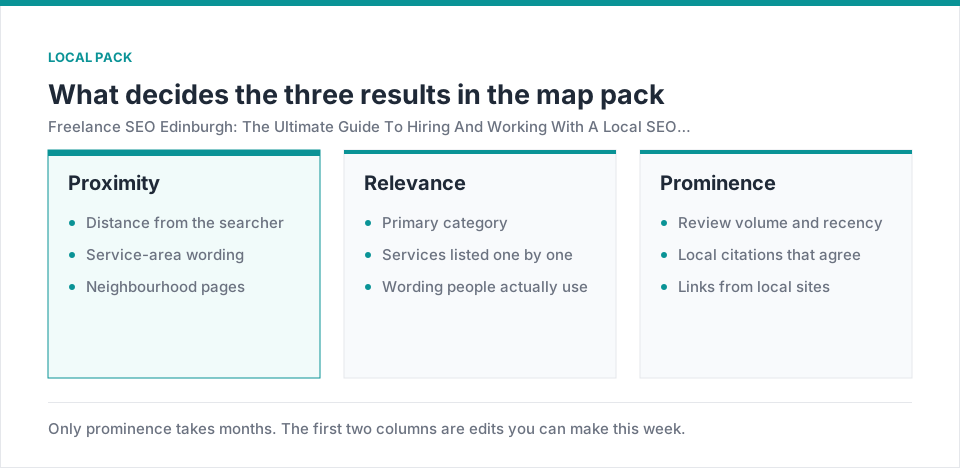
1. Local content mapping and pillar architecture
Construct a content pillar model that mirrors Edinburgh’s geography. Each pillar anchors to a spine term and branches into district proofs, ensuring that readers encounter practical, locally verified information as they explore different areas. A well‑designed pillar supports internal linking between city‑level terms and district pages, reinforcing topical authority and crawl efficiency. Provenance Trails should accompany major content activations to document how each district proof derives from spine terms.
- Define core content pillars: examples include Edinburgh SEO services, local GBP health and proximity signals, and district-specific growth strategies.
- Map district proofs to content blocks: each district page opens with a concise proof block (hours, directions, landmarks) to establish proximity from the first screen.
- Anchor case studies locally: publish Edinburgh‑centric outcomes with measurable metrics to boost trust and EEAT alignment.
- Internal linking discipline: create deliberate pathways from city spine content to suburb proofs and back, improving crawl paths and topical depth.
2) Content formats that work in Edinburgh
Utilise a mix of format types that satisfy local readers and search engines. Short, actionable pages can cover hours and directions for a given district; longer guides can explain decision journeys, like choosing a local SEO partner or a case study from Leith. Visuals such as maps, landmarks, and video snippets from Edinburgh venues can enrich the proximity narrative, provided they are anchored to verifiable proofs and are reinforced by structured data. Always attach Provenance Trails to major content deployments so regulators can review the signal lineage.
2. Conversion rate optimisation (CRO) for Edinburgh
CRO in a local Edinburgh context focuses on turning proximity into action. This involves aligning district proofs with intuitive user journeys, reducing friction on enquiry paths, and validating micro‑conversions that lead to tangible business outcomes. Key practice areas include clear calls-to-action on suburb pages, simplified contact forms, and location‑specific testimonials that reinforce trust.
- Define district‑level conversion goals: inquiries, bookings, store visits, or click‑to‑call actions tied to each precinct page.
- Micro‑moment optimisation: ensure the first interaction presents a concise proof block and a prominent path to the next step (contact or directions).
- User experience and trust signals: display local testimonials, landmark references, and photos to strengthen proximity credibility.
- A/B testing and What‑If planning: run tests that forecast how changes affect surface health and conversions, with baselines documented in Provenance Trails.
3) Link building in a local Edinburgh context
Local backlinks should be earned from Edinburgh‑relevant sources that reinforce proximity credibility. The approach emphasises quality over quantity and values connections to universities, local press, business associations, and community events. Each link should be accompanied by a Provenance Trail that documents the rationale, outreach steps, and value delivered to the local ecosystem.
- Local authority signals: seek citations from Edinburgh institutions and well‑regarded community sites that discuss proximity and local services.
- Content collaborations: co‑author district‑level case studies and resources with Edinburgh partners to secure credible mentions.
- Event and landmark partnerships: align with Edinburgh events and landmarks to generate timely, relevant backlinks tied to spine terms.
- Structured documentation: attach Provenance Trails to every link acquisition to maintain auditable signal lineage for regulators.
4) Governance, What‑If planning, and Provenance Trails
Content, CRO, and link activations should sit within a robust governance framework. What‑If planning provides predictive baselines for surface health and conversions before resource allocation, while Provenance Trails record the data lineage from spine terms to suburb proofs. A central data dictionary and versioned change logs ensure regulator readability and consistent terminology as Edinburgh’s neighbourhoods evolve. Regular reviews validate that content strategy, CRO, and link building remain aligned with local objectives and EEAT expectations.
To explore practical Edinburgh implementations, visit our SEO Services page on edinburghseo.org or book a consultation with our Edinburgh experts. For regulator guidance and signal provenance, review Google's EEAT guidelines to ensure your content, CRO, and backlink activities stay regulator-friendly and auditable as Edinburgh grows.
Ready to translate content and conversion strategies into Edinburgh‑level outcomes? Explore our SEO Services on edinburghseo.org or book a consultation to tailor a locality‑first activation plan that links spine terms to district proofs and measurable conversions.
Analytics, Reporting, and Measurement of Success
In Edinburgh’s locality-first SEO framework, measurement is the bridge between activity and outcomes. This Part 9 sets out a practical approach to analytics, reporting, and success criteria that are auditable, regulator-friendly, and entirely aligned with spine terms and district proofs developed in earlier parts. The aim is to ensure every optimisation—whether a district page update, a new piece of content, or a technical adjustment—can be traced back to measurable local value across Maps, Local Packs, Knowledge Panels, and suburb pages on edinburghseo.org.
Key to success is choosing the right metrics from the outset. Your baseline KPIs should reflect both user intent and business impact, capturing proximity credibility, engagement with district proofs, and conversions that matter to the client. The cadence of reporting must be explicit: weekly surface health checks, monthly governance reviews, and quarterly ROI assessments. The What-If planning framework becomes a running thread, allowing you to forecast outcomes before committing resources and then compare forecasts with actual results using Provenance Trails for full traceability.
1. Establishing a local KPI framework
Begin with a compact, regulator-friendly set of KPIs that tie directly to Edinburgh’s districts. Recommended metrics include:
- Proximity health indicators: consistency of NAPW data across GBP, Maps, and district pages; accuracy of hours and service areas by district.
- Maps and Local Pack visibility: presence and prominence of district proofs on Old Town, Leith, Portobello, and campus catchments.
- User engagement on district pages: time on page, scroll depth, and interactions with proof blocks (hours, directions, landmarks).
- Near‑me conversions: form submissions, click-to-call events, and direction requests attributed to district pages.
- Qualified inquiries and offline conversions: CRM‑tracked leads that originated from seed spine terms and district proofs.
Each metric should have a defined attribution window, a planned data source, and a clear owner. Use What-If baselines to forecast the effect of a specific activation, then measure the actual result against that forecast to gauge the reliability of your projections. Provenance Trails should be attached to every KPI update so regulators can trace how a signal travelled from spine terms to district outputs.
2. Data architecture, provenance, and governance
Effective measurement depends on clean data and well-documented signal lineage. Create a central data dictionary that defines terms such as spine term, district proof, and near-me conversion; attach a change log to every data point or dashboard element. Provenance Trails should capture the data journey from kernel spine terms to suburb outputs, including any data transformations, data source changes, and timestamped updates. This architecture supports EEAT alignment and makes audits straightforward for clients and regulators.
3. What-If planning and predictive dashboards
What-If planning is not a one-off activity; it should be embedded in your project lifecycle. For each major activation, attach a What-If baseline that predicts surface health, engagement, and conversion outcomes under defined conditions. Build dashboards that merge spine-term depth with district proof performance, offering a regulator-friendly view of potential and reality side by side. Regularly refresh baselines as Edinburgh’s districts evolve and new proofs are added. Proactively document any deviations in the Provenance Trails to maintain traceability.
4. Reporting cadence and regulator-ready artefacts
Reporting should balance practicality with governance. A typical cadence comprises:
- Weekly surface health reports: GBP integrity, Maps visibility, page health, and district-proof status. Include any What-If changes and immediate action items.
- Monthly governance reviews: review What-If outcomes, update the data dictionary, and refresh Provenance Trails to reflect the latest activations.
- Quarterly ROI and impact assessments: quantify inquiries, conversions, and revenue impact attributed to locality-first work, with an emphasis on auditable data lineage.
Deliverables should include regulator-ready dashboards, What-If scenario artefacts, a central data dictionary, and a complete set of Provenance Trails. These artefacts help validate the fairness and reproducibility of your locality-first approach, strengthening EEAT alignment and stakeholder trust within Edinburgh’s market.
5. Attribution challenges and practical solutions
Local SEO presents attribution challenges because many user journeys cross devices, channels, and offline interactions. Practical strategies include:
- UTM tagging and deterministic CRM integration: ensure campaign identifiers travel from search to form submission to CRM records, enabling clearer channel attribution.
- District-level event tracking: instrument events that reflect local decisions, such as hours confirmation, directions requests, and maps clicks tied to specific precinct proofs.
- What-If baselines tied to revenue metrics: forecast revenue impact alongside surface health to justify locality investments.
- Provenance Trails for every activation: document the signal path from spine terms through to suburb outputs, making audits straightforward.
For Edinburgh practitioners, the aim is to provide transparent, actionable insights that align with EEAT standards and local governance expectations. Use what you learn from measurement to refine the spine-to-district narrative, maintain data integrity, and demonstrate the real-world value of locality-first SEO to clients and regulators alike.
To explore how these measurement practices fit within our Edinburgh SEO services, visit our SEO Services page on edinburghseo.org or book a consultation with our Edinburgh experts. For regulator context and signal provenance guidance, review Google's EEAT guidelines; they reinforce the need for auditable data lineage and credible, history-backed signals as Edinburgh campaigns evolve.
Ready to embed robust analytics and regulator-friendly reporting into your Edinburgh campaigns? Explore our SEO Services on edinburghseo.org or book a consultation to design a measurement framework that scales with proximity and compliance.
Collaboration, Workflow, And Tools With A Freelancer
Effective collaboration between Edinburgh businesses and a freelance SEO practitioner hinges on clear processes, transparent governance, and the right mix of tools. This Part 10 in the Edinburgh SEO series emphasises practical working arrangements, deliverables, communication cadences, and the technology stack that keeps a locality‑first campaign moving smoothly. Grounded in the edinburghseo.org framework, it shows how spine terms, district proofs, and Provenance Trails come alive through everyday collaboration with a freelance partner in Edinburgh.
In a typical Edinburgh engagement, the freelance SEO specialist acts as the single point of accountability, orchestrating strategy, execution, measurement, and governance artefacts. This arrangement suits the capital’s close-knit business ecosystem where proximity, rapid feedback, and regulator‑friendly reporting matter as much as technical prowess. The freelancer’s role is to translate the city’s spine terms into district proofs, then map every activation to auditable provenance so readers and regulators can trace the signal journey from kernel terms to suburb outputs.
The Freelancer’s Role In Your Edinburgh SEO Project
A local Edinburgh freelancer brings a blend of hands‑on execution, district knowledge, and governance discipline. They should:
- Own the end‑to‑end signal journey: from spine terms to suburb proofs, with Provenance Trails documenting each step.
- Serve as a single point of contact: ensuring consistent communication, priority setting, and decision making for the client’s local priorities.
- Balance speed with governance: deliver rapid wins when needed while maintaining regulator‑friendly documentation and auditable changes.
- Collaborate with in‑house teams: work alongside developers, content writers, and marketers to integrate SEO work into broader initiatives.
For Edinburgh businesses, a freelance SEO edinburgh partner can be more nimble and cost‑transparent than a larger agency, while still providing proven frameworks for What‑If planning and traceable data lineage that satisfy EEAT expectations. When selecting a partner, assess their ability to communicate, deliver in a regulator‑friendly format, and maintain a visible data trail across all major activations.
Defining Deliverables And Responsibilities
Ground your engagement with a clear set of artefacts that demonstrate value and enable regulator reviews. Typical deliverables include:
- Discovery, baseline audits, and a city spine terms map: the foundational framework linking Edinburgh’s districts to the central spine terms.
- What‑If activation baselines: pre‑commitment projections showing potential surface health and conversions under defined conditions.
- Activation briefs tied to suburb proofs: concrete plans that map spine terms to district pages (Old Town, Leith, Portobello, etc.).
- Provenance Trails for all major activations: end‑to‑end data lineage from kernel terms to suburb outputs.
- Governance dashboards and regular reports: weekly surface health checks and monthly governance reviews with regulator‑friendly narratives.
Deliverables should be versioned and traceable, with a central data dictionary that standardises terms such as spine term, district proof, and near‑me signal. This reduces ambiguity and speeds regulatory reviews, while keeping the Edinburgh locality framework intact.
Want the numbers behind this? The analytics guide shows how organic traffic and the queries GA4 hides are rebuilt in Semalt.
Onboarding, Kick‑off, And Cadence
Successful onboarding sets expectations and aligns governance from day one. A practical kick‑off includes:
- Discovery workshop: confirm business goals, target districts, and the primary spine terms to anchor activations.
- Baseline audit and data dictionary setup: establish common definitions and the initial Provenance Trails for traceability.
- Governance framework: establish change logs, version control, and reporting cadences that regulators can follow.
- Communication protocol: decide on primary channels (collaboration platform, email, and weekly stand‑ups).
In Edinburgh, the cadence often mirrors seasonal cycles—university terms, festival periods, and local events—so the schedule should accommodate rapid iterations and quick wins, while maintaining auditable trails for long‑term governance.
The Right Tools For Collaboration
Choose tools that support collaboration, versioning, and traceability without creating friction. A typical Edinburgh freelance setup includes:
- Project management and task tracking: Asana, Trello, or equivalent to capture activation briefs and track What‑If baselines.
- Documentation and data dictionaries: shared documents in Google Workspace or Microsoft 365, with version history and access controls.
- Communication channels: Slack or Teams for real‑time updates; email for formal communications and regulator‑ready artefacts.
- Ownership and access control: clear permissions so that stakeholders see only what is necessary and auditability is maintained.
The Edinburgh model benefits from a lean stack: a single source of truth for What‑If baselines, a live Provenance Trails log, and dashboards that combine spine term depth with district proof health. Tools should be selected to complement, not complicate, governance and reporting for regulators.
Communication Cadence, Change Management, And artefacts
Regular, concise communication is essential. A practical framework includes:
- Weekly status brief: quick updates on GBP health, page health, and district proof status, with immediate action items.
- Monthly governance review: examine What‑If outcomes, update the data dictionary, and refresh Provenance Trails.
- Change logs and versioning: document every significant adjustment to spine terms, district proofs, or activation briefs.
- regulator‑friendly artefacts: ensure dashboards, What‑If baselines, and Provenance Trails are centralised and auditable.
For Edinburgh teams seeking a predictable, responsible collaboration model, these artefacts produce credible evidence of value to clients and regulators, while keeping the focus on proximity signals and local conversions.
When you’re ready to formalise collaboration with a freelance SEO edinburgh partner, explore our SEO Services on edinburghseo.org or book a consultation with our Edinburgh experts. For regulator context and signal provenance, review Google's EEAT guidelines to ensure your collaborative workflow remains credible and auditable as Edinburgh evolves. This Part 10 provides a practical blueprint for turning collaboration into measurable, governance‑driven local success.
Ready to establish a regulator‑friendly, locality‑first collaboration with a freelance SEO in Edinburgh? Explore our SEO Services on edinburghseo.org or book a consultation to design a workflow that delivers district proofs and auditable outcomes.
Budgeting, Contracts, And ROI Expectations
For freelance SEO Edinburgh engagements, clarity around budgeting, contract terms, and measurable return on investment forms the bedrock of trust with clients and regulatory comfort. This Part 11 translates the locality‑first framework into practical financial governance: how to price work fairly, what to put in a contract, and how to demonstrate value through auditable outcomes such as What‑If baselines and Provenance Trails. The aim is to align expectations from the outset so every activation, from district proofs to technical refinements, has a transparent pathway to business outcomes on edinburghseo.org.
1. Pricing models for an Edinburgh freelance SEO
Freelancers in Edinburgh commonly offer a mix of pricing structures to suit different client needs and project scopes. Each model has distinct advantages for local businesses that want predictable costs, auditable governance, and scalable activity aligned to what‑if scenarios.
- Hourly rates: A straightforward approach that matches effort to time. Ideal for smaller audits, ad hoc tweaks, or early discovery phases where scope may evolve. Benefits include flexibility and tighter control over spend, though it can be harder to predict final cost for larger projects.
- Project-based pricing: A clearly scoped engagement with defined deliverables and a fixed price. This works well for district‑proof pages rollouts, technical audits, or content kits where the scope can be precisely described upfront and governance trails can be attached to each milestone.
- Monthly retainer: Ongoing optimisation with a stable monthly investment. Retainers suit continuous locality‑first work, such as ongoing district proofs updates, content refreshes, and regular governance reporting, with regular What‑If baselines and Provenance Trails documenting progress.
- Hybrid arrangements: A combination of a base retainer for ongoing activities plus optional milestones or add‑ons (e.g., quarterly deep audits or seasonal content bursts). This model balances predictability with flexibility for Edinburgh markets that fluctuate with terms, festivals, and university calendars.
When discussing pricing, always tie every line item to an auditable outcome. For example, associate optimisations with district proofs, spine terms, and the What‑If baseline that accompanies the activation. This makes it easier to justify spend to stakeholders and regulators while ensuring the work remains aligned with EEAT principles.
2. Key contract essentials for Edinburgh projects
A well‑drafted contract protects both parties. It should codify scope, governance, data lineage, and exit terms, plus any regulatory considerations relevant to local authority signals and auditable trails. The following elements are particularly important in Edinburgh engagements:
- Scope of work and deliverables: A precise inventory of activations, from spine terms to district proofs, with corresponding acceptance criteria and sign‑offs.
- Timeline and milestones: Realistic dates for audits, activation briefs, What‑If baselines, and governance reviews, with defined cadence and owners.
- Data ownership and privacy: Clear statements on data rights, usage boundaries, and compliance with data protection regulations relevant to local businesses.
- What‑If baselines and provenance trails: A requirement that major activations include auditable What‑If projections and Provenance Trails to document signal lineage.
- Change control and scope creep: A formal process for approving changes, with impact assessments and updated milestones recorded in the governance log.
- Deliverable format and handover: Requirements for report formats, dashboards, and data dictionaries that regulators and clients can audit.
- Intellectual property and rights: Clarify ownership of outputs, analyses, and any custom tooling or datasets produced during the engagement.
- Termination and transition: Exit terms, knowledge transfer, and continuity arrangements if the engagement ends early.
3. Managing scope, changes, and governance in practice
Scope creep is a common risk in locality‑first SEO. A disciplined change‑control process, anchored by the Provenance Trails and a central data dictionary, keeps modifications accountable. Require written approval for any major activation, attach a What‑If baseline before work begins, and ensure every change updates the governance dashboard. This approach protects the relationship with Edinburgh clients by providing predictable costs, transparent progress, and regulator‑friendly evidence of value.
4. ROI expectations: measuring value in a locality-first model
Return on investment for freelance Edinburgh SEO should be expressed in terms of near‑me outcomes, conversions, and awareness uplift across district proofs rather than just keyword rankings. A practical framework includes the following steps:
- Define measurable objectives: e.g., increased store visits, bookings, inquiries, or direction requests within target Edinburgh districts.
- Track conversions at district level: attribute actions to specific district proofs and the spine term that initiated the journey, using What‑If baselines to forecast impact.
- Calculate ROI using auditable data: ROI = (Incremental revenue from locality‑first activations minus total programme costs) divided by total costs. For example, if a monthly spend is £2,000 and incremental monthly revenue from local actions is £6,000, the ROI would be (6,000 - 2,000) / 2,000 = 2.0x. All inputs should be supported by Provenance Trails and dashboard data so regulators can verify the path from spine terms to suburb outputs.
- Consider non‑monetary value: include awareness, proximity credibility, and regulator readiness as qualitative wins that support future growth and governance maturity.
In Edinburgh, ROI reporting should be concise, regulator‑friendly, and forward‑looking. Present dashboards that combine spine term depth with district proof performance, and accompany them with What‑If projections for upcoming activations. This ensures stakeholders understand not just what was done, but what it is worth moving forward in a regulated, auditable way.
5. Red flags in budgeting and contracting, and how to avoid them
Be alert to signs that a project may drift away from locality‑first governance. Common red flags include vague deliverables, unclear governance cadence, missing What‑If baselines, or dashboards that lack traceability. To mitigate these risks, insist on a central data dictionary, mandatory Provenance Trails for major activations, and a signed activation brief for every district page or technical improvement. Clear termination terms and a straightforward change process protect both sides if priorities shift in Edinburgh’s evolving market.
Practical next steps to move from planning to action include: (1) request a starter engagement outline with spine terms and district proofs, (2) co‑create a What‑If baseline for an initial activation, (3) agree on governance cadence and reporting formats, and (4) commit to a central data dictionary and Provenance Trails approach. These steps help Edinburgh practitioners, clients, and regulators stay aligned and accountable as proximity signals evolve.
To translate budgeting, contracts, and ROI into action, explore our SEO Services on edinburghseo.org or book a consultation with our Edinburgh experts. For regulator guidance and signal provenance, review Google's EEAT guidelines to ensure your engagements remain regulator‑friendly and auditable as Edinburgh’s market grows. This Part 11 closes the budgeting and governance loop, equipping you to negotiate confidently and deliver measurable local impact across Maps, Local Packs, and suburb pages.
Choosing the Right Freelance SEO In Edinburgh
Selecting the right freelance SEO partner in Edinburgh is a decision that shapes proximity signals, regulator credibility, and measurable local outcomes. A well-chosen freelancer brings city-specific expertise, a governance-forward mindset, and a transparent data lineage that aligns with EEAT principles. This Part 12 provides a practical, Edinburgh-focused checklist to evaluate candidates, backed by a framework you can apply to any shortlisting round. It emphasises dossier-based assessments, evidence of local work, and a disciplined approach to activation briefs, What-If planning, and Provenance Trails that readers and regulators can inspect with confidence.
Why this matters in Edinburgh: a successful freelancer should not only optimise for search engines but also for local realities—neighbourhood dynamics, seasonality from festivals and terms, and proximity signals that drive near-me actions. The right candidate will present a transparent, regulator-friendly way of working, with auditable data lineage from kernel spine terms to district proofs and eventual conversions. This Part 12 walks you through a pragmatic evaluation process tailored to Edinburgh’s distinctive market conditions and governance requirements.
What to look for in a freelance Edinburgh specialist
- Local market experience: demonstrated work in Edinburgh or similarly complex urban markets, with district-level optimisation that ties spine terms to neighbourhood proofs.
- Evidence of spine-to-district signal mapping: case studies or portfolio pieces showing how a city-level term translates into district proofs and auditable outcomes.
- Governance and provenance capabilities: ability to attach What-If baselines and Provenance Trails to activations, enabling regulators to trace data lineage end-to-end.
- Technical fluency and developer collaboration: comfort reading HTML, schema markup, and data governance artefacts; experience working with in-house teams and external developers.
- Communication and transparency: clear pricing, milestone-based deliverables, and regular, regulator-friendly reporting formats.
- Strategic and practical balance: beyond tactics, a track record of aligning SEO work with business goals and local audience needs.
Ask candidates to provide concrete examples rather than generic statements. Look for measurable outcomes in Edinburgh districts such as Old Town, Leith, Portobello, and university catchments, with artefacts that show how activity tied to spine terms produced proximate results and regulator-ready documentation. For credibility, prefer freelancers who publish or share auditable dashboards, What-If baselines, and Provenance Trails tied to real campaigns.
Portfolio and case studies: what to review
When reviewing portfolios, focus on the following indicators of suitability for Edinburgh clients:
- Proximity-driven pages and district proofs that reflect Old Town, New Town, Leith, and Portobello marketing realities.
- Clear demonstration of spine terms, district pages, and hub-and-spoke site architecture in practice.
- Evidence of regulator-friendly artefacts, including What-If baselines and Provenance Trails attached to major activations.
- Examples of technical work that supports local signals, such as structured data for LocalBusiness, breadcrumbs, and district schema updates.
- Outcomes that map to business metrics: inquiries, bookings, store visits, or other near-me conversions broken down by district.
Where possible, request references from Edinburgh-based clients or those serving Edinburgh’s districts. A strong reference list in the capital provides confidence that the freelancer can operate with the governance and transparency required by local stakeholders and regulators.
Evaluation steps: a practical vetting process
- Step 1 – Define your objectives: articulate the business outcomes you want from local SEO (e.g., near-me store visits, inquiries, or bookings in specific Edinburgh districts) and shortlist candidates whose portfolios reflect those outcomes.
- Step 2 – Review portfolio and references: examine district-focused work, governance artefacts, and evidence of auditable trails; contact references to confirm reliability and collaboration style.
- Step 3 – Commission a small trial project: propose a compact activation, such as a district-proof update or a baseline audit for one locality (e.g., Leith or Portobello) with What-If baselines and a Provenance Trail. This trial should have a defined scope, price, and acceptance criteria.
- Step 4 – Assess governance maturity: confirm the freelancer can produce What-If planning documents, central data dictionaries, and end-to-end Provenance Trails that readers and regulators can audit.
- Step 5 – Evaluate cultural fit and collaboration: ensure the freelancer is comfortable working with your team and understands Edinburgh’s regulatory expectations and stakeholder needs.
Key interview questions you can use
- How would you map a city spine term like Edinburgh SEO services to district proofs across Old Town, Leith, and Portobello, and what governance artefacts would you attach?
- Can you show an example of Provenance Trails from kernel term to suburb outputs for a previous Edinburgh project?
- How do you validate NAPW consistency and GBP health across Maps and suburb pages in a local market with seasonal fluctuations?
- Describe a scenario where What-If planning prevented an over-spend activation and how you documented that decision.
- What internal processes do you use to ensure smooth collaboration with in-house developers and content teams?
Red flags to watch for and how to respond
- Vague deliverables: if a candidate cannot articulate concrete outputs tied to spine terms and district proofs, push for a detailed activation brief and a What-If baseline before proceeding.
- Missing governance artefacts: absence of Provenance Trails or data dictionaries signals governance gaps that could hinder audits.
- Overly generic results: campaigns that claim rapid wins without measurable outcomes such as inquiries or conversions risk misalignment with locality-first objectives.
- Lack of Edinburgh context: insufficient district-specific references or understanding of local signals may lead to ineffective prioritisation.
- Unclear pricing and milestones: require a transparent pricing model with clear milestones and acceptance criteria, preferably linked to auditable outcomes.
If you identify red flags, address them directly in the contract stage. Request a trial brief that includes a What-If baseline, district proofs, and a Provenance Trail sample. Compare this artefact set across candidates to determine who offers the most regulator-friendly, locality-first approach for Edinburgh.
Next steps: once you have shortlisted candidates, direct them to your preferred engagement framework on edinburghseo.org. Recommend a starter engagement that aligns spine terms with district proofs and establishes governance cadences. For regulator guidance and signal provenance, review Google's EEAT guidelines to ensure the chosen freelancer maintains regulator-friendly, auditable practices as Edinburgh’s market evolves. A well-chosen freelancer will provide a transparent, scalable plan that can grow with your business while keeping governance intact.
Ready to move from shortlist to engagement? Explore our SEO Services on edinburghseo.org or book a consultation to discuss a locality-first activation plan that fits Edinburgh’s neighbourhoods and regulatory expectations.