Part 1 Of 12: What SEO In Edinburgh Means For Local Businesses
Edinburgh sits at a unique intersection of history, tourism, and a growing SME ecosystem. Local search in the city rewards geotargeted relevance, credible signals, and practical experiences that match how residents and visitors search. This twelve‑part series introduces a governance‑led diffusion framework for SEO in Edinburgh, built around six surfaces: Local Pages, Locale Hubs, Maps overlays, Knowledge Graph Edges, Catalog entries, and Edge Experiences. The aim is durable visibility that scales with confidence across Edinburgh’s districts while preserving one recognisable Topic Identity that guides every surface.
Edinburgh’s geography is a tapestry of historic cores, vibrant neighbourhoods, and waterfront communities. Old Town and the Royal Mile attract heritage‑mrenched queries, while Leith, Stockbridge, and the West End generate more residential, dining, and lifestyle intents. A practical Edinburgh SEO programme begins with impeccable GBP hygiene, accurate Local Pages for key geographies, and content crafted to answer district‑specific questions. As signals diffuse across Local Pages, Maps overlays, and KG Edges, a single Edinburgh Topic Identity keeps messaging coherent and recognisable city‑wide.
Crucially, governance artefacts underpin consistent diffusion. ActivationTemplates codify per‑surface publishing rules; LocalizationManifest depth defines how far diffusion travels by geography; TranslationKeys parity preserves language alignment; LicensingStamp provenance records asset rights; and a central Provenance Ledger logs diffusion decisions for regulator‑ready reporting. This disciplined backbone enables auditable growth as Edinburgh signals diffuse from Local Pages to Locale Hubs and beyond.
When choosing an Edinburgh partner, look for tangible outcomes: a clear plan for Local Pages and GBP hygiene first, followed by diffusion into Maps overlays and Locale Hubs. A credible Edinburgh agency will provide governance artefacts and dashboards that leadership can review, plus reference benchmarks from Google Structured Data guidelines, Moz Local, and BrightLocal Local SEO ranking factors to gauge diffusion health as you scale.
To begin implementing these ideas, explore the Edinburgh SEO Services hub to review activation briefs and diffusion templates, or book a discovery call via the Edinburgh contact page.
Edinburgh’s anchor geographies may include the City Centre, Leith, Stockbridge, Murrayfield, and the Waterfront. Mapping these geographies to Local Pages and Maps overlays helps maintain proximity signals and reduce topic drift as diffusion broadens. A unified Edinburgh Topic Identity ensures a consistent user experience whether someone searches for a City Centre café or a Leith service provider.
Practical early steps include building a starter Local Pages set for eight to ten geographies, aligning per‑surface schema, and establishing dashboards to track inquiries aligned to Edinburgh districts. For credible benchmarks, consult Google Structured Data guidelines, Moz Local, and BrightLocal Local SEO ranking factors.
With this framework, Edinburgh teams can plan a phased diffusion: start with Local Pages and GBP hygiene, extend into Maps overlays, then expand into Locale Hubs and KG Edges, followed by Catalog entries and Edge Experiences. The Edinburgh SEO Services hub serves as a central repository for activation briefs, governance templates, and diffusion dashboards you can reuse today.
Part 1 offers a practical, governance‑ready foundation: anchor geographies, surface‑specific content briefs, and auditable diffusion rules that build durable Edinburgh visibility. In Part 2, we translate these foundations into actionable discovery and onboarding steps tailored to Edinburgh’s districts, with sample briefs and dashboards hosted on the Edinburgh site. To start exploring now, book a discovery call via the Edinburgh contact page or browse the SEO Services hub for artefacts you can reuse today.
Part 2 Of 12: The Edinburgh Local Market: Understanding Local Search Intent
Edinburgh combines a rich tourism profile with a dense, dynamic local economy. Its neighbourhoods range from the historic Old Town and New Town to the waterfront and creative quarters in Leith and Stockbridge. Local search intent in Edinburgh is driven by proximity, district identity, and real-world activity—whether residents look for a nearby tradesperson, a restaurant with local flavour, or a service that suits visitors exploring the capital. A disciplined Edinburgh SEO programme recognises these nuances and diffuses signals across the six surfaces—Local Pages, Locale Hubs, Maps overlays, Knowledge Graph Edges, Catalog entries, and Edge Experiences—while preserving a single, recognisable Edinburgh Topic Identity. This part translates those ideas into practical steps you can apply with confidence to Edinburgh markets.
A practical starting point is to map anchor geographies to local search intent. The City Centre, Old Town, New Town, Leith, Stockbridge, Murrayfield, Meadowbank and the Waterfront form a core set of geographies where proximity signals and local knowledge queries converge. For each geography, content should answer district-specific questions, showcase nearby case studies, and align metadata across Local Pages, Maps overlays, and Locale Hubs. Maintaining a single Edinburgh Topic Identity ensures that diffusion across surfaces feels natural to users, whether they search for a City Centre cafe or a Leith service provider.
From governance to execution, the diffusion model remains sixfold. Local Pages anchor geographically targeted content; Locale Hubs cluster related topics around these anchors; Maps overlays translate proximity into actionable navigation signals; Knowledge Graph Edges connect local entities to the Edinburgh geography; Catalog entries extend product or service lines into nearby communities; and Edge Experiences create cross-surface journeys that end in meaningful conversions. A consistent Edinburgh Topic Identity across these surfaces reduces drift and improves user trust as audiences move from nearby searches to informed decisions.
In this plan, we reference credible guardrails such as Google Structured Data guidelines, Moz Local, and BrightLocal Local SEO ranking factors to calibrate diffusion health as Edinburgh campaigns scale. It is also important to keep Local Pages aligned with GBP hygiene and accurate Local Page data for core geographies, so local signals remain strong across Maps and KG Edges.
How to translate Edinburgh’s local market into actionable steps? Start with eight to twelve anchor geographies and build per-surface briefs that describe what content, metadata, and schema should render on Local Pages, Maps overlays, and Locale Hubs. Translation parity should travel with diffusion renders to sustain Topic Identity if Edinburgh content is produced in multiple languages or dialects. As signals diffuse, dashboards should reveal how proximity signals translate into inquiries and conversions across districts.
Practical steps for Edinburgh teams
- Identify anchor geographies. Define eight to twelve Edinburgh districts (for example, City Centre, Old Town, New Town, Leith, Stockbridge, Murrayfield, and Comely Bank) as anchors to base Local Pages and diffusion briefs.
- Create per-surface publishing rules. Use ActivationTemplates to codify how Local Pages, Locale Hubs, Maps overlays, KG Edges, Catalog entries, and Edge Experiences render content while preserving a single Edinburgh Topic Identity.
- Set diffusion depth by geography. LocalizationManifest depth should cap how far diffusion travels from each anchor geography without diluting Edinburgh’s identity.
- Maintain language governance. TranslationKeys parity travels with diffusion renders, ensuring multilingual readers encounter identical topical anchors across surfaces.
Content strategy should prioritise district-focused topics, local event calendars (such as the Edinburgh Festival and Fringe periods), and nearby case studies. Build suburb-focused topic families that begin on Local Pages and widen into Locale Hubs, Maps overlays, KG Edges, Catalog entries, and Edge Experiences. Translation parity travels with diffusion renders, and hreflang annotations ensure language variants land on the same Edinburgh anchors across all surfaces.
In terms of governance, ActivationTemplates, LocalizationManifest depth, TranslationKeys parity, LicensingStamp provenance, and a central Provenance Ledger form the backbone of auditable diffusion. The Edinburgh Services hub at /services/ provides ready-to-use artefacts, diffusion briefs, and dashboards you can reuse today. For external benchmarks, consult Google Structured Data guidelines, Moz Local, and BrightLocal Local SEO ranking factors to calibrate diffusion health as Edinburgh campaigns scale: Google Structured Data guidelines, Moz Local, and BrightLocal Local SEO ranking factors.
Starting now, Edinburgh teams can request a complimentary audit or a practical strategy outline to validate GBP hygiene, anchor geographies, and diffusion briefs. Book a discovery session via the Edinburgh contact page or browse the Edinburgh SEO Services hub to review artefacts you can reuse today. The next part expands into the six-surface diffusion in Edinburgh and introduces measurement controls that translate signals into tangible business outcomes.
Part 3 Of 12: Key Elements Of A Successful Edinburgh SEO Strategy
Edinburgh’s local search landscape rewards a cohesive, governance-led diffusion approach that travels reliably from Local Pages to Locale Hubs, Maps overlays, Knowledge Graph Edges, Catalog entries, and Edge Experiences. Part 1 introduced a six-surface diffusion spine; Part 2 clarified Edinburgh’s distinctive local market and how intent clusters form around anchor geographies. This Part 3 concentrates on the core elements you must get right to build durable Edinburgh visibility: audit and baseline, targeted keyword research, a cross-surface strategy with per-surface schemas, robust technical SEO, a content framework tuned to Edinburgh’s districts, and principled local link development. Each element reinforces a single Edinburgh Topic Identity while enabling signals to diffuse with minimal drift across the six surfaces.
Effective Edinburgh SEO starts with a rigorous audit that establishes a trustworthy baseline. GBP hygiene must be pristine, Local Pages aligned to core geographies (for example, City Centre, Old Town, Leith, Stockbridge), and metadata harmonised across Local Pages and Maps overlays. An audit also inventories current Knowledge Graph edges, existing Catalog entries, and any Edge Experiences that already exist, so diffusion can be planned without rework later. A clear baseline reduces drift as signals diffuse from Local Pages into Locale Hubs and beyond.
1) Audit, baseline, and governance readiness
Audit deliverables should include a geography map of eight to twelve Edinburgh districts, a starter Local Pages set for those geographies, and a diffusion brief library that dictates per-surface publishing rules. ActivationTemplates codify how each surface renders content and metadata while preserving a single Edinburgh Topic Identity. LocalizationManifest depth defines how far diffusion travels from anchor geographies, and TranslationKeys parity ensures language variants stay aligned across surfaces. A central Provenance Ledger tracks asset provenance and diffusion decisions for regulator-ready reporting.
2) Keyword research and local intent mapping
Local Edinburgh keyword maps should emphasise proximity and district-level needs. Start with anchor geographies such as City Centre, Leith, New Town, and Stockbridge, then identify district-specific intents (hospitality in close-to-centre quarters, services around residential pockets, events around festival seasons). Integrate findings into Local Pages and Maps overlays, ensuring translation parity travels with diffusion renders for multilingual audiences. Use credible benchmarks to validate keyword opportunities and search intent alignment across surfaces.
3) On-page optimisation and per-surface schema
On-page elements should be tuned to the Edinburgh geography. Localised meta titles, descriptions, H1s, and structured data blocks should reflect anchor geographies and district-specific queries. Per-surface schemas—LocalBusiness, Service, Product—must be consistently applied so KG Edges and Edge Experiences are reinforced with accurate entity relationships. Translation parity must accompany diffusion renders to maintain Topic Identity in multilingual contexts. Canonical handling and breadcrumb structure should be clear to prevent topic drift as content diffuses between Local Pages, Maps overlays, and Locale Hubs.
4) Technical SEO and diffusion health
Technical health is the bridge that keeps diffusion coherent. Edinburgh campaigns prioritise mobile performance, crawlability, and reliable indexation across six surfaces. Focus areas include clean canonical tags, robust sitemaps, and per-surface loading patterns that avoid topic drift. Structured data should be maintained across LocalPages, LocaleHubs, and Maps overlays, with TranslationKeys parity ensuring language variants stay anchored to the same Edinburgh geographies. Regular health checks against Google’s guidance help maintain diffusion health as new surfaces are activated.
5) Content strategy and localisation framework
Edinburgh content should serve district-focused needs, events, and local case studies. Build suburb-focused topic families that begin on Local Pages and diffuse into Locale Hubs, Maps overlays, KG Edges, Catalog entries, and Edge Experiences. Translation parity travels with diffusion renders, with hreflang annotations and language-specific structured data ensuring audiences land on the same Edinburgh anchors across all surfaces. A disciplined content calendar aligned to Edinburgh’s calendar—festivals, university terms, and local markets—drives timely relevance and sustained engagement.
- District-focused calendars. Plan FAQs, service descriptions, and local visuals tied to Edinburgh districts.
- Local knowledge graph signals. Link Local Pages to nearby venues, landmarks, and partners to strengthen city-wide relevance.
- Translation governance. Ensure TranslationKeys parity travels with diffusion renders so multilingual readers encounter identical topical anchors.
6) Link building and local partnerships
Edinburgh’s local ecosystem rewards links from credible Edinburgh outlets, business journals, and community publications that contextualise Edinburgh topics for nearby readers. Local partnerships, sponsorships, and press features should be designed to diffuse across surfaces while preserving Topic Identity. Activate translations and licensing governance to maintain asset provenance as links propagate through the diffusion spine.
To support governance and diffusion health, reference Google Structured Data guidelines, Moz Local, and BrightLocal Local SEO ranking factors as credible benchmarks: Google Structured Data guidelines, Moz Local, and BrightLocal Local SEO ranking factors.
Start applying these elements today by exploring the Edinburgh Edinburgh SEO Services hub for activation briefs, governance templates, and diffusion dashboards you can reuse. If you’d like tailored guidance, book a discovery call via the Edinburgh contact page and discuss anchor geographies, diffusion depth, and governance cadence tailored to your business.
Part 4 Of 12: Local SEO Essentials: Google Business Profile, NAP, and Reviews
Having established the six-surface diffusion spine in Part 3, Edinburgh businesses now focus on the foundational local signals that enable durable visibility: Google Business Profile (GBP) optimisation, consistent name, address, and phone (NAP) data, and proactive review management. In Edinburgh’s diverse districts — from the City Centre to Leith and Stockbridge — a well-maintained GBP acts as the city’s digital storefront, seeding proximity signals that travel through Local Pages, Maps overlays, and beyond. This part translates those essentials into practical steps you can enact today as part of the local Edinburgh strategy.
Google Business Profile hygiene and optimisation
GBP hygiene is the baseline for Edinburgh campaigns. Ensure the profile is complete with the exact business name used in all marketing and on Local Pages, a precise Edinburgh address (and service area where relevant), a local phone number, and a link to your website. Select the most relevant primary category and add supporting categories that map to your Edinburgh services. Include accurate business hours, holiday exceptions, and a description that mentions local districts such as City Centre, Leith, and New Town where appropriate. Regular GBP posts about Edinburgh-specific events or promotions can boost engagement and signal relevance to nearby searchers.
In addition, validate GBP attributes and photos. Upload high-quality exterior, interior, staff, and product images that reflect Edinburgh’s districts. The more complete the GBP, the stronger the local signals across Maps overlays and Knowledge Graph Edges, reinforcing a coherent Edinburgh Topic Identity across surfaces.
NAP consistency across Edinburgh surfaces
Consistency matters. Harmonise the Name, Address, and Phone across Local Pages for key Edinburgh geographies (for example City Centre, Old Town, Leith, Stockbridge, Murrayfield). Inconsistent NAP data weakens proximity signals and undermines Maps trust. Implement a central data governance process that standardises how NAP appears on Local Pages, GBP entries, and Maps overlays. Maintain translation parity where multiple language variants exist so the same anchor geographies remain visible to diverse Edinburgh audiences. A unified NAP also supports regulator-ready reporting through a central Provenance Ledger that tracks changes to asset data across surfaces.
Reviews strategy: acquisition, response, and leverage
Reviews are social proof that influence local decisions. Build a lifecycle for reviews in Edinburgh: invite satisfied customers in the districts you serve, respond promptly to all feedback, address negative reviews with constructive solutions, and showcase responses on Local Pages and on GBP. Use a structured approach to increase review volume without compromising authenticity, and consider incorporating ratings into Maps overlays and KG Edges to strengthen credibility. Positive reviews should be highlighted in UK English and, where appropriate, in Gaelic or other community languages to reflect Edinburgh’s diverse audiences. Regular sentiment analysis helps identify recurring themes and guide service improvements across districts.
Local citations and additional signals
Beyond GBP, maintain high-quality local citations for Edinburgh, prioritising credible, Edinburgh-focused directories and local media. Ensure citations consistently reference the same business name, NAP, and categories to reinforce proximity signals as diffusion expands to Locale Hubs and Maps overlays. Where feasible, align citations with per-surface metadata and language variants to preserve Topic Identity across all Edinburgh surfaces. Translation parity should accompany diffusion renders so multilingual readers encounter identical anchors in Local Pages and Maps overlays.
Read next: SEO Edinburgh: local strategies that work · Edinburgh SEO services for local firms
Measurement for these local signals integrates with your Diffusion Health framework. Track GBP interactions, Maps direction requests, Local Page visits, and review volume and sentiment. Use a DHI-like approach to blend engagement, proximity fidelity, and provenance across Local Pages, GBP, and Maps overlays, then report in governance dashboards that leadership can review. For external guardrails, reference Google Structured Data guidelines, Moz Local, and BrightLocal Local SEO ranking factors.
To begin applying these essentials, visit the Edinburgh SEO Services hub for activation briefs and governance artefacts, or book a discovery call via the Edinburgh contact page. Implement GBP hygiene, establish consistent NAP, and launch a proactive review programme to seed proximity signals city-wide. The diffusion framework described in Part 3 will then carry these signals through Local Pages, Locale Hubs, and Maps overlays, building a recognisable Edinburgh Topic Identity across all surfaces.
Part 5 Of 12: Edinburgh Keyword Research: Targeting Local Intent
With the six-surface diffusion spine established in Parts 1–4, Edinburgh-focused keyword research becomes the compass for local relevance. The aim is to identify terms that mirror how residents, visitors, and nearby decision-makers search across City Centre, Old Town, Leith, Stockbridge, Murrayfield, and other Edinburgh districts. By aligning keyword discovery with the Edinburgh Topic Identity, you ensure that Local Pages, Maps overlays, Locale Hubs, Knowledge Graph Edges, Catalog entries, and Edge Experiences move in lockstep toward credible, district-specific queries that convert.
Begin by defining eight to twelve anchor geographies that capture the city’s diversity—City Centre, Old Town, New Town, Leith, Stockbridge, Murrayfield, Meadowbank, and the Waterfront, among others. For each geography, create a geography-specific keyword set that reflects the typical user journey from awareness to action. This discipline ensures that diffusion into Local Pages and Maps overlays remains anchored to real places and local needs, preserving a single Edinburgh Topic Identity as signals diffuse across surfaces.
1) Build an Edinburgh geography-first keyword map
Seed the map with core Edinburgh terms such as SEO Edinburgh, local SEO Edinburgh, and Edinburgh digital marketing, then expand into district-focused variants like SEO City Centre Edinburgh, local services Leith, and Stockbridge SEO consultant. Each seed should be qualified for intent: informational (what is SEO in Edinburgh?), navigational (Edinburgh SEO agency), and transactional (hire Edinburgh SEO services). Record volume ranges, difficulty estimates, and seasonal peaks tied to Edinburgh events such as the Festival and Fringe to anticipate traffic shifts across surfaces.
Use credible benchmarks from Google, Moz Local, and BrightLocal to validate opportunities. These references help calibrate keyword viability and provide guardrails for diffusion health as you scale across Local Pages and Locale Hubs. For practical governance, anchor the keyword map to ActivationTemplates so per-surface content briefs reflect geography-specific queries while preserving Edinburgh’s Topic Identity.
2) Map keywords to surfaces and intent clusters
Assign each geography’s keywords to surfaces where they matter most: Local Pages for geography-specific landing content; Maps overlays for proximity- and direction-related queries; Locale Hubs to cluster related topics (e.g., “Edinburgh hotels near Leith” and “Leith event venues”); Knowledge Graph Edges to link nearby landmarks, partners, and services; Catalog entries for product or service lines with local relevance; Edge Experiences to guide users through cross-surface journeys that end in inquiries or bookings.
For each geography, draft short, medium, and long-tail variants that mirror user intent. Example mappings might include: City Centre Edinburgh for policy-compliant business SEO Edinburgh, Leith for local restaurants Edinburgh near port, and Stockbridge for boutique marketing agency Edinburgh. Linking these terms to Local Pages and Maps overlays ensures search engines recognise consistent anchors across diffusion surfaces.
3) Prioritise by intent, seasonality, and conversion potential
Rank opportunities using a simple framework: intent strength, district relevance, and conversion likelihood. Prioritise terms with high local intent and clear action signals, such as hire Edinburgh SEO, Edinburgh SEO services near me, or best Edinburgh local SEO agency. Factor seasonal spikes around Edinburgh’s major events; craft calendar-driven content briefs that align to diffusion depth without diluting Topic Identity.
Keep a compact, iterative approach. Start with eight to ten high-potential geography-specific keywords, then expand as Local Pages publish and diffusion dashboards show stable engagement. Translation parity should travel with diffusion renders when you work in multiple languages, ensuring consistent anchors across surfaces and audiences.
4) Create practical content briefs aligned to Edinburgh geographies
Turn keyword insights into per-surface briefs. For Local Pages, outline geography-specific topics, FAQs, and nearby case studies; for Locale Hubs, define topic clusters and cross-link opportunities that reinforce the Edinburgh identity; for Maps overlays, specify proximity-driven content and local service availability. ActivationTemplates should codify the publishing rules so diffusion remains cohesive across all six surfaces while TranslationKeys parity preserves language-consistent anchors.
To support ongoing governance, link keyword maps to your Edinburgh SEO Services hub for ready-to-use diffusion artefacts, or book a discovery session via the Edinburgh contact page to tailor the approach to your geography and growth goals. External references such as Google Structured Data guidelines, Moz Local, and BrightLocal Local SEO ranking factors provide credible benchmarks to calibrate diffusion health as Edinburgh campaigns scale.
What readers gain from Part 5 includes a geography-driven keyword framework, a practical mapping approach to six diffusion surfaces, and ready-to-use briefs you can adapt for Edinburgh districts. The next part builds on these foundations with on-page and technical SEO alignment, ensuring your Edinburgh keywords translate into durable visibility across Local Pages, Maps overlays, and KG Edges. To begin applying these ideas now, explore the Edinburgh SEO Services hub or book a discovery call via the Edinburgh contact page.
Part 6 Of 12: On-Page And Technical SEO For Edinburgh Websites
Building durable visibility in Edinburgh hinges on more than keyword choices. After establishing geography-led keyword foundations in Part 5, the focus now shifts to on-page optimisation and technical SEO that sustain diffusion across the city’s six surfaces: Local Pages, Locale Hubs, Maps overlays, Knowledge Graph Edges, Catalog entries, and Edge Experiences. The goal is to ensure every page is tightly aligned to Edinburgh’s anchor geographies while technical foundations support rapid, near-instant diffusion without identity drift.
Start with geography-aware on-page signals. Each Local Page should feature proximity-focused optimisations: geography in the meta title, a district-specific H1, and a meta description that answers locality-driven intents. Per-surface content briefs must ensure consistency of the Edinburgh Topic Identity as content diffuses to Locale Hubs and Maps overlays. ActivationTemplates govern publishing rules so that Local Pages, Maps overlays, and KG Edges render consistent anchors while TranslationKeys parity preserves language-aligned experiences across surfaces.
1) On-page optimisation best practices for Edinburgh Local Pages
Craft meta titles and descriptions that marry city-wide relevance with district specificity. Include district names such as City Centre, Leith, and Stockbridge where appropriate to signal proximity. Use H1s that directly state the geography and primary service, for example: Edinburgh SEO Services in Leith. Content blocks should answer common district questions, feature nearby case studies, and link to related topics within the Locale Hub to build coherent topic clusters that diffuse naturally across surfaces.
Local pages should also incorporate structured data blocks (LocalBusiness, Service, Product) with environment-specific attributes. Ensure TranslationKeys parity travels with every diffusion render so language variants reflect the same anchors across Local Pages and Maps overlays. For authoritative guidance on schema quality, review Google Structured Data guidelines, Moz Local, and BrightLocal Local SEO ranking factors.
2) Per-surface schema and entity relationships
Across Local Pages, Locale Hubs, Maps overlays, and KG Edges, apply consistent per-surface schemas. LocalBusiness, Service, and Product schemas should be synchronised, with geographic properties (address, areaServed, and geo coordinates) reflecting Edinburgh anchors. KG Edges should map local entities to your anchor geographies, reinforcing relationships that search engines can interpret as credible knowledge graphs. Translation parity must accompany diffusion renders so multilingual readers encounter identical topical anchors across surfaces.
3) Technical foundations: crawlability, indexation, and routing
Technical SEO acts as the plumbing that sustains diffusion. Ensure clean canonical handling to prevent topic drift when content moves between Local Pages and Locale Hubs. Maintain robust sitemaps that reflect geography-specific pages and their diffusion depth, and implement per-surface loading patterns to avoid content cannibalisation. A central ActivationTemplate repository should encode per-surface publishing rules so diffusion remains cohesive while new Edinburgh districts are activated.
4) Performance, mobile readiness, and Core Web Vitals
Edinburgh users expect fast, reliable experiences on mobile. Prioritise Core Web Vitals and mobile-first performance: optimize server response times, leverage lazy loading for off-screen images, optimise images for Edinburgh content (district photography and maps), and minimise render-blocking resources. A fast site reduces friction as users navigate from Local Pages to Maps overlays, boosting diffusion completion rates and improving engagement across all surfaces.
5) Internal linking and cross-surface navigation
Design internal link structures that naturally guide users from Local Pages to Locale Hubs and Maps overlays. Use geography-aware anchor text and recurring navigational motifs to preserve Topic Identity across surfaces. Cross-linking should be intentional: a Local Page about City Centre services should link to related City Centre case studies in the Locale Hub and to relevant KG Edges that tie to nearby landmarks, venues, and partners.
6) Handling duplication and topic drift
Topic drift happens when diffusion renders diverge semantically. Enforce canonical strategies, noindex judiciously on low-value diffusion surfaces, and consistent language variants to keep anchors aligned. Regularly audit per-surface metadata, translations, and licensing provenance to prevent drift from eroding Edinburgh’s single Topic Identity.
7) Practical steps for Edinburgh teams
- Audit per-surface schemas and activation rules. Review ActivationTemplates and TranslationKeys parity to ensure consistent diffusion across Edinburgh geographies.
- Publish geography-focused Local Pages first. Establish eight to twelve anchor geographies and embed district-specific FAQs, services, and case studies.
- Implement a unified sitemap strategy. Maintain per-surface sitemaps with clear crawl directives and indexation status.
- Monitor Core Web Vitals and mobile performance. Set targets for LCP, FID, and CLS across six surfaces and optimise accordingly.
For practical enablement, visit the Edinburgh SEO Services hub to access per-surface briefs, governance templates, and diffusion dashboards you can reuse. If you’d like tailored guidance, book a discovery call via the Edinburgh contact page to align on anchor geographies, diffusion depth, and governance cadence tailored to your business.
Part 7 Of 12: Localisation And Language Considerations For Edinburgh Content
Harmonising localisation with a geography-led diffusion spine is crucial for Edinburgh. As audiences in the city diversify, a language-aware governance approach protects the single Edinburgh Topic Identity while expanding proximity signals across Local Pages, Locale Hubs, Maps overlays, Knowledge Graph Edges, Catalog entries, and Edge Experiences. This part translates language strategy into practical, Edinburgh-centred steps you can implement today via the Edinburgh SEO Services hub on edinburghseo.org.
Begin with a comprehensive language audit tailored to Edinburgh’s communities. Identify languages commonly used by residents and visitors across districts such as City Centre, Old Town, Leith, Stockbridge, and the Waterfront. Target languages typically include Scottish Gaelic, Polish, Urdu, Arabic, Mandarin, Cantonese, and other community languages. Map each language variant to anchor geographies so translation assets travel with diffusion renders and maintain the Edinburgh Topic Identity. Translation parity isn’t optional; it’s a governance principle that keeps multilingual content coherent as signals diffuse across Local Pages, Locale Hubs, and Maps overlays.
Key localisation tactics for Edinburgh teams fall into four practical pillars. First, geography-aware language variants: deliver English plus targeted languages where audience demand is strongest, with accessible language toggles that reflect Edinburgh’s districts. Each Local Page should link to a language-appropriate diffusion brief so signals travel cohesively through Locale Hubs and Maps overlays. Second, local tone and terminology: adopt Edinburgh-centric phrasing that resonates within City Centre venues, Leith eateries, and Stockbridge boutiques, while preserving Topic Identity as diffusion progresses. Third, per-surface translation governance: TranslationKeys parity travels with every diffusion render; ActivationTemplates carry publishing guardrails; LicensingStamp provenance accompanies translated assets to support governance and rights tracing across Local Pages and Maps surfaces. Fourth, hreflang and structured data alignment: implement language-aware hreflang annotations and per-surface LocalBusiness, Service, and Product schemas to signal language and geography to search engines, ensuring diffusion signals stay anchored to Edinburgh geographies across all six surfaces.
Beyond translation, content should address local questions, seasonal events, and Edinburgh-specific service contexts in multiple languages. Gaelic content, where relevant to certain communities, can strengthen local trust if deployed thoughtfully and with cultural sensitivity. If Gaelic or bilingual content serves your audience, integrate it into Local Pages with language-aware metadata and localised supporting assets. Translation parity travels with diffusion renders so multilingual readers encounter identical topical anchors across Local Pages and Maps overlays.
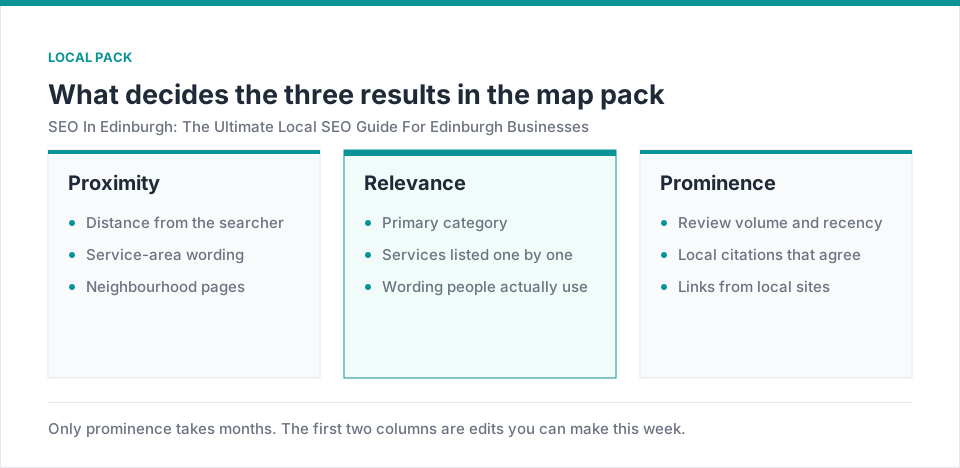
Governance artefacts underpin disciplined localisation as Edinburgh campaigns scale. ActivationTemplates encode per-surface publishing rules; LocalizationManifest depth defines how far diffusion extends geographically; TranslationKeys parity travels with every diffusion render; LicensingStamp provenance tracks asset rights; and a central Provenance Ledger logs translations and diffusion decisions for regulator-ready reporting. These artefacts ensure language variants never fragment the Edinburgh Topic Identity as content traverses Local Pages, Locale Hubs, Maps overlays, KG Edges, Catalog entries, and Edge Experiences.
Practical steps for Edinburgh teams
- Audit language demand by geography. Compile a language map tied to Edinburgh districts and identify the top languages used in each area.
- Define per-surface translation governance. Create TranslationKeys parity guidelines and ensure ActivationTemplates carry language metadata for every surface.
- Publish multilingual Local Pages with anchored geographies. Link Local Pages to locale-focused diffusion briefs so signals diffuse while maintaining Topic Identity.
- Apply hreflang and structured data consistently. Deploy language-specific LocalBusiness, Service, and Product schemas to support diffusion across Local Pages, Locale Hubs, and Maps overlays.
- Monitor diffusion health and user experience. Use dashboards to track language engagement, proximity signals, and conversions across Edinburgh districts.
To enable practical progress, visit the Edinburgh SEO Services hub for per-surface briefs, governance artefacts, and diffusion dashboards you can reuse today. If you’d like tailored guidance, book a discovery session via the Edinburgh contact page to align on anchor geographies, diffusion depth, and language governance tailored to your business. For external reference and credibility, consult Google Structured Data guidelines, Moz Local, and BrightLocal Local SEO ranking factors.
Readers will gain a robust localisation framework tailored to Edinburgh’s linguistic and cultural landscape, with ready-to-use artefacts that preserve Topic Identity as signals diffuse across six surfaces. This Part 7 sets the stage for suburb-focused content briefs and language-aware governance in Part 8, where localisation supports link building and local partnerships within Edinburgh’s districts.
Part 8 Of 12: Link Building And Local Partnerships In Edinburgh
Edinburgh's local ecosystem rewards credible, geographically relevant backlinks that reinforce proximity signals across Local Pages, Locale Hubs, Maps overlays, Knowledge Graph Edges, Catalog entries, and Edge Experiences. In a governance-led diffusion framework, earned links from Edinburgh-based publishers, institutions, and community organisations become durable trust signals that help maintain a single Edinburgh Topic Identity while expanding visibility across the city’s districts. This part outlines a practical approach to securing authentic local partnerships, structuring outreach, and measuring impact within the six-surface diffusion model.
Begin by recognising the three layers of Edinburgh-specific links that matter most: 1) community and trade associations, 2) local media and cultural organisations, and 3) universities, venues, and tourism partners. Each category offers different editorial and cross-media opportunities that diffuse meaningfully if aligned with ActivationTemplates, LocalizationManifest depth, TranslationKeys parity, LicensingStamp provenance, and the central Provenance Ledger. Never treat link-building as isolated outreach; integrate it into your diffusion briefs so every partnership reinforces Edinburgh anchors that users recognise across surfaces.
Strategic partner profiling for Edinburgh districts
- City Centre and historic core partners. Engage with local business associations, chamber networks, and city-centre publications to surface district-specific guides, event roundups, and service roundups that tie to Local Pages and Maps overlays.
- Leith, Stockbridge, and waterfront collaboratives. Target lifestyle outlets, neighbourhood blogs, and cultural venues that can host content, co-sponsor events, or publish editorial features relevant to nearby readers and visitors.
- Universities, galleries, and training organisations. Secure expert roundups, student-led projects, and campus events to create cross-link opportunities that diffuse through KG Edges and Locale Hubs while preserving Topic Identity.
Conversion-friendly link opportunities arise when partnerships deliver editorial value or practical resources. Editorial placements, local PR features, and event-driven content should be designed to diffuse across surfaces rather than accumulate as isolated backlinks. The governance layer ensures these links stay consistent with Edinburgh anchors and do not distort the Topic Identity as signals travel from Local Pages into Locale Hubs, Maps overlays, KG Edges, Catalog entries, and Edge Experiences.
How to structure Edinburgh link-building outreach
Adopt a disciplined process that mirrors the diffusion spine. Start with a concise outreach brief for each partner that includes: the Edinburgh anchor geography, the target surface (for example Local Page or Locale Hub), suggested content formats, and a cross-link plan that respects licensing and translation governance. Emphasise relevance to Edinburgh districts; avoid generic link schemes that do not reflect local user intent or community context. Language parity should travel with diffusion renders when content serves multilingual audiences, ensuring anchors remain consistent across surfaces.
Practical outreach prompts include: 1) editorial guest posts about district-level topics; 2) event sponsorship pages that link to Local Pages and Maps overlays; 3) resource hubs created with local partners that feed into Locale Hubs and KG Edges. Each instance should be accompanied by a per-surface tagging plan within ActivationTemplates so diffusion remains coherent and the Edinburgh Topic Identity remains central.
Governance and artefacts for sustainable link-building
Link-building in Edinburgh benefits from robust governance artefacts. ActivationTemplates codify how partnerships render on each surface; LocalizationManifest depth constrains diffusion to relevant geographies; TranslationKeys parity ensures language-consistent anchors; LicensingStamp provenance records asset rights for any assets or content used in partnerships; and a central Provenance Ledger logs all link-related assets and decisions for regulator-ready reporting. These artefacts provide an auditable trail as you expand across Local Pages, Locale Hubs, Maps overlays, and beyond.
Measurement should track both the velocity and quality of Edinburgh backlinks. Key metrics include the number of referring domains from Edinburgh-based outlets, the relevance of linking pages to local anchors, the referral traffic quality to Local Pages, and the downstream impact on inquiries and conversions across diffusion surfaces. Tie these metrics into the Diffusion Health Index (DHI) to present a unified view of how partnerships contribute to cross-surface engagement and business outcomes.
Don’t forget: maintain editorial integrity and avoid manipulative practices. Prioritise relationships with credible Edinburgh sources, obtain proper permissions for content use, and ensure all assets are licensed and traceable through LicensingStamp provenance. When done well, local partnerships become durable signals that reinforce proximity and trust city-wide.
Ready to begin? Use the Edinburgh SEO Services hub to access activation briefs and governance artefacts you can reuse today. For a guided start, book a discovery session via the Edinburgh contact page to discuss anchor geographies, diffusion depth, and a tailored link-building plan that respects Edinburgh’s distinctive districts and communities. Credible external references such as Google Structured Data guidelines, Moz Local, and BrightLocal Local SEO ranking factors provide useful benchmarks to calibrate diffusion health as Edinburgh campaigns scale.
Part 9 Of 12: Measuring Success: Metrics, Reporting, And ROI For Edinburgh Campaigns
Having established a robust six-surface diffusion spine for Edinburgh, the next step is to translate activity into credible business value. This part outlines a disciplined measurement framework, defines a Diffusion Health Index (DHI) to track cross-surface health, and prescribes a clear reporting cadence. The aim is to provide leadership with auditable insights that demonstrate how proximity signals, city-wide authority, and content governance convert into inquiries, appointments, and revenue across Edinburgh’s districts.
Measurement in Edinburgh should be geographically aware, temporally disciplined, and aligned with governance artefacts such as ActivationTemplates, LocalizationManifest depth, TranslationKeys parity, LicensingStamp provenance, and a central Provenance Ledger. When diffusion health is monitored as a single, auditable score, stakeholders can see how Edinburgh’s topics travel from anchor geographies to broader surfaces while preserving a recognisable Topic Identity across Local Pages, Maps overlays, KG Edges, Catalog entries, and Edge Experiences.
A Measurement Framework For Edinburgh Campaigns
The framework combines a robust baseline, a composite health index, surface-specific signals, and a clear attribution approach. It enables Edinburgh teams to diagnose drift early and adjust diffusion depth without destabilising core anchors.
Key components of the framework include a baseline refresh, a governance-aligned data stack, and a practical measurement plan that ties to business outcomes. Baselines cover GBP hygiene, Local Page completeness for core geographies, and the maturity of Maps overlays. The Diffusion Health Index blends engagement, proximity fidelity, and provenance into one auditable metric that leadership can review alongside revenue and ROI indicators.
What to measure across Edinburgh surfaces
Edinburgh campaigns diffuse signals across Local Pages, Locale Hubs, Maps overlays, Knowledge Graph Edges, Catalog entries, and Edge Experiences. The most actionable metrics are those that illuminate how a district-level inquiry becomes a real-world conversion, while keeping Edinburgh’s Topic Identity intact across surfaces. The following five areas capture the most meaningful signals for governance and growth:
- Diffusion Health Index (DHI): A composite score that blends engagement, proximity fidelity, and asset provenance across six surfaces to indicate overall diffusion health.
- Local Page engagement and intent signals: Page views by geography, time on page, click-throughs to local actions, and district-specific queries that validate content relevance.
- GBP interactions and NAP consistency impact: Profile views, directions requests, calls, and visits that reflect perceived local authority and proximity.
- Maps overlays and proximity events: Direction requests, distance-to-location metrics, and in-map interactions that signal practical next steps for users in Edinburgh districts.
- Cross-surface conversion potential: Inquiries, form submissions, bookings, or purchases that originate from a multi-surface journey, tracked through a unified attribution model.
Each of these signals should be defined in per-surface briefs so the diffusion framework remains coherent as content diffuses from Local Pages to Locale Hubs and beyond. For authoritative guidance on structured data and entity signals, consult Google Structured Data guidelines, Moz Local, and BrightLocal Local SEO ranking factors.
ROI is not derived from a single metric; it emerges from the quality of cross-surface journeys and their ability to generate measurable business outcomes. An Edinburgh programme should link diffusion activity to practical results such as lead generation, appointments booked, or revenue attributed to GEOGRAPHY-anchored campaigns. A well-constructed attribution model captures cross-surface journeys from Local Pages to Edge Experiences, with the central Provenance Ledger ensuring language parity and asset provenance remain traceable across translations and licensing terms.
How to approach reporting and governance cadence
Adopt a predictable rhythm that keeps leadership informed without causing fatigue. A simple but robust cadence includes weekly tactical summaries, monthly diffusion dashboards, and quarterly strategy reviews. Each meeting should review ActivationTemplates and TranslationKeys parity updates, examine any diffusion depth adjustments, and assess provenance changes in the Ledger. The cadence ensures Edinburgh’s six-surface diffusion remains coherent as new geographies or surfaces are activated.
- Step 1: Define KPIs aligned to Edinburgh geography. Establish a concise set of district-focused KPIs that tie diffusion activity to business outcomes.
- Step 2: Instrument a unified measurement stack. Implement GA4, Data Studio/Looker, and diffusion dashboards that bring Local Pages, Maps overlays, and other surfaces into a single view.
- Step 3: Create governance-reviewed reporting templates. Use ActivationTemplates and the Provenance Ledger to ensure every report is auditable and regulator-ready.
- Step 4: Link diffusion to ROI. Map DHI and surface metrics to inquiries, conversions, and revenue across Edinburgh districts, feeding CRM or ERP where possible.
- Step 5: Establish ongoing optimisation loops. Schedule regular reviews that feed back into content briefs, surface updates, and governance artefacts to sustain Topic Identity.
To implement these measurement practices, access the Edinburgh SEO Services hub for diffusion artefacts, dashboards, and governance templates you can reuse today. If you prefer a guided start, book a discovery call via the Edinburgh contact page to tailor KPIs, data sources, and reporting cadences to your organisation. For external benchmarks that inform governance practices, consult Google Structured Data guidelines, Moz Local, and BrightLocal Local SEO ranking factors.
By following these measurement disciplines, Edinburgh campaigns build a transparent path from local signals to tangible business results, ensuring a durable Topic Identity while progressively increasing proximity-based visibility across all six diffusion surfaces.
Part 10 Of 12: Budgeting And Implementing Edinburgh SEO Packages
With a mature six-surface diffusion spine in place, Edinburgh campaigns demand a clear, governance‑driven budgeting approach. This part translates the six-surface diffusion model into practical pricing tiers, deliverables, and governance artefacts that Edinburgh teams can implement from day one. The aim is to deliver durable proximity signals, maintain a single Edinburgh Topic Identity, and provide regulator‑ready visibility across Local Pages, Locale Hubs, Maps overlays, Knowledge Graph Edges, Catalog entries, and Edge Experiences. For context and repeatable governance, see the Edinburgh SEO Services hub and the diffusion artefacts hosted on edinburghseo.org.
Edinburgh budgets typically align to three progressive packages, each designed to scale diffusion depth, surface activation, and governance sophistication while preserving a coherent Edinburgh Topic Identity. Baseline focuses on stabilising Local Pages and GBP hygiene; Growth deepens district coverage and Locale Hubs; Scale activates advanced surfaces such as KG Edges, extensive Catalog entries, and Edge Experiences. The typical monthly investment ranges reflect Edinburgh’s competitive local market and the operational cost of disciplined governance and diffusion health tracking.
Package overview and pricing framework
- Baseline package (£3,000–£6,000 per month). Establish GBP hygiene, core Local Pages for key Edinburgh districts, essential Maps overlays, and the initial diffusion spine. Deliverables include geography-aligned Local Pages, starter per-surface schema, a foundational diffusion dashboard, and a governance diary to log asset provenance. This tier stabilises Edinburgh anchors and validates diffusion processes before deeper activation.
- Growth package (£6,000–£15,000 per month). Expand anchor geographies, accelerate diffusion into additional districts, and deepen Locale Hubs with suburb-focused topic clusters. Expect richer per-surface schemas, expanded dashboards, more cross-surface attribution, and translated assets with parity to sustain Edinburgh’s Topic Identity as signals diffuse further.
- Scale package (£15,000–£35,000+ per month). Fully activate KG Edges and Catalog entries, plus Edge Experiences. This tier supports granular cross-surface attribution and sophisticated governance, with multi-language diffusion, licensing provenance, and comprehensive dashboards feeding CRM and GBP activity for regulator-ready reporting.
All packages include governance artefacts essential to scalable diffusion. ActivationTemplates codify per-surface publishing rules; LocalizationManifest depth defines diffusion boundaries by geography; TranslationKeys parity maintains language-aligned anchors; LicensingStamp provenance records asset rights; and a central Provenance Ledger logs diffusion decisions for regulator-ready reporting. These artefacts ensure that as Edinburgh signals diffuse, Topic Identity remains intact and auditable across Local Pages, Locale Hubs, Maps overlays, KG Edges, Catalog entries, and Edge Experiences.
Want the numbers behind this? The analytics guide shows how organic traffic and the queries GA4 hides are rebuilt in Semalt.
What’s included in the governance stack
- ActivationTemplates: per-surface publishing rules to preserve Edinburgh Topic Identity.
- LocalizationManifest depth: controls how far diffusion travels from each anchor geography.
- TranslationKeys parity: ensures language variants align on all surfaces.
- LicensingStamp provenance: records asset rights for governance and auditing.
- Provenance Ledger: a central log of asset movements, translations, and licensing decisions.
Onboarding and rollout require a practical sequence. Start with Baseline GBP hygiene and eight to twelve anchor geographies, then progressively unlock Maps overlays and Locale Hubs, followed by KG Edges and Catalog entries. This staged diffusion keeps Edinburgh’s Topic Identity cohesive while you learn what content and formats perform best in each surface.
Onboarding cadence and quick-start steps
- Step 1: Define eight to twelve anchor Edinburgh geographies. Map each geography to initial Local Pages and diffusion briefs to guide per-surface content, metadata, and schema. Ensure TranslationKeys parity travels with all diffusion renders.
- Step 2: Lock GBP hygiene and Local Pages first. Prioritise accurate NAP data, verified addresses, and up-to-date business details across City Centre, Leith, New Town, and Stockbridge, then validate Maps overlays for proximity signals.
- Step 3: Establish per-surface diffusion briefs. Use ActivationTemplates to codify how Local Pages, Locale Hubs, Maps overlays, KG Edges, Catalog entries, and Edge Experiences render content, ensuring consistent Edinburgh Topic Identity across surfaces.
- Step 4: Set diffusion depth and governance cadence. LocalizationManifest depth should cap diffusion by geography, while TranslationKeys parity travels with diffusion renders for multilingual audiences. Schedule quarterly governance reviews alongside monthly diffusion dashboards.
ROI expectations in Edinburgh are tied to cross‑surface journeys, not rankings alone. The Diffusion Health Index (DHI) remains the anchor metric, blending surface engagement, proximity fidelity, and asset provenance into a single, auditable score. Tie DHI outcomes to GBP interactions, Local Page conversions, and Maps‑driven inquiries to produce regulator‑friendly reporting for leadership and stakeholders. External references such as Google Structured Data guidelines, Moz Local, and BrightLocal Local SEO ranking factors provide calibration benchmarks as diffusion scales city‑wide.
To start applying these budgeting and implementation principles, visit the Edinburgh SEO Services hub for per-surface briefs, governance templates, and diffusion dashboards you can reuse today. If you’d like tailored guidance, book a discovery call via the Edinburgh contact page to align package scope, diffusion depth, and governance cadence to your business needs.
Credible external references that inform budgeting decisions include Google Structured Data guidelines, Moz Local, and BrightLocal Local SEO ranking factors. These sources help calibrate diffusion health as Edinburgh campaigns scale and serve as governance touchpoints when presenting ROI to stakeholders.
In summary, Part 10 equips Edinburgh teams with a practical budgetary framework, a clear ladder of package options, and a governance blueprint that scales in step with growth. The next steps involve validating anchor geographies, initiating GBP hygiene, and leveraging the Edinburgh Services hub to begin your diffusion journey with auditable artefacts that stay true to Edinburgh’s Topic Identity across six surfaces.
Part 11 Of 12: The SEO Agency Vs In-House Debate In Edinburgh
Edinburgh businesses face a pivotal decision when building search visibility: partner with a local SEO agency or develop an in-house team capable of sustaining a six-surface diffusion strategy. The Edinburgh Topic Identity framework introduced earlier in this series requires disciplined governance across Local Pages, Locale Hubs, Maps overlays, Knowledge Graph Edges, Catalog entries, and Edge Experiences. This part weighs the benefits and trade-offs of outsourcing versus in-house delivery within Edinburgh’s distinctive market, offering a practical decision framework tailored to the city’s districts and business rhythms.
Agency-led engagement offers speed to impact, breadth of expertise, and a ready-made governance scaffold. A local Edinburgh agency typically brings a multidisciplinary team capable of handling GBP hygiene, Local Pages, Maps overlays, and cross-surface diffusion with consistent Topic Identity. They can accelerate diffusion health by applying ActivationTemplates, LocalizationManifest depth, TranslationKeys parity, LicensingStamp provenance, and a central Provenance Ledger from day one. For Edinburgh firms aiming to respond quickly to market shifts or to scale across multiple districts, an agency partner can compress the learning curve and provide regulator-ready reporting templates that align with Google’s guidance and local best practices.
On the flip side, in-house teams offer deep domain knowledge about the business, culture, and product nuances. An Edinburgh in-house team can embed diffusion governance within product roadmaps, align closely with GBP strategy, and tailor localisation to reflect the city’s unique neighbourhoods. Maintaining a single Edinburgh Topic Identity across Local Pages and Maps overlays becomes an internal mandate, reducing external dependency. However, building the necessary capability in-house demands access to skilled personnel, time for training, and a significant upfront investment in tooling and governance artefacts—elements that can slow initial progress but yield longer-term control and cultural alignment.
What should you weigh when deciding between agency and in-house delivery in Edinburgh? Consider these core dimensions:
1) Speed to impact vs long-term control
Agencies typically deliver faster initial improvements due to established playbooks, access to tested ActivationTemplates, and ready-made dashboards. In Edinburgh, where proximity signals and district-specific intents matter, this speed can translate into quicker GBP visibility, Maps presence, and early conversions. In-house teams, while potentially slower to ramp, offer tighter control over brand voice, data handling, and strategic pivots that align with product or service innovations. The choice depends on whether rapid wins or deep governance customisation is the priority.
2) Range of capabilities
A local Edinburgh agency frequently provides breadth: technical SEO, content strategy, local link building, GBP optimisation, and analytics governance, all wrapped with cross-surface diffusion expertise. In-house teams may excel in specialised areas—perhaps product-led content or a niche sector—yet they often require augmentation to cover all six diffusion surfaces with the same level of governance rigor. For Edinburgh campaigns, many firms adopt a hybrid approach: core governance and diffusion management led by an agency, with in-house personnel handling day-to-day content and local stakeholder engagement.
3) Governance, transparency, and compliance
A central strength of agency partnerships is a transparent governance footprint. In Edinburgh, ActivationTemplates, LocalizationManifest depth rules, TranslationKeys parity, LicensingStamp provenance, and the Provenance Ledger can be provided as auditable artefacts, making regulator-ready reporting straightforward. In-house teams can mirror this governance but require a dedicated governance function, clear SOPs, and robust change-management processes. If your organisation demands stringent data security, access controls, and audit trails, evaluate whether a partner can supply a transparent governance stack from day one or if you must build it internally over time.
4) Cost models and total cost of ownership
Agency engagements are typically structured as monthly retainers, with optional onboarding fees for artefact delivery and initial diffusion briefs. In Edinburgh, a baseline engagement might cover GBP hygiene, Local Pages for core geographies, and initial diffusion dashboards; Growth or Scale engagements extend diffusion into Locale Hubs, KG Edges, and more sophisticated cross-surface attribution. In-house teams incur salaries, benefits, software licences, and ongoing training costs, plus the price of tools and governance platforms. A realistic comparison should include not only monthly costs but also the value of faster time-to-market, reduced risk of drift, and the long-term benefits of a scalable governance framework.
For Edinburgh firms weighing options, a practical approach is to model a 12-month view of both scenarios, including diffusion health outcomes, cross-surface conversions, and regulator-ready reporting requirements. External references, such as Google Structured Data guidelines, Moz Local, and BrightLocal Local SEO ranking factors, can help calibrate expectations and provide benchmarks for governance-equipped campaigns in Edinburgh: Google Structured Data guidelines, Moz Local, and BrightLocal Local SEO ranking factors.
5) Onboarding, knowledge transfer, and ongoing collaboration
Whether you choose an agency, in-house, or a hybrid model, a successful diffusion programme in Edinburgh requires a well-planned onboarding and continuous learning process. Agencies typically bring structured onboarding that includes asset handover, access to dashboards, and walkthroughs of governance artefacts. In-house teams benefit from a formal knowledge transfer plan, documentation, and a cadence of cross-functional reviews to maintain Topic Identity as new geographies and surfaces are activated.
Practical decision framework for Edinburgh businesses
To decide confidently, follow these steps:
- Define the objective and desired diffusion depth. Are you aiming for rapid GBP visibility expansion, or a longer-term, highly customised diffusion across all six surfaces?
- Audit governance requirements. Determine whether ActivationTemplates, LocalizationManifest depth, TranslationKeys parity, LicensingStamp provenance, and the Provenance Ledger will be provided by a partner or built in-house.
- Assess internal capability and capacity. Evaluate whether you have the talent to sustain Local Pages, Locale Hubs, and cross-surface diffusion without compromising other priorities.
- Model total cost of ownership. Compare monthly costs, onboarding, tool licences, and the asset-management burden against expected diffusion health and ROI, using a Diffusion Health Index as the guiding metric.
- Demand regulator-ready reporting from the outset. If you require audit trails and verifiable governance, ensure the chosen path includes a central Provenance Ledger and documented asset provenance.
For Edinburgh teams seeking ready-made governance artefacts and diffusion dashboards, the Edinburgh SEO Services hub provides a repository of activation briefs, templates, and dashboards you can reuse today. If you’d like personalised guidance, book a discovery call via the Edinburgh contact page to discuss your geography, surface activation, and governance cadence in detail.
In Part 12, we’ll translate these choices into concrete onboarding playbooks and comparison scenarios tailored to Edinburgh businesses. The aim is to help you move decisively—whether you partner with a trusted Edinburgh agency, build internal capability, or adopt a blended approach that leverages the strengths of both models while preserving a single Edinburgh Topic Identity across Local Pages, Locale Hubs, Maps overlays, KG Edges, Catalog entries, and Edge Experiences.
Part 12 Of 12: How To Choose A Trusted Edinburgh SEO Partner
Choosing the right partner is as important as the diffusion framework you’re adopting. In Edinburgh, where Local Pages, Locale Hubs, Maps overlays, Knowledge Graph Edges, Catalog entries, and Edge Experiences must communicate under a single Edinburgh Topic Identity, a trusted ally should not only execute well but also steward governance artefacts, measurement discipline, and long‑term consistency. This final part translates the six-surface diffusion model into a practical partner selection guide, offering a clear framework to evaluate agencies or in‑house teams against Edinburgh’s unique geography, languages, and district dynamics.
Why this matters in Edinburgh is simple. A credible partner will deliver activation briefs and artefacts that meaningfully map Local Pages to Maps overlays, ensure TranslationKeys parity travels with diffusion renders, and maintain an auditable Provenance Ledger as asset provenance evolves. They should also demonstrate a track record of improving proximity signals across Edinburgh districts such as City Centre, Leith, and Stockbridge, while keeping a single, recognisable Topic Identity across all surfaces.
What to look for in an Edinburgh partner
- Transparent governance and clear communication. The partner should publish how activation rules, diffusion depth, language parity, asset licensing, and provenance are managed on a day‑to‑day basis, with predictable reporting cadences to inform leadership.
- Committed delivery of governance artefacts from day one. Expect ActivationTemplates, LocalizationManifest depth settings, TranslationKeys parity, LicensingStamp provenance, and a central Provenance Ledger to accompany every surface activation.
- Local Edinburgh domain expertise. Demonstrable experience delivering across Local Pages, Maps overlays, Locale Hubs, and KG Edges for businesses anchored in Edinburgh’s districts. Case studies should show outcomes such as improved GBP signals, higher Maps visibility, and measurable cross‑surface conversions.
- Integration readiness with your tech stack. The partner should align with your analytics, CRM, CMS, and governance tooling so diffusion remains coherent as signals diffuse through all six surfaces.
- Regulator‑friendly reporting capability. Expect ready access to audit‑ready dashboards and artefacts that support governance and compliance requirements.
To evaluate potential partners, request transparent examples of real Edinburgh work, including diffusion dashboards, per‑surface briefs, and the assets that tie Local Pages to Locale Hubs and Maps overlays. Seek evidence of ongoing governance practices and a demonstrated ability to scale diffusion while preserving the Edinburgh Topic Identity across geographies like City Centre, Leith, and New Town.
A practical partner discovery checklist
- Confirm anchor geographies and diffusion briefs. Ensure eight to twelve Edinburgh geographies are defined with per‑surface briefs that describe content, metadata, and diffusion depth while preserving Topic Identity.
- Request live artefacts samples. ActivationTemplates, LocalizationManifest depth, TranslationKeys parity, LicensingStamp provenance, and a sample Provenance Ledger should be demonstrable and editable for your disclosure needs.
- Demonstrate governance cadence. The partner should outline weekly tactical checks, monthly diffusion dashboards, and quarterly governance reviews, with clear ownership and escalation paths.
- Assess data security and compliance. Verify data handling practices, access controls, GDPR considerations, and audit trails for artefacts and diffusion decisions.
- Review Edinburgh client case studies. Look for tangible outcomes across Local Pages, Maps overlays, and Locale Hubs in Edinburgh districts, with quantified improvements in proximity signals and conversions.
- Clarify pricing, SLAs, and exit terms. Understand what is included in Baseline, Growth, and Scale scopes, along with ownership of artefacts and a smooth transition plan at contract end.
Questions to ask during vendor conversations
- How do you ensure TranslationKeys parity across all six surfaces? Explain how multilingual audiences stay anchored to the same Edinburgh geographies during diffusion.
- Can you share a live example of ActivationTemplates in practice? Demonstrate publishing rules per surface and how they preserve Edinburgh Topic Identity during expansion.
- What is your governance cadence and who is accountable? Identify the governance roles, owners of artefacts, and the review timetable.
- How do you handle licensing provenance and asset rights? Show how LicensingStamp provenance is tracked across Local Pages, Maps overlays, and KG Edges.
- What reporting formats will leadership receive? Describe dashboards, export formats, and regulator-ready artefacts, including the Provenance Ledger.
- What is your approach to GBP hygiene and NAP consistency? Confirm processes for ongoing GBP optimisation and cross‑surface data alignment.
- How do you measure multi‑surface diffusion impact? Explain the Diffusion Health Index and how it ties to cross‑surface conversions and CRM data.
- Can you provide Edinburgh references or testimonials? Validate local credibility with Edinburgh‑based clients or projects.
- What is your pricing model and what happens at renewal? Clarify inclusions, changes in scope, and possible escalations during contract cycles.
- What onboarding and knowledge transfer do you offer? Outline the initial handover, access to dashboards, and documentation to support internal continuity.
If you are weighing options, use the Edinburgh SEO Services hub to compare artefacts, dashboards, and sample briefs. A discovery session via the Edinburgh contact page provides a practical forum to align anchor geographies, diffusion depth, and governance cadence with your organisation’s growth plan. For external references that support credible governance, review Google Structured Data guidelines, Moz Local, and BrightLocal Local SEO ranking factors as benchmarks for diffusion health across Edinburgh’s districts.
In summary, Part 12 equips Edinburgh teams with a practical, decision‑focused framework to select a trusted partner who can scale six‑surface diffusion while preserving a single Edinburgh Topic Identity. The emphasis remains on governance artefacts, measurable ROI, and a collaborative cadence that keeps pace with Edinburgh’s evolving districts and language needs. If you’re ready to begin, reach out via the Edinburgh services hub or the contact page to start a dialogue about anchor geographies, diffusion depth, and governance cadence tailored to your business.