Understanding The Role Of An SEO Specialist In Edinburgh
Edinburgh’s business environment blends a rich historical backdrop with a vibrant, modern economy. For local organisations, search engine optimisation (SEO) is less a luxury and more a strategic necessity. An experienced SEO specialist in Edinburgh helps you navigate a competitive local landscape, where visibility in maps, local packs, and organic results translates directly into enquiries, leads, and revenue. The purpose of this Part 1 is to establish what an Edinburgh-based SEO professional brings to the table, how their expertise aligns with Scotland’s capital area, and why hiring local matters for sustaining long‑term growth. You’ll also see how this site, EdinburghSEO.org, frames a locality-forward approach that can be customised to your business goals.
The value of a local SEO specialist for Edinburgh businesses
Local search has evolved beyond keyword stuffing. In Edinburgh, consumers routinely search for nearby providers, directions, opening hours, and district-specific services. A skilled Edinburgh SEO specialist optimises for these local intents, ensuring your site signals align with how people in the city search. This means harmonising technical health with locally relevant content, accurate business data, and trustworthy user experiences. The outcome is improved visibility in Google Maps, Local Packs, and organic results that drive qualified traffic and tangible outcomes for Edinburgh enterprises.
Key reasons to engage a local expert include an intimate understanding of Edinburgh’s neighbourhoods, transportation corridors, and community references. A local practitioner can tailor content and service pages to districts such as the Old Town, New Town, Leith, Granton, and suburban belts, ensuring diffusion assets are authentic and credible to Edinburgh’s audiences. For further reading on authoritative local signals, see Google’s Local Business Structured Data guidelines and Moz Local SEO Guide.
To explore how a local Edinburgh strategy fits your business, review our SEO services page or book a consultation with our team through EdinburghSEO.org. A short, well-scoped engagement can often unlock early momentum in your target Edinburgh districts.
What an Edinburgh SEO specialist does for your organisation
An Edinburgh SEO specialist combines technical proficiency with strategic content planning and local market insight. Their responsibilities typically span five core areas:
- Technical SEO and site health: crawlability, indexation, Core Web Vitals, mobile usability, and canonical handling. This foundation helps search engines understand your Edinburgh-focused content and rank it accurately.
- Local optimisation and GBP governance: ensuring your Google Business Profile is complete, accurate, and活 actively reflects Edinburgh service areas and neighbourhoods.
- On‑page optimisation and content strategy: crafting locality-forward pages, optimising meta data, headings, and internal links to support diffusion from CBD authority to Edinburgh’s suburbs.
- Content localisation and district signals: integrating Edinburgh landmarks, transit routes, and community references into hub and edge content for authentic relevance.
- Measurement and governance: establishing dashboards, attribution models, and regular reviews to track diffusion velocity and local conversions across Edinburgh markets.
The EdinburghSEO.org framework emphasises a governance-driven approach. This means activating suburb-focused assets in a controlled, auditable way, with activation briefs, translation provenance mappings to preserve seed-term journeys, locale notes for district-specific terminology, and parity checks to maintain a consistent user experience across hub and edge surfaces.
How local knowledge translates into tangible outcomes
Local awareness drives relevance, which in turn boosts engagement signals. An Edinburgh-focused SEO strategy recognises that users often search for nearby services with near-me intent, and it tailors the site structure and content to reflect Edinburgh’s geography, culture, and daily rhythms. When your hub content is robust and your edge assets are precisely targeted to suburbs such as Leith, Morningside, and Sighthill, you create a diffusion network that improves not only rankings but real-world action—phone calls, form submissions, directions, and in-store visits.
In practice, this translates to consistent NAP data across Edinburgh directories, optimised local landing pages, and timely GBP updates that mirror local events and promotions. External references to best practices include Google’s Local Business Structured Data guidelines and Moz Local SEO Guide, which underpin reliable local signals that help your Edinburgh business stand out in Maps and Local Packs.
Getting started with Edinburgh SEO: next practical steps
If you’re considering how to move from concept to action, begin with a targeted assessment of your Edinburgh footprint. A practical starting point is a localisation audit combining GBP health, NAP consistency, and a quick review of hub-to-edge content alignment. For immediate guidance, explore the SEO services on EdinburghSEO.org or book a consultation to discuss your Edinburgh goals and unlock a locality-forward plan tailored to your business.
What to expect from Part 1 and what comes next
Part 1 establishes the philosophy of hiring and working with an Edinburgh SEO specialist. In Part 2, we will dive into goal setting and diffusion mapping for Edinburgh—defining audience segments, priority suburbs, and initial edge assets that help you gain local visibility while keeping seed terms protected. For immediate steps, you can start with the SEO services page and schedule a consultation via the contact page.
Goal Setting And Diffusion Mapping For Edinburgh Web Design And SEO
Following the foundation laid in Part 1, this section translates the Edinburgh-focused philosophy into practical, locality-forward actions. The aim is to define precise Edinburgh audience segments, establish diffusion goals, and outline the initial hub-to-edge assets that will accelerate local visibility while protecting CBD authority. By framing Dalkeith, Leith, Portobello, and other Edinburgh neighbourhoods as diffusion targets, you’ll create a measurable path from central authority to suburb-level impact that translates into qualified enquiries and conversions.
Defining Edinburgh Audiences And Audience Journeys
Begin by segmenting Edinburgh’s diverse market into coherent journeys that reflect local behaviours. Core Edinburgh segments include: local shoppers in suburban clusters seeking nearby services; professionals and decision-makers in business districts looking for reliable local options; residents researching transport links, schools, and community resources; visitors seeking quick, practical guidance; and students or commuters needing city-centre amenities. Mapping these journeys helps you tailor hub and edge content so each suburb surface answers real local questions and supports rapid diffusion.
- Local shoppers in Edinburgh’s suburbs seeking nearby services and clear directions.
- Business professionals evaluating nearby facilities for meetings or procurement.
- Residents researching transport access, schools, and community resources.
- Visitors requiring fast directions, local recommendations, and accessible facilities.
- Students and commuters looking for local amenities and services.
Setting Edinburgh Diffusion Goals
Diffuse Edinburgh CBD authority into targeted suburbs with clear, trackable outcomes. Establish goals that span awareness, intent, and conversion, ensuring every diffusion step contributes to tangible business results. Core Edinburgh diffusion goals include increasing Maps impressions in priority districts, elevating Local Pack visibility for suburb-specific queries, and driving edge-page inquiries and conversions that tie back to GBP activity and local signals.
- Hub-to-edge diffusion velocity: measure how quickly suburb pages gain authority after activation.
- Edge engagement: track time on page, pages per session, and CTA interactions on suburb surfaces.
- Local conversions: forms, calls, or bookings attributed to suburb-page journeys and GBP activity.
- Return on diffusion: tie suburb-level results to real business metrics such as enquiries and revenue impact.
Identifying Priority Suburbs And Activation Radius
Prioritise Edinburgh suburbs based on search interest, local demand, and competitive intensity. Start with central districts around the Old Town and New Town, then extend into Leith, Portobello, Granton, Dalkeith, Musselburgh, Corstorphine, and Sighthill as diffusion momentum grows. Create a diffusion map linking hub pages to suburb pages, guiding the activation sequence and resource allocation. Transit accessibility, community events, and district momentum should inform which suburbs activate first and how edge content expands.
Edge Assets: What To Activate First
Edge assets are suburb-focused pages, locality-specific service pages, GBP updates, and timely content about local events. Begin with a compact, high-potential set of edge assets that map directly to seed terms, embed local context such as landmarks and transit routes, and maintain alignment with hub authority. The initial set should address the most promising Edinburgh districts and services, expanding as diffusion momentum increases.
- Suburb-focused landing pages with clear service relevance and authentic local testimonials.
- Service pages that answer common Edinburgh near-me queries and schedules.
- GBP posts and local event updates that support edge surface momentum.
Activation Briefs For Surfaces, Translation Provenance Mappings, Locale Notes, And PSC Parity Checks
Adopt governance artefacts to protect seed terms while enabling diffusion. Activation Briefs for Surfaces specify targets, data feeds, validation steps, and success criteria for each edge asset. Translation Provenance mappings help preserve the journey from broad hub content to suburb-specific topics, preventing semantic drift. Locale Notes codify Edinburgh terminology and district nuances to ensure authentic edge content. PSC parity checks guarantee a consistent user experience as you diffuse from CBD hub pages to edge surfaces.
- Activation Briefs: targets, data feeds, validation steps, and success metrics.
- Translation Provenance mappings: protect seed-term journeys during diffusion.
- Locale Notes: Edinburgh terminology and district cues for edge editors.
- PSC parity checks: consistent navigation, CTAs, and forms across hub and edge surfaces.
Measurement, Dashboards, And Governance Cadence For Edinburgh
Measurement anchors diffusion to business outcomes. Create Edinburgh-specific dashboards that merge GA4, Google Search Console, and GBP insights with hub-to-edge attribution. Track diffusion velocity, edge engagement, and local conversions, then hold regular governance sessions to refresh Activation Briefs for Surfaces, Translation Provenance mappings, Locale Notes, and PSC parity checks. A practical cadence includes weekly tactical reviews and monthly governance sessions to adjust surface priorities as Edinburgh markets evolve.
- Hub and edge surface performance visualised on a unified Edinburgh dashboard.
- Cross-surface attribution credits diffusion from CBD authority to suburb surfaces.
- Quarterly ROI reviews to recalibrate diffusion targets, budgets, and surface priorities.
Next Steps: Engaging With EdinburghSEO.org
To operationalise these Edinburgh-focused diffusion steps, explore SEO services on edinburghseo.org and book a consultation to tailor Activation Briefs for Surfaces, Translation Provenance mappings, Locale Notes, and PSC parity checks to your Edinburgh footprint. A governance-driven diffusion plan translates CBD authority into suburb-level impact, maximising local visibility and measurable ROI. For practical guidance, review our Edinburgh service pages or contact us through the contact page.
Core Elements Of Edinburgh-Focused Web Design
Edinburgh's unique urban fabric, from the historic Old Town to the modern west end, demands a web design approach that respects local behaviour while supporting SEO diffusion from a central Edinburgh CBD authority to surrounding suburbs. A locality-forward design ensures that as your Edinburgh SEO specialist, edinburghseo.org, helps you diffuse notability signals and drive real-world outcomes across Maps, Local Packs, and organic search results.
User Experience And Conversion-Driven Edinburgh Design
Experience is the core differentiator. An Edinburgh-focused UX strategy aligns site architecture with how residents and visitors search for local services, with clear paths from CBD-wide hub content to suburb-specific edge pages. A well-structured information architecture supports discovery, reduces friction, and improves on-site conversions such as form submissions, click-to-directions, and telephone clicks. In practice, this means intuitive navigation, consistent naming conventions, and accessible CTAs that reflect Edinburgh's districts, transport corridors, and landmarks.
Content strategy feeds UX by surfacing suburb-specific answers within hub pages, ensuring users encounter authentic, locally resonant information early in their journey. To reinforce credibility, include client testimonials from Edinburgh customers and local case studies that emphasise the diffusion journey from CBD to suburbs.
Responsive And Mobile-First Layouts For Edinburgh Audiences
With high mobile usage for local searches in Edinburgh, mobile-first design is essential. This means fluid layouts that adapt to Edinburgh’s diverse devices, compact navigation, and touch-friendly controls for maps, directions, and appointment bookings. Above-the-fold content should present the most common Edinburgh‑specific actions, such as “Find opening times in your district” or “Get directions to my nearby branch,” while ensuring visual hierarchy supports quick decisions.
Maintain consistent layouts across hub and edge surfaces so Edinburgh users experience a familiar interface as they move from CBD authority to suburb-specific resources. This cohesion strengthens notability signals and reduces friction that could erode conversions.
Performance And Core Web Vitals In Edinburgh Context
Performance is a design decision. Edinburgh sites should load swiftly, render content quickly, and remain stable as users interact with maps, appointment forms, and suburb content. Focus areas include image optimisation, minification of CSS and JavaScript, and a robust hosting strategy with a CDN that serves Edinburgh and surrounding areas efficiently. Regular performance audits help identify bottlenecks and guide iterative improvements to LCP, FID, and CLS, metrics that correlate with user satisfaction and local search visibility.
Structure data and semantic HTML further enhance Edinburgh‑specific edge surfaces. Annotating LocalBusiness, Service, and FAQ content helps surface in rich results and knowledge panels while keeping pages accessible to assistive technologies. For authoritative guidance, see Google Local Business Structured Data guidelines and Moz Local SEO Guide. Google Local Business Structured Data guidelines and Moz Local SEO Guide
Accessibility And Inclusive Design For Edinburgh Customers
Inclusive design broadens the potential audience in Edinburgh and aligns with UK accessibility standards. Keyboard navigation, meaningful skip links, good colour contrast, and screen reader compatibility are essential. Implement accessible forms with clear error messaging, ARIA labels, and semantic headings to streamline navigation for all users. Accessibility also enhances usability and can positively influence engagement metrics used by search engines as part of quality signals.
Document accessibility guidelines within Locale Notes and perform regular QA checks. Maintain a living checklist to ensure ongoing compliance as Edinburgh content expands across CBD and suburb surfaces.
Branding, Typography, And Local Identity
Brand identity in Edinburgh should feel authentic to the city’s character while remaining cohesive with your broader brand. Typography, colour palettes, and imagery should support readability and convey trust. Consistent branding across hub and edge surfaces helps users recognise authority quickly, boosting click-through and engagement from search results. Choose web fonts that render well across Edinburgh devices and networks, maintain accessible contrast, and use imagery that reflects Edinburgh’s neighbourhoods, streets, and community life.
Local identity informs content strategy. Suburb-focused pages benefit from captions referencing local landmarks, transit routes, and community events. This localisation signals relevance to both users and search engines, increasing the likelihood of your pages surfacing for near-me queries and district-level searches.
Content Management Systems For Edinburgh Websites
Selecting a CMS that supports Edinburgh’s locality-forward strategy is essential. WordPress remains a flexible option for many Edinburgh businesses, while Shopify or Drupal may better suit ecommerce or enterprise needs. The key is to ensure the chosen CMS enables clean URL structures, robust schema integration, efficient asset management, and smooth content workflows for hub-to-edge diffusion. When evaluating platforms, consider how easily you can publish suburb-specific pages, maintain GBP coherence, and manage edge content.
- WordPress: Flexible, cost-effective, and well-supported for locality-forward SEO in Edinburgh.
- Shopify: Fast, reliable, ideal for Edinburgh retailers prioritising ecommerce with local signals.
- Drupal or enterprise CMSs: Scalable for large, multi-surface Edinburgh sites with complex governance.
Regardless of platform, ensure semantic HTML, accessible navigation, and integrated schema. For practical guidance, explore our SEO services on edinburghseo.org and contact us to tailor platform recommendations to your business context.
Starting With A Comprehensive SEO Audit For Edinburgh
Building on the core Edinburgh web design and diffusion framework developed in Part 3, a comprehensive SEO audit establishes the baseline health of your site, signals to local search engines, and pinpoints practical actions to improve Edinburgh-specific visibility. This audit focuses on aligning technical excellence with locality signals, ensuring your hub content strengthens CBD authority while your edge surfaces begin to resonate in Edinburgh’s diverse neighbourhoods.
Audit Scope: What Gets Checked
The audit covers four interrelated pillars that are essential for Edinburgh diffusion: technical health, site structure and navigation, content quality and locality signals, and measurement readiness. Each pillar feeds into a practical action plan you can implement with confidence.
- Technical health and crawlability: assess how search engines discover and render Edinburgh-focused content, including crawl errors, robots.txt, and sitemap integrity.
- Indexation and canonical handling: verify that the most relevant Edinburgh pages are indexed and avoid duplicate content across hub and edge surfaces.
- Core Web Vitals and mobile performance: evaluate LCP, FID, and CLS across Edinburgh users, with a priority on mobile experiences in city-centre and suburb areas.
- Site architecture and internal linking: ensure a logical diffusion path from CBD hub content to suburb pages, enabling efficient crawl and user navigation.
- Local SEO signals: GBP health, NAP consistency, local citations, reviews, and schema for LocalBusiness, Service, and FAQ content.
- Content maturity and relevance: review hub content versus edge content to identify gaps, topical authority, and authentic locality signals.
- Structured data and rich results readiness: confirm appropriate LocalBusiness, Service, and FAQ markup to surface in knowledge panels and rich results.
- Measurement readiness: ensure analytics, event tracking, and attribution are configured to support hub-to-edge diffusion measurement.
Audit Methodology: How We Gather Intelligence
A rigorous Edinburgh audit combines technical inspection, data analytics, and qualitative checks. The approach uses reputable sources and practical tooling to produce actionable outputs tailored to Edinburgh’s locality signals.
- Technical tools: crawl simulations, page-by-page health checks, and Core Web Vitals profiling to identify quick wins and long-tail optimisations.
- Analytics and search data: GA4/Universal Analytics where available, Google Search Console, and GBP insights to understand local performance and issues.
- Content and structure review: maps, headings, meta data, internal linking, and the mapping of hub terms to suburb-specific queries.
- Local presence validation: GBP health, NAP consistency, local citations, and district terminology alignment in Locale Notes.
Key reference points include Google’s guidelines for Local Business Structured Data and Moz Local SEO best practices, which inform how Edinburgh-specific signals should be represented on your site and in your GBP. See also our internal Edinburgh SEO service pages for implementation guidance and governance practices.
Read next: SEO marketing in Edinburgh: a local guide · Edinburgh SEO company: how they work
Edinburgh-Specific Audit Focus Areas
To translate general SEO hygiene into locality-aware results, concentrate on Edinburgh-centric issues that influence diffusion velocity and local conversions.
- GBP health optimisation tailored to Edinburgh districts, including service areas that reflect real customer geography.
- NAP consistency across Edinburgh directories and maps platforms to strengthen edge surface credibility.
- Suburb-focused edge pages with authentic local references, district landmarks, and transit routes.
- Structured data coverage for LocalBusiness, Service, and FAQ aligned with Edinburgh terminology and district cues.
Deliverables: What You’ll Receive
At the conclusion of the Edinburgh audit, you’ll receive a comprehensive, practitioner-friendly report and a practical action plan. Expect the following outputs to guide a locality-forward diffusion program:
- Executive audit summary highlighting critical issues and quick-win opportunities for Edinburgh pages.
- Technical remediation plan with priority fixes for crawlability, indexation, and Core Web Vitals.
- GBP health and local signals improvement plan, including NAP harmonisation and citations strategy for Edinburgh.
- Content audit with recommended hub-to-edge diffusion paths and localisation opportunities for Edinburgh districts.
- Measurement plan and governance recommendations to support ongoing diffusion velocity tracking.
Deliverables are designed to dovetail with EdinburghSEO.org’s governance framework, including Activation Briefs for Surfaces, Translation Provenance mappings, Locale Notes, and PSC parity checks. For execution, navigate to our SEO services page or book a consultation to tailor the audit findings to your Edinburgh footprint.
Next Steps: Turning Insights Into Action
With the Edinburgh audit complete, the next step is to translate findings into a staged diffusion plan. Prioritise fixes that unlock visible gains in Maps and Local Packs, then schedule hub-to-edge content activations that align with your Edinburgh target districts. Use the audit outputs to inform your budgeting, governance cadence, and resource allocation. For practical support, visit our Edinburgh SEO services page or contact us to initiate a locality-forward optimisation in Edinburgh.
Local SEO Fundamentals For Edinburgh Audiences
Edinburgh’s local landscape blends historic streets with a bustling, modern economy. For businesses serving the city and its surrounding suburbs, local search presence is not optional—it’s essential. A locality-forward approach ensures your Edinburgh organisation appears prominently in Maps, Local Packs, and organic results when residents and visitors search for nearby services. The aim of this Part is to translate Edinburgh-specific local signals into practical steps: optimising Google Business Profile (GBP), maintaining NAP consistency, building suburb-level assets, and measuring diffusion momentum across Edinburgh’s neighbourhoods. Through EdinburghSEO.org, you’ll see how governance-minded strategies turn local authority into reliable, measurable business outcomes.
Google Business Profile Health And Local Presence In Edinburgh
GBP remains the cornerstone of Edinburgh’s local visibility. Begin with a fully claimed and verified GBP that mirrors your business name, exact address, and contact details (NAP). Select Edinburgh-specific categories and add suburb-level service areas that reflect your real offerings. Regular GBP posts about promotions, events, or service updates help you stay visible in Maps and Local Packs, especially during Edinburgh’s city-centre peaks and local events. A locality-forward GBP strategy aligns with Edinburgh’s calendar, supporting timely, authentic engagement with residents in both CBD and peri-urban areas.
- Claim and verify GBP with consistent NAP across your site and major Edinburgh directories.
- Choose accurate local categories and add suburb-level service areas that map to real offerings.
- Post timely updates and respond to reviews to build trust in Edinburgh markets.
Where possible, reference Google’s Local Business Structured Data guidelines and Moz Local SEO Guide to underpin edge surfaces and local authority. These sources help structure data that search engines can interpret reliably, increasing the chances your Edinburgh business appears in knowledge panels and Local Packs.
NAP Consistency And Local Citations Across Edinburgh
Name, Address, and Phone (NAP) consistency is critical for Edinburgh diffusion. Start with a comprehensive site-wide NAP audit, then harmonise listings on Edinburgh directories, maps platforms, and local business networks. Prioritise citations that reflect Edinburgh’s districts or popular neighbourhoods (e.g., Old Town, New Town, Leith, Portobello, Corstorphine, Sighthill) and promptly fix duplicates or inconsistencies that fragment authority. A robust Edinburgh citation strategy strengthens edge surfaces and supports GBP momentum, particularly when paired with suburb-specific GBP activity.
- Audit major listings for NAP uniformity and quickly resolve discrepancies.
- Target high-quality Edinburgh-oriented directories and community portals.
- Monitor citation health and manage duplicates that dilute local authority.
External references such as Google Local Business Structured Data guidelines and Moz Local SEO Guide provide credible frameworks for local signals and edge activation within Edinburgh’s market. Use them to inform both on-site and GBP governance decisions.
Edge Assets: Suburb Pages And Local Landing Pages
Edge assets are suburb-focused landing pages and locality-specific service pages that address near-me queries and reflect authentic Edinburgh signals. Start with a compact set of edge assets that map directly to seed terms, incorporating local landmarks, transport routes, and district cues to reinforce relevance. Each edge page should connect to a CBD hub page, preserving seed-term integrity while enabling diffusion outward to nearby suburbs such as Leith, Portobello, Dalkeith, Musselburgh, Corstorphine, and Sighthill. Early activation should prioritise Edinburgh districts with strong search demand and clear practical relevance to your services.
- Suburb-focused landing pages with service relevance and authentic local testimonials.
- Service pages that answer common Edinburgh queries about hours, access, and availability.
- GBP posts and local event updates that support edge momentum.
Content Localisation And Local Signals
Content that mirrors Edinburgh’s geography, landmarks, and daily rhythms resonates with local searchers. Suburb-specific pages, city-centre guides, and district narratives help search engines interpret relevance to Edinburgh communities. Local signals extend beyond the site: consistent GBP activity, authentic reviews, and locally sourced backlinks reinforce notability momentum across Edinburgh’s districts.
- Suburb and district references in headings, copy, and FAQs to improve locality signals.
- Local event coverage and timetable-aware content aligned with Edinburgh calendars.
- Structured data for LocalBusiness, Service, and FAQ content to surface in rich results and knowledge panels.
Measurement, Dashboards, And Edinburgh Governance Cadence
Measurement ties Edinburgh diffusion to tangible business outcomes. Create Edinburgh-specific dashboards that merge GA4, Google Search Console, and GBP insights with hub-to-edge attribution. Track diffusion velocity, edge engagement, and local conversions, then hold governance sessions to refresh Activation Briefs for Surfaces, Translation Provenance mappings, Locale Notes, and PSC parity checks. A practical cadence includes weekly tactical reviews and monthly governance sessions to adjust surface priorities as Edinburgh markets evolve.
- Hub and edge surface performance visualised on a unified Edinburgh dashboard.
- Cross-surface attribution credits diffusion from CBD authority to suburb surfaces.
- Quarterly ROI reviews to recalibrate diffusion targets, budgets, and surface priorities.
Next Steps: Engaging With EdinburghSEO.org
To operationalise locality-forward Edinburgh strategies, explore SEO services on edinburghseo.org and book a consultation to tailor Activation Briefs for Surfaces, Translation Provenance mappings, Locale Notes, and PSC parity checks to your Edinburgh footprint. A governance-driven diffusion plan translates CBD authority into suburb-level impact, maximising local visibility and measurable ROI. For practical guidance, review our Edinburgh service pages or contact us through the contact page.
Technical SEO Essentials For Edinburgh
Building on the locality-forward mindset established in Part 5, this section concentrates on the technical foundations that empower Edinburgh diffusion from CBD authority to suburb surfaces. Technical SEO is not a separate discipline; it underpins every edge activation, ensuring Edinburgh audiences experience fast, accessible, and reliable pages as they move from hub content to district-focused assets. A disciplined technical framework supports not only rankings but real-world actions such as directions, form submissions, and local enquiries through Maps, Local Packs, and organic results.
Crawlability And Indexation: Getting The Basics Right In Edinburgh
Crawlability and indexation are the gatekeepers of your Edinburgh diffusion strategy. Begin with a clean robots.txt that allows search engines to access hub and edge surfaces while excluding irrelevant pages. Maintain a concise sitemap that highlights hub pillars and suburb-focused pages, ensuring rapid discovery of new edge assets as you activate additional Edinburgh districts. Canonical handling is essential to prevent duplicate content across hub pages and suburb pages that offer similar services in different districts.
- Audit robots.txt to confirm crawlers can reach Edinburgh hub and edge surfaces without unnecessary blockers.
- Review sitemap coverage to ensure all diffusion-friendly pages are submitted for indexing.
- Implement canonical tags that preserve seed terms while allowing diffusion to edge pages.
- Clarify internal linking so crawlers understand hub-to-edge relationships and diffusion paths.
- Monitor indexation status in Google Search Console and resolve any crawl or coverage issues promptly.
Core Web Vitals And Performance Optimisation For Edinburgh Audiences
Core Web Vitals (LCP, FID, CLS) remain strong signals of user satisfaction and local search performance. In Edinburgh, where mobile usage is high and users interact with maps, directions, and appointment forms, optimising for fast rendering and stable layouts is crucial. Practical steps include image optimisation with next-gen formats, judicious script loading, and a lightweight, responsive design that scales across CBD and suburban surfaces. A fast site boosts not only user engagement but efficiency of diffusion momentum from hub content to edge assets.
- Improve Largest Contentful Paint (LCP) by compressing hero images and prioritising critical CSS for Edinburgh pages.
- Reduce first input delay (FID) with efficient JavaScript execution and asynchronous loading where possible.
- Minimise Cumulative Layout Shift (CLS) through stable visual elements during page load.
- Leverage a Content Delivery Network (CDN) with edge nodes that serve Edinburgh users rapidly.
Structured Data And Local Signals
Structured data helps search engines understand Edinburgh-specific content and how hub authority diffuses toward edge surfaces. Deploy LocalBusiness, Service, and FAQ schema to reflect district terminology, transit references, and notability signals unique to Edinburgh communities. Rich results, knowledge panels, and improved eligibility in Local Packs hinge on accurate, locality-aligned markup. Keep GBP signals in sync with on-site data to reinforce notability momentum across Edinburgh's districts.
- LocalBusiness and LocalService schemas capturing district cues, opening hours, and service areas.
- FAQ schema addressing Edinburgh-local questions about hours, access, and neighbourhood considerations.
- Product and offer markup where relevant for Edinburgh-based services or local ecommerce.
Refer to Google’s Local Business Structured Data guidelines and Moz Local SEO Guide to align edge assets with authoritative signals, ensuring edge surfaces surface in knowledge panels and local packs when Edinburgh users search locally.
Canonicalisation, Duplicate Content, And International Considerations
Maintaining a clean canonical strategy is essential as you diffuse from CBD hub pages to suburb-specific edges. Ensure that each suburb page has a unique target keyword focus and that canonical tags point to the primary hub or the most authoritative edge page, depending on your diffusion goals. If your Edinburgh site targets multiple locales or languages, implement hreflang tags to serve the correct regional versions and prevent content duplication. Consistent internal linking reinforces the diffusion path and helps search engines allocate authority where it matters most in Edinburgh’s complex geography.
- Unique edge page targets to avoid keyword cannibalisation between hub and edge surfaces.
- Strategic canonical tags that maintain seed-term integrity while enabling diffusion to suburb pages.
- Hreflang consideration for language or regional variants where appropriate.
Measurement, Dashboards, And Edinburgh Governance Cadence
Measurement anchors diffusion to tangible outcomes. Build Edinburgh-specific dashboards that combine GA4, Google Search Console, and GBP insights with hub-to-edge attribution. Track diffusion velocity, edge engagement, and local conversions, then use regular governance sessions to refresh activation artefacts and localisation notes as Edinburgh markets evolve. A disciplined cadence—weekly tactical reviews and monthly governance meetings—keeps diffusion momentum visible, auditable, and aligned with notability signals across the city.
- Unified dashboards displaying hub authority alongside suburb surface performance.
- Cross-surface attribution credits diffusion from CBD to edge surfaces.
- Quarterly ROI reviews to recalibrate diffusion targets, budgets, and surface priorities across Edinburgh.
Next Steps: Integrating With EdinburghSEO.org
To operationalise technical SEO for Edinburgh, explore our SEO services on edinburghseo.org and book a consultation to tailor Technical SEO milestones to your Edinburgh footprint. A governance-led, locality-aware approach ensures technical health supports not only higher rankings but meaningful diffusion momentum into Edinburgh’s suburbs. For practical guidance, review our Edinburgh service pages or contact us via the contact page.
Local SEO Fundamentals For Edinburgh Audiences
Edinburgh’s local search landscape blends historic districts with a modern, service-led economy. For businesses serving the city and its surrounding suburbs, a locality-forward local SEO approach is essential. This section distils the practical fundamentals that help an Edinburgh-based SEO specialist drive visibility in Maps, Local Packs, and organic results while keeping the CBD authority intact. The narrative here builds on the diffusion framework established earlier and translates notability signals into suburb-level momentum across Edinburgh's distinctive communities.
Google Business Profile Health And Local Presence In Edinburgh
The Google Business Profile (GBP) remains the cornerstone of Edinburgh local visibility. A fully claimed and verified GBP should mirror your official name, address, and phone number (NAP). Select Edinburgh-relevant categories and define suburb-level service areas that accurately map to the real services you offer. Regular GBP posts about promotions, events, or service updates help you stay prominent in Maps and Local Packs, particularly during Edinburgh’s city-centre peaks and local happenings. A well-governed GBP supports notability momentum across CBD and suburb surfaces when aligned with on‑site signals.
- Claim and verify GBP with consistent NAP across your site and major Edinburgh directories.
- Choose accurate local categories and add suburb-level service areas that reflect your real offerings.
- Post timely updates and respond to reviews to build trust in Edinburgh markets.
NAP Consistency And Local Citations Across Edinburgh
Name, Address, and Phone consistency is crucial for diffusion credibility. Start with a thorough NAP audit, then harmonise listings on Edinburgh directories, maps platforms, and local business networks. Prioritise citations that mirror Edinburgh’s districts or well-known neighbourhoods (Old Town, New Town, Leith, Portobello, Corstorphine, Sighthill) to reinforce edge surfaces. Resolve duplicates and discrepancies quickly to maintain authority signals that search engines rely on for suburb-level rankings.
External references provide reliable frameworks for local signals. See Google Local Business Structured Data guidelines and Moz Local SEO Guide for grounding principles that help edge surfaces surface in knowledge panels and Local Packs when Edinburgh users search locally.
- Audit major listings for NAP uniformity and promptly resolve discrepancies.
- Target high-quality Edinburgh-oriented directories and community portals.
- Monitor citation health and manage duplicates that dilute local authority.
Edge Assets: Suburb Pages And Local Landing Pages
Edge assets are suburb-focused landing pages and locality-specific service pages that address near-me queries and reflect authentic Edinburgh signals. Start with a compact set of edge assets that map directly to seed terms, incorporating local landmarks, transit routes, and district cues to reinforce relevance. Each edge page should connect to a CBD hub page, preserving seed-term integrity while enabling diffusion outward to nearby suburbs such as Leith, Portobello, Dalkeith, Musselburgh, Corstorphine, and Sighthill. Early activations should prioritise Edinburgh districts with strong search demand and clear practical relevance to your services.
Examples include suburb-specific service pages for Leith and Portobello, city-centre guides that reference tram routes and markets, and edge pages highlighting district-specific operating hours or local promotions. Edge surfaces should maintain consistency with hub authority to sustain diffusion velocity.
Content Localisation And Local Signals
Content that mirrors Edinburgh’s geography, landmarks, and daily rhythms resonates with local searchers. Suburb-focused pages, city-centre guides, and district narratives help search engines interpret relevance to Edinburgh communities. Local signals extend beyond the site: GBP activity, authentic reviews, and locally sourced backlinks reinforce notability momentum across Edinburgh’s districts.
To strengthen locality signals, include district references in headings, copy, and FAQs. Cover Edinburgh events and transit timetables, and deploy structured data for LocalBusiness, Service, and FAQ content to surface in rich results and knowledge panels. When possible, align on-site data with GBP data to create coherent, district-aware notability signals across surfaces. See Google Local Business Structured Data guidelines and Moz Local SEO Guide for grounded practices.
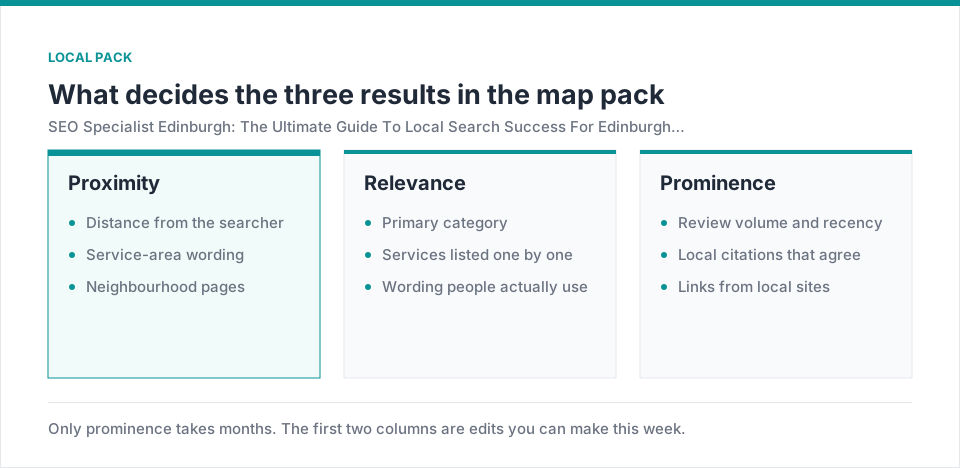
Measurement, Dashboards, And Edinburgh Governance Cadence
Measurement ties diffusion to tangible outcomes. Build Edinburgh-specific dashboards that merge GA4, Google Search Console, and GBP insights with hub-to-edge attribution. Track diffusion velocity, edge engagement, and local conversions, then hold governance sessions to refresh Activation Briefs for Surfaces, Translation Provenance mappings, Locale Notes, and PSC parity checks. A practical cadence includes weekly tactical reviews and monthly governance sessions to adjust surface priorities as Edinburgh markets evolve.
Next Steps: Engaging With EdinburghSEO.org
To operationalise locality-forward Edinburgh strategies, explore SEO services on edinburghseo.org and book a consultation to tailor Activation Briefs for Surfaces, Translation Provenance mappings, Locale Notes, and PSC parity checks to your Edinburgh footprint. A governance-led diffusion plan translates CBD authority into suburb-level impact, maximising local visibility and measurable ROI. For practical guidance, review our Edinburgh service pages or contact us via the contact page.
Starting With A Comprehensive SEO Audit For Edinburgh
Building on the core Edinburgh web design and diffusion framework developed in Part 3, a comprehensive SEO audit establishes the baseline health of your site, signals to local search engines, and pinpoints practical actions to improve Edinburgh-specific visibility. This audit focuses on aligning technical excellence with locality signals, ensuring your hub content strengthens CBD authority while your edge surfaces begin to resonate in Edinburgh’s diverse neighbourhoods.
Audit Scope: What Gets Checked
The audit covers four interrelated pillars that are essential for Edinburgh diffusion: technical health, site structure and navigation, content quality and locality signals, and measurement readiness. Each pillar feeds into a practical action plan you can implement with confidence.
- Technical health and crawlability: assess how search engines discover and render Edinburgh-focused content, including crawl errors, robots.txt, and sitemap integrity.
- Indexation and canonical handling: verify that the most relevant Edinburgh pages are indexed and avoid duplicate content across hub and edge surfaces.
- Core Web Vitals and mobile performance: evaluate LCP, FID, and CLS across Edinburgh users, with a priority on mobile experiences in city-centre and suburb areas.
- Site architecture and internal linking: ensure a logical diffusion path from CBD hub content to suburb pages, enabling efficient crawl and user navigation.
- Local SEO signals: GBP health, NAP consistency, local citations, reviews, and schema for LocalBusiness, Service, and FAQ content.
- Content maturity and relevance: review hub content versus edge content to identify gaps, topical authority, and authentic locality signals.
- Structured data and rich results readiness: confirm appropriate LocalBusiness, Service, and FAQ markup to surface in knowledge panels and rich results.
- Measurement readiness: ensure analytics, event tracking, and attribution are configured to support hub-to-edge diffusion measurement.
Audit Methodology: How We Gather Intelligence
A rigorous Edinburgh audit combines technical inspection, data analytics, and qualitative checks. The approach uses reputable sources and practical tooling to produce actionable outputs tailored to Edinburgh’s locality signals.
- Technical tools: crawl simulations, page-by-page health checks, and Core Web Vitals profiling to identify quick wins and long-tail optimisations.
- Analytics and search data: GA4/Universal Analytics where available, Google Search Console, and GBP insights to understand local performance and issues.
- Content and structure review: maps, headings, meta data, internal linking, and the mapping of hub terms to suburb-specific queries.
- Local presence validation: GBP health, NAP consistency, local citations, and district terminology alignment in Locale Notes.
Key reference points include Google’s guidelines for Local Business Structured Data and Moz Local SEO Guide, which inform how Edinburgh-specific signals should be represented on your site and in your GBP. See also our internal Edinburgh SEO service pages for implementation guidance and governance practices.
Edinburgh-Specific Audit Focus Areas
To translate general SEO hygiene into locality-aware results, concentrate on Edinburgh-centric issues that influence diffusion velocity and local conversions.
- GBP health optimisation tailored to Edinburgh districts, including service areas that reflect real customer geography.
- NAP consistency across Edinburgh directories and maps platforms to strengthen edge surface credibility.
- Suburb-focused edge pages with authentic local references, district landmarks, and transit routes.
- Structured data coverage for LocalBusiness, Service, and FAQ aligned with Edinburgh terminology and district cues.
Deliverables: What You’ll Receive
At the conclusion of the Edinburgh audit, you’ll receive a comprehensive, practitioner-friendly report and a practical action plan. Expect the following outputs to guide a locality-forward diffusion program:
- Executive audit summary highlighting critical issues and quick-win opportunities for Edinburgh pages.
- Technical remediation plan with priority fixes for crawlability, indexation, and Core Web Vitals.
- GBP health and local signals improvement plan, including NAP harmonisation and citations strategy for Edinburgh.
- Content audit with recommended hub-to-edge diffusion paths and localisation opportunities for Edinburgh districts.
- Measurement plan and governance recommendations to support ongoing diffusion velocity tracking.
Deliverables are designed to dovetail with EdinburghSEO.org’s governance framework, including Activation Briefs for Surfaces, Translation Provenance mappings, Locale Notes, and PSC parity checks. For execution, navigate to our SEO services page or book a consultation to tailor the audit findings to your Edinburgh footprint.
Next Steps: Turning Insights Into Action
With the Edinburgh audit complete, the next step is to translate findings into a staged diffusion plan. Prioritise fixes that unlock visible gains in Maps and Local Packs, then schedule hub-to-edge content activations that align with your Edinburgh target districts. Use the audit outputs to inform your budgeting, governance cadence, and resource allocation. For practical support, visit our Edinburgh SEO services page or contact us to initiate a locality-forward optimisation in Edinburgh.
Local Keyword Research For Edinburgh Audiences
Keyword research tailored to Edinburgh audiences is the compass that guides a locality-forward SEO strategy. By understanding what residents, commuters, visitors, and students search for in Edinburgh and its surrounding districts, a SEO specialist in Edinburgh can prioritise edge assets that respond to real local intent. This part builds on the diffusion framework established earlier, translating Edinburgh-specific search behaviour into actionable keyword targets that inform content, GBP activity, and suburb-focused pages on edinburghseo.org.
Core Edinburgh search intents and how they shape keywords
Local search users in Edinburgh typically fall into several intent categories: nearby services (near-me), local information about districts and landmarks, and transactional queries for appointments or openings. Distinguishing these intents helps you assign terms to hub content (CBD authority) and edge assets (suburb-focused pages) in a way that mirrors real user journeys. The Edinburgh SEO specialist should capture queries tied to the city’s geography, such as district names, transit corridors, and well-known venues, while maintaining alignment with seed terms that reflect your core offerings.
In practice, a disciplined approach separates general Edinburgh terms from suburb-specific variants. For example, seed terms around a service in the CBD can be expanded to Leith, Morningside, or Portobello variants that reflect district-level intent without diluting seed-term authority. This discipline supports diffusion by ensuring edge assets grow from a solid CBD foundation rather than competing duplicates across districts.
Local keyword research workflow for Edinburgh
A practical workflow balances data with locality nuance. The following sequence helps a dedicated Edinburgh SEO specialist surface meaningful targets and maintain governance across hub and edge surfaces:
- Compile a seed term list rooted in your Edinburgh services, CBD authority, and district signals.
- Expand the seed list with city-specific modifiers and district identifiers to capture Edinburgh’s locality signals.
- Analyse intent alignment to ensure you prioritise terms that drive both visibility and meaningful Edinburgh conversions.
- Assess seasonality and event-driven spikes tied to Edinburgh’s calendar, including festivals and university terms.
- Map keywords to the hub-to-edge diffusion paths, ensuring edge assets address suburb-specific questions and needs.
- Prioritise a first wave of edge assets with high relevance and moderate competition to accelerate diffusion momentum.
Tools such as Google Keyword Planner, Ahrefs, and Moz can support the discovery and prioritisation process, but the real value comes from integrating Edinburgh-specific signals—district references, local landmarks, and transit routes—into the keyword architecture. Cross-check terms against GBP content and local landing pages to maintain coherence across surfaces.
District-focused keyword mapping
Edinburgh comprises several distinct areas, each with its own search dynamics. Mapping keywords to these districts helps you build authentic, district-relevant content and improves edge surface performance. Examples of district-focused groupings include the Old Town and surrounding historic corridors, New Town’s business clusters, Leith’s harbourfront, Portobello’s seaside neighbourhood, and Corstorphine’s residential belt. For each district, create a concise keyword set that captures services, directions, hours, and local preferences, while anchoring them to your CBD authority.
- Old Town, New Town: high-intent service queries and directions anchored to central accessibility.
- Leith and Portobello: edge assets around harbour access, cafés, and local events.
- Morningside, Bruntsfield, and Drylaw: suburb-level service pages and local testimonials.
Seasonality, events, and Edinburgh-specific trends
Edinburgh’s calendar drives notable shifts in local search. Festivals, university schedules, and seasonal tourism influence the volume and type of queries. Build a seasonality plan that prioritises terms around major events (for example, festival accessibility, venue directions, and event-specific services) and aligns edge content with districts hosting these activities. Monitoring year-over-year trends helps you adjust priorities, so edge assets remain timely and relevant to Edinburgh audiences.
From keywords to content governance
Keyword research is not a standalone activity. It should feed content strategy, GBP planning, and diffusion governance. As you define Edinburgh-led targets, document how you will translate terms into hub and edge assets, maintain translation provenance for seed-term journeys, and ensure locale notes reflect Edinburgh’s terminology. This approach keeps your diffusion velocity aligned with notability signals and local intent, while safeguarding seed terms against drift as edge pages mature.
For practical next steps, explore our SEO services on edinburghseo.org and book a consultation via the contact page to tailor a district-aware keyword plan that powers Edinburgh diffusion.
Budgeting And ROI: Pricing Models For Edinburgh Web Design And SEO
With the locality-forward diffusion framework established across Edinburgh, budgeting isn’t a bolt-on decision but a core governance activity. A clear, transparent pricing model supports steady CBD-to-suburb diffusion while enabling your team to forecast ROI, manage stakeholder expectations, and align resources with district-level opportunities. This Part outlines practical pricing structures, budgeting considerations, and how to evaluate return on investment for Edinburgh’s markets through the lens of an Edinburgh-based SEO specialist working with EdinburghSEO.org.
Pricing models you’ll encounter in Edinburgh projects
Local Edinburgh engagements typically adopt several governance-friendly structures. Each model balances predictability with flexibility to support diffusion velocity from CBD hubs to suburb surfaces while protecting seed terms and local signals. The common approaches include:
- Retainer model: A predictable monthly fee covering ongoing technical health, GBP governance, edge-content guidance, diffusion monitoring, and regular reporting. This model suits businesses seeking continuous Edinburgh diffusion across multiple suburbs with a stable governance cadence.
- Project-based model: A fixed price for a clearly scoped sprint, typically 4–12 weeks, such as a comprehensive technical audit, a suburb-focused content sprint, or a GBP overhauls aligned to a local event calendar.
- Hybrid model: A base monthly retainer for core activities plus milestone-based payments for specific activations. This approach provides budgeting clarity while enabling targeted edge surface launches as diffusion velocity grows.
- Performance-based arrangements: Fees tied to predefined outcomes like diffusion velocity milestones, edge notability momentum, or local conversions. Use with guardrails to maintain focus on long-term locality fidelity rather than short-term play for rankings alone.
How Edinburgh pricing varies by scope and complexity
Pricing is driven by four primary levers: the breadth of suburb activation, platform and CMS complexity, technical health requirements, and the extent of GBP governance. A larger diffusion footprint across Edinburgh’s districts (Old Town, New Town, Leith, Portobello, Corstorphine, Sighthill, and beyond) naturally increases the number of edge surfaces and governance artefacts to maintain. Complex platforms (WordPress with advanced customisations, Drupal, or ecommerce-friendly stacks) require more integration work and testing. When GBP health, NAP consistency, and local citations demand ongoing attention, budgets rise to reflect sustained diffusion activity.
Edinburgh projects benefit from a disciplined governance framework that treats Activation Briefs for Surfaces, Translation Provenance mappings, Locale Notes, and PSC parity checks as living documents. This governance reduces risk, sets expectations, and ensures diffusion momentum remains auditable across suburb surfaces.
Typical price ranges for Edinburgh projects
Below are representative price bands for Edinburgh engagements, framed in GBP. Real-world figures depend on your business size, diffusion ambition, and the maturity of current local signals. Use these as starting points for negotiations with an edinburgh-focused SEO specialist who understands Edinburgh’s suburb dynamics.
- Local small business retainer: £1,200–£4,000 per month for ongoing technical health, GBP governance, edge guidance, diffusion monitoring, and monthly reporting. Higher bands apply when multiple suburbs require active management or when diffusion velocity is rapid.
- Project-based engagements: £4,000–£25,000 for a 4–12 week sprint, covering comprehensive audits, edge asset activation, GBP optimisation, and governance documentation.
- Hybrid arrangements: A base monthly retainer in the £2,000–£4,500 range plus milestone payments of £3,000–£12,000 depending on activation scope and diffusion velocity.
- Performance-based terms: Additional fees aligned to diffusion milestones, local conversions, and edge notability momentum, with clearly defined attribution rules.
Estimating return on investment for Edinburgh diffusion
ROI in locality-forward projects is best understood through diffusion outcomes and real-world conversions, not rankings alone. Build an attribution framework that credits CBD authority for the diffusion of edge assets into suburb pages and measures local conversions tied to suburb experiences. A practical example can illustrate the dynamics. If a monthly retainer is £2,000 and diffusion yields an incremental 20 qualified inquiries per month at an average value of £150 per enquiry, the direct value from inquiries is £3,000 per month, surpassing the base cost and delivering immediate upside. When edge diffusion expands across multiple Edinburgh districts, not only do inquiries rise, but notability signals, maps impressions, and organic visibility improve, creating compounding benefits over time. Use Activation Briefs for Surfaces and Translation Provenance mappings to safeguard seed terms while enabling district-specific edge activation.
For credibility, reference Google Local Business Structured Data guidelines and Moz Local SEO Guide to ground local signals and edge activation within Edinburgh’s market. An Edinburgh-focused ROI model should combine on-site conversions with GBP-driven actions and diffusion velocity to present a complete business case to stakeholders.
Want the numbers behind this? The analytics guide shows how organic traffic and the queries GA4 hides are rebuilt in Semalt.
Next steps: engaging with EdinburghSEO.org
To implement budgeting and ROI practices that support Edinburgh diffusion, explore our SEO services on edinburghseo.org and book a consultation to tailor Activation Briefs for Surfaces, Translation Provenance mappings, Locale Notes, and PSC parity checks to your Edinburgh footprint. A governance-led budgeting approach helps convert CBD authority into suburb-level value with clear, measurable ROI. For practical guidance, review our Edinburgh service pages or contact us via the contact page.
Budgeting And ROI: Edinburgh Web Design And SEO
With the locality-forward diffusion framework well established across Edinburgh, budgeting and return on investment (ROI) become active governance levers rather than afterthoughts. This part translates the Edinburgh-centric philosophy into practical, auditable financial planning. It emphasises how Activation Briefs for Surfaces, Translation Provenance mappings, Locale Notes, and PSC parity checks underpin a measurable, accountable diffusion from CBD authority to suburb surfaces. The aim is to equip Edinburgh organisations with pricing clarity, governance disciplines, and a transparent pathway to measurable local impact.
Pricing models you’ll encounter in Edinburgh projects
Edinburgh projects typically rely on governance-friendly pricing structures that balance predictability with the flexibility needed to diffuse CBD authority into suburb surfaces. Each model supports different diffusion paces and stakeholder expectations while ensuring seed terms remain protected as edge assets mature.
- Retainer model: A predictable monthly fee covering ongoing technical health, GBP governance, edge-content guidance, diffusion monitoring, and regular reporting. This model suits businesses seeking sustained Edinburgh diffusion across multiple suburbs with a stable governance cadence.
- Project-based model: A fixed price for clearly scoped initiatives or sprint windows (typically 4–12 weeks). Ideal for comprehensive audits, suburb-specific content sprints, or initial GBP optimisation aligned to local events.
- Hybrid model: A base monthly retainer for core activities plus milestone-based payments for specific activations. This provides budgeting clarity while enabling targeted edge surface launches as diffusion gains velocity.
- Performance-based arrangements: Fees linked to predefined outcomes such as diffusion velocity milestones, edge notability momentum, or local conversions. Use with guardrails to maintain long-term locality fidelity rather than chasing short-term ranking gains.
Typical price ranges for Edinburgh projects
These ranges reflect Edinburgh market norms and governance expectations. Exact figures depend on the breadth of suburb activation, CMS complexity, GBP governance requirements, and the level of diffusion velocity targeted. Use them as starting points for discussions with an Edinburgh-based SEO specialist who understands suburb dynamics and CBD authority diffusion.
- Local small business retainer: £1,200–£4,000 per month for ongoing technical health, GBP governance, edge-content guidance, diffusion monitoring, and monthly reporting. Higher bands apply when multiple suburbs require active management or when diffusion velocity is rapid.
- Project-based engagements: £4,000–£25,000 for a 4–12 week sprint, covering in-depth audits, activation of initial edge surfaces, and GBP optimisation tied to local events.
- Hybrid arrangements: A base monthly retainer in the £2,000–£4,500 range plus milestone payments of £3,000–£12,000 depending on activation scope and diffusion velocity.
- Performance-based terms: Additional fees tied to outcomes such as diffusion milestones and local conversions. Use with clear attribution rules and a cap to protect value across Edinburgh markets.
Calculating return on investment for Edinburgh diffusion
ROI in locality-forward projects is best understood through diffusion outcomes and real-world conversions, not rankings alone. A practical approach links hub authority to edge surface performance and ties suburb-level actions back to actual customer journeys. Consider a straightforward scenario to illustrate how Edinburgh diffusion can translate into tangible value.
Assume a monthly retainer of £2,000. Suppose diffusion yields 15–20 qualified inquiries per month from edge surfaces, each valued at £150. If these inquiries convert at a modest rate and generate £20,000 in potential pipeline value across Edinburgh suburbs over a 12-week window, the direct influence from diffusion becomes evident. Add intangible benefits such as improved GBP momentum, better Maps impressions, and strengthened Local Pack presence, which compound over time as edge assets mature and district signals become more established.
To refine this in practice, apply a straightforward attribution model across hub and edge surfaces. Credit a portion of inbound enquiries and conversions to hub-to-edge diffusion activities, with a clear breakdown by suburb and service area. This approach aligns with authoritative guidance on local signals, such as Google Local Business Structured Data guidelines and Moz Local SEO Guide, which emphasise credible, locality-aligned notability signals as drivers of diffusion and conversions.
Governance cadence and measurement setup for Edinburgh
Measurement becomes the language of governance. Establish Edinburgh-specific dashboards that merge GA4, Google Search Console, and GBP insights with hub-to-edge attribution. Use a regular cadence to review diffusion velocity, edge engagement, and local conversions, and refresh Activation Briefs for Surfaces, Translation Provenance mappings, Locale Notes, and PSC parity checks as Edinburgh markets evolve. A practical rhythm includes weekly tactical reviews to remove blockers and monthly governance sessions to revise priorities for suburb activation.
- Hub and edge surface performance visualised on a unified Edinburgh dashboard.
- Cross-surface attribution credits diffusion from CBD authority to suburb surfaces.
- Quarterly ROI reviews to recalibrate diffusion targets, budgets, and surface priorities across Edinburgh.
Next steps: engaging with EdinburghSEO.org
To implement budgeting and ROI practices that support Edinburgh diffusion, explore our SEO services on edinburghseo.org and book a consultation to tailor Activation Briefs for Surfaces, Translation Provenance mappings, Locale Notes, and PSC parity checks to your Edinburgh footprint. A governance-led budgeting approach helps convert CBD authority into suburb-level value with measurable ROI. For practical guidance, review our Edinburgh service pages or contact us via the contact page.
Choosing And Working With An Edinburgh SEO Specialist
Selecting the right Edinburgh-based SEO specialist is a strategic decision that shapes how CBD authority diffuses into Edinburgh’s suburbs. The practitioner you choose should bring a blend of local market intuition, governance discipline, and a proven track record in delivering measurable results for Edinburgh businesses. This part focuses on practical criteria, critical questions to ask, and the collaboration model that keeps diffusion velocity high while protecting seed terms and locality signals. It integrates seamlessly with the EdinburghSEO.org governance framework, including Activation Briefs for Surfaces, Translation Provenance mappings, Locale Notes, and PSC parity checks.
Key criteria for choosing an Edinburgh SEO specialist
When evaluating potential partners, look for demonstrable experience in Edinburgh’s distinctive geography and consumer behaviour. The right specialist should be able to articulate how they would diffuse CBD authority into suburb surfaces without diluting seed terms. A robust proposal will align with Edinburgh’s districts, landmarks, and transport corridors, ensuring edge assets feel authentic to residents in Leith, Portobello, Dalkeith, and beyond.
Evidence of successful Edinburgh campaigns, including Maps visibility, Local Packs, and suburb-page traction. A portfolio featuring Edinburgh clients or similar city-scale diffusion is valuable. Clear Activation Briefs for Surfaces, Translation Provenance mappings, Locale Notes, and PSC parity checks that demonstrate controlled diffusion from CBD to suburbs. A track record of not just rankings, but local conversions, inquiries, and offline actions tied to Edinburgh surfaces. A written, auditable scope with milestones, deliverables, and a predictable reporting cadence. Experience working with in-house teams, marketing, sales, and customer support to embed locality signals across surfaces. Balanced focus on technical SEO, GBP governance, and district-specific content that mirrors Edinburgh’s geography and culture. Regular, shareable dashboards that combine hub and edge data, GBP insights, and on-site conversions to demonstrate diffusion momentum.
Essential questions to ask in interviews
Asking the right questions early helps you assess compatibility with the Edinburgh diffusion framework. The following prompts probe methodology, governance, and real-world applicability:
- How will you tailor CBD-to-edge diffusion for Edinburgh geography? Describe your approach to hub-to-suburb activation and how you preserve seed-term authority while enabling suburb-specific signals.
- What are your primary KPIs for the first 90 days? Explain how you’ll track surface health, diffusion velocity, GBP momentum, and local conversions.
- Can you share Activation Briefs for Surfaces and Translation Provenance mappings? Request examples and discuss how they prevent semantic drift during diffusion.
- What is your governance cadence and reporting structure? Clarify weekly touchpoints, monthly reviews, and the formats of dashboards you provide.
- How do Locale Notes influence editorial decisions? Provide samples showing Edinburgh terminology, landmarks, and district cues that editors will apply.
- What is your approach to GBP management for Edinburgh? Discuss categories, service areas, posts, and review responses that sustain local visibility.
- How do you handle NAP consistency and local citations across Edinburgh? Outline a plan for audits, duplicates, and high-value Edinburgh directories.
- What is your edge-asset activation plan? Describe how you sequence suburb-focused pages and tie them back to hub authority.
- How do you stay current with algorithm updates and AI developments? Ensure governance remains human-led and auditable.
- Can you share Edinburgh-specific case studies or references? Look for concrete examples of diffusion velocity and local conversions.
- What CMS and tooling do you prefer for Edinburgh diffusion? Seek alignment with WordPress, Shopify, Drupal, or enterprise CMSs, and explain how diffusion data feeds into your workflows.
- What does your onboarding look like? Request a concise plan for access provisioning, baseline audits, and a staged diffusion roadmap.
Pilot projects, trials, and onboarding
A pragmatic path to trust in an Edinburgh setting is to start with a short, structured pilot. This allows you to evaluate diffusion velocity, GBP governance, and edge content quality before committing to a longer-term engagement. A typical pilot might include a baseline technical audit, activation of 2–4 suburb-focused assets, and a 6–8 week measurement window to observe updates in Maps impressions, Local Pack visibility, and local conversions.
Define suburbs, services, and seed terms to test diffusion against. Establish GA4, Search Console, and GBP integrations with hub-to-edge attribution. Create Surfaces briefs for initial edges, with translations and locale cues. Schedule a mid-pilot governance review to adjust priorities and surface activation plans.
Contracting, risk management, and governance expectations
Contracts should reflect a governance-led diffusion model, not a one-off deliverable. Key components include a precise scope, clearly defined milestones, data-sharing arrangements, data privacy compliance, IP ownership of activation assets, and a robust change-control process. Explicit terms for Activation Briefs for Surfaces, Translation Provenance mappings, Locale Notes, and PSC parity checks help ensure a consistent user experience across hub and edge surfaces while protecting seed terms from drift.
Document audit, activation, GBP governance, and reporting deliverables. Realistic dates for baseline, activation, testing, and handover. GDPR-compliant practices and clear ownership of analytics and dashboards. Define who owns activation assets and dashboards created during the diffusion. A formal process to manage scope changes, pricing adjustments, and impact assessments.
How EdinburghSEO.org supports due diligence
During supplier evaluation, lean on EdinburghSEO.org for locality-forward playbooks and governance practices. Look for alignment with Activation Briefs for Surfaces, Translation Provenance mappings, Locale Notes, and PSC parity checks, which ensure edge surfaces reflect Edinburgh signals while maintaining CBD authority. If you’re ready to proceed, explore our dedicated SEO services on edinburghseo.org or book a consultation to tailor a diffusion-ready plan for your Edinburgh footprint.
Case Studies And Potential Outcomes For Edinburgh Diffusion
With the locality-forward diffusion framework established across Edinburgh, practical case studies illuminate how hub authority can mature into suburb-level impact. This Part demonstrates plausible outcomes from real-world diffusion in Edinburgh’s districts, framed by governance artefacts such as Activation Briefs for Surfaces, Translation Provenance mappings, Locale Notes, and PSC parity checks. The intention is to provide tangible benchmarks that Edinburgh-based businesses can adapt, measure, and iterate against, reinforcing notability signals in Maps, Local Packs, and organic results while maintaining seed-term integrity.
Case Study 1: Leith hospitality group expands Perth-to-Portobello diffusion
A mid-sized hospitality chain in Edinburgh’s Leith area implemented a targeted diffusion programme to extend CBD authority into adjacent districts, starting with Portobello and nearby harbourfront zones. Activation briefs for Surfaces defined two suburb-focused edge assets: a Leith-to-Portobello service hub and a harbourfront dining guide, each anchored to seed terms tied to central CBD authority. Translation Provenance mappings preserved the journey from the central hub concept to district-tailored content, ensuring language and terminology matched Edinburgh’s local signals.
Measured outcomes over a 6-month window included improvements in Maps impressions, Local Packs visibility, and edge-page engagement. Key metrics included a 34% rise in local enquiry forms from Portobello and a 28% increase in phone clicks from the harbourfront surface. GBP activity remained consistent with the higher district relevance, while on-site conversions rose due to clearer district-specific CTAs and native locality references.
- Diffusion velocity: suburb pages gained authority within 10–12 weeks of edge activation, aligning with hub signals.
- Edge engagement: session duration increased by 22% on edge assets and pages per session rose to 3.1.
- Local conversions: form submissions and reservations grew by 36% in targeted suburbs.
- GBP momentum: regular posts and district-specific updates improved GBP interactions by 40%.
What this case teaches Edinburgh businesses
Strategic diffusion works best when edge assets speak authentically to district signals while preserving CBD notability. Localised CTAs, transit cues, and district landmarks help search engines interpret relevance, boosting Local Pack eligibility and user trust. The Leith-to-Portobello example demonstrates how governance artefacts enable fast, auditable diffusion, reducing risk and increasing ROI through measurable local actions.
Case Study 2: A Edinburgh professional services firm scales local inquiries
A professional services firm in Edinburgh city centre adopted a governance-forward diffusion plan to diffuse CBD authority into nearby districts such as New Town, Leith, and Morningside. Activation Briefs for Surfaces outlined three edge assets: a suburb-focused service page for New Town businesses, a Leith professional services hub, and a Morningside client resources guide. Translation Provenance mappings ensured terminology and district cues remained authentic across editors and channels. PSC parity checks maintained consistent navigation, forms, and CTAs across hub and edge surfaces.
Results across a 4–6 month period included a 41% uplift in local enquiries, a 53% increase in GBP-post engagement, and a 19% rise in organic traffic to edge pages. Local conversions, including appointment bookings and consultation requests, grew by 28%. This case emphasises the value of district-tailored assets feeding from CBD authority while preserving seed-term integrity.
- Hub-to-edge diffusion velocity: edge assets achieved noticeable authority lift within 8–10 weeks of activation.
- Edge engagement: increased page depth and CTA interactions on edge surfaces by 25–30%.
- Local conversions: a measurable rise in consultations booked and contact-form submissions from edge pages.
- GBP momentum: district postings and responses reinforced notability signals across multiple Edinburgh districts.
Interpreting these outcomes for Edinburgh strategy planning
The two illustrative case studies highlight consistent themes. First, start diffusion from CBD authority and map a clear activation sequence to suburbs with the most immediate local demand and strongest relevance to your services. Second, preserve seed-term integrity while edge assets evolve; use Translation Provenance mappings to avoid semantic drift and Locale Notes to preserve district accuracy. Third, measure outcomes beyond rankings, focusing on maps impressions, Local Pack visibility, edge engagement, and local conversions. Finally, maintain governance cadence with Activation Briefs for Surfaces and PSC parity checks to keep the diffusion graph auditable and aligned with Edinburgh’s evolving markets.
How to translate these insights into your Edinburgh practice
To turn these outcomes into a repeatable programme, adopt Edinburgh-specific diffusion playbooks and governance rituals. Start with a local audit of your CBD-to-suburb diffusion capacity, then create Activation Briefs for Surfaces, Translation Provenance mappings, Locale Notes, and PSC parity checks tailored to your Edinburgh footprint. Use the insights from these case studies to justify budget, establish a realistic diffusion timeline, and present a clear ROI narrative to stakeholders. For guidance, explore our SEO services on edinburghseo.org or book a consultation to tailor a district-aware diffusion plan that aligns with Edinburgh’s markets.