What Is SEO Edinburgh And Why It Matters
Edinburgh is a dynamic hub of business, tourism and education, where local search behaviour directly influences enquiries, footfall and revenue. SEO Edinburgh is the practice of aligning your online presence with the way people in Edinburgh search for products and services, especially when they are looking for nearby solutions. A well-executed local strategy translates into more qualified traffic, higher visibility in maps and local packs, and stronger reputation among Edinburgh communities. This opening section lays the groundwork for understanding how local search works in Edinburgh and why a local-first approach matters for your growth goals.
How Local SEO Edinburgh Drives tangible outcomes
Local search signals connect directly with the purchase journey. When a resident in Edinburgh searches for a service near them, the Local Pack and Maps results often appear at the top, delivering immediate visibility. Optimising for these signals helps ensure your business information is accurate, your profile is complete, and your content speaks to the Edinburgh audience you want to attract. A practical local strategy starts with robust data, credible listings, and content that answers real questions from people in the city and its neighbourhoods.
- Local visibility in the Local Pack and Maps: A substantial share of Edinburgh queries with local intent surface in the Local Pack and on Maps, so appearing there can significantly increase clicks and footfall.
- Google Business Profile (GBP) relevance: A complete GBP profile with up-to-date hours, photos and responses to reviews boosts trust and click-throughs for Edinburgh searches.
- Proximity and relevance: Mobile users travelling within Edinburgh are prioritised by proximity and the surrounding distance to the searcher.
- NAP consistency and citations: Consistent name, address and phone number across directories strengthen local authority and reduce confusion in search results.
- Structured data and landing pages: LocalBusiness schema and purpose-built Edinburgh landing pages help search engines interpret local intent and surface the right signals to the right audience.
To anchor practical action, partners often begin with GBP optimisation, followed by data cleansing, then expansion to suburb-focused pages. For authoritative guidance, see input from external sources such as Google Local guidance on local business structured data, available at Google Local Business Structured Data Guidelines.
The Edinburgh search landscape
Users in Edinburgh interact with search in similar ways to other UK cities, but local context, seasons and events shape demand. Festivals such as the Edinburgh Festival Fringe and the Edinburgh International Festival generate spikes in searches for venues, services and hospitality. Universities, local authorities, and cultural organisations also influence how people query about dining, transport and local experiences. A sound SEO Edinburgh plan recognises these patterns and tailors content and signals to align with local intent.
Key signals to prioritise include accurate location data, timely Google Business Profile updates, and clear, locally relevant content. In practice this means aligning on-page signals with GBP signals and ensuring that maps proximity data, reviews, and region-specific terms stay coherent across Edinburgh’s diverse districts.
Foundations for effective SEO Edinburgh
A robust local strategy rests on a set of core practices that work together to improve visibility and user trust in Edinburgh. The following areas form the backbone of a practical Edinburgh SEO plan:
- Technical health: Speed, mobile usability, secure connections and crawl-friendly structure support higher rankings and better user experience.
- Local data accuracy (NAP): The business name, address and phone number must be uniform across all Edinburgh listings and GBP profiles.
- GBP governance: Regular updates to hours, services and photos, plus proactive responses to reviews, strengthen engagement and trust.
- Local citations: Listing the business on Edinburgh-relevant directories with accurate data supports stronger signals and credibility.
- Localized content and landing pages: Create topic clusters around Edinburgh neighbourhoods to surface relevant signals while maintaining a cohesive spine.
- Reviews and reputation: A proactive review strategy improves visibility and builds social proof for Edinburgh audiences.
- Schema markup: LocalBusiness and FAQPage markup helps search engines interpret local context and improves rich results potential.
Understanding what to expect from a local SEO Edinburgh engagement
In practice, a local Edinburgh project begins with a Local SEO audit to surface data quality and signal gaps. A typical engagement then progresses through GBP setup, on-site optimisations, and the launch of suburb landing pages. Ongoing work includes local content creation, schema enhancements, and a disciplined approach to reviews and reputation management. Regular reporting tracks visibility in local packs, Maps impressions, GBP engagement, and suburb-level conversions to demonstrate tangible value to Edinburgh clients.
Internal pathways and next steps
If you are looking to start or optimise a local Edinburgh initiative, consider visiting our Edinburgh Services hub for structured packages and implementation guidance. The page at /services/ outlines the available options and how they map to business goals. For immediate support or a quick starter plan, you can also reach out via the contact page to arrange a scoping call. A thoughtful, data-driven approach ensures your SEO Edinburgh efforts deliver lasting improvements in visibility, traffic and conversions across Edinburgh's diverse communities.
Understanding The Edinburgh Search Landscape
Edinburgh's local search landscape is shaped by a mix of resident queries, student enrolments, and tourism-driven interest. People increasingly use mobile devices to discover nearby services, restaurants, transport options and cultural venues. A thoughtful SEO Edinburgh approach recognises how Edinburgh's geography, events and districts influence search intent across the city and its suburbs.
Maps, Local Packs And The Edinburgh User
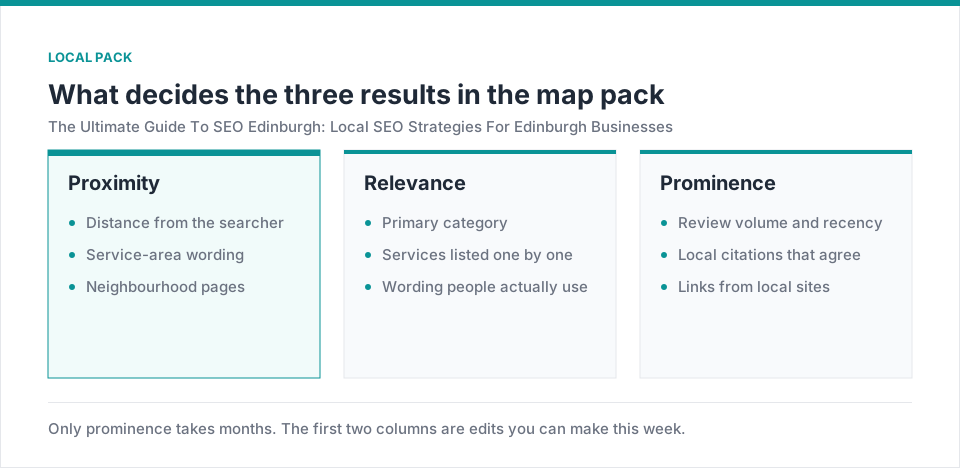
When users search with local intent in Edinburgh, the Local Pack and Maps results frequently surface near the top of the page, particularly on mobile. Ensuring your business details are accurate and your GBP profile is rich with imagery and up-to-date information helps you appear in the Local Pack, Maps and knowledge panels more consistently. Proximity and relevance are the two most influential signals in Edinburgh’s dense urban environment, but quality content and reviews also play a critical role.
- Local Pack visibility: Local queries in Edinburgh tend to generate Local Pack placements, driving quick visibility.
- GBP completeness: A full profile with hours, services and photos increases click-throughs.
- Proximity: Closer searches in central areas are favoured, but well-optimised suburb pages can extend reach.
- NAP consistency: Uniform name, address and phone across Edinburgh directories strengthens trust.
- Landing page relevance: Landing pages tailored to Edinburgh districts improve signal alignment with user intent.
Seasonality And Local Demand In Edinburgh
Edinburgh hosts major events such as the International Festival and the Fringe, alongside a thriving university calendar. These periods create spikes in searches for venues, restaurants, transport, and accommodation. An effective Edinburgh SEO plan uses historical data to anticipate these waves, enabling content, promotions and landing pages to align ahead of peak demand.
Neighbourhood-Focused Content In Edinburgh
Creating content clusters around Edinburgh districts allows you to address district-specific queries while maintaining a cohesive site structure. For example, Old Town, Leith, Stockbridge and Morningside pages can capture local services, reviews and events. The central hub provides city-wide context, while linked sub-pages support discovery and relevance across Edinburgh's diverse communities.
In addition, embedding FAQs, case studies and testimonials from Edinburgh clients strengthens local authority and trust. Implement LocalBusiness, OpeningHours and FAQPage schema to help search engines surface the most relevant signals to Edinburgh users.
Foundations For Edinburgh Local SEO
A robust Edinburgh Local SEO programme requires alignment across technical health, GBP governance and content strategy. Ensure technical health targets are met, GBP updates are timely, and content clusters cover both the city and its notable neighbourhoods. Consistent signals across GBP, Maps and on-page elements help search engines interpret local intent more accurately.
- Technical health: Site speed, mobile usability, secure connection and crawlability.
- GBP governance: Regular updates to hours, services and photos, with proactive responses to reviews.
- Local content and landing pages: City-wide and district-specific pages fed by strong internal linking.
- Schema: LocalBusiness, OpeningHours and FAQPage markup to enable rich results.
- Reviews and reputation management: A proactive approach improves visibility and trust with Edinburgh audiences.
Next Steps And How To Start
To begin building momentum in Edinburgh, explore our Edinburgh Services hub for tailored local packages and implementation guidance. The /services/ page outlines current options and how they map to growth goals for Edinburgh businesses. You can request a scoping call via the /contact/ page to discuss your objectives and create a practical, data-driven plan designed to improve local visibility and conversions.
Local SEO Fundamentals For Edinburgh Businesses
A solid foundation in local search is essential for Edinburgh-based businesses seeking visible, credible, and actionable engagement. Local SEO fundamentals focus on reliable data, optimised presence on Google’s local surfaces, and content that resonates with Edinburgh’s diverse neighbourhoods—from the historic Old Town to cosmopolitan Leith. Implementing these basics not only boosts local visibility but also improves trust and conversions across Edinburgh’s unique consumer journey.
Core local SEO elements you should master
Edinburgh searches hinge on a set of signal groups that work in concert. A practical Edinburgh local SEO approach begins with the essentials and then scales with city-specific nuance, such as local events, district identity, and seasonal demand.
- Technical health: Speed, mobile usability, secure connections and crawl-friendly architecture underpin rankings and user experience in Edinburgh’s busy digital landscape.
- Local data accuracy (NAP): Name, Address, and Phone number must be consistent wherever your business appears in Edinburgh’s ecosystem of directories and GBP profiles.
- Google Business Profile (GBP) governance: A complete GBP with hours, services, categories, photos and timely responses to reviews strengthens local authority in the Edinburgh market.
- Local citations: High-quality, Edinburgh-relevant directory listings with accurate data reinforce trust signals and strengthen local prominence.
- Localized content and landing pages: District-focused content clusters support search relevance for Edinburgh’s diverse areas while maintaining a cohesive site structure.
- Reviews and reputation: A proactive review strategy boosts credibility with Edinburgh audiences and signals quality to search engines.
- Schema markup: LocalBusiness and FAQPage markup helps Google interpret local intent and surface rich results relevant to Edinburgh users.
How Edinburgh’s search landscape shapes expectations
Edinburgh’s mix of residents, students, and visitors makes its local search profile distinctive. Festivals, university calendars, and municipal activities create predictable spikes in demand for venues, eateries and services. A well-structured Edinburgh local SEO plan anticipates these patterns and integrates them into GBP management, on-site signals, and district-level content that answers real questions from Edinburgh’s communities.
Foundations for an effective Edinburgh Local SEO programme
Building a reliable Edinburgh SEO foundation involves coordinating data quality, profile governance, and content strategy. The following elements form a practical starting framework:
- Technical health: Target speed, mobile usability, SSL and crawlability to enable smooth user journeys in Edinburgh’s mobile-first context.
- NAP consistency: Uniform business name, address, and phone number across Edinburgh listings and GBP profiles to avoid confusion and improve local trust.
- GBP ownership: Regularly update hours, services, photos and respond to reviews to sustain engagement with Edinburgh customers.
- Local citations: Build citations on Edinburgh-relevant directories with accurate data and keep them refreshed.
- Localized content and landing pages: Create district-focused pages linked to a city-wide hub for coherent signal distribution.
- Reviews and reputation: Proactively manage and respond to feedback to strengthen social proof within Edinburgh’s communities.
- Schema markup: Implement LocalBusiness, OpeningHours and FAQPage where relevant to surface richer results in local search.
What an Edinburgh engagement typically looks like
A practical Edinburgh project starts with a Local SEO audit to identify data quality gaps and signal misalignments. It then proceeds through GBP setup, on-site optimisations, and the launch of suburb landing pages. Ongoing work includes local content creation, schema enhancements, and reviews strategy. Regular reporting focuses on local packs, Maps impressions, GBP activity, and suburb-level conversions to demonstrate tangible value to Edinburgh clients.
Internal pathways and next steps
If you are ready to start or refine a local Edinburgh initiative, visit our Edinburgh Services hub for structured packages and implementation guidance. The /services/ page outlines options and how they map to growth objectives for Edinburgh businesses. For immediate assistance or a quick starter plan, reach out via the /contact/ page to arrange a scoping call. A data-driven approach ensures your Edinburgh Local SEO delivers measurable improvements in visibility, traffic and conversions across the city’s diverse communities.
On-page SEO Best Practices For Edinburgh Sites
Edinburgh's unique local flavour matters for on-page SEO because searchers in the city expect content that speaks to its neighbourhoods, venues and communities. On-page optimisation for Edinburgh should harmonise core SEO fundamentals with district‑level signals, ensuring pages address local intent while maintaining a cohesive, city‑wide narrative. This part of the Edinburgh SEO series concentrates on practical, Edinburgh‑specific on-page tactics that support higher visibility, relevance and conversions through authentic local signal alignment.
Core on-page elements tailored to Edinburgh
Effective Edinburgh on-page SEO starts with precise, user‑centred signals. It begins with tightly scoped title tags and meta descriptions that reflect Edinburgh intent, followed by a clear content hierarchy using logical headings. Each page should answer a local question, such as district‑specific services, venue recommendations, or transit guidance within the city. A disciplined approach to on-page signals helps search engines connect Edinburgh queries with the most relevant page on your site.
- Title tags: Craft Edinburgh‑specific titles that include local terms (for example, the district or well‑known Edinburgh landmarks) while preserving readability and unique value for each page.
- Meta descriptions: Write compelling, concise descriptions that emphasise Edinburgh relevance and a clear call to action without duplicating other pages.
- Headings and content structure: Use a logical H1 to define the page, H2s for major Edinburgh topics, and H3s/H4s for granular subtopics such as Leith dining, Old Town attractions, or university services.
- Local keywords and intent: Integrate district names, street names and Edinburgh‑specific phrases in a natural, user‑friendly way.
- Internal linking for city navigation: Build meaningful anchors that guide users through related Edinburgh topics, districts and services while preserving a coherent site structure.
For authoritative guidance, align on-page signals with Google’s expectations for local content and structured data. See Google’s guidance on local business structured data and schema markup to enrich local results in Edinburgh contexts.
District‑level landing pages and internal architecture
Edinburgh comprises distinct districts with unique needs and search patterns. Creating district landing pages (for example, Old Town, Leith, Stockbridge, Morningside) allows you to surface local signals without diluting the city-wide brand. Each district page should link back to a broader Edinburgh hub, while internal links point to related services, events and resources. This internal spine strengthens topical authority across Edinburgh and improves crawl efficiency for search engines.
Structure pages to enable easy navigation for both users and search engines. Prefer descriptive URLs that reflect the district and main product or service, maintain consistent NAP presentation when applicable, and avoid duplicating content across similar district pages.
Local content formats that resonate with Edinburgh audiences
Content should answer real questions that Edinburgh residents and visitors ask. Consider formats such as district guides, event calendars tied to Edinburgh festivals, venue roundups, and practical transport tips. FAQs tailored to Edinburgh queries can significantly improve visibility in rich results and voice searches. Pair each content piece with relevant LocalBusiness or FAQPage schema to help search engines surface the right signals to Edinburgh users.
- Frequently asked questions (FAQs): Address common Edinburgh questions with concise, structured answers.
- Neighbourhood guides: Provide practical information for visitors or locals exploring Old Town, Leith, and surrounding areas.
- Case studies and testimonials: Showcase Edinburgh-based clients and local success stories to build local authority.
Schema and on-page signals for Edinburgh
Schema markup helps search engines understand Edinburgh‑specific signals. Implement LocalBusiness, OpeningHours, and FAQPage where relevant. Rich results can increase click-through by clarifying proximity, services and frequently asked questions for Edinburgh searches. Always validate structured data with Google’s Rich Results Test to ensure accuracy and compliance with Edinburgh audience expectations.
Practical on-page optimisation checklist for Edinburgh sites
Adopt a pragmatic, city-first approach to on-page optimisation. Start with a content audit that maps every Edinburgh page to a district or city topic, ensuring the page title, meta description and headings reflect Edinburgh intent. Then layer in district landing pages, localised FAQs and schema where appropriate. Finally, validate the page experience with Core Web Vitals and ensure the on-page signals align with GBP signals if applicable to your Edinburgh presence.
- Audit cadence: Conduct at least quarterly audits of page metadata, headings and content alignment with Edinburgh search intent.
- Canonical and duplication controls: Ensure canonical tags prevent content overlap across Edinburgh district pages.
- Content quality and depth: Prioritise comprehensive, well‑researched Edinburgh content that demonstrates expertise and trust.
- Schema implementation: Apply LocalBusiness, OpeningHours and FAQPage where relevant to surface richer results in Edinburgh searches.
- Performance and accessibility: Monitor Core Web Vitals; ensure mobile‑friendly design and accessible content for Edinburgh users.
To explore Edinburgh‑specific packages and guidance, visit our Edinburgh Services hub for tailored on-page strategies and implementation support. The /services/ page outlines options that map to growth goals in Edinburgh, while the /contact/ page enables you to arrange a scoping call to tailor a practical plan. A city‑level, data‑driven approach helps Edinburgh sites achieve steady improvements in visibility, traffic and conversions.
Edinburgh SEO expertise is grounded in local knowledge and proven on-page techniques. For more about our Edinburgh on‑page services and engagement options, see our Edinburgh SEO services and contact us to begin refining your local strategy today.
Technical SEO For Edinburgh Websites
Edinburgh's competitive local landscape means a technically solid website is a prerequisite for visibility. Technical SEO optimises the underpinnings that allow search engines to crawl, index and rank pages effectively, particularly where local intent and regional signals matter. This section provides practical, Edinburgh-focused guidance on building a technically robust site that supports local authority, reliability and user experience.
Core technical health signals
Key signals include Core Web Vitals, crawlability, indexability, security and structured data. Align targets with Google guidance on page experience and local search expectations.
- Core Web Vitals: LCP, FID, CLS. Aim to meet or exceed recommended thresholds; monitor with Google Search Console and PageSpeed Insights.
- Security and accessibility: Use HTTPS, accessible design, and compliant colour contrast to satisfy user expectations in Edinburgh's diverse audience.
- Crawlability and indexability: Ensure important pages are discoverable; use robots.txt judiciously and submit an up-to-date sitemap.
Speed and performance optimisation
Strategies include image optimisation (compression, next-gen formats), minification of CSS and JavaScript, server-side rendering where appropriate, and edge caching. Prioritise critical rendering path optimisation for key Edinburgh pages such as district landing pages and GBP-integrated sections. Consider a content delivery network (CDN) to reduce latency for Edinburgh users, particularly those accessing the site from outer neighbourhoods.
- Compress and optimise images using modern formats such as WebP where supported.
- Minify CSS and JavaScript; remove unused code; defer non-critical assets.
- Improve server response time (TTFB) through efficient hosting and caching; consider edge caching for dynamic content.
Mobile usability and accessibility as part of technical SEO
Mobile first is essential for Edinburgh residents and visitors. Ensure responsive design, legible typography, and appropriate viewport settings. Apply accessible navigation and meaningful alt text to images, especially for Edinburgh district imagery and maps.
Structured data and local signals
LocalBusiness, OpeningHours, Address, and FAQPage markup help search engines interpret Edinburgh-specific signals. Validate with Google's Rich Results Test and maintain consistency with GBP data. Leverage district-level schema on landing pages where relevant to surface rich results in local search. For guidance, see Google's Local Business Structured Data Guidelines.
Canonicalisation, duplicates and index governance
District landing pages are valuable for local intent but can create duplicate content if not differentiated. Use canonical tags to guide search engines to primary pages and maintain unique meta data. Implement proper noindex on truly low-value variants and avoid parameter-driven duplication where possible.
Testing, monitoring and governance
Regularly audit technical health using tools such as Google Search Console, Lighthouse, and PageSpeed Insights. Establish a quarterly technical SEO review for Edinburgh assets, with dashboards that track Core Web Vitals, index coverage, and structured data validity. Integrate findings into the ongoing Edinburgh SEO roadmap and coordinate with content and GBP teams to ensure signals stay aligned.
- Set up scheduled crawls and performance monitoring for district landing pages in Edinburgh.
- Track Core Web Vitals alongside GBP performance metrics to understand local impact.
- Maintain a structured data validation workflow and fix any detected issues promptly.
Ready to enhance technical foundations for Edinburgh audiences? Explore our Edinburgh Services hub for tailored technical SEO packages and support. Visit /services/ for options and how they map to growth goals, or contact us to arrange a scoping call. A robust technical base supports higher visibility and sustainable conversions for Edinburgh businesses.
Local Citations, Maps And NAP Consistency For Edinburgh
Local citations, maps presence and consistent name, address, and phone number (NAP) are the backbone of credible, city-focused visibility in Edinburgh. A deliberate approach to citations helps search engines interpret which Edinburgh doors your business should open for nearby customers, while Maps and GBP signals reinforce your proximity and trust. This part of the series drills into practical steps you can take to align Edinburgh listings, Maps results, and page-level signals so your local presence is cohesive, expandable, and regulator-friendly.
Read next: SEO in Edinburgh: the local playbook · SEO consultant Edinburgh: costs and fit
Why Edinburgh requires rigorous local citations
Edinburgh combines a historic core with vibrant neighbourhoods such as Old Town, Leith, Stockbridge and New Town. In this environment, users frequently search for a nearby service with local intent, and the Local Pack or Maps results can be decisive. When Edinburgh listings are incomplete or inconsistent, search engines struggle to join the signals—from GBP activity to district pages—to a single customer journey. A robust Edinburgh citation strategy improves signal coherence, boosts local authority, and reduces the friction between discovery and action.
A high-quality Edinburgh citation profile should prioritise accuracy, currency and relevance. Beyond basic NAP, include service details, category alignment, and punchy local descriptions that reflect Edinburgh’s distinctive districts and landmarks. Structured data on district pages and consistent GBP signals together amplify how Edinburgh users surface your business across Maps and organic results.
Core elements of Edinburgh-focused local data you should optimise
Start with a definitive NAP and ensure it matches across GBP profiles, website schema, and major Edinburgh directories. Synchronise service areas to reflect Edinburgh’s district structure, particularly if you serve Old Town, Leith or Stockbridge, and use district landing pages to surface local intent signals. LocalBusiness schema on each district page, together with OpeningHours where relevant, helps search engines contextualise the Edinburgh consumer journey.
Local citations act as trusted attestations. In Edinburgh, prioritise high-quality, Edinburgh-relevant directories over broad, national platforms. Regularly audit data for errors, prune duplicates and remove outdated listings. When citations are kept fresh, search engines gain confidence that you’re a legitimate option for nearby customers.
Mapping citations to the Maps and GBP ecosystem
GBP completeness and Maps signals are tightly linked with citation quality. Ensure GBP profiles reflect Edinburgh’s local terminology, district names, and parking or accessibility details that matter to residents and visitors. A well-populated GBP with photos, services, categories and prompt responses to reviews translates into stronger GBP presence and more credible local signals feeding Maps and the Local Pack.
To surface the right signals to Edinburgh users, align GBP data with district landing pages and ensure that the same terms appear in meta data, headings and on-page content. This reduces ambiguity and strengthens topical authority for Edinburgh communities. See Google’s guidance on Local Business Structured Data for formal guidelines on local signals and schema usage.
Practical tip: keep a live data sheet of GBP attributes (hours, services, phone, URL) and compare it against every Edinburgh directory entry to identify gaps and drift before it affects rankings.
A pragmatic Edinburgh audit: how to surface signals that convert
An Edinburgh-focused local SEO audit starts with data hygiene and signal alignment. Steps include: (1) crawling GBP, Maps listings and Edinburgh directory entries to compile a master NAP board; (2) identifying inconsistencies in Edinburgh district pages and GBP; (3) creating district-specific landing pages that reinforce local intent; (4) validating LocalBusiness, OpeningHours and FAQPage schema on district pages; (5) establishing a quarterly refresh cadence for GBP posts, reviews, and listings. This disciplined approach creates an auditable trail that regulators and clients can rely on for clarity and accountability.
For content teams, ensure district pages provide unique, district-relevant signals without duplicating the city-wide page. Use internal linking to connect district hubs with the city-level Edinburgh page to maintain a coherent topical spine.
Internal pathways and next steps for Edinburgh clients
To implement a robust Edinburgh local citations programme, start with our Edinburgh Services hub for structured guidance and implementation support. The /services/ page outlines packages that map to local growth goals, while the /contact/ page enables you to arrange a scoping call to tailor a practical, data-driven plan for Edinburgh’s diverse communities. A disciplined, Edinburgh-first approach ensures your local signals are durable and scalable as your business expands across the city’s districts.
Local Citations, Maps And NAP Consistency For Edinburgh
In Edinburgh, local citations, Maps presence and name, address, and phone number (NAP) consistency are not academic notions; they are foundational signals that help search engines understand which nearby customers you should serve. When GBP data, Maps listings, and Edinburgh directory citations agree on core details, local rankings improve, Map Pack visibility increases, and potential customers experience a coherent, trustworthy journey from discovery to conversion. This part of the SEO Edinburgh series drills into practical steps to align Edinburgh signals across GBP, Maps and district-focused landing pages so your local footprint becomes durable and scalable.
Why Edinburgh demands rigorous local data governance
Edinburgh’s geography—a compact city centre with widespread neighbourhoods—means people search with strong local intent. When a user looks for a nearby service, Local Pack and Maps results surface quickly. If your NAP is inconsistent across GBP, your website, and directory listings, search engines struggle to align signals with user intent, which can reduce visibility and click-through. A disciplined Edinburgh approach treats GBP data, district landing pages and local citations as a single, cohesive signal net that mirrors the real marketplace in the city and its suburbs.
Core elements to optimise for Edinburgh local signals
Adopt a practical checklist that aligns GBP, Maps, and local directories with Edinburgh’s district structure. The following elements form a repeatable framework you can apply quarterly across the city’s districts:
- NAP consistency across GBP and directories: Ensure the exact business name, street address and phone number appear identically on GBP, your website schema, and top Edinburgh directories. Small mismatches compound quickly in local search.
- Google Business Profile governance: Regularly update hours, services, categories and photos; actively respond to reviews to boost local engagement and signal quality to Edinburgh users.
- District-focused citations: Build high-quality citations on Edinburgh-relevant directories and industry directories, prioritising accuracy and relevance to districts such as Old Town, Leith, Stockbridge and Morningside.
- District landing pages and hub architecture: Create district pages that feed into a city-wide Edinburgh hub. Link district pages to related services and resources to strengthen internal coherence and signal distribution.
- Schema and structured data: Apply LocalBusiness, OpeningHours, and Address schema on district pages where appropriate, ensuring consistency with GBP data.
Mapping signals to Maps, GBP and on-page content
To surface the right signals to Edinburgh users, align GBP attributes with district landing pages and ensure the same terminology appears in title tags, meta descriptions and on-page headings. Consistency across GBP, Maps proximity data and on-page signals reduces ambiguity for search engines and improves user trust. When district terms are reflected in localised content, you improve relevance for queries like "Edinburgh plumbers Old Town" or "Leith restaurants near me".
For authoritative guidance, consider Google’s Local Business Structured Data Guidelines as a reference point for how LocalBusiness, Address, OpeningHours and FAQPage markup should surface local signals. See: Google Local Business Structured Data Guidelines.
Practical steps to implement Edinburgh-friendly local data governance
Plan a three-phased approach. Phase one focuses on data hygiene: audit NAP across GBP and your site, fix duplicates, and move to a single canonical address. Phase two expands to district pages: publish Old Town, Leith, Stockbridge, and other district pages with district-specific signals and clear internal linking to a central Edinburgh hub. Phase three scales with governance: implement ongoing GBP updates, ensure consistent district terminology across content, and maintain a quarterly cadence of citations refresh and schema validation.
In practice, this means: (1) maintaining a live GBP data sheet; (2) aligning district landing pages with GBP categories and services; (3) conducting quarterly citation cleanups; (4) validating schema with tools like Google’s Structured Data Testing Tool or Rich Results Test; and (5) identifying gaps between GBP data and Maps signals to close signal gaps before they affect local visibility.
Measurement, governance and next steps
Track signals with a lightweight governance cockpit that ties GBP activity, Maps impressions, and district-page engagement to a single Edinburgh hub. Metrics to monitor include GBP engagement (views, saves, direction requests), Maps impressions by district, traffic from district landing pages, and NAP consistency scores across top Edinburgh directories. Regular reporting demonstrates tangible improvements in local visibility and user trust, while ensuring that Edinburgh’s multi-district audience experiences a coherent surface journey.
To explore Edinburgh-focused packages and practical guidance, visit our Edinburgh Services hub for structured local SEO guidance and implementation support. The /services/ page outlines options and how they map to growth goals for Edinburgh businesses. For immediate support, you can also reach out via the contact page to arrange a scoping call. A data-driven, Edinburgh-first approach ensures your local signals translate into increased visibility, traffic and conversions across the city’s diverse communities.
Keyword Research For Edinburgh Markets
Effective Edinburgh SEO starts with precise keyword research that reflects the city’s distinctive districts, venues, and consumer behaviours. Keyword discovery for Edinburgh isn’t only about volume; it’s about intent, local context, and the signals that turn searchers into visitors, inquiries or bookings. A well-structured Edinburgh keyword strategy aligns content development, GBP optimisation, and district-level pages, ensuring every signal points to a relevant local outcome.
What to research and why
Identify local search terms that capture Edinburgh’s everyday decisions, from city-wide needs to district-specific queries. Prioritise terms based on relevance to your services, then assess whether they indicate information, navigation or transactional intent. In Edinburgh, district modifiers (such as Old Town, Leith, Stockbridge or Morningside) often unlock high-value, low-competition opportunities when paired with core products or services.
- Local intent clusters: Group keywords by Edinburgh-wide topics and by neighbourhoods to surface district-focused content and landing pages.
- Commercial intent vs informational intent: Differentiate terms that signal purchase intent (e.g., “Edinburgh plumber Old Town”) from informational queries (e.g., “Edinburgh bus routes to Leith”).
- District-specific modifiers: Add district names, landmarks, and well-known streets to capture local queries and improve relevance in Maps and Local Pack results.
- Seasonality and events: Consider terms tied to Edinburgh events, festivals, and academic calendars to anticipate spikes in demand and content needs.
- Search intent signals: Prioritise terms that align with your conversion goals, whether bookings, inquiries or signups, and tag them with appropriate on-page signals.
Tools and data sources for Edinburgh keyword research
Leverage a mix of official guidance and robust analytics to build a city-specific keyword map. Start with the basics and expand to city-centric signals that reflect Edinburgh’s geography and culture.
- Google Keyword Planner: A foundational tool to estimate search volume, competition levels and historical trends for Edinburgh terms. Use a mix of exact, phrase and broad match keywords to understand breadth and depth. More guidance is available from Google's support resources, which explain how to configure keyword ideas and plan budgets in relation to local search intent.
- Google Trends: Compare Edinburgh terms across time and seasonality, and identify rising queries tied to local events or academic calendars. This helps anticipate content needs and align promotions with city rhythms.
- Google Search Console: Analyse actual queries that surface your site in Edinburgh searches, capturing click-through rates and ranking positions for local terms to refine prioritisation.
- Competitive intelligence: Tools from Moz, Ahrefs or other reputable providers help evaluate keyword difficulty, topical gaps, and how Edinburgh competitors address local intent. See Moz Local SEO ranking factors for context on local competitiveness, and consult authoritative guidelines such as Moz Local SEO ranking factors to benchmark local signals.
- Local context sources: Consider partner signals, district guides and Edinburgh event calendars to surface contextually relevant terms and long-tail opportunities that resonate with residents and visitors alike.
For formal methodological grounding, you can review Google’s Local Business Structured Data Guidelines and industry best practices from Moz and Ahrefs, which provide practical frameworks for prioritising Edinburgh-specific terms while maintaining a city-wide coherence.
Internal note: to explore scalable Edinburgh keyword research services, see our Edinburgh Services hub. If you’d like a quick starter plan or a scoping discussion, visit our contact page.
Translating keywords into Edinburgh content strategy
Convert the keyword map into a practical content architecture that serves both city-wide audiences and district communities. Create a city hub page that anchors the Edinburgh narrative, supplemented by district landing pages (for Old Town, Leith, Stockbridge, Morningside, and others). Each district page should reflect local needs, queries, and landmarks, with internal links that guide users to services, case studies and events relevant to that area.
Develop topic clusters around Edinburgh topics such as local services, transportation tips, and event calendars. Pair district content with FAQs, how-to guides, and local reviews to boost engagement and capture voice-search opportunities. Align on-page signals (titles, headings, and meta descriptions) with GBP signals to reinforce local intent and proximity.
Example keyword groupings might include Edinburgh restaurants Leith, Old Town wedding venues, transport to Edinburgh festival, and Leith boat trips. These groups inform content briefs and help you prioritise the most commercially viable districts first.
Prioritisation framework for Edinburgh keywords
Adopt a simple, repeatable scoring model to rank terms by impact and feasibility. Use a 1–5 scale across four dimensions and compute a composite score to guide priority order.
- Relevance to services: How closely does the term map to your offerings within Edinburgh?
- Local intent and proximity: Does the term imply a local search and, if so, is the district or city context clear?
- Conversion potential: What is the likelihood of a visitor taking a meaningful action (enquiry, booking, call)?
- Ranking feasibility: How competitive is the term given your current domain authority and district presence?
With Edinburgh terms, consider starting with high-relevance, high-intent phrases tied to district landing pages, then scale to broader city-wide terms as authority grows. Regular re-prioritisation keeps the Edinburgh content plan aligned with changing search patterns and event-driven spikes.
Measurement, governance and next steps
Translate keyword decisions into measurable actions by tying them to content briefs, district landing page production, and GBP optimisations. Establish quarterly reviews to reassess volumes, competition, and local intent shifts across Edinburgh’s districts. Track rankings for key Edinburgh terms, monitor Maps surface, and observe GBP engagement signals such as clicks and direction requests as a proxy for local relevance and resonance.
To explore Edinburgh-specific keyword research packages and guidance, visit our Edinburgh Services hub for structured plans and implementation support. If you’re ready for a quick scoping call, reach out via the contact page. A data-driven, Edinburgh-first approach ensures your local footprint evolves with the city and delivers meaningful growth in visibility, traffic and conversions.
Link Building And Outreach In Edinburgh's Ecosystem
In Edinburgh, effective link-building and outreach act as powerful levers for local visibility, credibility and conversions. While technical health and accurate local data establish trust, high-quality links from Edinburgh-relevant domains reinforce topical authority and proximity signals that search engines prize for local queries. This part of the Edinburgh SEO series focuses on ethical, city-specific outreach strategies that align with a local-first mindset and sustainable growth goals.
Why Edinburgh demands ethical local link-building
Edinburgh’s dense, neighbourhood-rich landscape means local signals are amplified when connections come from trusted, relevant sources. Ethical link-building avoids quick-fix tactics and concentrates on relationships that deliver durable value—improving referral traffic, brand authority and local relevance. In practice, Edinburgh-focused outreach should prioritise relevance to districts such as Old Town, Leith and Stockbridge, alignment with community interests, and transparency in how links are earned.
- Local authority signals: Links from Edinburgh-based organisations strengthen signals about your proximity and authority in the city.
- Content relevance: Partnerships that complement your Edinburgh content strategy improve user satisfaction and engagement.
- Trust and reputation: Transparent outreach and earned editorial placements enhance trust with Edinburgh audiences and regulators alike.
Local partnership opportunities in Edinburgh
Building genuine collaborations with Edinburgh’s ecosystem creates durable, ethical link opportunities. Focus on partnerships that provide mutual value, measurable outcomes and long-term relationships.
- Local businesses and retailers: Co-host events, cross-promotions or district guides that feature your partners and provide useful local signals to readers and search engines.
- Chamber of Commerce and business networks: Sponsor or contribute to local events, studies or directories, ensuring listings carry accurate NAP and service information.
- Neighbourhood associations and community groups: Partner on community projects or informational content that benefits residents and aligns with your services.
- Hospitality and tourism collaborations: Create guides, itineraries or venue roundups with Edinburgh partners to surface contextual, local signals.
Local media and press relationships
Edinburgh’s press landscape rewards stories with local impact. Develop a proactive press kit tailored to Edinburgh audiences and offer data-backed angles that interest editors. News hooks around new openings, renovations, or community initiatives can attract earned media links and visibility in local knowledge panels.
- Newsworthy angles: Share data, case studies or insights that illuminate Edinburgh-specific trends or events.
- Editorial outreach: Build a targeted media list for Edinburgh outlets and pitch with concise briefs and contact points.
- Resource pages for journalists: Provide evergreen content such as district guides, transport tips or visitor itineraries that journalists can reference.
Educational and research institutions as link sources
Universities and research bodies in Edinburgh offer credible, high-authority link opportunities when approached with value-based collaborations. Co-create study results, host seminars, or publish joint content that showcases local expertise while delivering relevant signals to search engines.
- Academic collaborations: Partner on white papers or city-specific studies that appeal to both students and professionals.
- Research-centred content: Publish district-focused insights, datasets or visualisations that attract commentary and citations.
- Guest contributions: Offer expert viewpoints on Edinburgh topics for university blogs or industry journals.
Cultural organisations and events as signal amplifiers
Leverage Edinburgh’s rich cultural calendar by aligning content with festivals, galleries and local heritage sites. Event pages, sponsor disclosures and venue spotlights can attract event-related backlinks from credible local domains while enriching user experience with timely, contextual signals.
- Event-focused content: Create district-level event roundups and venue suggestions tied to Edinburgh happenings.
- Sponsorship mentions: Ensure sponsorships link back to your site in a contextually relevant way and maintain clean, local signals across GBP and Maps.
- Community resources: Curate and share practical transport, accessibility and dining guides that benefit residents and visitors alike.
Content-driven PR and data-led outreach in Edinburgh
Use data-backed narratives to create PR opportunities that attract editorial links from Edinburgh outlets. Publish district-specific insights, traffic trends, or local footprint studies that editors can reference as credible sources. Combine traditional PR with digital PR by distributing press releases, data visualisations and expert quotes that are naturally linkable.
- Data storytelling: Present Edinburgh-specific datasets in visually engaging formats to encourage shares and citations.
- Editorial alignment: Craft pitches that map to Edinburgh topics editors cover, such as city planning, nightlife trends or Festival Fringe developments.
- Ethical outreach: Avoid paid link schemes; pursue earned placements through value, transparency and relevance.
Outreach tactics that work in Edinburgh
Implement a structured, city-first outreach plan that prioritises relevance, mutual benefit and long-term relationships.
- Build a local prospect list: Compile Edinburgh-domain targets across partnerships, media, academia and community groups.
- Personalised outreach: Customise messages with district-specific context and clearly articulate shared value.
- Follow-up cadence: Plan a respectful sequence of reminders that recognise editors’ and partners’ time constraints.
- Content alignment: Ensure every outreach includes a relevant linkable asset—such as a district guide, data visualisation or case study.
Measurement, governance and risk management
Track link-building activity with a lightweight governance log that captures targets, outreach status, and earned links. Key metrics include the number of Edinburgh-domain links acquired, referral traffic, domain authority changes and the quality of referring pages. Maintain a disavow process and regularly audit links to protect against toxic signals that could undermine local authority and user trust. Integrate link-building outcomes with broader Edinburgh SEO dashboards to demonstrate impact on local visibility, traffic and conversions.
- Link acquisition metrics: Number and quality of Edinburgh-specific backlinks gained each quarter.
- Referral traffic: Traffic attributed to local links and district-focused pages.
- Authority and relevance: Changes in domain authority and topical relevance within Edinburgh contexts.
Internal pathways and next steps
To explore Edinburgh-focused link-building programmes, visit our Edinburgh Services hub for structured packages and implementation guidance. The /services/ page outlines options and how they map to growth goals for Edinburgh businesses. For immediate support or a scoping discussion, reach out via the /contact/ page to plan a practical, data-driven outreach strategy that strengthens your Edinburgh footprint.
Measuring Success In Edinburgh SEO: Metrics, Dashboards And ROI
For Edinburgh-based businesses, the true value of a local SEO programme lies in measurable outcomes rather than impressions alone. A systematic measurement framework translates activity into clarity about what works in Edinburgh’s distinct districts, from the Old Town to Leith, Stockbridge to Morningside. By tying signals such as GBP engagement, Maps impressions, district page interactions and on-site conversions to real business results, you build a credible case for ongoing investment in Edinburgh SEO. This part of the series focuses on defining the right metrics, designing practical dashboards, modelling return on investment, and establishing governance that keeps Edinburgh growth on a predictable path.
Foundational measurement philosophy for Edinburgh
The Edinburgh market combines high-density local competition with strong district identities. Measurement should therefore capture signals at three levels: city-wide visibility, district-level engagement, and on-site outcomes. City-wide metrics reveal overall health and trajectory; district metrics surface where to prioritise content and optimisation; on-site metrics demonstrate the ultimate impact on enquiries and revenue in Edinburgh’s local economy.
- Visibility signals: Impressions, search visibility metrics, Local Pack and Maps presence for Edinburgh keywords and district terms.
- Engagement signals: GBP views, saves, direction requests, Maps clicks, and district-page interactions that indicate interest in Edinburgh’s local surface.
- Conversion signals: Inquiries, phone calls, form submissions, bookings or purchases attributed to Edinburgh traffic sources.
- Economic signals: Revenue or lead value attributable to Edinburgh segments, including average order value by district where applicable.
Dashboards you should build for Edinburgh SEO
An effective Edinburgh dashboard combines data from multiple sources into a coherent narrative. The following components help you see both the whole city and its parts:
- City overview panel: Overall visibility, traffic, and conversions trends across Edinburgh, refreshed monthly.
- GBP and Maps panel: GBP profile signals, photo views, review velocity, and Maps impressions by district.
- District performance panels: Landing-page traffic and engagement broken down by Old Town, Leith, Stockbridge, Morningside, and other key areas.
- On-site and content panel: Page-level performance, internal navigation between Edinburgh district pages, and schema validation status.
- ROI and attribution panel: Modelling results, attributed conversions, and projected revenue impact by district and city-wide campaigns.
To ensure accuracy, connect data sources through a consistent tagging strategy and use a single Edinburgh hub as the anchor for all district signals. For practical guidance on local data governance, see our guidance in the Edinburgh Services hub and consider how these dashboards tie into your regular client reporting. If you need a quick starter plan, you can reach out via the contact page.
Modelling return on investment for Edinburgh SEO
Attribution for local search is inherently multi-touch. A practical Edinburgh ROI model recognises that a user may interact with GBP, Maps, district pages and on-site content before converting. Start with a multi-touch attribution approach, assigning reasonable weight to each touchpoint while acknowledging the sequence that led to the action. A common starting framework is to allocate a baseline value to aided interactions (GBP exposure and district content) and a higher weight to the final action (conversion on-site or form submission), then adjust as data matures.
- Define conversion value: Establish a monetary value for each Edinburgh conversion type (inquiries, bookings, purchases or qualified leads).
- Assign touchpoint weights: Use historical data to estimate the contribution of GBP views, Maps interactions, district-page visits and on-site events to final conversions.
- Calculate ROAS: Revenue from Edinburgh conversions divided by the cost of Edinburgh SEO investments, including content creation, GBP optimisation, and technical work.
- Scenario planning: Run best-case, baseline and optimistic scenarios to understand potential growth in Edinburgh’s districts under different investment levels.
Document assumptions clearly and link ROI results to business objectives. When presenting to clients or internal stakeholders, narrate the path from local signals to revenue in Edinburgh’s real economy, emphasising how district signals support proximity and trust. For deeper context on local measurement frameworks, consult Google’s guidance on structured data and local results, and reference Moz or Ahrefs analyses as supplementary perspectives.
Governance, cadence and reporting rituals
Consistent reporting is essential to sustain momentum in Edinburgh. Establish a cadence that fits client needs while ensuring timely visibility into performance shifts tied to Edinburgh events, university calendars and seasonal promotions. A typical rhythm might be:
- Monthly updates: Quick health check on Core Web Vitals, GBP activity, Maps impressions and district-page engagement.
- Quarterly deep dives: Comprehensive review of city-wide and district performance, ROI calculations, and content roadmap alignment for Edinburgh targets.
- Annual planning: Scenario planning for the next year, adjusting district focus in response to Edinburgh’s evolving markets and events calendar.
Use clearly defined KPIs, share context around any anomalies (for example festival-driven traffic spikes or academic term effects), and translate data into concrete optimisation actions. Link dashboards to the Edinburgh Services hub for scalable reporting templates and governance guidelines, and invite stakeholders to schedule regular scoping calls via the contact page.
Putting it into practice: a starter plan for Edinburgh clients
If you are launching measurement for Edinburgh, begin with a three-week onboarding that covers data mapping, dashboard skeletons, and ROI modelling. Week 1 focuses on data integration and district-scoped goal definitions. Week 2 builds the Edinburgh dashboards and starts basic attribution modelling. Week 3 rolls out the reporting cadence, shares initial insights, and translates findings into an Edinburgh-backed content and GBP optimisation plan. You can explore structured Edinburgh packages in our Edinburgh Services hub, and a scoping call is available via the contact page.
Ultimately, robust measurement is a differentiator for Edinburgh SEO. When you demonstrate a clear link between local signals and revenue, you reinforce trust with clients and drive smarter investment across Edinburgh’s districts.
Measuring success: metrics, dashboards and ROI
With Edinburgh’s local market dynamics, proving the value of SEO requires a disciplined measurement framework. This section outlines the key metrics, dashboard architecture, ROI modelling, and governance practices that translate local signals into tangible business outcomes for Edinburgh clients. A clear measurement plan helps teams stay aligned, justify investment, and prioritise initiatives that move the needle in Edinburgh’s distinct neighbourhoods—from Old Town to Leith and beyond.
Defining success in Edinburgh SEO
Success for Edinburgh-based campaigns rests on a balanced mix of visibility, engagement and conversion. The following KPIs offer a practical foundation for monitoring performance across Edinburgh’s districts and the city as a whole:
- City-wide visibility: overall search visibility for Edinburgh-focused queries, including Local Pack and Maps presence.
- GBP engagement: number of profile views, saves, direction requests and phone enquiries originating from the Google Business Profile.
- Maps and Local Pack impressions: impressions and click-throughs from Maps surfaces by district.
- District page engagement: traffic, time on page and interaction rates on district landing pages (e.g. Old Town, Leith, Stockbridge).
- On-site conversions: form submissions, calls, bookings or product purchases attributed to Edinburgh traffic, segmented by district where possible.
- Revenue impact and ROI: attributed revenue or lead value from Edinburgh-related campaigns relative to investment in SEO, content, GBP upkeep and technical work.
A practical approach combines leading indicators (impressions, GBP interactions, Maps clicks) with lagging indicators (conversions and revenue) to capture both surface-level visibility and downstream business outcomes in Edinburgh’s local economy.
Dashboards, data sources and signal surfaces
Effective measurement requires harmonised data from multiple sources. A three-tier dashboard architecture helps teams understand the Edinburgh landscape from different angles while maintaining a single truth source.
- City overview panel: aggregates visibility, GBP engagement, Maps surface and overall conversion trajectory for Edinburgh as a whole.
- District performance panels: separate views for key districts (for example Old Town, Leith, Stockbridge, Morningside) showing landing-page metrics, GBP activity and district-specific conversions.
- On-site performance panel: page-level metrics, internal navigation, and funnel analysis from district pages to conversion points.
Data sources to feed these dashboards include: Google Analytics 4 (GA4) for on-site behavior, Google Search Console for query-level performance, Google Business Profile insights and Maps data for local signals, and your CRM or e-commerce system for revenue attribution. To visualise these signals, Looker Studio (formerly Data Studio) provides flexible, shareable dashboards that rotate between city-wide and district views.
Where relevant, pair dashboards with district-specific landing pages, ensuring consistent use of district terms in titles, headings and metadata. This alignment makes it easier to interpret performance and iterate quickly in Edinburgh’s diverse communities. For official guidance on local data structures and schema integration, refer to Google’s Local Business Structured Data Guidelines.
ROI modelling for Edinburgh SEO
Local SEO in Edinburgh benefits from a thoughtful attribution approach. Because customers often interact with GBP, Maps surfaces and district content before converting on-site, a multi-touch attribution model is appropriate. The objective is to assign meaningful weights to each touchpoint while reflecting the real journey of Edinburgh buyers and decision-makers.
- Define conversion value: establish a monetary value for Edinburgh-specific conversions (inquiries, bookings, consultations or purchases) based on typical deal sizes within target districts.
- Assign touchpoint weights: estimate the contribution of GBP interactions, Maps engagement, district-page visits and on-site actions to the final conversion using historical data and sanity checks.
- Calculate ROAS: compute revenue generated by Edinburgh conversions divided by SEO-related investment, including content creation, GBP maintenance and technical work.
- Scenario planning: model best-case, baseline and optimistic outcomes to understand potential growth under different investment scenarios and district focuses.
Communicate ROI with a clear narrative that links local signals to outcomes, emphasising how district signals reinforce proximity and trust in Edinburgh’s local markets. When presenting ROI, include a transparent set of assumptions and a sensitivity analysis showing how changes in traffic, conversion rate or average order value affect the result.
Governance, cadence and reporting rituals
Consistent governance ensures measurement remains accurate and actionable. Establish a regular reporting cadence that suits client needs while capturing the influence of Edinburgh events, university terms and seasonal campaigns.
- Monthly health and performance updates: quick checks on Core Web Vitals, GBP engagement, Maps impressions, and district-page interactions.
- Quarterly deep-dives: comprehensive ROI analysis, district-by-district performance review, and content roadmap alignment for Edinburgh targets.
- Annual planning: scenario planning for the next year, adjusting district focus in response to Edinburgh’s evolving markets and events calendar.
Publish insights through a single Edinburgh hub dashboard and use the data to guide ongoing SEO priorities. For practical reporting templates and governance guidelines, see our Edinburgh Services hub and consider scheduling scoping calls via the contact page.
A practical starter plan for Edinburgh clients
To begin measuring success in Edinburgh, follow a three-phase onboarding that aligns data collection with district-focused objectives. Phase one focuses on data mapping and KPI agreement. Phase two builds the dashboards and starts onboarding attribution modelling. Phase three delivers regular reporting, actionable insights and a district-driven content and GBP optimisation plan. Explore our Edinburgh Services hub for packaged measurement solutions and implementation support, and use the contact page to arrange a scoping call for a tailored plan.
Clear, city-first measurement strengthens your Edinburgh footprint by linking local signals to revenue. For more on our Edinburgh measurement services, see the Edinburgh services pages or reach out through the contact page to begin your data-driven journey.
Choosing An Edinburgh SEO Partner: What To Look For
Selecting the right partner for Edinburgh SEO is a strategic decision that shapes your city-wide visibility and district-level demand. A capable agency should combine deep local knowledge with rigorous data, transparent processes and a proven track record of delivering measurable outcomes in Edinburgh’s diverse neighbourhoods. This part of the Edinburgh SEO series translates these essentials into practical criteria, a due-diligence checklist, and guidance on how to compare proposals confidently. For reference, see how our Edinburgh Services hub structures packages and how a scoping conversation can crystallise your goals.
Key criteria for an Edinburgh partner
Good partnerships in Edinburgh hinge on four pillars: expertise relevant to local search, transparent governance, disciplined measurement, and collaborative delivery. When evaluating potential partners, use these criteria as a practical yardstick rather than relying on promises alone.
- Proven Edinburgh experience: A track record of improving local visibility for businesses within Edinburgh’s districts, with case studies or references from comparable markets such as Leith, Old Town or Stockbridge.
- Transparent methodologies and reporting: Clear explanation of strategies, timelines and KPIs, plus regular, accessible dashboards that illuminate progress in GBP engagement, Maps surface and district-page performance.
- Ethical, white-hat practices: Adherence to search engine guidelines, avoidance of black-hat tactics, and a proactive plan for risk management and algorithmic shifts.
- Local integration capability: The ability to harmonise GBP, Maps, schema markup and district landing pages within Edinburgh’s multi-district landscape.
- Collaborative roadmap and governance: A co-created strategy with a named client contact, regular scoping calls and a clear change-management process when priorities shift.
- Measurement discipline and ROI focus: A robust attribution model that ties local signals to tangible outcomes, with quarterly ROI reviews and practical optimisations.
- Content and technical synergy: Ability to align on-page, technical SEO, content creation and GBP upkeep as a unified workstream, not siloed activities.
- Evidence-based pricing and SLAs: Transparent pricing models, service-level agreements, and realistic timelines set against Edinburgh’s pace of business.
Due diligence questions to ask
During vendor conversations, use targeted questions to surface capability, culture and fit. The aim is not only to confirm competence but to understand how an agency collaborates within Edinburgh’s local ecosystem and with your internal teams.
Want the numbers behind this? The analytics guide shows how organic traffic and the queries GA4 hides are rebuilt in Semalt.
- Can you share Edinburgh-specific case studies? Request examples that demonstrate outcomes in districts analogous to yours and a breakdown of the signals and actions that generated those results.
- What is your approach to GBP governance and local landing pages? Seek a clear method for updating hours, services and photos, and for linking district pages with city-wide content in a coherent signal net.
- How do you measure local ROI? Look for a multi-touch attribution model that accounts for GBP, Maps and on-site conversions, with transparent assumptions and scenario planning.
- What does a typical Edinburgh engagement look like? Ask for a phased plan, including audit, implementation, optimisation and cadence of reporting, and how you would onboard a new client.
- Who will be the primary contact and what is the governance model? Confirm a dedicated point of contact, regular review meetings and a practical escalation path.
- What investment and timelines should I expect for district-level impact? Request realistic expectations tied to district priorities, seasonality and festival-driven demand in Edinburgh.
How to read proposals and compare options
When evaluating proposals, look beyond headline claims and focus on practical alignment with Edinburgh’s realities. Compare the depth of district strategy, the clarity of KPIs, the realism of timelines and the quality of communication promises. A strong proposal should articulate how GBP and Maps signals will be leveraged in tandem with district content, landing pages and schema. Confirm the proposed reporting cadence and the level of senior expertise involved in the project, ensuring you will be guided by someone who understands Edinburgh's local market dynamics.
Red flags to watch for
Be vigilant for signals that suggest misalignment or unsustainable practices. Examples include vague or unverifiable results, promises of quick wins with questionable tactics, or a lack of a structured onboarding and governance process. Seek clarity on how the agency handles algorithm updates, data governance and client communication. If a partner cannot provide evidence of Edinburgh-focused results or a transparent measurement framework, reassess the fit before moving forward.
Next steps: making the final decision
To progress, request formal proposals, organise scoping calls and visit the Edinburgh Services hub to understand the packaged options and how they map to your growth goals. Use your shortlist to schedule a joint discovery session with the chosen agency and your internal team. A clear, data-driven approach to partner selection helps ensure your Edinburgh strategy remains coherent, credible and capable of delivering sustained local impact.
For immediate assistance or a quick starter plan, you can also reach out via the contact page to begin shaping your Edinburgh-focused approach with our team.
Measuring Impact: Analytics, ROI And Reporting For Edinburgh SEO
In Edinburgh, proving the value of local SEO requires a disciplined approach to analytics, attribution and reporting. A well designed Edinburgh SEO programme tracks signal quality, user journeys and conversions, translating visibility into tangible outcomes such as enquiries, bookings and footfall. The aim is to connect local visibility across GBP, Maps and district pages with business goals, so stakeholders can see what works and where to invest next.
Key performance indicators that matter in Edinburgh
A robust Edinburgh local SEO programme starts with clear KPI definitions that reflect your city-specific context. Focus on outcomes that tie directly to local intent and short-Cycle learning. The following indicators are particularly meaningful for Edinburgh businesses:
- Local Pack visibility and Maps impressions: Measures how often Edinburgh users see your business in local search surfaces and navigation results.
- Google Business Profile (GBP) engagement: Cl clicks, calls, direction requests and saves indicate how compelling your GBP presence is for Edinburgh audiences.
- District-page traffic and engagement: Pageviews, time on page and scroll depth on Old Town, Leith, Stockbridge and other districts show local relevance.
- Conversions and enquiries from local traffic: Signups, bookings or form submissions attributed to Edinburgh signals or district pages.
- Offline-to-online influence: In-person visits or phone inquiries that originated from online discovery and local surfaces.
Attribution models that reflect Edinburgh's local paths
The Edinburgh consumer journey blends online discovery with offline actions. A pragmatic attribution approach recognises multi‑touchpoints across GBP interactions, Maps engagement and district-page visits. Prioritise models that illuminate the contribution of each touchpoint—such as a multi‑touch attribution or position-based model—without over-allocating credit to a single interaction. Tag Edinburgh campaigns with consistent UTM parameters to maintain traceability across channels and devices.
- Multi-touch attribution: Allocates value across multiple interactions, useful for complex Edinburgh journeys from search to store visit.
- First/last interaction considerations: Use cautiously in Edinburgh where a customer might discover via Maps and convert later via a district landing page.
- Offline to online reconciliation: Tie in call and visit data with online touchpoints to close the loop for Edinburgh campaigns.
Tools and data sources you should use
Gaining reliable insight into Edinburgh performance relies on a mix of platforms. Google Analytics provides on-site behaviour, while Google Search Console reveals search visibility and click data. Looker Studio (formerly Data Studio) can be used to build an Edinburgh-specific cockpit that combines GBP metrics, Maps impressions, district-page engagement and conversion events. External benchmarks from trusted sources can help calibrate expectations for local search dynamics, such as seasonal Edinburgh patterns tied to festivals, university calendars and travel trends.
For authoritative, city-relevant guidance, consider Google’s resources on local optimization and structured data, and align technical signals with the Edinburgh signal net you’ve built on your site. See the Local Business Structured Data Guidelines on the Google Developers site for formal standards.
Internal: To support ongoing optimisation, explore our Edinburgh Services hub for packages that include analytics setup, dashboards and reporting cadence, or contact us to arrange a scoping call and tailor a measurement strategy to Edinburgh’s districts.
Internal link: Learn more about our Edinburgh services at our Edinburgh services.
Reporting cadence for Edinburgh stakeholders
Set a regular reporting rhythm that matches decision-making cycles in Edinburgh. Monthly dashboards keep the team informed about short-term momentum, while quarterly reviews assess progress against long-term goals and budget allocations. Each report should highlight three things: signal strength (visibility and engagement), conversion outcomes (online and offline), and readiness actions (optimisations to implement next). Use executive summaries to translate data into practical recommendations suitable for Edinburgh leadership and client reviews.
Practical tip: align your reporting with Edinburgh-specific events and seasons to show how campaigns respond to local demand and tourism cycles. For example, festival periods and university terms often produce predictable shifts in district-level search activity.
How to start measuring today
If you’re ready to formalise analytics and reporting for Edinburgh, begin with a lightweight measurement framework that links GBP signals, Maps data, and district-page performance to your business goals. Our Edinburgh Services hub can provide a scoping plan, setup guidance and ready-made dashboards that align with your growth targets across Edinburgh’s districts. You can also reach us through the contact page to initiate a quick scoping call and tailor a metric-led strategy for your local market.
For detailed guidance on setting up your Edinburgh measurement plan, browse our Edinburgh services and contact us to start the optimisation journey today.
Conclusion: Building Trusted, Auditable Court Discovery
As the Edinburgh local SEO programme matures, this final section crystallises a regulator-ready, spine-driven approach to local signals. By treating location data, language, accessibility and provenance as first-class signals tethered to a single semantic spine, Edinburgh businesses can surface consistent, auditable surface experiences across the web, Maps, GBP and district pages. This closing chapter emphasises trust, transparency and repeatability—so that stakeholder reviews, audits and regulator drills can replay the exact journey from spine inputs to suburb outcomes with identical locale context.
Establishing a regulator-ready signalling spine for Edinburgh
The Edinburgh signal network must carry consistent intent from the city-wide spine into district pages and local surfaces. A well-governed spine ensures that changes to LocalBusiness schema, OpeningHours, FAQs and GBP updates propagate coherently, enabling regulator replay with identical inputs and outputs. This coherence underpins trust and reduces the friction regulators might face when verifying how local signals surface to residents and visitors.
- End-to-end replay readiness: All surface activations should be replayable from spine inputs to final outputs without semantic drift.
- Locale provenance: Trails, Region Briefs and Translation Memories document decisions about terminology and accessibility across Edinburgh districts.
- Surface parity: Maintain consistent signal semantics across the web, GBP, Maps and district pages to prevent cross-surface ambiguity.
- Accessibility as a signal: Locale-aware language, accessible navigation, and inclusive content strengthen the trust signal for Edinburgh audiences.
- Auditability framework: Versioned artefacts and auditable dashboards enable regulators to replay journeys with exact locale context.
End-to-end governance and auditable trails
Governance must operate as a living contract between business goals, local signals and user experiences. A regulator-ready Edinburgh plan integrates governance rituals with practical deliverables: district-anchored landing pages, district-specific FAQs, GBP updates, and schema that mirrors local intent. The objective is a transparent decision trail that can be exported, reviewed and replayed under scrutiny, while preserving language parity and accessibility standards for Edinburgh's diverse communities.
- Trails documentation: Capture rationale for each district activation, including signal sources and district-specific constraints.
- Region Briefs governance: Publish concise, district-focused briefs that guide content, signals and accessibility rules across Edinburgh.
- Translation Memory discipline: Maintain consistent terminology across languages and districts to prevent drift in signalling.
Measurement, dashboards and regulator replay
Measurement in Edinburgh should mirror the regulator’s perspective: a single source of truth that ties surface health to local outcomes. Build dashboards that fuse GBP engagement, Maps impressions, district-page interactions and on-site conversions, all anchored to the Edinburgh spine. Regular regulator drills should be scheduled to verify that inputs, data lineage and outputs stay aligned as districts evolve and new signals emerge.
- Dashboard architecture: Three-tier views—city-wide, district-level and on-site performance—delivered in a single cockpit for governance clarity.
- Data lineage: Document data sources, transformations and signal mappings to ensure audit integrity.
- Accessibility and language parity monitoring: Track translation accuracy, screen reader compatibility and keyboard navigation across Edinburgh content.
Implementation plan for Edinburgh maturity
Adopt a staged pathway that scales signals across the city’s districts while preserving a robust governance layer. Start with a baseline spine for core Edinburgh assets, followed by region briefs and district landing pages. Then extend to district-specific GBP updates, localized FAQs, and schema enhancements. Finally, establish quarterly audits, update cadences and regulator-ready reports that prove the linkage from spine to district outcomes.
- Phase 1: Lock the spine, validate data sources and align district pages with the Edinburgh hub.
- Phase 2: Deploy district briefs, translation memories and District landing pages with cohesive internal linking.
- Phase 3: Implement ongoing GBP governance, schema enhancements and accessibility audits.
- Phase 4: Establish regulator replay drills and auditable dashboards with exportable reports.
Internal pathways and next steps for Edinburgh clients
To translate theory into practice, visit our Edinburgh Services hub for structured packages and implementation guidance. The /services/ page outlines current options and how they map to growth goals for Edinburgh businesses. For immediate support or a scoping discussion, reach out via the /contact/ page to arrange a concise, data-driven plan that anchors local signals to real-world outcomes.
A city-first, auditable approach strengthens your Edinburgh footprint and builds lasting credibility with local audiences and regulators alike.
Future-Proofing SEO Edinburgh: Governance, Measurement And Growth
Having covered the core elements of SEO Edinburgh across the preceding parts, this final section focuses on sustainable governance, rigorous measurement, and practical steps to keep your local strategy robust as Edinburgh evolves. The aim is a regulator-ready, auditable signalling spine that remains accurate, accessible and adaptable from the city centre to every district within Edinburgh’s diverse communities. This concluding stage emphasises how to translate data into disciplined action, ensuring continuous improvement and real-world growth for Edinburgh-based businesses.
Operational governance that withstands change
Operational governance is the backbone of long-term Edinburgh SEO success. It ensures signals remain coherent as markets shift, as new districts emerge, and as Google occasionally updates its ranking systems. A disciplined governance model links the spine (city-wide signals and terminology) with district pages, GBP signals, and Maps presence, so every surface activation is traceable back to a central intent. The governance framework should include: a canonical spine document, region briefs for each district, translation memories to preserve language parity, and Trails dashboards that document signal provenance and rationale for changes.
- Spine ownership: Assign a single owner for the Edinburgh city-topic spine and ensure all surfaces reference this backbone to prevent drift.
- Region briefs and translations: Maintain concise district briefs and translation memories so terminology stays consistent as new districts come online.
- Trails dashboards: Use Trails to capture the rationale for each surface activation, enabling regulators and clients to replay decisions with identical locale context.
- Change management: Establish a formal process for approving, documenting and communicating changes across GBP, Maps, and district pages.
Cadence, dashboards, and continuous improvement
Edinburgh’s local surface ecosystem rewards a steady rhythm of assessment and refinement. Implement a cadence that supports rapid responsiveness to district-level shifts, festival-driven demand, and university calendars. A practical framework includes monthly health checks, quarterly in-depth reviews, and an annual strategic recalibration. Dashboards should weave together city-wide visibility with district-level engagement and on-site conversions, creating a single source of truth for Edinburgh’s local surfaces. Tools like GBP insights, Maps data, and GA4 can feed these dashboards, with Looker Studio or Data Studio providing shareable visuals for stakeholders.
- Monthly health updates: Quick checks on Core Web Vitals, GBP engagement signals, and district-page traffic.
- Quarterly performance deep-dive: Comprehensive review of Edinburgh districts, signal integrity and ROI implications.
- Annual planning and scenario testing: Align next-year priorities with Edinburgh’s event calendar and growth objectives.
Case study framework: turning signals into tangible Edinburgh outcomes
Case studies translate the abstract of signals into concrete business impact. For Edinburgh, structure each case study around district focus, signal mix, actions taken and measured outcomes. A practical template includes: objective, district scope (e.g., Old Town or Leith), signals touched (GBP, Maps, on-site pages), actions executed (page optimisations, schema, content), and outcomes (visibility, traffic, enquiries or bookings). Document lessons learned, and present a before/after narrative that evidences how the district surface improvements contributed to local revenue or leads. This approach supports repeatable growth across Edinburgh’s varied neighbourhoods and provides credible evidence for clients and regulators alike.
- Objective: what Edinburgh district or surface you aimed to influence.
- Signal mix: which Local Pack, GBP and Maps signals were activated.
- Actions: the on-page, GBP, and technical changes implemented.
- Outcomes: KPIs such as district-page traffic, GBP engagement, and conversions.
Risks, ethics, and compliance
As with any regulator-facing signalling framework, there are risks to manage. Algorithm updates can recalibrate local surface rankings, data drift may erode signal coherence, and privacy considerations require careful handling of user data and consent. Mitigation strategies include ongoing data governance, robust versioning of translation memories and region briefs, transparent change logs, and a clear process for data minimisation and consent management. Adhering to established guidelines from Google on local structured data and accessibility remains essential, while ethical outreach and link-building maintain integrity within Edinburgh’s local ecosystem.
- Algorithmic shifts: Monitor and respond to updates that affect local surfaces in Edinburgh.
- Data drift: Regularly audit data sources (NAP, GBP, district pages) and correct drift before it impacts signals.
- Privacy by design: Implement consent, data minimisation and access controls across all Edinburgh surfaces.
Practical next steps to start today
To translate the momentum from this series into action, consider a focused three-step starter plan tailored for Edinburgh: (1) run a quick Edinburgh SEO audit to surface immediate signal gaps and inconsistencies across GBP, Maps and district pages; (2) implement a district page sprint by publishing Old Town, Leith, Stockbridge and additional district hubs with clear internal linking to a city-wide Edinburgh hub; (3) establish a quarterly measurement review and governance cadence with a dashboard that combines GBP, Maps, district engagement and on-site conversions. For scalable guidance, explore our Edinburgh Services hub, which houses packaged solutions and implementation playbooks, and use the contact page to arrange a scoping call for a tailored, data-driven plan.
Remember, a city-wide spine supported by district signals creates a stronger local presence and more reliable conversion paths for Edinburgh audiences. For ongoing guidance, consult external sources like Google’s Local Business Structured Data Guidelines and Moz Local’s practical recommendations to maintain signal quality and accessibility as you scale.