Introduction to SEO: What It Is And Why It Matters
Search engine optimisation (SEO) is the practice of improving a website’s visibility in organic search results. It combines technical, content and behavioural signals to help search engines understand what your pages are about and to deliver them to people who are actively searching for what you offer. For Edinburgh businesses, SEO isn’t an optional extra; it is a strategic channel that can drive sustainable traffic and higher conversions, particularly in competitive local markets where visibility translates directly into opportunities.
Unlike paid search, where visibility vanishes when the budget runs out, SEO focuses on earning visibility over time by delivering relevant, trustworthy content and a fast, accessible site experience. It rewards organisations that prioritise user intent, accessibility and authoritative information, rather than short-term gimmicks. This approach also supports broader marketing goals by laying a solid foundation for content marketing, social engagement and brand credibility.
Three fundamental pillars underpin effective SEO: technical health, high-quality content aligned with user intent, and credible signals from other reputable sources. In practice, these areas work in concert; neglecting one diminishes the overall impact of the others. At edinburghseo.org, our stance emphasises local relevance, measurable outcomes and a clear path from technical optimisation to content strategy. For Edinburgh-based organisations seeking practical guidance, our services page translates theory into action, while our contact page offers a personalised consultation.
What is SEO and how does it differ from paid search?
SEO focuses on earning organic visibility, while paid search (PPC) involves acquiring ad placements through bidding models. Both channels can be complementary, but SEO’s value tends to compound over time as a site becomes more trustworthy and easier to crawl. PPC delivers immediate traffic, yet it requires ongoing budget and cannot replicate the long-term trust that comes from strong organic rankings. For a structured, authoritative overview, see Google’s SEO Starter Guide, which outlines best practices across technical, content and user experience aspects.
In contemporary SEO, the concept of E-E-A-T—Experience, Expertise, Authoritativeness and Trustworthiness—plays a central role. Google’s guidance emphasises that high-quality, reliable information and a user-friendly site are essential for achieving sustained visibility. Adopting this framework helps align your site with user expectations and search engine guidelines alike.
- It targets organic visibility rather than paid placements, making it a sustainable long-term investment.
- It evolves with search algorithms and user behaviour, requiring ongoing optimisation rather than a one-off fix.
- It reinforces user trust by prioritising clear information, fast performance and accessible design.
Three core domains shape most modern SEO strategies: technical health that enables crawlers to access and interpret pages; content that satisfies real user needs with clarity and depth; and authority signals that demonstrate credibility and trust. At Edinburgh SEO, we approach these layers holistically, ensuring that improvements in one area reinforce the others rather than creating disjointed optimisations. For ongoing learning and practical examples, our blog offers interim insights while you plan longer-term strategies.
Foundational pillars of effective SEO
- Technical health and crawlability: ensure pages load quickly, are mobile-friendly and easily indexable by search engines.
- Content relevance and quality: answer user intent with well-structured, informative content that is easy to read and useful.
- Trust and authority: cultivate accurate information, transparent author details and reputable, ethical linking patterns.
These pillars frame early diagnostic work. A typical first step is a technical audit to identify crawl errors, mobile performance gaps and indexation issues. Parallel analyses of content quality and topical relevance help prioritise optimisation work that yields the greatest impact for Edinburgh’s local market. We will outline concrete steps in the next sections, including how to translate insights into actionable tasks on your site and content calendar.
To understand how SEO can align with your business goals, explore our services and contact us for a customised plan via our contact page.
For readers seeking a practical starting point, our team emphasises auditing and quick wins that do not disrupt user experience or violate guidelines. You’ll find that modest improvements in page speed, mobile usability and clear, well-structured content often lead to disproportionate gains in rankings and engagement. In Part 2, we drill into keyword research and search intent to help you prioritise opportunities that reflect real user questions and buying signals in Edinburgh and beyond.
As you begin framing an SEO programme, remember that performance is best measured over time. Early wins may come from technical fixes and content updates, while longer-term value builds through steady, authoritative coverage and refined user experience. For a broader perspective on measurement and KPIs, we provide practical benchmarks and reporting guidance in subsequent sections, tying improvements to tangible business outcomes.
How Search Engines Operate: Crawling, Indexing and Ranking
Effective SEO rests on understanding how search engines discover, understand and order content. This part builds on the foundation laid in Part 1 by unpacking the three core processes that determine whether your pages appear in search results and in what order: crawling, indexing and ranking. For Edinburgh-based organisations, aligning technical health with clear content signals is the fastest route to sustainable visibility through our services at Edinburgh SEO and a practical path to measurable outcomes on edinburghseo.org.
Crawling is the initial discovery stage. Search engines send out small programs, known as crawlers or spiders, to fetch pages across the web. They follow links, read sitemaps and periodically re‑crawl pages to detect new or updated content. The efficiency of this process depends on site structure, server responsiveness and how well you signal to crawlers where to look. A well-structured site with a clean URL hierarchy helps crawlers navigate quickly and comprehensively, which in turn accelerates indexing and ranking opportunities.
For Edinburgh-focused sites, practical crawling considerations include ensuring local landing pages are reachable from the homepage through sensible internal links, using a concise robots.txt file to guide crawlers, and providing a clean, sitemap.xml that reflects your actual content and service areas. These steps minimise missed pages and reduce the risk of content staying unindexed while customer queries remain unanswered. For a broader understanding of how search engines work, refer to Google’s accessible overview at How Search Works.
As you prepare to optimise, consider how your technical decisions affect crawl budget and coverage. If your site has thousands of pages or frequent updates, targeted changes to internal linking and canonical signals can help ensure the most important pages are crawled more often. In practice, your goal is to balance breadth (covering all relevant pages) with depth (prioritising content that directly addresses user intent and business goals). Our blog regularly features practical examples of crawl optimisation in local contexts, including Edinburgh-specific case studies.
- Crawlers discover pages by following links from existing pages or sitemaps, so a strong internal link structure is essential.
- Robots.txt and meta robots directives guide crawlers on what to fetch or ignore, affecting coverage and crawl efficiency.
- Sitemaps provide a defined list of pages you want crawled, helping cover new or updated content quickly.
- Site performance and server errors influence crawling frequency; slow responses can limit crawl depth and speed.
Indexing follows crawling. When a page is crawled, search engines decide whether it should be added to the index—the vast database they consult to answer user queries. Indexing is not automatic; engines assess semantics, content quality, structure, and signals such as metadata and structured data. Pages may be crawled but not indexed if they duplicate existing content, violate guidelines, or fail to demonstrate clarity about their purpose. For Edinburgh businesses, indexing decisions are particularly influenced by relevance to local intent, mobile usability, and the clarity of on-page signals that confirm what the page is about.
To optimise indexing, align on-page content with explicit, well-defined topics, use structured data where appropriate, and ensure that the page’s purpose is clear from its title, headings and metadata. Ensuring consistency between your public content and any audience-facing claims (e.g., reviews, contact information, service areas) helps search engines interpret and classify your pages more accurately. For a broader context on indexing concepts, consult Google’s guidance linked in Part 1 and the How Search Works resource above.
Ranking, the final piece, is how search engines decide which pages show up first for a given query. Ranking hinges on a wide set of signals — technical health, content relevance, user experience, and authority. In practical terms, you can think of ranking as the outcome of a negotiation between what a user asks, what your page offers, and how trustworthy your site appears to be. For Edinburgh-based sites, local signals such as proximity, local business data, and user reviews can materially influence ranking in local search results. This is where local optimisation intersects with core ranking factors to deliver tangible, localised visibility.
Rankings are fluid; changes to a single factor rarely move the needle alone. Rather, improvements in site speed, mobile accessibility, precise semantic targeting and credible cross‑links all contribute to a stronger overall signal. A pragmatic approach is to begin with technical fixes that clear barriers to crawling and indexing, then layer content optimisations that match real user questions and buying signals in your area. For an authoritative reference on search quality and ranking signals, Google’s How Search Works page remains a useful overview, while practical, local SEO considerations are covered in our Local and Localised SEO section on edinburghseo.org.
Practical workflow to leverage crawling, indexing and ranking
Start with a crawlable, fast, mobile-friendly site. Then, validate which pages are indexed and ensure they reflect the most important local offerings for Edinburgh clients. Next, optimise on-page elements for intent, and deploy structured data to help search engines interpret product, service and local information. Finally, monitor performance using clear KPIs that connect to business outcomes, not just rankings. For ongoing guidance, consult our blog and the dedicated services page for hands-on tactics you can apply this quarter.
To deepen your understanding of search dynamics beyond general principles, the next part explores keyword research and search intent. You’ll learn how to identify queries that reflect real user questions and buying signals while prioritising opportunities that align with Edinburgh’s market realities. The plan and tools discussed here are designed to enable a practical, repeatable process you can trust over time, with clear metrics to demonstrate value to stakeholders.
For further credibility and practical examples, you may also reference authoritative resources such as the Google SEO Starter Guide and the How Search Works page noted earlier. If you’re ready to translate these concepts into action, contact Edinburgh SEO to tailor a crawl, index and ranking strategy that aligns with your local objectives and growth targets.
Keyword Research and Search Intent: Targeting the Right Queries
Effective keyword research starts with a clear understanding of user intent and how Edinburgh audiences search for information, services and solutions. By aligning your content strategy with real questions and buying signals, you create a path from discovery to conversion that search engines recognise as helpful and trustworthy. On edinburghseo.org, we emphasise local relevance alongside solid, data-driven methodology so Edinburgh-based organisations appear for the right queries at the right time.
Keywords are more than isolated phrases. They represent an intent, a context, and a potential journey a user takes from initial curiosity to a decision. The most valuable opportunities arise when you combine high-quality, locally pertinent content with search terms that reflect real user needs. In practice, this means moving beyond generic terms to clusters of related queries that map to specific pages, topics and service offerings on your site.
Google’s guidance and practical industry benchmarks emphasise purpose-driven content. When you design keyword strategies that address explicit user needs, you improve click-through rates, dwell time and conversion probability, while also reducing bounce by delivering on the promise of the query. For deeper technical grounding, review the Google SEO Starter Guide and the How Search Works overview linked in Part 1, both of which underpin practical, local-ready optimisation approaches.
Types of search intent you should prioritise
Understanding intent categories helps you organise topics and decide which pages should answer which questions. The main intents to consider are:
- Informational queries: users seek knowledge or explanations, such as how SEO works or what makes a site fast. This category supports long-form guides, explainers and practical examples.
- Navigational queries: users look for a specific site or page, often a brand or service hub. Clear site architecture and branded pages help capture these visits.
- Transactional queries: users intend to take an action, such as requesting a quote, booking a consultation or purchasing a product. These require optimised product or service pages with clear calls to action.
- Local intent with commercial interest: queries that indicate a proximity or local service focus, such as SEO consultant in Edinburgh or digital marketing in Edinburgh. Local signals and accurate business data improve relevance.
When planning content, you should map each keyword cluster to a page type. Pillar pages become authoritative hubs that cover broad topics, while cluster pages answer specific, intent-driven questions. This structure not only optimises for a breadth of terms but also helps search engines understand content relationships, improving topical authority in the eyes of users and bots alike.
A practical workflow for discovering and prioritising keywords
Below is a repeatable process you can apply to any Edinburgh-based project. It emphasises local relevance, user intent and content practicality while remaining scalable across small and large sites. You should consult our blog for ongoing examples and updates, and consider scheduling a strategy session via our contact page if you would like a tailored plan for your business.
- Start with a clear business goal and customer personas to define what success looks like in organic traffic and conversions.
- Create a seed list of core topics based on your services, customer pain points and common Edinburgh search behaviours.
- Expand the seed list using reputable tools and qualitative inputs from customers, sales conversations and support queries.
- Group keywords into topic clusters and assign each cluster to a page type, prioritising local relevance and high intent signals.
- Assess ranking difficulty, search volume and potential ROI to decide which clusters to develop first and how to schedule content creation.
The expansion step is essential. You can pull ideas from multiple sources, including local business directories, customer feedback channels, and competitive analyses. Look for questions your clients mention in conversations, review sections, and service descriptions that signal intent and pain points unique to Edinburgh’s market. When possible, validate ideas against real search results to confirm that queries are being actively used by local searchers.
One widely used practice is to perform SERP analysis for each seed keyword. Look at the results pages to understand intent signals, featured snippets opportunities, and the type of content that tends to rank well for similar queries. This helps you prioritise content formats, such as in-depth guides, FAQs, how-to tutorials, or case studies that demonstrate local credibility and practical outcomes.
Mapping keywords to content and structure
Effective mapping ensures search terms translate into tangible on-site pages. A well-structured approach typically involves three content levels:
- Pillar pages that cover broad topics comprehensively, acting as definitive references for your audience and search engines.
- Cluster pages that answer specific questions or address subtopics linked to the pillar page.
- Long-tail pages or FAQs that target highly specific queries, often with local modifiers, such as services in Edinburgh, nearby towns or suburbs.
As you build the content map, consider on-page elements that reflect intent. For informational content, craft thorough, well-structured explanations with practical examples. For transactional content, ensure pricing clarity, strong CTAs and detailed service descriptions. And for local queries, integrate accurate business data, local landing pages and customer testimonials that resonate with Edinburgh searchers.
For a practical reference that helps translate plan into action, see our services page for examples of how we structure content around local search priorities, and our blog for case studies that demonstrate how keyword strategies translate into measurable gains.
Local relevance and intent alignment in Edinburgh
Local intent often blends with transactional or navigational signals. People searching for SEO help in Edinburgh expect relevant local context, including service areas, local success stories and visible proof of credibility. Your keyword strategy should reflect these expectations by combining city modifiers with your core topics, such as Edinburgh SEO, SEO consultant Edinburgh, or local SEO services in Edinburgh.
Local content should be supported by structured data, accurate business hours, a consistent NAP (name, address, phone number) across pages, and optimised Google Business Profile signals. These elements help search engines connect the query to a physical location and verified business information, improving the likelihood of appearing in local packs and map results.
In summary, a robust keyword research workflow combines intent classification with disciplined content mapping, emphasises local relevance, and uses data to prioritise actions that move the needle on engagement and conversions. For Edinburgh-based organisations, the payoff comes from aligning content calendars with real customer questions and service propositions, while maintaining technical fidelity that supports discoverability across devices and networks.
Next, we explore how to structure on-page elements to reflect these insights without resorting to over-optimisation. We’ll translate keyword clusters into actionable page templates, metadata structures and internal linking strategies that reinforce topical authority while delivering a seamless user experience. If you’d like tangible templates or a bespoke keyword plan, our team at Edinburgh SEO services can help you implement a localisation-first approach that scales with your business.
On-Page Optimisation: Crafting Effective Titles, Meta Descriptions and Headers
With keyword intent clarified in Part 3, on‑page optimisation becomes the practical mechanism for turning that insight into visible, trustworthy signals on your Edinburgh site. The titles, meta descriptions and header structure you create directly shape how search engines interpret your content and how users decide to click, read and convert. Small, precise adjustments can yield meaningful improvements in both click‑through rate (CTR) and on‑page engagement, particularly when local intent is involved. At edinburghseo.org, we emphasise discipline over volume: unique, accurate metadata tied to real user needs.
Think of titles as compact statements of value. They should clearly reflect the page topic, incorporate the primary keyword where natural, and remain compelling enough to entice a click. Avoid stuffing multiple keywords; instead, target a single, clear proposition per page. For pillar pages, consider a templated approach that preserves brand voice while maintaining keyword focus. Reference practical examples in our blog to see how titles perform across Edinburgh‑specific queries.
On‑Page Titles: Crafting Effective Page Titles
Guiding principles for titles include length, clarity and relevance. Aim for approximately 50–60 characters so Google’s display doesn’t truncate content, while ensuring the main topic remains immediately evident. Place the core keyword near the start when natural, but prioritise a reader‑friendly rhythm that mirrors how Edinburgh searchers think about their needs. Where appropriate, include local modifiers to strengthen local relevance, such as Edinburgh SEO or SEO services in Edinburgh.
- Reflect the page’s intent with a precise, unique proposition in the first 60 characters.
- Use natural language that reads well on desktop and mobile; avoid awkward wording just to fit a keyword.
- Avoid duplicating titles across pages; each page should offer a distinct value claim.
- For large sites, consider templates that retain consistency while adapting to local topics.
In practice, create a title that sets expectations and signals authority. If your page is about a local service, the title could foreground the service and the city before offering a concrete benefit. For example, a page about SEO audits in Edinburgh might read: “Edinburgh SEO Audits — Comprehensive Site Optimisation.” Such phrasing helps search engines classify topics while signalling tangible value to readers.
Next, we examine meta descriptions, the second major on‑page element that influences CTR and context. While not a direct ranking factor, a well written meta description clarifies the page’s purpose and encourages clicks from relevant Edinburgh searches. See Google’s guidance on how metadata supports search presence for further context.
Meta Descriptions: Attracting Clicks and Providing Context
A meta description should summarise the page content in a way that matches user expectations and aligns with the title. Keep it within roughly 120–160 characters to reduce truncation in search results, while ensuring it remains readable and compelling. Include a call to action when it fits naturally and avoid overloading with keywords; the goal is clarity and persuasiveness, not keyword density.
- Convey the page’s primary benefit or outcome in the opening sentence.
- Include a local cue where relevant to reinforce Edinburgh relevance.
- Differentiate pages with unique descriptions that reflect distinct value propositions.
- Incorporate a subtle CTA that nudges clicks, such as “Learn more” or “Request a free audit.”
When structuring meta descriptions, align the copy with the content’s tone and offer. For service pages, mention the core service, the local angle, and a benefit that resonates with Edinburgh visitors. If you have reviews or case studies that demonstrate credibility, weave them into the description where possible without compromising readability.
Header hierarchy plays a pivotal role in content comprehension. After you’ve established strong titles and descriptions, use headers to guide readers through the page’s argument and to assist search engines in understanding topic relationships. The next section outlines how to deploy headings effectively to reinforce topical depth while maintaining a clean, accessible structure.
Headers: Using H1–H3 to Signal Structure
Header usage should reflect a logical, reader‑friendly structure. Reserve the H1 for the page title; then deploy H2s for the main sections and H3s for sub‑points within those sections. A well‑constructed header sequence helps readers skim content and allows search engines to identify content blocks quickly. Local pages benefit from including the city name in at least one H2 or H3 where relevant, supporting local intent signals without over‑optimising.
- Keep headings concise and descriptive, avoiding filler phrases.
- Ensure each heading clearly signals the topic of the following content.
- Use a consistent naming convention across pages to reinforce topical authority.
Regarding URL structure and on‑page signals, ensure the slug reflects the page topic in a concise, human‑readable form. While this Part focuses on on‑page elements, remember that a tidy URL, canonical tags where necessary and consistent internal linking augment the impact of your titles, descriptions and headers. For practical localisation patterns, our Edinburgh SEO guidance demonstrates how to balance global best practices with local relevance.
Alt text for images and accessibility also ties into on‑page optimisation. Describe visual content succinctly to support users who rely on assistive technologies, while including keywords only where they naturally fit. Alt text should describe the image’s purpose or content, not merely decorate the page.
To reinforce your learning, the next section provides a practical checklist you can apply across Edinburgh‑facing pages, ensuring metadata, headings and accessibility work in harmony. If you’d like hands‑on templates or a bespoke on‑page plan, our Edinburgh SEO services page offers actionable examples you can adapt for your site.
References from authoritative sources, such as Google's SEO Starter Guide and the How Search Works overview, can deepen your understanding of why these on‑page signals matter. For ongoing guidance and real‑world examples, consult our blog and schedule a strategy session via our contact page.
Technical SEO Essentials: Site Speed, Mobile Optimisation and Structured Data
Building on the previous section’s focus on on-page elements, Technical SEO Essentials examines the performance and infrastructure that empower search engines to crawl, interpret and rank Edinburgh-based websites effectively. Speed, mobile usability and correctly implemented structured data are not optional additives; they are foundational signals that influence user experience, engagement and visibility across devices and networks. For practical, localisation-friendly guidance, explore our Edinburgh SEO services page and consider aligning improvements with your business goals as documented in our blog.
Site speed is a measurable, scoreable signal that affects both user behaviour and search rankings. In practice, faster pages reduce bounce and improve conversions, especially for mobile users who may be on variable networks around Edinburgh. Key metrics from Core Web Vitals, such as Largest Contentful Paint (LCP) and the visual stability of pages, should guide optimisation efforts. While exact thresholds evolve with updates to search algorithms, the ongoing aim is to deliver meaningful content quickly, with a stable, responsive experience across devices. For technical references, Google’s guidance and the web performance community remain valuable sources of best practice, including guidance on Core Web Vitals and performance testing via PageSpeed Insights.
To improve speed, start with a structured audit of render-blocking resources, image assets and server responsiveness. Practical steps include compressing images without compromising quality, adopting modern image formats, deferring non-critical JavaScript and CSS, enabling HTTP/2 or HTTP/3, and implementing effective caching strategies. Caching reduces repeated server work, while a content delivery network (CDN) speeds delivery to users who are geographically distant from your hosting location. For Edinburgh-specific sites, a staged approach often yields the best balance between speed and maintainable code, especially when service pages or events attract bursts of traffic.
- Identify which assets most impact render time, such as large hero images or heavy third‑party scripts, and prioritise their optimisation.
- Enable browser caching, minify CSS and JavaScript, and remove unused code where feasible to streamline delivery.
- Leverage a reputable CDN to bring content closer to Edinburgh users and reduce latency across networks.
- Audit server response times and consider hosting optimisations or edge compute where appropriate to improve LCP.
Mobile optimisation is inseparable from speed. In a city like Edinburgh, where users frequently access sites from varying locations and devices, a mobile-first approach ensures content remains accessible and actionable. Responsive design, properly configured viewport settings and optimised touch targets are essential. Equally important are typography choices that remain legible on small screens, and interactive elements that respond with minimal delay to user input. A fast, dependable mobile experience signals quality to both users and search engines, reinforcing local relevance and trust.
Read next: Edinburgh SEO: the local search guide · SEO marketing in Edinburgh: a local guide
Structured data helps search engines understand content beyond plain text. Implementing JSON-LD markup for LocalBusiness, Organisation, Product, Article or FAQ enhances the chance of rich results and better indexing. For Edinburgh services, structured data can illuminate location data, phone numbers, service areas and reviews, creating richer listings in search results and maps. When applied consistently, structured data supports local intent signals and can improve click-through rates by providing concise context directly in the SERP. For detailed guidelines, refer to authoritative resources and ensure your data matches what appears on public profiles and pages.
To implement effectively, place JSON-LD blocks near the relevant page content and ensure alignment between on-page signals (title, headers, content) and the structured data you provide. Avoid duplicating local data across pages and maintain consistency with your Google Business Profile and other local listings. For a practical starting point, consult Google’s structured data guidelines and the wider SEO community’s best practices, then translate these into Edinburgh-focused templates that your content team can reuse. Internal guidance and case studies on our blog can help you see how these patterns perform in real campaigns.
Practical optimisation checklist for Part 5
- Run a speed audit to identify bottlenecks that affect LCP, CLS and overall interactivity, prioritising changes with the highest impact on user experience.
- Optimise images by using modern formats, appropriate dimensions and lazy loading for non-critical visuals.
- Minimise render-blocking resources and defer non-essential JavaScript to accelerate first contentful paint.
- Enable caching and a reliable CDN to improve response times for Edinburgh users across devices and networks.
- Implement structured data in JSON-LD for local business data, services and frequently asked questions to support rich results.
For ongoing guidance, use our blog for practical examples and follow updates in Google’s published guidance on Core Web Vitals and structured data. If you would like a localisation-first technical plan, contact Edinburgh SEO to tailor a site speed, mobile optimisation and data strategy aligned with your local growth targets.
In summary, Technical SEO is not merely a technical checklist; it is a localisation-aware strategy that connects fast performance, mobile fluency and structured information with tangible business outcomes. The next section expands on content quality and user experience, detailing how to craft valuable, accessible content that resonates with Edinburgh audiences while maintaining technical integrity.
Further reading and reference points include Google’s Core Web Vitals guidance available at Core Web Vitals and Google’s PageSpeed Insights tool at PageSpeed Insights. These resources help translate the practical steps outlined here into measurable improvements that stakeholders can track over time.
Content Quality and User Experience: Creating Valuable, Accessible Content
Content quality and user experience (UX) are not separate concerns in modern SEO. They intertwine to influence engagement, credibility and conversion, and search engines increasingly prioritise pages that deliver meaningful value quickly and inclusively. For Edinburgh businesses, high-quality content that is easy to read, accessible and richly helpful forms the foundation of sustainable visibility on edinburghseo.org and across the web.
Quality content begins with clarity of purpose and audience. It involves answering real questions, providing practical guidance and presenting information in a way that respects diverse reading styles and accessibility needs. Our approach at Edinburgh SEO combines rigorous content planning with data-informed writing that mirrors how Edinburgh users search and consume information.
Key criteria for high-quality content include:
- Relevance to user intent and local context, demonstrated through accurate service data and Edinburgh-specific examples.
- Depth and accuracy, including citations or references to credible sources when appropriate.
- Clear structure with logical progression, scannable headings and readable typography.
- Currency, with updates reflecting algorithm changes, market shifts and customer feedback.
- Trust signals such as author transparency, published dates, and evidence of revisions.
Readability and structure are as important as information density. Short paragraphs, well-defined topics and informative subheads help readers quickly grasp the page’s value. In practice, structure content around user journeys, including practical steps, examples and checklists that readers can apply immediately. For Edinburgh audiences, weaving local references and case evidence strengthens relevance and trust.
Multimedia can enrich a article when used judiciously. Images, diagrams, video and interactive elements should enhance understanding without distracting from the core message. All media should be optimised for performance and accessibility, with descriptive alt text and captions that convey the essential meaning even when the media cannot be loaded. This is particularly important for Edinburgh readers who access content across a range of devices and bandwidth conditions.
Accessibility and inclusive design
Accessibility ensures your content is usable by people with disabilities and by assistive technologies. It also aligns with legal and ethical expectations around web usability. Practical steps include descriptive alt text for images, meaningful link text, sufficient colour contrast and keyboard-friendly navigation. Content should be perceivable, operable, understandable and robust (the POUR principles) to minimise barriers for any user, including those in Edinburgh with varying connectivity or device access.
Authoritativeness and trust signals are reinforced through author bios, transparent publication and revision histories, and the careful use of quotes or data from credible sources. If you cite third-party research or datasets, provide precise references and dates to demonstrate currency and reliability.
Measurement and optimisation: what matters in content performance
Content success is measured by engagement and practical outcomes, not just page views. Track metrics such as time on page, scroll depth, return visits and conversion actions to determine whether content delivers on its stated intent. For Edinburgh-specific campaigns, overlay local business impact with broader engagement signals to show value to stakeholders.
To operationalise these principles, adopt a lightweight content optimisation workflow. Start with a content brief that captures user intent, local context and success metrics. Then create an editorial calendar that aligns with your service cycle and seasonal Edinburgh opportunities. Finally, implement ongoing updates based on user feedback, performance data and industry guidance from our blog and other reliable sources.
Next, Part 7 focuses on Internal and External Linking: building a strong and ethical link profile, which complements content quality by guiding readers and search engines through a coherent information landscape.
To ensure ongoing value, revisit content every quarter for accuracy, update numbers, and refresh references. A living content model aligns with local market shifts and algorithmic changes, ensuring you remain competitively visible in Edinburgh and beyond.
For more on content engineering and editorial best practices, explore our blog and Edinburgh SEO services for localisation-ready templates and guidance.
Internal and External Linking: Building a Strong and Ethical Link Profile
Link profile strength is a backbone of sustainable search visibility. It combines the navigational clarity and topical authority conferred by internal links with the credibility signals earned from high‑quality external links. For Edinburgh-based organisations, a deliberate linking strategy can guide both users and search engines through a coherent information landscape, supporting content quality, trust and conversions. This part expands on how to build a responsible, scalable linking framework that complements the content and technical work discussed in earlier sections on edinburghseo.org.
Internal linking is the map that helps visitors discover related services, case studies and supporting content. It also signals to crawlers which pages are most central to your offerings in Edinburgh and which topics sit within your broader topical authority. The principle is simple: create a logical, user‑centric structure where readers can move naturally from pillar pages to cluster pages and back, without getting lost in a maze of orphaned content. At a practical level, this means designing a siloed architecture that reflects real user journeys and business priorities, while ensuring every important page is accessible within a few clicks from the homepage or service hubs.
External linking, by contrast, is about earning trust. When reputable sites link to yours, search engines view your content as endorsed by credible sources. The quality, relevance and context of those links matter far more than quantity. For Edinburgh campaigns, external links from local publications, industry authorities and regional partners can be particularly powerful because they reinforce local relevance and demonstrate real-world value to nearby searchers.
Below are practical guidelines you can apply without risking over‑optimisation or misalignment with user expectations. Internal and external linking interlock with content quality, UX and technical performance to create a trustworthy, efficient path from discovery to action.
Internal Linking: navigation, relevance and authority
Internal links should guide users to the content that most closely matches their intent, while also spreading link equity to support pages that are strategically important for converting Edinburgh audiences. A well‑structured internal linking strategy reinforces topic clusters, helps crawlers discover contextual relationships and reduces the likelihood of important pages remaining underindexed.
Key internal linking practices include:
- Anchor text should be descriptive, context‑appropriate and varied. Use natural language that reflects the destination page’s topic rather than repetitive exact phrases.
- Link from high‑authority pages to those you want to rank or convert, prioritising pages with clear business value for Edinburgh users.
- Maintain a coherent pillar‑and‑cluster structure. Pillar pages cover broad topics; cluster pages address specific questions and link back to the pillar with purposeful anchors.
- Avoid excessive link depth. Most important pages should be reachable within three clicks from the homepage or a primary navigation hub.
Internal linking is also a practical troubleshooting tool. When you surface new content or update a service page, add internal links from established, well‑ranked pages to accelerate discovery and indexing. Regularly audit internal links to identify broken paths, orphaned pages or outdated anchors and fix them promptly. For Edinburgh‑oriented content, align anchor destinations with local service areas, case studies and local event pages to strengthen local relevance.
Embedding internal links within evergreen content can yield durable gains. For instance, a pillar page on Edinburgh SEO can link to service pages, local case studies and FAQ entries, with cluster pages answering visitors’ day‑to‑day questions about price, process and impact. This structure helps search engines understand content relationships and supports a more complete user journey for Edinburgh businesses seeking practical optimisation guidance.
External Linking: quality signals and ethical practices
External links should be earned or earned‑through‑quality rather than purchased or manipulated. The most robust approach is to publish content that others find genuinely useful, enabling natural linking from credible domains such as industry authorities, local media and partner organisations. When you do acquire external links, prioritise relevance, editorial integrity and alignment with user expectations in Edinburgh and beyond.
Practice pointer: avoid link schemes and manipulative strategies. Do not engage in excessive reciprocal linking, artificial anchor text optimisation or paid links that pass PageRank without clear editorial value. Google’s guidance on link schemes highlights the importance of natural linking patterns and high‑quality content as the foundation for credible relationships ( Google's link schemes guidelines). For broader context on ethical link building, see Moz's Beginner's Guide to Link Building.
When linking out, ensure the destination adds value to your readers. Link to authoritative sources to provide background, corroborate data or offer additional tools. Use rel attributes thoughtfully to reflect the nature of the relationship. For example, use rel="noopener" for security and performance, and consider rel="nofollow" or rel="sponsored" for content that is paid or affiliate‑driven. A balanced mix of outbound links from your Edinburgh‑focused content can reinforce trust and demonstrate due diligence in curating credible information.
In practice, external linking should be selective and context‑driven. A local policy page, a credible research study, a regional industry association or a university resource can all be valuable references when they genuinely enhance reader understanding and support business goals. As with internal linking, consistency is key: ensure your linking logic remains coherent across pages, so readers and machines alike perceive a clear, trustworthy information architecture.
Anchor text, disavow and link auditing: maintaining quality over time
Anchor text remains a signal of topic relevance, but over‑optimised or repetitive anchors can backfire. Aim for natural diversity in anchor text while ensuring the linked page topic is clear. When you audit a link profile, separate links by quality, relevance and destination type. High‑quality, relevant linking domains deserve thoughtful anchors; low‑quality or suspicious links require action.
Use Google Search Console and third‑party tools to audit your backlink profile. Identify links from non‑authoritative sites, excessive exact‑match anchors, or links that may appear manipulative to search engines. If you discover problematic links, consider disavowing them with care. The Disavow Links guide from Google’s Webmaster Help provides step‑by‑step instructions on how to address harmful backlinks ( Disavow links guidance).
Following a disciplined audit, you can supplement your linking strategy with outreach that earns credible placements. Propose value through original research, local case studies, or insightful analyses that are inherently shareable with Edinburgh audiences. When such content resonates with authoritative sources, your link profile will improve naturally over time, reinforcing credibility and proximity to local search intent.
A practical linking checklist for Edinburgh SEO growth
To operationalise the concepts in this part, use the following checklist as a quarterly guide. It helps ensure your linking remains ethical, targeted and aligned with your business goals in Edinburgh.
- Review the internal link map to verify a coherent pillar and cluster structure that reflects current services and local priorities.
- Audit anchor text distribution to avoid over‑optimisation and maintain natural language around topic relevance.
- Assess the quality and relevance of external links; prioritise authoritative, locally relevant sources.
- Identify orphaned pages and create internal paths that connect them to central content hubs.
- Run a backlink profile audit with Google Search Console and a reputable suite (e.g., Moz, Ahrefs, SEMrush) to spot potential issues and opportunities.
- Update or disavow low‑quality links carefully, documenting decisions for stakeholders and crawlers.
- Encourage ethical outreach for earned links through locally valuable content and partner collaborations in Edinburgh.
- Monitor impact through KPIs such as traffic from linking domains, referral conversions and improvements in targeted Edinburgh queries.
For ongoing guidance and localisation‑focused tactics, explore our blog for updates and case studies, or reach out to our team via our contact page to discuss a localisation‑first linking plan tailored to your growth targets. If you’re seeking comprehensive examples of linking structures and editorial practices, our Edinburgh SEO services page offers practical templates and proven workflows you can adapt for your site.
In the next section, Part 8, we shift to Local and Localised SEO strategies, showing how to optimise for nearby searches and real‑world Edinburgh visibility through service areas, reviews and local data accuracy. The approach integrates with the linking framework described here, ensuring local signals contribute to a cohesive, trustworthy online presence.
Local and Localised SEO: Optimising for Nearby Searches
Local search optimisation is the practical art of making your Edinburgh business visible to nearby customers at the exact moment they are looking for relevant services. Part 8 of our plan focuses on Local and Localised SEO, translating the broader local signals into actionable steps that improve proximity-based visibility, drive footfall and support local partnerships. By aligning service-area pages, GBP data, reviews and local content, you build a localisation-first ecosystem that resonates with Edinburgh searchers and supports sustainable growth through edinburghseo.org.
Local optimisation begins with a clear understanding that queries often mix intent with place. People search for services such as SEO help, digital marketing or web design in Edinburgh, or for nearby providers who can meet specific timelines, budgets or industry needs. The goal is to ensure your site appears prominently for both organic local results and map-based listings, while also delivering a compelling on-site experience once visitors land on your pages. This section synthesises the critical local signals and practical steps you can implement today on our Edinburgh SEO services page and through our blog for continuous learning tied to local outcomes.
One of the most influential factors in local search is the consistency and completeness of your local data across platforms. A well-maintained Google Business Profile (GBP), accurate NAP (name, address, phone number) on your site, and coherent service-area information across directories create a recognisable, trustworthy local footprint. This not only improves local pack and map results but also reinforces trust when users click through to your site from nearby searches. For guidelines on optimising GBP, see Google’s official help resources, which detail how to claim, verify and enrich your local profile ( Google Business Profile help).
In Edinburgh, local signals extend beyond a single address. Businesses serving a city-wide audience, multiple neighbourhoods or vicinity-based industries should consider service-area pages that clearly indicate where you operate, supported by accurate local data in your GBP, and consistent presence in local directories. This approach helps search engines connect your content with nearby search intent and increases the chances of appearing in local search results, Local Packs and map results.
To translate localisation into measurable outcomes, start by auditing your NAP consistency across the site and key directories. A minor discrepancy in a phone number or street suffix can confuse search engines and dilute trust signals. Use structured data to annotate your organisation with locale-specific details such as service areas, hours and contact options. For technical grounding on local schemas, refer to Google’s structured data guidelines for LocalBusiness ( LocalBusiness structured data).
Edinburgh-specific content should address the questions real local customers ask. What makes your service distinctive in Edinburgh? Which neighbourhoods do you cover and how quickly can you respond? What proof do you provide—case studies, client testimonials or local press coverage? Answering these questions on dedicated local pages strengthens topical relevance and supports higher-quality user experiences when shown in local search results.
The Local SEO playbook combines four practical pillars: accurate business data across profiles, optimised local landing pages, reviews and reputation management, and robust location-based content. The next sections unpack each pillar with concrete steps so Edinburgh-based teams can execute quickly yet methodically.
Optimising Google Business Profile and Local Listings
A complete GBP listing acts as a digital storefront in the local ecosystem. Claiming, verifying and optimising your GBP is the fastest route to near-me visibility, especially when paired with accurate store information, photos and timely updates. Local queries often surface GBP results in the local pack or map results, so ensuring your GBP reflects current offerings and hours directly impacts nearby engagement. For official guidance, consult Google’s business profile resources on enhancing presence and responsiveness.
- Claim and verify your business on GBP, and make sure the exact business name, address and phone number match your site and other listings.
- Choose precise, descriptive categories that reflect your Edinburgh services while avoiding over-claiming.
- Populate service areas if you operate across multiple local zones; update hours to reflect seasonal changes or events in Edinburgh.
- Regularly publish posts, update photos and collect recent, relevant reviews to keep engagement high and signals fresh.
- Ensure GBP data aligns with on-site content, structured data and other local profiles to maintain a coherent presence across channels.
Beyond GBP, audit other local listings and citations for consistency. Local directories, industry associations and regional publications can augment visibility when they provide accurate, current information and context about your Edinburgh presence. When you secure credible local mentions, search engines interpret them as strong signals of local relevance and community integration. See local SEO case studies in our blog for examples of how these signals translate into actionable results.
Local Keyword Strategies and Localised Content
Localised content translates locality signals into on-page relevance. Combine city modifiers with core service topics to create pages that answer Edinburgh residents’ questions with practical, localised details. Pair this approach with GBP and local citation work to reinforce proximity signals. A well-structured content map for Edinburgh should feature local landing pages that address service areas, neighbourhoods and noteworthy local use cases, complemented by blog posts about Edinburgh-specific developments or events that relate to your offerings.
- Target phrases that blend service intent with locality, such as Edinburgh SEO services or SEO consultant Edinburgh, plus neighbourhood-focused variants.
- Develop FAQs that address local concerns, including service availability, pricing in Edinburgh and typical delivery timelines.
- Build pillar content around broad topics (eg. Local SEO in Edinburgh) with cluster pages that answer specific questions and include local modifiers.
When planning content, always validate that local terms are actively used by Edinburgh searchers. SERP analysis can reveal whether a query tends to yield informational content, transactional pages or maps results, helping you decide on page type and format. Use structured data to reinforce context, including LocalBusiness, Organization and FAQ schemas where appropriate. For a reference on structured data and local semantics, see Google’s guidelines and the broader SEO community contributions linked in Part 1 of this series.
Another practical tactic is to create city-specific landing pages that consolidate service-area information, testimonials and quick contact options. These pages should be linked from the homepage or core service hubs and include local features like maps, photos of Edinburgh locations and regionally relevant case studies. The aim is to provide a clear, easily navigable path for locals that also helps search engines understand the geographic focus of your offerings.
Reviews, Reputation, and Local Social Proof
Reviews are powerful local signals because they demonstrate real-world satisfaction and influence click-through and conversion rates. Develop a structured approach to acquiring, monitoring and responding to reviews. Encourage satisfied Edinburgh clients to share their experiences, while responding professionally to all feedback, highlighting resolution progress where necessary. A thoughtful review strategy enhances trust, supports local ranking signals and communicates a customer-first ethos that resonates in Edinburgh’s business community.
Beyond review quantity, focus on review quality and relevance. Requests for reviews should be timely, specific to the project, and reflect the local context where possible. Showcasing local success stories in testimonials can reinforce credibility for nearby searchers and help convert local traffic into consultations or contracts.
Reputation management also includes monitoring for inconsistent NAP data or misrepresentations across platforms. Regular audits help you catch discrepancies quickly, ensuring that search engines and users receive a coherent, trustworthy picture of your business in Edinburgh. For practical reading on ethical local linking and reviews, refer to authoritative local SEO guides and industry discussions in our blog.
Structured Data and Local Semantics for Edinburgh
Structured data lets search engines understand not just the content on the page but also its locality, operations and relationships. For local businesses, LocalBusiness, Organisation and Product schemas provide structured signals about your location, hours, contact options and services. When implemented correctly, these markup types can contribute to rich results, knowledge panels and more informative SERP features that improve local CTR and user confidence. Align on-page text with the data you mark up to avoid mismatches that could confuse search engines and users.
The combination of GBP accuracy, local content, and schema markup creates a coherent ecosystem that signals proximity, relevance and trust to Edinburgh searchers. To apply these principles consistently, use localisation-ready templates, maintain regular data audits, and reuse successful content patterns across service areas in your editorial calendar. Our services page offers localisation-ready templates you can adapt for your site, while our blog provides real-world examples of how local schemas and GBP improvements performed in campaigns across Edinburgh.
In the next section, Part 9, we turn to product and commerce pages, examining how to optimise product data, category architecture and shopping experiences in a localised context. If you’d like a tailored localisation strategy to accelerate your near-term visibility, contact Edinburgh SEO to discuss your business goals and growth targets.
Optimising Product and E-commerce Pages
Product and e-commerce pages represent the closest interaction point to revenue for many Edinburgh businesses selling online. This Part 9 of the plan translates broader SEO foundations into practical tactics that enhance product data quality, category architecture and the shopping experience for local customers. By aligning product content with user intent and ensuring robust technical signals, Edinburgh‑facing retailers can improve visibility, trust and conversion rates across devices and networks.
Start with clean product data. Accurate titles, compelling but factual descriptions, pricing in GBP, stock status and clear imagery stage the user journey from discovery to decision. For Edinburgh shoppers, local modifiers, regional delivery options and relevant service details can lift engagement by answering questions before they’re asked. Use structured data to annotate products with price, availability and review data, helping search engines surface rich results in local and shopping queries.
The product markup should cover essential fields such as name, image, description, sku, brand, offers and aggregateRating where appropriate. JSON-LD is the recommended format for local optimisation because it integrates cleanly with on‑page content and doesn’t disrupt page rendering. When implemented consistently, structured data increases the chance of appearing in carousel results, knowledge panels and other SERP features that local Edinburgh users frequently notice.
Beyond basic data, the user experience hinges on depth and clarity. Elevate product pages with:
- Compelling, value‑driven product titles that reflect real customer needs in Edinburgh, not merely technical terms.
- Concise, scannable descriptions that translate features into tangible benefits for local buyers.
- Multiple high‑quality images and videos showing the product from real angles and in real use contexts.
- Transparent pricing, delivery options, return policies and after‑sales support relevant to UK customers.
- Clear calls to action and contextual cross‑selling that respects user intent and avoids overwhelming the shopper.
Internal linking plays a key role here. Product pages should connect to category hubs, related accessories and high‑intent service pages (e.g., installation or setup guides) to create a coherent path from discovery to action. This approach helps crawlers understand the topical relevance of each product within Edinburgh’s local market while guiding the user through a natural buying journey.
Structured data: making products shine in local search
Structured data for products and offers signals to search engines what you sell, how it is priced and when it is available. For Edinburgh retailers, local signals such as delivery zones, store pickup options and regional promotions can be encoded in the markup to improve visibility for queries like Edinburgh product or delivery in Edinburgh. Always ensure the data aligns with what is presented on the page and any local storefronts or GBP entries to avoid inconsistencies that confuse users or bots.
Category architecture matters greatly for shopping experiences. A well‑designed taxonomy enables shoppers to navigate by product families, price bands, use cases and local relevance. A strong hub‑and‑spoke model starts with pillar pages such as Edinburgh Tech Accessories or Home Office Essentials in Edinburgh, then branches into product pages and subcategories. This structure supports both human readers and search engines, making it easier to surface related products when users are exploring a topic in depth.
Pagination and faceted navigation require careful handling. Use canonicalisation to prevent duplicate content when multiple filters create numerous URLs. Implement robust breadcrumb trails so users can understand their position within the category, and ensure the primary category page remains a stable hub that organises subpages around collective intent rather than producing chaos for crawlers.
Optimising product and category pages also means improving page speed and usability. Large product imagery, 360° views or video content should be optimised for fast loading, with lazy loading for additional media to prevent blocking the initial render. For Edinburgh shoppers who switch between mobile networks and urban Wi‑Fi, speed directly correlates with perceived trust and conversion probability. Regular performance testing via tools such as Google PageSpeed Insights should be part of your quarterly optimisation routine.
Another practical lever is price and promotion management. When you run local promotions, ensure the messaging is consistent across product pages, category hubs and GBP posts. This alignment strengthens local signals and reduces friction for shoppers comparing options within Edinburgh. Internal announcements and landing pages should reflect current offers in a timely fashion to maintain relevance and trust.
Content depth matters. Include buying guides, size‑/tech‑specs, compatibility information and troubleshooting tips that answer common Edinburgh customer questions. FAQs, installation notes and short video clips can reduce Cartesian friction and improve dwell time. In addition, consider accessibility and readability by using clear typography, scannable headings and descriptive alt text for all media. This ensures your product content serves a diverse audience across Edinburgh’s communities and device types.
Finally, measure the impact of product page optimisations with the right KPIs. Track conversion rate per product, average order value, cart abandonment and revenue per session, and stratify these metrics by device and location where feasible. Layer in qualitative signals from user feedback and support inquiries to ensure data‑driven decisions align with real customer needs in Edinburgh.
If you would like tailored templates for product data, category templates and localisation‑driven guidance, explore Edinburgh SEO’s services page or visit our blog for practical case studies. To implement any of these tactics in a way that aligns with your growth targets, reach out through our contact page.
Analytics, KPIs and Reporting: Measuring SEO Performance
Analytics and measurement form the backbone of accountable, localisation-focused SEO in Edinburgh. By translating organic visibility into tangible business outcomes, you can justify investments, refine tactics and demonstrate progress to stakeholders. This Part 10 of the Edinburgh SEO guide concentrates on defining meaningful KPIs, selecting trustworthy data sources, building practical dashboards and establishing reporting cadences that align with local growth targets.
Effective reporting starts with clear goals. For Edinburgh-based campaigns, success isn’t just higher rankings; it’s more qualified traffic, more inquiries and, ultimately, more contracts or sales. The metrics you prioritise should reflect the customer journey from search to result, and be traceable to revenue or other strategic objectives. In practice, we marry technical health, content performance and local signals to create a reliable measurement framework that scales with your business needs.
Core KPIs for Edinburgh SEO: what to measure and why
The following KPI set focuses on outcomes and actionable insights that resonate with local organisations. Use a compact, consistent dashboard to monitor these indicators over time and across devices. The aim is to observe trends, not chase fleeting ranking fluctuations.
- Organic traffic: the volume of sessions arriving from search engines, broken down by device and location when possible, to gauge overall visibility growth in Edinburgh and surrounding areas.
- Keyword rankings for target Edinburgh queries: track movement for priority terms such as Edinburgh SEO, SEO services in Edinburgh and local service-area keywords, while understanding that fluctuations are normal and must be interpreted in context.
- Click-through rate from search results: CTR changes tied to improved titles and meta descriptions reflect the effectiveness of on-page signals in attracting Edinburgh readers.
- On-site engagement metrics: time on page, pages per session and bounce rate help assess content quality and relevance to local search intent.
- Conversions and micro-conversions: quote requests, consultation bookings, newsletter sign-ups or form submissions tied to SEO-driven traffic, with attribution models that recognise multi-channel paths.
- Lead quality and close rate from organic traffic: downstream business impact, such as booked consultations or signed contracts, demonstrates true ROI from SEO investments.
These KPIs should be complemented by local context signals. For example, in Edinburgh you might track location-rich interactions, service-area page views or GBP-engagement metrics to confirm that local intent translates into meaningful actions. The aim is to observe not only how many people visit, but how well those visits convert within your local market.
Data sources and attribution: where insights come from
A reliable reporting framework relies on trustworthy data sources and clear attribution. The main data streams typically include:
• Google Analytics 4 (GA4) for user journeys, events and conversions, with custom events that capture Edinburgh-specific actions. GA4 setup and measurement guidance.
• Google Search Console for search performance, impressions and click data, plus query-level insights and available features like rich result impacts. See Google's guidance on how to use Search Console data to inform optimisation.
• Google Business Profile (GBP) insights for local visibility signals, including map views, direction requests and phone calls from local search. Maintain consistency between GBP, on-site NAP data and local listings to preserve trust signals.
• Call tracking and form analytics to attribute offline or hybrid conversions to organic visits. Local campaigns often benefit from a multi-channel attribution approach that recognises the contribution of both online and in-person actions.
• Server logs and performance data to validate user experience signals and detect anomalies that impact engagement. Cross-referencing with client-side analytics helps validate accuracy and reconcile discrepancies.
In Edinburgh campaigns, it’s particularly valuable to fuse these sources into a single plan. A well-designed attribution approach considers how local intent translates into different channels and touches, ensuring you don’t over-attribute or misinterpret short-term spikes in activity.
For practical execution, align your data collection with a documented measurement plan and regular quality checks. Our blog frequently discusses measurement hygiene and practical examples, while our services page outlines standard dashboards you can adapt for your organisation.
To keep data meaningful, avoid vanity metrics and focus on signals that relate to real outcomes. For Edinburgh customers, that often means prioritising lead quality, conversion rate from organic traffic and the incremental value of bookings or contracts secured through organic search over a defined period.
Dashboards, reporting templates and the cadence of insights
Dashboards act as living documents that evolve with your business and market conditions. Start with a quarterly plan that maps KPIs to business milestones, then translate this into monthly updates for internal stakeholders. A well-structured dashboard should be scannable within a few seconds and capable of drilling down into Edinburgh-specific data when needed.
Key reporting components include: a summary of performance against targets, highlights of notable changes, local-market context and recommended actions. To keep stakeholders engaged, pair data with narrative insight about what drove changes in Edinburgh and what actions will sustain momentum. Consider a quarterly business review template that combines data with levers such as content changes, technical improvements and GBP optimisations.
In addition to default dashboards, create localisation-ready templates that can be reused across campaigns in Edinburgh. These templates should reflect service areas, neighbourhood signals and local case studies, enabling teams to scale their reporting without losing local flavour. For implementation guidance and practical templates, explore our Edinburgh SEO services and see where localisation best practices have delivered measurable wins.
Cadence and governance: establishing a reporting rhythm that sticks
Set a predictable rhythm: a monthly data check-in, a quarterly in-depth review and an annual strategy retreat. Monthly reviews focus on the health of data feeds, data quality and short-term performance shifts. Quarterly reviews examine longer-term trends, content impact and localisation effectiveness. Annual reviews reassess targets, update attribution models and refresh the measurement framework to reflect market shifts in Edinburgh and beyond.
Governance includes documentation of data sources, definitions, and calculation methods. Keeping a live measurement plan ensures all stakeholders understand what is being tracked and why certain metrics matter for Edinburgh’s local market. Regularly audit data accuracy, refresh dashboards and adjust KPIs as your business priorities evolve.
Want the numbers behind this? The analytics guide shows how organic traffic and the queries GA4 hides are rebuilt in Semalt.
For readers seeking practical inspiration, our blog contains case studies on measurement improvements and localisation-led reporting approaches. If you’d like a customised analytics framework tailored to your growth targets, contact Edinburgh SEO for a localisation-first plan that aligns with your quarterly and annual objectives.
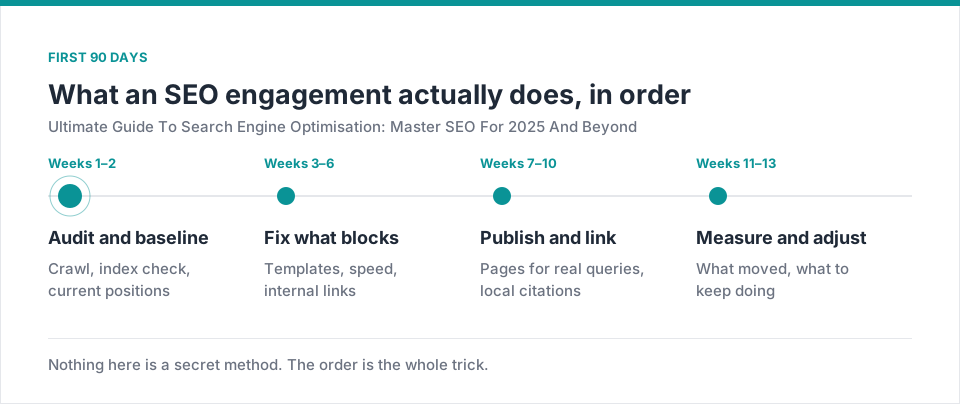
As a practical takeaway, commit to a short, actionable KPI short-list for the next 90 days. Focus on a core set of Edinburgh-relevant metrics, validate data accuracy and use insights to drive specific optimisations in your content, technical stack or GBP activity. The payoff is a clearer link between SEO actions and business outcomes, reinforcing trust with stakeholders and accelerating local growth.
Looking ahead, Part 11 shifts to SEO tools and resources that support measurement, technical audits and performance tracking. If you’re ready to translate these principles into a localisation-driven analytics programme, explore our services or reach out through our contact page to start building a measurement framework that delivers real Edinburgh value.
SEO Tools and Resources: A Practical Overview
Following the measurement framework outlined in Part 10, this section walks through a practical toolkit for Edinburgh-based campaigns. It focuses on the tools that help you plan, execute and optimise SEO with localisation in mind. The aim is to equip you with reliable, responsible resources that scale from small businesses to larger enterprises, while keeping London-to-Edinburgh nuances in sharp focus. For hands-on demonstrations and local case studies, explore our blog and our localisation-first Edinburgh SEO services for concrete templates and workflows. If you’d like personalised guidance, you can reach our team via our contact page.
Key categories of SEO tools and how to choose them
A well-constructed toolkit covers five core areas: keyword research, technical audits, analytics and data collection, competitive intelligence, and local data quality. Each category serves a distinct purpose, yet the best results come from a harmonised workflow that aligns with your content calendar, site architecture and local market priorities in Edinburgh.
1) Keyword research and intent mapping tools
Keyword discovery forms the starting point for content planning and measurement. Start with free signals from Google such as Keyword Planner to generate seed ideas and understand basic search volumes. Then enrich these insights with data from reputable paid tools to prioritise opportunities that most realistically convert in Edinburgh’s market.
- Google Keyword Planner helps you understand search volume, seasonality and suggested terms tied to Edinburgh audiences. Use it for initial seed lists and to validate local relevance before expanding to paid campaigns.
- Google Trends reveals interest over time and regional flavour, ensuring that content calendars reflect seasonal Edinburgh search behaviours.
- Third‑party tools such as Ahrefs, SEMrush and Moz provide competitive context, keyword difficulty scores and related query clusters that expand coverage beyond the basics.
2) Technical audit and crawling tools
Technical tools diagnose how well your site can be crawled, indexed and rendered. They help you identify performance bottlenecks, crawl budget issues and architectural gaps that impede local visibility. Start with Google’s own signals and expand to dedicated crawlers for deeper analysis.
- Screaming Frog SEO Spider offers a scalable, localised way to crawl sites, identify broken links, analyse redirects and audit meta data at scale. A practical Edinburgh-friendly approach is to map service areas and local landing pages into a single crawl so you can prioritise fixes with high local impact.
- Google Search Console (GSC) provides indexing reports, coverage data and mobile usability insights that help you prioritise fixes on pages that matter for Edinburgh queries.
- PageSpeed Insights and Lighthouse evaluate performance and accessibility, with actionable recommendations to boost Core Web Vitals, which are particularly consequential for mobile users in Edinburgh’s varied network conditions.
Structured data and local schemas play nicely with these tools. When you harmonise crawl data with on‑page signals and local business attributes, you create a coherent path for search engines to understand your local relevance and offerings.
3) Analytics, data collection and dashboards
Analytics tooling translates visibility into business outcomes. A well‑configured suite helps you measure the customer journey from organic search to conversion, while enabling localisation insights such as Edinburgh‑specific landing page performance and GBP interactions.
- Google Analytics 4 (GA4) provides event‑based measurement for user journeys, enabling customised events that capture Edinburgh‑specific actions, such as quote requests or local inquiry submissions.
- Google Search Console complements GA4 by linking search performance with on‑site experiences and enabling keyword‑level insights where available.
- Looker Studio (formerly Data Studio) consolidates GA4, GSC and GBP data into cohesive dashboards you can share with stakeholders across Edinburgh teams.
Reference points include Google's Analytics Help and the official GA4 setup guides to ensure your implementation aligns with best practices and privacy considerations.
4) Competitor intelligence and market context
Understanding what rivals rank for helps you prioritise gaps and new opportunities. Combine market intelligence with local signals to ensure Edinburgh campaigns remain relevant and credible.
- Ahrefs and SEMrush offer keyword and backlink analyses that illuminate content gaps and topical authority. Use them to model clusters around Edinburgh‑specific topics, such as local SEO audits, Edinburgh service offerings and neighbourhood‑level content.
- Moz provides practical training and guidelines that reinforce foundational SEO concepts, useful when onboarding new team members or aligning contractors with Edinburgh objectives.
Industry‑standard references include Ahrefs' blog posts and SEMrush resources, along with Moz's Beginner's Guide to SEO. Linking to these sources helps ground your strategy in widely recognised methodologies while you adapt them to Edinburgh’s local dynamics.
Practical tooling workflow for Edinburgh SEO
- Define a localisation‑driven measurement plan that integrates GA4 events, GSC insights and GBP signals to capture local intent and conversions.
- Set up a keyword and content workflow that starts with seed terms, expands to clusters, and maps to pillar and cluster pages in Edinburgh’s context.
- Run quarterly site audits using Screaming Frog and PageSpeed Insights to maintain crawlability and speed targets tailored to Edinburgh audiences.
- Build an evergreen analytics dashboard in Looker Studio that combines traffic, extraction of local signals and GBP performance into a single narrative.
- Institute a quarterly review process that rebalances priorities based on Edinburgh market shifts, results from the dashboards and feedback from local clients.
For ongoing guidance, our blog contains practical case studies and updates on tool usage, while our services page outlines templates and playbooks you can adopt with your team. If you would like a localisation‑forward toolkit tailored to your growth targets, contact Edinburgh SEO to discuss a configured, ROI‑driven toolset.
In Part 12, we shift from tools to common SEO mistakes and how to avoid them, illustrating why even powerful toolsets can falter when misapplied. If you’re ready to take the next step, explore our Edinburgh SEO services or schedule time through our contact page to tailor a practical, Edinburgh‑specific tooling plan.
Common SEO Mistakes and How to Avoid Them
Even with a robust, localisation‑focused toolkit, SEO can derail if the usual missteps aren’t recognised and addressed. This Part identifies common pitfalls that affect Edinburgh campaigns and offers practical remedies to preserve credibility, protect rankings and sustain local growth. By foregrounding consistency, clarity and measurement, you keep your optimisation efforts aligned with real user needs and business goals.
In our experience at edinburghseo.org, mistakes tend to cluster around content depth, technical hygiene and local relevance. The fixes are rarely exotic; they are disciplined, repeatable processes that scale with your organisation. Below we outline the eight most frequent traps and how to navigate them without compromising user experience or compliance with search engine guidelines. For ongoing practical insights, you can also consult our blog and our localisation‑driven services for templates you can adapt today.
Eight common SEO mistakes and practical fixes
- Over‑optimisation and keyword stuffing can degrade readability and erode trust with Edinburgh readers, and may trigger penalties if guidelines are violated. Remedy by prioritising natural language, semantic targeting and placing keywords only where they fit naturally within the page’s purpose and user intent.
- Thin content and content gaps waste crawl budget and frustrate users looking for real value. Remedy by consolidating related pages into authoritative pillar content, enriching with local Edinburgh examples, case studies and practical steps that answer real questions.
- Poor mobile experience and slow load times undermine engagement and conversions. Remedy with a mobile‑first redesign, optimised images, efficient scripts and Core Web Vitals‑friendly practices to sustain fast, responsive performance across Edinburgh networks.
- Ignoring user intent and local context leads to pages that misalign with how Edinburgh searchers actually think and behave. Remedy by conducting SERP analyses for key terms, mapping topics to audience needs and adding local nuance such as service areas, neighbourhoods and regional timing.
- Inconsistent metadata and header misuse reduce clarity about page purpose. Remedy by applying metadata templates, writing unique titles and descriptions for each page, and using a clean header hierarchy that mirrors the content flow while incorporating local signals where natural.
- Broken internal linking and poor navigation hinder discovery and dilute topical authority. Remedy by auditing the internal link map, repairing broken paths, and maintaining a siloed, pillar‑and‑cluster structure that guides Edinburgh readers to the most relevant content within a few clicks.
- Not leveraging structured data and local signals limits the chances of rich results and nearby visibility. Remedy by implementing LocalBusiness, FAQ and Product schemas where appropriate, ensuring data accuracy on the page and across GBP, and aligning on‑page text with structured data for consistency.
- Lack of measurement and vague attribution makes it difficult to prove ROI and optimise effectively. Remedy by establishing a localisation‑driven measurement plan, linking GA4 events, GSC insights and GBP signals to concrete business outcomes such as enquiries, bookings and revenue growth.
Implementing these fixes requires disciplined governance. Start with a quarterly content and technical audit that specifically flags local relevance, mobile performance and metadata integrity. Use a lightweight, repeatable checklist to prevent drift, and tie improvements to measurable outcomes that matter to Edinburgh stakeholders. This approach preserves the integrity of your SEO programme even as search algorithms evolve.
To stay aligned with best practices and local expectations, reference authoritative sources such as Google's SEO Starter Guide and How Search Works. These references provide a dependable baseline for craftsmanship in titles, meta descriptions, headers and structured data. You can access practical, Edinburgh‑specific examples and templates through our services page and the case studies published in our blog.
If you’d like a fully backed localisation plan, our team is ready to tailor a governance framework that integrates technical health, content quality and local signals into a cohesive, measurable programme for Edinburgh. Contact Edinburgh SEO to discuss practical steps, quarterly targets and a realistic timeline for improvements.
In addition to the eight core mistakes, be mindful of evolving industry nuances, including evolving expectations around user privacy, accessibility and ethical link building. A robust audit cadence combined with real‑world measurement ensures your Edinburgh campaigns remain credible, competitive and capable of delivering tangible local outcomes.
For ongoing guidance and practical templates, browse our blog and explore our localisation‑first services for ready‑to‑use frameworks you can adapt. If you want a personalised plan that translates these principles into action, reach out via our contact page.
Future Trends in SEO: AI, Semantic Search and Voice
The SEO landscape continues to evolve quickly as new technologies and user behaviours reshape how people discover, research and decide. For Edinburgh businesses and organisations working with Edinburgh SEO, embracing artificial intelligence (AI), semantic search and voice interactions can unlock more efficient processes, richer user experiences and more precise, localised visibility. This final part of the guide looks ahead at practical trends, how they intersect with our proven localisation‑first approach, and how to translate emerging patterns into a realistic, ROI‑driven roadmap for edinburghseo.org clients.
Artificial Intelligence in SEO: Opportunities and Boundaries
AI is less a single tactic and more a set of capabilities that can augment every phase of an optimisation programme. In Edinburgh campaigns, AI can accelerate keyword discovery, automate routine audits, personalise user experiences and surface patterns in large data sets that would be impractical to detect manually. Yet AI is not a magic wand. The safest path combines AI‑assisted methods with human editorial judgment, ethics, and a localisation lens that respects local intent and regulatory considerations.
Key practical applications include: automated topic research that identifies emerging Edinburgh‑specific questions, sentiment analysis to monitor local brand perception, and data‑driven content briefs that accelerate writer workflows. Crucially, AI should support quality assurance, not substitute for governance. When we embed guardrails around data provenance, citation standards and responsible AI use, we safeguard accuracy and trust—essentials for Edinburgh readers and search engines alike.
From a technical perspective, AI can streamline technical audits and performance monitoring. For example, automated checks can flag sudden shifts in Core Web Vitals metrics, detect anomalies in server responses for Edinburgh regions, and highlight pages that break accessibility standards. In tandem with our measurement framework, these insights translate into concrete actions with clear business value.
- Adopt AI tools for topic modelling and SERP analysis to prioritise Edinburgh‑specific opportunities with realistic ROI.
- Use AI to draft initial content briefs, but require final human review to ensure accuracy, tone, and local relevance.
- Institute governance for data sourcing and model usage to maintain consistency with privacy and editorial standards.
- Balance automation with qualitative testing, such as user testing and live site experiments, to validate AI‑driven changes before broad rollout.
Semantic Search and Knowledge Graphs
Semantic search shifts focus from keyword matching to understanding the intent and the relationships between concepts. In practice, this means emphasising entities, their attributes and the connections between topics. For Edinburgh campaigns, a knowledge‑graph‑friendly approach helps search engines connect local services, customers, references and events into a coherent topical network. This is particularly powerful for establishing authority around local topics such as Edinburgh SEO, service areas and regional case studies.
To operationalise semantic search, you need robust on‑page signals: precise topic definitions, entity‑based content structures, and rich, well‑linked data using structured data formats (JSON‑LD). When pages clearly declare their subjects and their relations to other pages, search engines can build richer understandings of your topical footprint and how each Edinburgh service interrelates with user needs.
Practical steps include mapping content to distinct entities (e.g., “Edinburgh” as a place, “SEO audits” as a service, “GBP” as a local data source) and annotating pages with appropriate schemas (Article, LocalBusiness, Service, FAQ). This enhances the chance of appearing in knowledge panels, rich results and local knowledge graphs, improving visibility for Edinburgh queries that blend local intent with service interest.
Voice Search and Conversational SEO
Voice search continues to reshape how people phrase questions, often favouring longer, conversational queries. For Edinburgh audiences, voice queries may involve time, location, and practical outcomes (for example, “best Edinburgh SEO consultant near me” or “how long does an Edinburgh SEO audit take?"). Optimising for voice means prioritising natural language, FAQs and page structures that reflect spoken inquiry patterns while maintaining the strict information architecture that search engines rely on to deliver immediate answers.
Two practical approaches stand out. First, create well‑structured FAQ content that directly answers common local questions, including intake processes, delivery timelines and regional constraints. Second, ensure responses to voice queries live where users can act on them quickly, with clear CTAs and contact options. For Edinburgh businesses, this often means coupling voice‑optimised pages with easy routes to consultation booking or a local service page.
Visual Search, Local Imagery and Zero‑Click Trends
Visual search and image‑first experiences are increasingly influential, especially for local shopping and service discovery. Optimising images with descriptive file names, alt text and structured data not only supports accessibility but also enables local visual discovery. In Edinburgh campaigns, visually rich content—such as service demonstrations, storefronts, and event photography—can be surfaced through image search, knowledge panels and related features. Prioritise image quality, fast loading and accessibility to maximise impact across devices and network conditions in the city.
Zero‑click results—where the user gets the answer directly in the SERP—are a growing reality. The goal is to provide concise, reliable answers on the page that match user intent while maintaining opportunities for engagement through more in‑depth content and call to action. Structured data, high‑quality content and credible local signals work together to deliver helpful snippets and map results that drive relevant Edinburgh traffic to your site.
Privacy, Data Strategy and First‑Party Data
As AI and semantic capabilities advance, organisations must balance innovation with privacy and data integrity. A localisation‑first SEO plan benefits from strong first‑party data collection—such as on‑site user registrations, newsletter sign‑ups, and quotation requests—acted upon in a privacy‑conscious manner. In the UK context, transparent consent, data minimisation and clear explanations of how data improves user experiences are essential to sustaining trust with Edinburgh audiences.
Direct data collection supports personalised experiences while reducing reliance on opaque third‑party data. This fosters longer dwell times, higher engagement and more precise attribution—crucial when proving ROI to local stakeholders. When implementing AI and semantic features, document data governance, consent flows and data processing practices to ensure compliance and build confidence with your customers.
Local Implications for Edinburgh: Aligning Trends with Place
Edinburgh’s unique mix of business sectors, universities, tourism and local government creates a fertile ground for applying future‑forward SEO. Local signals, such as GBP data, local business citations and community‑focused content, remain central. The trends above should be implemented with a localisation bias: ensure content reflects Edinburgh’s geography, culture and economic priorities while maintaining universal best practices in structure, accessibility and ethics.
Our localisation framework at edinburghseo.org emphasises a repeatable discipline: map topics to local realities, integrate structured data for local semantics, and combine AI‑assisted insights with human editorial oversight. This approach ensures your Edinburgh audience experiences relevant, trustworthy content that search engines interpret as credible and locally anchored.
Practical Roadmap: Turning Trends into a Realistic Plan
Below is a pragmatic 12‑month plan that blends forward‑looking trends with the maturity of ongoing optimisation work. Use this as a starting point to align with your team’s capacity, budget and growth targets in Edinburgh.
- Establish AI governance for localisation‑driven content research, including clear provenance, attribution and human review checkpoints.
- Develop a semantic content map that treats Edinburgh as a set of interrelated entities, supported by robust schema and local data signals.
- Launch a voice‑optimisation sprint focused on FAQs, conversational pages and clear local CTAs, integrated with your service pages.
- Expand image and video assets with descriptive metadata and structured data to support visual and local discovery.
- Strengthen first‑party data capture through ethical forms, gated resources and event registrations, with clear privacy disclosures.
- Introduce ongoing AI‑assisted analytics that flags anomalies in Edinburgh‑specific KPIs and suggests corrective actions validated by editors and marketers.
- Prioritise local knowledge graph work by mapping entities to pillar pages and implementing LocalBusiness and FAQ schemas where relevant.
- Enhance GBP activity with consistency checks, new posts and refreshed reviews to sustain local trust signals.
- Implement a structured data quality programme that aligns on‑page content with website data, GBP and local directories.
- Set up quarterly experiments to test AI‑driven hypotheses on UK and Edinburgh search results, with rigorous measurement and reporting.
- Develop a content boilerplate for pillar pages that can adapt to new topics while preserving local relevance and editorial voice.
- Review outcomes with stakeholders in Edinburgh through a quarterly business review and adjust targets for the coming year.
For ongoing ideas, practical templates and concrete examples in Edinburgh contexts, explore our blog and our localisation‑ready templates on the Edinburgh SEO services page. If you’d like help tailoring this forward plan to your organisation, contact Edinburgh SEO to discuss a localisation‑first roadmap that aligns with your growth targets.