An SEO Audit In Edinburgh: Foundations And Local Context
An SEO audit is a structured, evidence-based examination of a website to identify health, usability, and relevance issues that affect visibility in search engines. For Edinburgh businesses, the audit must translate general optimisation practices into the city’s distinctive local landscape. It recognises Local Pages (LPs), Canonical Local Pages (CLPs), and Google Business Profile (GBP) as essential surfaces alongside traditional on-page, technical, and content considerations. When the audit is grounded in Edinburgh-specific signals, districts, and proofs, improvements become auditable actions that deliver tangible local outcomes.
Why run a governance-informed audit in Edinburgh? The city blends historic centres with dynamic neighbourhoods, from the Old Town and New Town to Leith, Stockbridge, and Morningside. Local intent often hinges on proximity, recognisable district proofs, and reliable GBP data as much as on broad national best practices. A structured Edinburgh audit aligns surface health with reader expectations, ensuring that optimisation efforts reflect where customers actually live and move in the city. This Part 1 lays the groundwork for the rest of the series by outlining the audit’s scope, the local governance concepts that sustain it, and the practical steps you can take today to begin an Edinburgh-focused assessment.
What an Edinburgh SEO audit typically covers
The Edinburgh-centric audit integrates five core areas that interlock to drive local visibility and conversions:
- Technical health: crawlability, indexability, mobile performance, site speed, and structured data readiness.
- On-page optimisation: title tags, meta descriptions, headers, internal linking, image optimisation, and local relevance signals.
- Content quality and local relevance: district proofs, evergreen guides, and content spine that mirrors Edinburgh’s district realities.
- GBP health and local signals: GBP categories, hours, service areas, posts, and review management aligned with LPs and CLPs.
In Edinburgh, it’s essential to tie these areas to district-level proofs readers recognise—landmarks, transport routes, and community anchors—so the audit yields actionable steps that reinforce proximity signals. For reference, Google’s GBP guidelines provide a broader framework for local surfaces, while CORA Trails and Translation Provenance offer a governance lens to justify locale modifiers and preserve authentic terminology across updates.
To explore practical Edinburgh-specific playbooks, dashboards, and governance artefacts, visit our Edinburgh Services hub and arrange a scoping discussion via the Contact Page to tailor a district-focused assessment for your portfolio.
Governance as a foundation for Edinburgh audits
A robust Edinburgh audit relies on governance artefacts that make localisation decisions reproducible. CORA Trails provide locale rationales for each suburb modifier, while Translation Provenance ensures terminology remains authentic as updates roll out across LPs, CLPs, and GBP surfaces. Implementing these artefacts early creates an auditable history that supports regulatory reviews and stakeholder confidence as the Edinburgh footprint expands.
Looking ahead, Part 2 of this series will translate governance principles into concrete local signals, district-focused keyword strategy, and an initial measure baseline. To start the conversation, book a discovery call through the Contact Page or browse the Edinburgh Services hub for district-ready templates and measurement templates that travel with growth. A disciplined, auditable approach ensures Edinburgh’s local visibility translates into real business outcomes.
Note: This Part 1 establishes the mindset and governance framework. In subsequent sections, expect deeper dives into local signals, keyword strategy, on-page and technical SEO, content and link building, analytics, budgeting, and practical contracting considerations, all tailored to Edinburgh’s markets. For authoritative context on local guidelines, refer to Google’s GBP resources and Edinburgh-specific market expectations as you build auditable localisation that travels with growth across the city.
The Value Of Local Edinburgh SEO
Local knowledge matters more than ever for Edinburgh businesses seeking sustainable visibility. A well-executed local Edinburgh SEO programme recognises the city’s unique mix of historic centres, modern business districts, and vibrant neighbourhoods such as the Old Town, New Town, Leith, Stockbridge, and Morningside. By rooting strategy in local realities, you align surface health, user intent, and conversion opportunities with Edinburgh’s distinctive geography and consumer behaviours. This part builds on the governance framework introduced in Part 1 and explains how a local, Edinburgh-first approach translates into practical advantage for an SEO services company in Edinburgh and their clients. Discover practical resources at our Edinburgh Services hub and arrange a scoping discussion through the Contact Page to tailor a district-aware plan for your business.
What makes Edinburgh distinctive for local SEO is how proximity intersects with cultural and logistical cues. Proximity signals extend beyond raw distance to include landmarks (Edinburgh Castle, the Scott Monument), transport arteries (Waverley Station, Princes Street), and community anchors (neighbourhood tenants, local markets, university campuses). An Edinburgh-focused partner translates general best practices into district-level actions: improving GBP presence for specific postcodes, aligning LPs and CLPs to district proofs, and ensuring maps and local citations reflect the real-world geography readers navigate every day. This is not about generic optimisations; it is about auditable localisation that scales with Edinburgh’s evolving markets while staying fully transparent for audits and governance reviews.
What an Edinburgh Partner Delivers
An Edinburgh-centric SEO partner offers more than technical fixes. They provide a governance-driven, locality-aware strategy that connects Local Pages (LPs), Canonical Local Pages (CLPs), and Google Business Profile (GBP) with real-world Edinburgh proofs. Expect a phased roadmap starting with a tight hub-and-spoke structure, defined district priorities, and auditable localisation history. A trustworthy partner will present transparent CORA Trails for locale rationales and Translation Provenance to maintain authentic terminology as you scale across Edinburgh’s districts.
- Local district expertise across Edinburgh, with district-specific case studies and optimisations.
- Auditable reporting that ties local decisions to district proofs and language guidelines.
- A staged rollout plan that starts small and expands once early signals validate impact.
- Clear governance artefacts, including CORA Trails and Translation Provenance, to support regulatory reviews.
- Ethical, local PR and link-building that reinforce proximity signals without compromising integrity.
A Simple, Structure-First Edinburgh Local SEO
Adopt a governance-first foundation: create Local Pages (LPs) that anchor district authority and map their relationship to Canonical Local Pages (CLPs) and Google Business Profile (GBP) signals. Each suburb page should surface proofs that readers recognise, from landmark references to transport routes. Translation Provenance ensures terminology remains natural across updates, while CORA Trails justify locale modifiers for each Edinburgh district so updates stay auditable as you expand into new areas.
How To Start With Your Discovery
Begin with a practical discovery call to align business objectives with Edinburgh-specific signals. Prepare a district-by-district brief that lists target suburbs, known proofs, and data points you want surface. A good disclosure in the brief includes CORA Trails and Translation Provenance expectations so the agency can deliver auditable localisation from day one.
How This Part Connects With Part 1
Where Part 1 established governance, Part 2 translates that governance into local Edinburgh value. You’ll see how district-aware planning, GBP hygiene, and suburb-level localisation unlock practical, measurable outcomes: higher proximity signals, more directions requests, more calls, and more conversions. The Edinburgh Services hub remains your central resource for playbooks, dashboards, and artefacts that codify auditable localisation history as your Edinburgh footprint grows. To begin, book a scoping discussion through the Contact Page or explore our Edinburgh Services hub for district-ready templates and measurement templates that travel with growth.
In summary, the value of local Edinburgh SEO lies in connecting the city’s physical geography to search-visible outcomes. Local knowledge, regular governance, and auditable localisation create a practical pathway from discovery to revenue that scales gracefully across Edinburgh’s districts. For ongoing support, revisit the Edinburgh Services hub and schedule a scoping discussion to tailor a district-focused plan for your business.
What An Edinburgh SEO Company Typically Offers
Edinburgh businesses benefit from a disciplined, locality-aware approach that combines governance with practical delivery. A typical Edinburgh SEO services company aligns Local Pages (LPs), Canonical Local Pages (CLPs), and Google Business Profile (GBP) signals with real-world Edinburgh proofs and district content. This part outlines the core services you should expect, the governance artefacts that sustain auditable localisation, and how these elements translate into tangible outcomes for your business. For practical Edinburgh-specific playbooks and dashboards, visit our Edinburgh Services hub and explore the scoping options via the Contact Page to tailor a district-focused plan for your portfolio.
Core Service Areas You Should Expect
Most Edinburgh campaigns begin with a clearly defined set of service areas designed to surface recognisable proofs for readers. The portfolio typically includes audits and baseline assessments, keyword research mapped to LPs and GBP surfaces, on-page optimisation, technical SEO, content strategy, and local link building. A credible partner will present a staged roadmap that stays auditable through CORA Trails (locale rationales) and Translation Provenance (authentic terminology) as you scale across Edinburgh’s districts.
- Audits And Baselines: a comprehensive evaluation of technical health, GBP hygiene, and district proofs to establish a trustworthy starting point.
- Keyword Research: a district-aware keyword universe linking LPs, CLPs, and GBP signals to near-me opportunities.
- On-Page Optimisation: optimised title tags, meta descriptions, headers, and internal linking with local relevance.
- Technical SEO: data-driven improvements to crawlability, site speed, mobile usability, and structured data for local entities.
- Content Strategy And Local PR: district-proof assets, guides, and credible local media outreach to earn relevant mentions.
- Link Building And Local Citations: trusted, Edinburgh-focused backlinks and high-quality local citations that reinforce proximity signals.
Local Governance And Auditability
Edinburgh campaigns benefit from a governance framework that makes localisation decisions reproducible. CORA Trails justify locale modifiers for each suburb, and Translation Provenance keeps terminology natural across content updates. A well-defined governance cadence ensures every change is reviewable, from LP health updates to GBP post schedules. Regular artefact reviews enable audits and regulator checks, helping you demonstrate the reliability of Edinburgh-specific optimisations.
GBP Optimisation And Local Profiles
GBP should be treated as a central, live surface that mirrors LPs and CLPs. Regular updates to categories, hours, and service areas keep proximity signals accurate. Suburb posts should surface proofs readers recognise, such as local landmarks (Edinburgh Castle, Scott Monument), transport routes, and community anchors. Translation Provenance ensures authentic terminology remains intact across GBP updates, while CORA Trails justify locale modifiers for each Edinburgh suburb so updates stay auditable as you expand.
- Maintain GBP categories that reflect current services and Edinburgh suburbs you actively serve.
- Keep hours and service areas precise and aligned with LPs and CLPs.
- Publish suburb posts that surface reader-recognised proofs, such as landmarks or transport links.
On-Page Optimisation And Technical SEO
On-page work includes optimising title tags, meta descriptions, headings, and internal linking with a strong local flavour. Technical SEO covers site speed, mobile usability, crawlability, indexability, structured data, and canonical parity across LPs and CLPs. A robust Edinburgh implementation ensures maps, local knowledge panels, and local business data stay in harmony with user expectations. Translation Provenance preserves authentic Scottish terminology in updates, while CORA Trails justify locale modifiers for each Edinburgh suburb so updates remain auditable as you grow through Edinburgh’s districts.
- Local schema and GBP integration for district proofs.
- NAP consistency across GBP and local pages.
- Mobile-first, fast loading pages with clear pathways to district proofs.
Content Strategy And Local Digital PR
Edinburgh content should blend local knowledge with sustainable SEO practices. Develop evergreen guides that surface recognisable Edinburgh proofs, district roundups highlighting landmarks and transport corridors, and visuals that aid discovery. Digital PR should target Edinburgh-centred outlets and local industry publications to earn credible placements. All outreach should be anchored to CORA Trails and Translation Provenance to maintain authentic, auditable language across campaigns.
- District-proof content assets that feature recognisable Edinburgh landmarks.
- Outreach to Edinburgh outlets for local coverage and credible backlinks.
- Partnerships with Edinburgh organisations to generate authentic mentions.
Measurement, Reporting, And Governance
Measurement should connect surface health to near-me actions, inquiries, and revenue. Build dashboards that segment by Edinburgh district, LP health, GBP engagement, and conversion outcomes. Governance cadences—weekly tactical reviews, monthly strategic assessments, and quarterly locale revalidations—keep localisation history auditable. CORA Trails and Translation Provenance must be visible in every report to justify locale modifiers and language choices.
To access practical Edinburgh-specific playbooks and dashboards, visit our Edinburgh Services hub and book a scoping discussion via the Contact Page to tailor the framework to your portfolio. External references, such as Google’s local guidelines, provide helpful guardrails, but the differentiator is auditable localisation history that travels with growth across Edinburgh’s districts.
Technical SEO Audit In Edinburgh
A robust technical SEO audit is the foundation of strong, Edinburgh-focused local visibility. By aligning crawlability, indexability, site architecture, mobile performance, structured data, and canonical parity with Local Pages (LPs), Canonical Local Pages (CLPs), and Google Business Profile (GBP) signals, Edinburgh businesses can ensure search engines understand and accurately surface district proofs readers recognise. This part builds on the governance and local signal framework introduced earlier and shows how to translate Edinburgh-specific realities into auditable technical actions. For practical Edinburgh-specific playbooks and dashboards, explore our Edinburgh Services hub and book a scoping discussion via the Contact Page to tailor a technical plan for your portfolio.
Crawlability And Indexability: Edinburgh’s perspective
The Edinburgh network benefits from a crawlable, well-indexed structure that keeps district proofs accessible while avoiding over-indexing low-value pages. Start by auditing robots.txt to ensure essential suburb pages and GBP-related surfaces are allowed to be crawled. Validate XML sitemaps to guarantee comprehensive coverage of LPs, CLPs, and GBP-linked content. Remove crawl blockers, prioritise indexable pages, and ensure canonical parity aligns with Edinburgh’s hub-and-spoke surface model.
- Audit robots.txt to confirm access for LPs and GBP assets that readers rely on.
- Validate the sitemap and ensure suburb pages are represented accurately.
- Check for duplicate content and ensure canonical tags point to the correct CLP surface.
- Ensure important district proofs surface in indexable content and GBP posts.
- Document crawl anomalies and remediation steps in CORA Trails for auditable governance.
Site Architecture And Internal Linking For Edinburgh
A clear hub-and-spoke architecture supports Edinburgh readers by making district proofs easy to find and navigate. LPs should act as district authorities connected to CLPs as canonical local surfaces, with GBP signals reinforcing local intent. Maintain consistent URL patterns, breadcrumb trails, and internal linking that directs readers from broad Edinburgh pages to suburb-specific proofs. Translation Provenance ensures Edinburgh terminology remains authentic across updates, while CORA Trails justify why each suburb modifier exists within the site structure.
- Establish a hub page that represents Edinburgh’s core services and links to district spokes.
- Align LPs and CLPs with clear, district-focused URL schemas.
- Use logical internal links to connect LPs, CLPs, and GBP posts.
- Preserve canonical parity across surface representations to prevent signal drift.
Mobile Performance And Core Web Vitals
In Edinburgh, users frequently search on mobile while travelling between districts. Prioritise mobile-first design, optimise above-the-fold rendering, and reduce layout shifts that disrupt discovery of local proofs. Target Core Web Vitals metrics such as Largest Contentful Paint (LCP) under 2.5 seconds, Total Blocking Time (TBT) minimised, and CLS kept low on district pages. A fast, stable experience supports GBP engagement and map-pack visibility in Edinburgh queries.
- Improve server response times and render-blocking resources on suburb pages.
- Optimise images and assets for mobile delivery without sacrificing proof quality.
- Minimise layout shifts on critical district pages during user interaction.
- Regularly test performance across representative Edinburgh devices and networks.
Structured Data And Local Rich Results
Structured data helps search engines interpret local entities and proofs. Implement LocalBusiness or Organisation schemas for Edinburgh entities, plus FAQPage schemas for common questions about districts such as Old Town, Leith, or Stockbridge. Rich results for events, services, and local knowledge panels can improve click-throughs. Translation Provenance ensures the terminology remains authentic during schema updates, and CORA Trails justifies locale modifiers tied to district-specific knowledge.
- Apply LocalBusiness or Organisation schema to reflect Edinburgh surfaces.
- Enhance with FAQ schema that answers district-specific questions readers may have.
- Integrate event and service schemas to surface timely district proofs.
Governance, Artefacts, And Practical Playbooks
Edinburgh governance relies on artefacts that justify locale rationales for suburb modifiers and preserve authentic terminology. CORA Trails capture the reasoning behind each Edinburgh district modifier, while Translation Provenance ensures language fidelity across updates. Maintain change logs for technical tweaks and schema changes so auditors can replay decisions. A clear governance cadence supports regulator readiness as Edinburgh’s district footprint expands.
Read next: Hiring a freelance SEO in Edinburgh · SEO in Edinburgh: the local playbook
To access practical Edinburgh-specific playbooks, dashboards, and governance artefacts, visit our Edinburgh Services hub and book a scoping discussion via the Contact Page to tailor the technical framework for your portfolio.
Measurement, Dashboards, And Ongoing Optimisation
Link technical health to near-me outcomes with dashboards that track crawlability, index coverage, LP health, GBP engagement, and conversion events by district. Use CORA Trails to show why each technical choice exists, and Translation Provenance to keep Edinburgh terminology consistent as content evolves. Schedule regular reviews to adjust priorities, validate proofs, and ensure the technical stack remains aligned with governance expectations.
- Baseline technical health by district with clear ownership.
- Dashboards that connect LP health, GBP signals, and user actions.
- Regular governance reviews to keep updates auditable.
If you want hands-on templates, dashboards, and governance artefacts tailored to Edinburgh, explore our Edinburgh Services hub and arrange a scoping discussion through the Contact Page to empower your Edinburgh technical SEO rollout. The auditable localisation history you build today travels with growth across Edinburgh’s districts while keeping you compliant and competitive.
On Page Optimisation And Technical SEO In Edinburgh
Edinburgh campaigns demand a disciplined blend of on–page optimisation and robust technical foundations, all aligned to Local Pages (LPs), Canonical Local Pages (CLPs), and Google Business Profile (GBP) signals. In practice, this means every Edinburgh suburb you serve should have optimised title tags, meta descriptions, headers, and internal links that surface recognisable proofs readers expect — landmarks, transport routes, and community anchors identified in CORA Trails. Translation Provenance ensures terminology remains authentic across updates, so language fidelity travels with growth while audits stay straightforward for governance reviews. This approach also complements a broader seo audit edinburgh programme, ensuring changes stay auditable and locally resonant.
Core On–Page Elements For Edinburgh
- Title tags and meta descriptions: craft location–specific titles that include Edinburgh suburbs (for example, Edinburgh SEO Leith), and write meta descriptions that emphasise proximity, proofs, and clear action prompts such as directions or enquiries.
- Headers and content structure: use H1/H2/H3 hierarchies that mirror district priorities, ensuring each suburb page surfaces proofs readers recognise.
- Internal linking strategy: create logical pathways between LPs, CLPs, and GBP posts to guide readers through Edinburgh's suburb network and reinforce canonical parity.
- Local schema and structured data: implement LocalBusiness, Organization, and FAQ schemas tied to GBP and LP content to improve rich results in Edinburgh queries.
- NAP consistency across surfaces: align name, address, and phone numbers across LPs, CLPs, and GBP to strengthen proximity signals.
Technical Health Essentials For Local Edinburgh
Beyond on–page cues, technical SEO underpins reliability and speed, which in turn influence user experiences and rankings. Edinburgh campaigns benefit from a mobile–first approach, optimised image handling for local visuals, and rigorous crawlability controls so search engines can index suburb proofs without friction. Structured data should be extended to support district proofs, events, and local services, all keeping Translation Provenance intact so terminology remains natural as the Edinburgh footprint expands.
- Site speed optimisations: prioritise critical rendering paths, minify assets, and leverage caching to maintain fast Edinburgh page loads.
- Mobile usability: ensure mobile–first design with accessible navigation, touch targets, and legible typography for readers on the move around the city.
- Crawlability and indexability: provide clear robot directives, clean navigation, and suburb–level sitemaps so search engines discover proofs quickly without friction.
- Structured data depth: expand LocalBusiness, Service, and FAQ schemas to reflect district proofs readers expect in Leith, Stockbridge, New Town, and beyond.
GPS, GBP Hygiene, And Local Proximity Signals
GBP hygiene remains a critical lever for Edinburgh. Regularly refresh categories, hours, and service areas to maintain accurate proximity signals. Suburb posts should surface recognisable proofs readers recognise, such as local landmarks (Edinburgh Castle, Scott Monument), transport arteries, and community anchors. Translation Provenance ensures authentic terminology remains intact across GBP updates, while CORA Trails justify locale modifiers for each Edinburgh suburb so updates stay auditable as you expand.
- GBP category alignment to reflect active Edinburgh services and suburbs you actively serve.
- Keep hours and service areas precise and aligned with LPs and CLPs.
- Publish suburb posts that surface recognisable proofs, such as landmarks or transport links.
Governance, Audits, And Localisation History
Auditable localisation is not optional; it is the backbone of governance for Edinburgh campaigns. CORA Trails justify every locale modifier for each suburb, while Translation Provenance preserves authentic Edinburgh terminology across updates. Maintain change logs for page rotations, schema adjustments, and GBP post schedules so auditors can replay decisions with confidence. A regular governance cadence — weekly tactical reviews, monthly strategic assessments, and quarterly locale revalidations — keeps Edinburgh’s network current and auditable.
To access practical Edinburgh-specific playbooks, dashboards, and governance artefacts, visit our Edinburgh Services hub and book a scoping discussion via the Contact Page to tailor the governance framework to your portfolio. The end goal is auditable localisation that travels with growth across Edinburgh's districts while staying regulator-friendly.
Practical Steps To Start On Page Optimisation Today
1) Audit each core Edinburgh suburb page to verify the alignment of LPs, CLPs, and GBP elements with locale proofs. 2) Implement a suburb-level content spine that surfaces recognisable proofs for readers, supported by Translation Provenance. 3) Deploy local schema extensions and ensure NAP parity across all Edinburgh surfaces. 4) Establish a governance log that records locale rationales behind every modifier and every update. 5) Connect your dashboards to the Edinburgh Services hub for templates, dashboards, and CORA Trails documentation to support regulator reviews and audits.
For ongoing guidance, explore our Edinburgh Services hub for practical templates and measurement dashboards, and book a scoping discussion through the Contact Page to tailor a local on–page and technical SEO plan that travels with growth across Edinburgh. Anchoring every decision in CORA Trails and Translation Provenance not only strengthens trust but also simplifies governance as your Edinburgh footprint expands.
Content Audit And Local Relevance Strategy For Edinburgh SEO
A content audit focused on Edinburgh must go beyond generic quality checks. It should map every piece of content to Edinburgh’s distinctive districts, landmarks, transport routes, and community anchors. The goal is to create a district-aware content spine that supports Local Pages (LPs), Canonical Local Pages (CLPs), and Google Business Profile (GBP) surfaces while remaining auditable through CORA Trails and Translation Provenance. This part builds on the governance and local signals framework established previously, translating insights into a practical content strategy you can implement today.
Assessing content quality, depth, and gaps
The content audit begins with a comprehensive inventory of all Edinburgh-facing assets, including LPs, CLPs, GBP posts, and district guides. Each asset is evaluated for relevance to local proofs readers recognise, such as Old Town’s historic streets, Leith’s harbour, and Stockbridge’s neighbourhood character. The audit also checks for accuracy in local terminology, timetable information, and event coverage. A clear gap analysis reveals opportunities to surface proofs readers expect in Edinburgh’s districts and to fill missing district stories with credible, up-to-date content.
- Catalogue every Edinburgh page and GBP post by district; tag them with known proofs and nearby landmarks.
- Assess content depth against district priorities, ensuring coverage for high-potential suburbs first.
- Identify content gaps in NAP-dense surfaces, GBP posts, and knowledge panels that inhibit proximal discovery.
Developing a district-focused content spine
The content spine should anchor district authority and flow logically from broad Edinburgh topics to suburb-specific proofs. Begin with a central hub page that summarises Edinburgh’s core service areas and links to district spokes. Each suburb page then surfaces recognisable proofs (landmarks, routes, institutions) and contains a compact spine of evergreen content and timely local updates. Translation Provenance ensures consistency of Edinburgh terminology across updates, while CORA Trails justify why each suburb modifier exists within the content structure.
- Hub-and-spoke model: a single Edinburgh hub with district spokes for Old Town, Leith, Stockbridge, New Town, and surrounding areas.
- District proofs as content anchors: landmarks, transport arteries, local events, and community anchors.
- Editorial guidelines that preserve authentic terminology and tone across updates.
Content creation, optimisation, and governance playbooks
Create templates and playbooks that enable scalable content production while preserving locality fidelity. Evergreen district guides, nearby event round-ups, and practical how-to content (e.g., navigating transport between Old Town and Leith) should be paired with timely posts that reflect Edinburgh’s seasonal activities. All content should be reviewed against CORA Trails and Translation Provenance to ensure locale rationales are explicit and traceable through updates.
- Produce district-focused evergreen content that readers can rely on long term.
- Supplement evergreen content with timely local posts about events, changes, and opportunities in each district.
- Apply Local Business and FAQ schemas to district pages to improve rich results and user understanding.
Measurement, governance, and content iteration
Link content performance to local intent by tracking metrics such as proximity-driven engagement, directions requests, and GBP interactions by district. Use CORA Trails to justify content modifiers and Translation Provenance to maintain authentic Edinburgh language across revisions. A regular governance cadence (weekly tacticals, monthly strategic reviews, quarterly revalidations) keeps the content spine aligned with evolving district priorities and search behaviours.
- Content health by district: pages, posts, and GBP content surface health.
- Engagement and conversion signals tied to district proofs and local events.
- Governance artefacts visible in dashboards to support regulator-ready localisation histories.
For practical Edinburgh-specific playbooks, dashboards, and governance artefacts, visit our Edinburgh Services hub and schedule a scoping discussion via the Contact Page to tailor the content strategy to your portfolio. The auditable localisation history you build today travels with growth across Edinburgh’s districts, helping you sustain relevance and trust as you scale.
Backlinks And Authority In Edinburgh Context
In Edinburgh, the strength of your local search presence rests not only on technical health and on-page optimisation but profoundly on the quality and locality of your backlinks. A disciplined Edinburgh backlink strategy prioritises relevance, proximity, and provenance. When combined with governance artefacts such as CORA Trails (locale rationales) and Translation Provenance (authentic terminology), backlinks become auditable evidence of authority that supports Local Pages (LPs), Canonical Local Pages (CLPs), and Google Business Profile (GBP) surfaces across Edinburgh’s distinctive districts.
Why do Edinburgh-specific backlinks matter more than generic links? Readers respond to proximity cues, recognisable proofs (landmarks, campuses, neighbourhood anchors), and credible local mentions. Search engines interpret these signals as validators of local relevance. The best backlinks in Edinburgh contexts come from locally authoritative domains: universities, local government pages, regional media, professional networks, and chamber of commerce listings. When these links are earned through relevant stories, local data assets, or truly local collaborations, they amplify proximity signals and bolster map-pack and GBP visibility.
Principles of Edinburgh-focused link building
- Prioritise relevance to Edinburgh districts and the suburb spine of your content. Links from nearby institutions carry more weight for district-spoke LPs and GBP posts.
- Balance quantity with quality. A handful of highly relevant Edinburgh-domain links often outrank large volumes of generic references.
- Integrate digital PR with locality governance. Each outreach should surface district proofs readers recognise, supported by CORA Trails and Translation Provenance to justify locale modifiers.
Ethical outreach and Edinburgh specificity
Outreach should reflect genuine local value. Develop district-focused angles that relate to Edinburgh proofs readers recognise, such as Old Town heritage, Leith harbour activity, or Stockbridge community initiatives. Build relationships with Edinburgh-based outlets, institutions, and professional groups to secure credible placements. All outreach should be documented within CORA Trails, while Translation Provenance ensures language fidelity across updates so terminology remains authentic throughout growth.
- Target high-authority Edinburgh domains with a clear relevance to your district strategy.
- Document outreach rationale and expected local impact in CORA Trails.
- Maintain language fidelity by applying Translation Provenance in every outreach asset and resulting content.
Anchor text strategy and geographic diversity
Anchor text should be natural and contextually anchored to Edinburgh districts. Avoid over-optimisation with exact-match phrases; instead, align anchor terminology with local language and district proofs. A diversified geographic footprint—linking Old Town, Leith, New Town, and surrounding suburbs—helps search engines understand the city-wide relevance of your business and supports GBP and LP signals across multiple surfaces.
Local citations and backlinks interplay
Backlinks should complement citations and GBP data. Ensure NAP consistency across Edinburgh listings and embed locality proofs within content where possible. Local citations reinforce proximity signals, while high-quality backlinks from Edinburgh domains contribute to authority and relevance. Track how backlink acquisition influences LP health, CLP depth, GBP engagement, and near-me actions. CORA Trails justify why each suburb modifier and local anchor exists; Translation Provenance keeps terminology authentic as you grow across districts.
Measurement, governance, and accountability in Edinburgh backlinks
Establish dashboards that map backlink velocity, referring domains, and the quality of Edinburgh sources against LP health, CLP depth, and GBP engagement by district. Use CORA Trails to document locale rationales for each link decision and Translation Provenance to preserve authentic Edinburgh terminology during updates. Regular governance reviews ensure the backlink network remains relevant and regulator-friendly as Edinburgh’s districts evolve.
- Quality over quantity: prioritise Edinburgh-linked domains with real relevance to your district spokes.
- Link-building and GBP synergy: coordinate outreach with GBP posts to maximise proximity signals.
- Audit trails for every outreach: maintain CORA Trails and Translation Provenance in dashboards and reports.
For ongoing practical resources, visit our Edinburgh Services hub to access templates, dashboards, and governance artefacts that codify auditable localisation. To discuss a district-focused backlinks plan tailored to your portfolio, book a scoping discussion via the Contact Page.
Backlinks And Authority In Edinburgh Context
In Edinburgh, the strength of your local search presence rests not only on technical health and on-page optimisation but profoundly on the quality and locality of your backlinks. A disciplined Edinburgh backlink strategy prioritises relevance, proximity, and provenance. When combined with governance artefacts such as CORA Trails (locale rationales) and Translation Provenance (authentic terminology), backlinks become auditable evidence of authority that supports Local Pages (LPs), Canonical Local Pages (CLPs), and Google Business Profile (GBP) surfaces across Edinburgh’s distinctive districts.
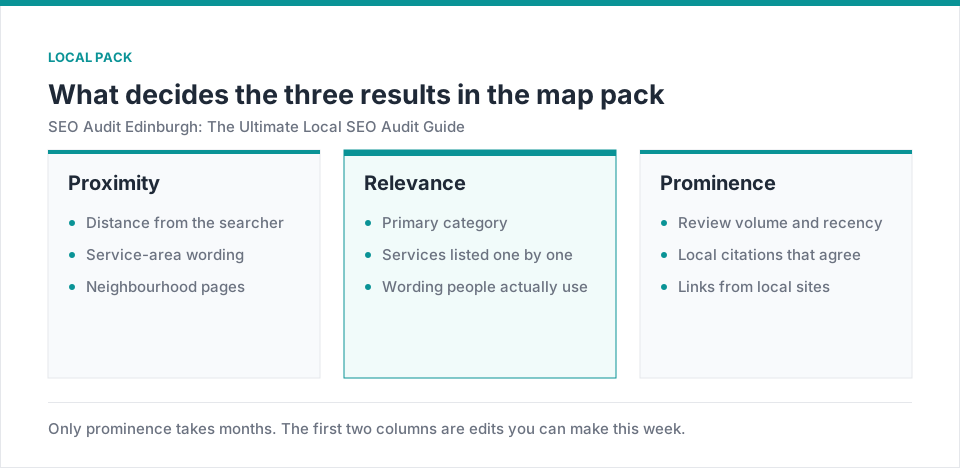
Why do Edinburgh-specific backlinks matter more than generic links? Readers respond to proximity cues, recognisable proofs (landmarks, campuses, neighbourhood anchors), and credible local mentions. Search engines interpret these signals as validators of local relevance. The best backlinks in Edinburgh contexts come from locally authoritative domains: universities, local government pages, regional media, professional networks, and chamber of commerce listings. When these links are earned through relevant stories, local data assets, or truly local collaborations, they amplify proximity signals and bolster map-pack and GBP visibility.
Principles of Edinburgh-focused link building
- Prioritise relevance to Edinburgh districts and the suburb spine of your content. Links from nearby institutions carry more weight for district-spoke LPs and GBP posts.
- Balance quantity with quality. A handful of highly relevant Edinburgh-domain links often outrank large volumes of generic references.
- Integrate digital PR with locality governance. Each outreach should surface district proofs readers recognise, supported by CORA Trails and Translation Provenance to justify locale modifiers.
Ethical outreach And Edinburgh specificity
Outreach should reflect genuine local value. Develop district-focused angles that relate to Edinburgh proofs readers recognise, such as Old Town heritage, Leith harbour activity, or Stockbridge community initiatives. Build relationships with Edinburgh-based outlets, institutions, and professional groups to secure credible placements. All outreach should be documented within CORA Trails, while Translation Provenance ensures language fidelity across updates so terminology remains authentic throughout growth.
- Target high-authority Edinburgh domains with a clear relevance to your district strategy.
- Document outreach rationale and expected local impact in CORA Trails.
- Maintain language fidelity by applying Translation Provenance in every outreach asset and resulting content.
Measurement, Governance, And Link Quality
Track link velocity, referring domains, and the quality of Edinburgh backlinks against LP health, CLP depth, and GBP engagement by district. Build auditable dashboards that show how backlinks translate into near-me actions and conversions. Keep CORA Trails visible in reports to justify locale modifiers and Translation Provenance to preserve language fidelity across updates. Governance cadences should include weekly tactical reviews and monthly governance checks to prevent drift and maintain a credible link network across Edinburgh.
- Quality over quantity: prioritise Edinburgh-linked domains with real relevance to your district spokes.
- Link-building and GBP synergy: coordinate outreach with GBP posts to maximise proximity signals.
- Audit trails for every outreach: maintain CORA Trails and Translation Provenance in dashboards and reports.
Templates, Playbooks And Getting Started
Access templates, data dictionaries, and outreach playbooks via our Edinburgh Services hub. Prepare a scoping brief that lists target suburbs, proofs to surface, and local data points you want to surface. Then book a scoping discussion via the Contact Page to tailor a district-focused outreach plan. For additional context, Google Local Guidelines offer useful guardrails, but your auditable localisation history is the real differentiator as Edinburgh expands.
Start small with a district spine and a handful of high-potential suburbs, then scale based on measured impact. Maintain governance artefacts, CORA Trails and Translation Provenance, to ensure every link decision is reproducible and auditable for regulators and stakeholders. Revisit the Edinburgh Services hub and book a scoping discussion to tailor a long-term link-building programme that grows with your Edinburgh footprint.
Local SEO Essentials For Edinburgh: Citations, GBP, Reviews, And Map Pack Rankings
Effective local keyword research sits at the centre of Edinburgh’s competitive search landscape. It combines district-level insights with user intent to surface proofs readers recognise across Old Town, Leith, Stockbridge, New Town, and surrounding neighbourhoods. When your keyword strategy aligns with Local Pages (LPs), Canonical Local Pages (CLPs), and Google Business Profile (GBP) surfaces, Edinburgh-focused queries become more navigable, affordable, and auditable. If you’re looking for practical, district-informed guidance, explore our Edinburgh Services hub and arrange a discovery via the Contact Page to tailor a district-aware keyword plan for your portfolio.
Begin by prioritising Edinburgh-specific terms that reflect real-world search behaviour. Core keywords such as Edinburgh SEO, SEO Edinburgh, and Edinburgh SEO agency form the backbone, while district qualifiers (Leith SEO agency, Old Town SEO, Stockbridge SEO services) extend reach into local intents. To balance breadth and relevance, create a seed list that merges service terms with suburb identifiers, then expand through related queries, questions, and colloquial phrases that readers in Edinburgh actually type into search engines.
Next, map search intent to Edinburgh surfaces. Informational queries like "best SEO company in Edinburgh" often align with GBP posts and district pages, while transactional intents such as "Edinburgh SEO quote" may drive inquiries via contact forms or GBP calls. For aspirational targets, combine brand terms (your company name plus Edinburgh) with district credentials (e.g., Leith, Old Town) to position your business as the local authority readers trust. A practical approach is to run a district-by-district keyword audit, capturing monthly search volumes, seasonality patterns, and competitive density for each suburb surface.
Tools such as Google Keyword Planner, Ahrefs, and SEMrush can assist in compiling a robust Edinburgh keyword universe. Use these insights to prioritise terms by potential impact and effort. Focus on terms that tie directly to district proofs readers recognise, such as landmarks, transport corridors, and local institutions, ensuring your content spine addresses the questions and needs most relevant to each area.
Keyword mapping should then feed the Edinburgh content spine. Each LP should surface a district-relevant set of terms on page titles, meta descriptions, headings, and anchor text. CLPs establish canonical local signals that reflect Edinburgh’s hub-and-spoke structure, while GBP surfaces should reinforce proximity signals with district-focused phrases in posts, hours, and service areas. Translation Provenance ensures terminology remains authentic as you surface new district proofs, and CORA Trails justify locale modifiers for each suburb so updates stay auditable as your footprint grows.
Prioritising Local Cited Terms And Knowledge Surfaces
Beyond the core keywords, local citations and GBP signals amplify proximity signals. Plan a cadence of district-oriented queries that you want to dominate, such as Edinburgh SEO Leith, Edinburgh SEO Leith harbour guides, or Old Town SEO services. Use the keyword plan to guide not only on-page content but also GBP updates, local knowledge panels, and FAQ sections that address district-specific questions. CORA Trails capture the rationale behind each modifier, while Translation Provenance guarantees authentic language across updates, aiding regulator reviews and long-term consistency.
Measurement, Dashboards, And Governance For Edinburgh Keywords
Establish dashboards that track keyword visibility by district, LP/CLP health, and GBP engagement. Monitor rankings movements for core and district terms, and correlate these with near-me actions such as directions requests, phone calls, and enquiries. Regular governance cadences—with CORA Trails and Translation Provenance visible in reports—support auditable localisation as Edinburgh’s district footprint expands. The Edinburgh Services hub provides ready-made templates and dashboards to help visualise these relationships and demonstrate ROI by suburb.
To start implementing today, review our Edinburgh Services hub for district-ready keyword templates, dashboards, and governance artefacts. Then book a scoping discussion via the Contact Page to tailor a district-focused keyword plan that travels with growth across Edinburgh. The objective remains clear: translate district knowledge into search visibility that readers recognise and regulators tolerate, while delivering tangible near-me outcomes for your business.
Tools And Methodology For The Edinburgh SEO Audit
This section outlines the practical tools, data sources, and test methods used to conduct an Edinburgh-focused SEO audit. Building on the governance and local signal framework established in previous parts, it emphasises auditable localisation through CORA Trails (locale rationales) and Translation Provenance (authentic terminology) as you verify Local Pages (LPs), Canonical Local Pages (CLPs), and Google Business Profile (GBP) surfaces across Edinburgh’s districts.
Technical toolbox for Edinburgh audits
A robust Edinburgh audit combines technical depth with local relevance. The core toolbox typically includes crawlability, indexability, performance, structured data, and governance traces that tie every decision to district proofs readers recognise.
- Crawlability And indexability: Use industry-standard crawlers such as Screaming Frog, OnCrawl, or Sitebulb to assess LPs and CLPs, ensuring suburb pages and GBP surfaces are crawlable and properly indexable. Validate robots.txt and XML sitemaps to confirm comprehensive coverage of district pages and GBP-linked content.
- Site architecture assessment: Leverage crawlers to map hub-and-spoke structures, verify canonical parity across LPs, CLPs, and GBP posts, and surface any orphaned or low-value pages that dilute proximity signals.
- Performance and Core Web Vitals: Run Lighthouse, WebPageTest, and PageSpeed Insights to target LCP under 2.5 seconds, TBT minimised, and CLS kept low on district pages, particularly for users navigating between Old Town, Leith, and New Town.
- Structured data validation: Validate LocalBusiness, Organization, and FAQ schemas with the Rich Results Test or Schema Validation tools, ensuring the data aligns with LPs, CLPs, and GBP knowledge panels. Translation Provenance should be consulted during schema updates to preserve Edinburgh terminology.
- GBP hygiene and local signals: Regular checks of GBP categories, hours, service areas, and posts, ensuring these reflect the corresponding LPs and CLPs. GBP data should mirror district proofs readers recognise, reinforcing proximity signals.
- Analytics and data integration: Combine Google Analytics 4, Google Search Console, and API-accessible data from GBP with LP/CLP performance metrics. Build Dashboards that segment by district and surface type to reveal actionable near-me insights.
Local governance, data provenance, and artefacts
Governance artefacts underpin auditable localisation. CORA Trails document the locale rationales behind each suburb modifier, while Translation Provenance preserves authentic Edinburgh terminology across updates. Maintain a change-log discipline that records data sources, validation steps, dates, and owners so auditors can replay decisions and regulators can verify compliance as Edinburgh’s district footprint grows.
- CORA Trails: Locale rationales for suburb modifiers that justify why particular district updates surface in LPs and GBP posts.
- Translation Provenance: Keeps Edinburgh terminology authentic across updates, reducing terminological drift.
- Audit-friendly change logs: Document every data or content change, including surface mapping decisions and schema updates.
- Governance cadence: Weekly tactical reviews, monthly strategic assessments, and quarterly locale revalidations to keep localisation history coherent.
Data integration and dashboard design for Edinburgh
Turn disparate data streams into a cohesive, district-aware dashboard framework. Feed LP health, CLP depth, and GBP engagement along with near-me actions into a central BI layer. Implement district filters (Old Town, Leith, Stockbridge, etc.) so teams can compare performance across areas, identify proximity signals, and prioritise optimised actions. Ensure CORA Trails and Translation Provenance are visible in dashboards to justify locale modifiers and preserve language fidelity.
- Inventory data sources and appoint data owners for crawl, index, speed, GBP, and analytics signals.
- Define district-specific metrics and data attributes that map to LPs, CLPs, and GBP posts.
- Design dashboards with district filtering and surface-level drill-downs for governance reviews.
- Establish access controls and data governance policies to support regulator readiness.
- Run a pilot in 2–3 Edinburgh districts to validate the integration and reporting cadence.
Deliverables, testing, and audit-ready outputs
When the audit concludes, the deliverables should enable rapid governance reviews and clear decision-making for Edinburgh stakeholders. Expect an executive summary, district-by-district findings, prioritised recommendations with clear ROI implications, an actionable road map with milestones, and artefacts that travel with growth. Each deliverable should reference CORA Trails for locale rationales and Translation Provenance for terminology consistency, ensuring auditable localisation remains intact as Edinburgh expands.
- Executive summary summarising surface health, GBP hygiene, and district readiness.
- Detailed findings by district with proofs and actionable recommendations.
- Prioritised roadmap and milestones aligned to Edinburgh’s districts.
- Governance artefacts including CORA Trails, Translation Provenance, and change logs.
- Dashboards and data dictionaries supporting regulator reviews and ongoing measurement.
For practical Edinburgh-specific playbooks, dashboards, and governance artefacts, visit our Edinburgh Services hub and book a scoping discussion via the Contact Page to tailor the tooling and reporting framework to your portfolio. The auditable localisation history you build today travels with growth across Edinburgh’s districts, supporting regulator reviews and transparent governance as you scale.
Measuring Success And ROI In Edinburgh SEO Audits
Measuring success in an Edinburgh-focused SEO audit requires a governance-backed framework that connects surface health to tangible near-me actions and revenue. Using CORA Trails and Translation Provenance ensures locale rationales are auditable as you track district-proof surfaces across Local Pages (LPs), Canonical Local Pages (CLPs), and Google Business Profile (GBP). This part outlines a practical approach to KPIs, data sources, dashboards, and ROI calculation tailored to Edinburgh's local market.
Define A District-Centric KPI Framework
Establish KPI pillars that connect Edinburgh's district realities to reader actions and revenue. Core measures include surface health of LPs and GBP hygiene; proximity signals; near-me actions such as directions requests and phone calls; conversion metrics and revenue proxies; brand engagement; and governance reliability. Each KPI should be mapped to LPs, CLPs, or GBP posts and have a clear owner per district.
- Local visibility health: crawl, index, and canonical parity health by district.
- GBP engagement: posts, reviews, hours accuracy, and knowledge panels by district.
- Near-me actions: directions requests, calls, and form submissions by suburb.
- Revenue proxies: qualified inquiries leading to conversions by district.
Data Sources And Auditability
Rely on a combination of GA4, Google Search Console, GBP insights, and LP/CLP dashboards to populate the KPI framework. CORA Trails annotates locale rationales behind each district modifier, while Translation Provenance records authentic Edinburgh terminology in updates. All data points linked to district proofs can be replayed in audits to demonstrate compliance and reasoned decisions.
Running the same checks against your own site is what the technical audit guide is for — it walks through them one screen at a time in Semalt.
- LP/CLP performance by district, with landing page health metrics.
- GBP engagement metrics by district, including posts and hours accuracy.
- Near-me actions by suburb and device class to capture discovery patterns.
- Conversion metrics and revenue proxies at district level to translate visibility into tangible outcomes.
- Governance artefacts visibility (CORA Trails, Translation Provenance) in all reports.
Dashboards, Cadence, And Governance
Design dashboards that strip data by Edinburgh district (Old Town, Leith, Stockbridge, New Town, etc.) and surface type (LP, CLP, GBP). Establish a cadence that blends tactical and strategic reviews: weekly operational checks, monthly performance discussions, and quarterly locale revalidations. Ensure CORA Trails and Translation Provenance appear in every report to justify locale modifiers and to maintain language fidelity across Edinburgh's evolving geography.
ROI Calculation And Practical Budgets
Translate activity into financial value with a practical ROI framework. Use a standard formula: ROI = (Incremental net profit attributable to Edinburgh local SEO activities minus the total programme costs) divided by the costs. Attribute uplift through a mix of attribution models (multi-touch, last non-direct, and controlled experiments) and consider both online conversions and offline actions where appropriate. Segment attribution by district to reveal which Edinburgh spokes generate the strongest lift in directions requests, GBP engagement, and lead quality. Link all ROI calculations to CORA Trails for locale rationales and Translation Provenance to preserve authentic terminology as Edinburgh expands.
- Define a clear attribution model suitable for local search and GBP surfaces.
- Estimate incremental revenue by district using baseline vs post-optimisation comparisons.
- Match programme costs to district activity and forecast ROI by suburb.
- Attach CORA Trails and Translation Provenance to every ROI assumption for auditability.
- Present three rollout scenarios (starter, growth, expansion) with district-specific ROI expectations.
For practical Edinburgh-specific playbooks, dashboards, and governance artefacts, visit our Edinburgh Services hub and book a scoping discussion via the Contact Page to tailor the ROI framework to your portfolio. The auditable localisation history you build today travels with growth across Edinburgh's districts, supporting regulator reviews and transparent governance as you scale.
Tools And Methodology For The Edinburgh SEO Audit
A robust Edinburgh-focused SEO audit relies on a practical toolkit and a clear, auditable methodology. This part builds on the governance and local-signal framework established in earlier sections and translates that foundation into actionable, Sydney-like precision for Edinburgh’s districts. By leveraging CORA Trails to justify locale rationales and Translation Provenance to preserve authentic terminology, enterprises can surface Local Pages (LPs), Canonical Local Pages (CLPs), and Google Business Profile (GBP) surfaces with transparent provenance. The outcome is an auditable localisation history that travels with growth across Edinburgh’s districts and supports regulator-friendly governance.
Technical toolbox for Edinburgh audits
The Edinburgh audit blends a technical depth with locality-aware insights. The core toolbox covers crawlability, indexability, site architecture, performance, structured data, and governance traces that tie every decision to district proofs readers recognise. Practical elements include:
- Crawlability And indexability: utilise industry-standard crawlers to assess LPs and CLPs, ensuring suburb pages and GBP surfaces are crawlable and properly indexable. Validate robots.txt and XML sitemaps to confirm comprehensive coverage of district pages and GBP-linked content.
- Site architecture assessment: verify hub-and-spoke structures, maintain canonical parity across LPs, CLPs, and GBP posts, and identify orphaned or low-value pages that dilute proximity signals.
- Performance and Core Web Vitals: target LCP under 2.5 seconds, minimise TBT, and keep CLS low on district pages to support mobile discovery and GBP engagement.
- Structured data validation: implement LocalBusiness, Organization, and FAQ schemas aligned to LPs, CLPs, and GBP knowledge panels, ensuring data coherence across surfaces.
- GBP hygiene and local signals: monitor categories, hours, service areas, and posts to reflect district proofs readers recognise and maintain accurate proximity signals.
- Analytics and data integration: combine GA4, Google Search Console, GBP insights, and LP/CLP performance metrics into district-focused dashboards for near-me actions.
- Governance artefacts: codify CORA Trails and Translation Provenance in every technical decision to enable audits and regulator readiness.
Local governance, data provenance, and artefacts
Governance artefacts are the connective tissue of auditable localisation. CORA Trails record the locale rationales behind each suburb modifier, while Translation Provenance preserves authentic Edinburgh terminology across updates. Regular change logs and governance cadences enable auditors to replay decisions and regulators to validate compliance as Edinburgh’s district footprint expands.
- CORA Trails: locale rationales for suburb modifiers that justify why certain district updates surface in LPs and GBP posts.
- Translation Provenance: ensures authentic Edinburgh terminology remains intact across updates.
- Audit-friendly change logs: document data sources, validation steps, dates and owners for governance traceability.
- Governance cadence: weekly tactical reviews, monthly strategic assessments, and quarterly locale revalidations to maintain current localisation history.
Data integration and dashboard design for Edinburgh
Turn disparate data streams into a cohesive, district-aware dashboard framework. Feed LP health, CLP depth, and GBP engagement with near-me actions into a central BI layer. Implement district filters (Old Town, Leith, Stockbridge, New Town, etc.) so teams can compare performance across areas, identify proximity signals, and prioritise optimised actions. Ensure CORA Trails and Translation Provenance are visible in dashboards to justify locale modifiers and preserve language fidelity.
- Inventory data sources and appoint data owners for crawl, index, speed, GBP, and analytics signals.
- Define district-specific metrics and data attributes that map to LPs, CLPs, and GBP posts.
- Design dashboards with district filtering and drill-down capabilities for governance reviews.
- Establish access controls and data governance policies to support regulator readiness.
- Run a pilot in 2–3 Edinburgh districts to validate the integration and reporting cadence.
Deliverables, testing, and audit-ready outputs
Auditable outputs should include an audit plan, district-by-district findings, prioritised recommendations with clear ROI implications, and an actionable road map with milestones. Each deliverable must reference CORA Trails for locale rationales and Translation Provenance for terminology consistency, ensuring auditable localisation remains intact as Edinburgh expands.
- Audit plan and executive summary: succinct overview of surface health, GBP hygiene, and district readiness.
- Detailed district findings: findings and actionable recommendations per district with proofs.
- Prioritised road map: milestones and dependencies aligned to Edinburgh’s district strategy.
- Governance artefacts: CORA Trails, Translation Provenance and change logs included with reports.
- Dashboards and data dictionaries: accessible visuals demonstrating LP health and GBP engagement by district.
For practical Edinburgh-specific playbooks, dashboards, and governance artefacts, visit our Edinburgh Services hub and book a scoping discussion via the Contact Page to tailor the tooling and reporting framework to your portfolio. The auditable localisation history you build today travels with growth across Edinburgh’s districts, supporting regulator reviews and transparent governance as you scale.
As you implement, remember to stay aligned with the ongoing Edinburgh content spine and local authority signals. In the following part, we translate these tools and processes into measurable outcomes, focusing on measurement, dashboards, and ROI to demonstrate the true value of an Edinburgh SEO audit conducted through edinburghseo.org.
Measuring Success, ROI And The Path Forward For Edinburgh SEO Audits
As the Edinburgh-focused SEO audit concludes, the emphasis shifts from gathered insights to visible business impact. A governance-driven framework—anchored by CORA Trails for locale rationales and Translation Provenance to preserve authentic Edinburgh terminology—ensures every district decision is auditable and scalable. The aim is to translate surface health, reader intent, and near‑me actions into measurable revenue contributions while maintaining regulator-friendly localisation history as Edinburgh’s districts evolve.
To make the value tangible, organisations should align measurement with district realities. You want dashboards that segment LP health, CLP parity, GBP engagement, and near‑me actions by suburb, with CORA Trails explaining why every locale modifier exists and Translation Provenance preserving authentic Scots terminology across updates. This final section outlines a practical approach to KPIs, data sources, dashboards, and ROI calculation tailored to Edinburgh's local market.
A district-centric KPI framework
- Surface health by district: Crawlability, index coverage, and canonical parity for each Edinburgh suburb page, CLP, and GBP surface.
- GBP engagement depth: Posts, hours accuracy, and knowledge panel updates aligned to district proofs.
- Near‑me actions by suburb: Directions requests, calls, and form submissions tied to LP and GBP surfaces.
- Conversion proxies by district: Inquiries and offline conversions attributable to Edinburgh surfaces, mapped to district proofs.
- Governance visibility: All decisions logged with CORA Trails and Translation Provenance visible in dashboards for auditability.
These KPI pillars connect everyday optimisation work to concrete business outcomes. By attributing uplift to specific Edinburgh districts, leadership gains clarity on where to invest next and how governance artefacts support ongoing compliance and transparency. For practical templates and dashboards, explore the Edinburgh Services hub and book a scoping discussion via the Contact Page to tailor the measurement framework for your portfolio.
Data sources and governance in practice
Integrate data from GA4, Google Search Console, GBP insights, and LP/CLP performance dashboards to populate the KPI framework. CORA Trails annotate locale rationales for each suburb modifier, while Translation Provenance maintains authentic Edinburgh terminology across updates. Regular governance reviews—weekly tactical checks, monthly performance assessments, and quarterly locale revalidations—ensure localisation history remains coherent and auditable as Edinburgh’s footprint grows.
To keep the governance live, publish an audit trail that highlights data sources, validation steps, dates, and owners. This transparency supports regulator readiness and reassures clients that district-specific decisions are rooted in verifiable signals. For ready-made governance artefacts and dashboards, visit the Edinburgh Services hub or schedule a scoping discussion via the Contact Page.
ROI modelling and practical budgeting
Translate activity into financial value with a pragmatic ROI framework. Consider a simple equation: ROI = (Incremental net profit attributable to Edinburgh local SEO activities minus programme costs) / costs. Use multi‑touch attribution to allocate uplift across LPs, CLPs, and GBP posts by district. Attribute lift to near‑me actions, GBP engagement, and conversions, then cascade the results into district dashboards for leadership review. Attach CORA Trails to every ROI assumption and preserve Translation Provenance to maintain authentic terminology as you scale across Edinburgh’s districts.
Plan three scalable rollout scenarios—starter, growth, and expansion—each with district‑level ROI expectations. The Edinburgh Services hub contains templates for ROI calculations, data dictionaries, and reporting cadences to support regulator-ready budgeting. To discuss a tailored ROI model for your portfolio, book a scoping discussion via the Contact Page.
Implementation roadmap and next steps
Move from measurement to momentum with a staged plan. Start with a core set of districts, implementing district templates and aligning GBP cadences with content updates. Then scale to additional suburbs based on measured impact. Ensure CORA Trails and Translation Provenance remain visible in all dashboards and reports to support audits and regulator reviews. The Edinburgh Services hub is designed to accelerate this transition with ready-to-use playbooks and dashboards.
What to review in your next scoping session
When you schedule a follow-up discovery, bring district-by-district objectives, a current GBP cadence, and a proposed content spine aligned to Edinburgh proofs. Request access to CORA Trails and Translation Provenance guidelines so your governance can travel with growth. For practical templates, dashboards, and artefacts, visit the Edinburgh Services hub and book a scoping discussion via the Contact Page to tailor the framework for your portfolio.
In summary, the true value of an Edinburgh SEO audit lies in the auditable localisation history that travels with growth. By tying governance, district proofs, and authentic terminology to measurable near‑me outcomes, you create a robust, regulator‑friendly framework that sustains visibility and trust as Edinburgh’s markets evolve. Revisit the Edinburgh Services hub for ongoing templates and dashboards, and book your next scoping discussion to embed the ROI and measurement framework into your long‑term strategy.