Ecommerce SEO In Edinburgh: A Local Market Introduction
Edinburgh presents a distinctive backdrop for ecommerce brands. The city blends a thriving local shopping scene with a steady stream of visitors, students, and commuters who turn to online stores for quick purchases, doorstep deliveries, and click-and-collect options. Ecommerce SEO in Edinburgh, therefore, is not just about broad keyword rankings; it requires a district-aware approach that aligns product discovery with local intent, delivery options, and trusted local signals. An Edinburgh-based ecommerce SEO agency understands the nuances of the city’s consumer behaviours, retail mix, and regulatory context, translating them into practical strategies that improve visibility, engagement, and revenue.
Why local focus matters for Edinburgh ecommerce
Local intent remains a powerful driver for online shoppers in Edinburgh. People frequently search for city-centric terms such as “Edinburgh delivery,” “shop Edinburgh,” or “local Edinburgh deals” before finalising purchases. A localised SEO approach helps capture this intent through district-specific landing pages, optimised product category pages, and regionally tailored content. Beyond intent, Edinburgh’s mix of university campuses, business districts, and tourist magnets creates recurring search opportunities tied to events, seasonal shopping, and local services. An Edinburgh ecommerce strategy that understands these cycles can synchronise product promotions with local calendars, boosting relevance and conversion probability.
Investing in local signals also supports multi-channel visibility. Even when the primary conversion happens online, shoppers may discover products via local search surfaces, knowledge panels, or GBP-enabled listings. A credible Edinburgh ecommerce plan therefore weaves together on-site optimisation, local business data, and cross-surface signals to build a cohesive presence that resonates with Edinburgh-based buyers and visitors alike.
Key Edinburgh-specific signals to optimise
Local search surfaces reward pages that reflect real-world geography, language, and consumer behaviour. For Edinburgh, this means attention to district-level pages (e.g., Old Town, New Town, Leith) and clear mapping between product categories and local needs. In practice, this involves creating hub pages for major districts, aligning product taxonomies with district interests, and ensuring that delivery options, store pickup points, and service levels mirror local expectations. Structured data, including LocalBusiness, Product, and FAQPage schemas, should be configured with Edinburgh-specific attributes to enrich Knowledge Graph connections and support local search surfaces. Additionally, customer reviews and local citations reinforce credibility, helping your brand appear in proximity when Edinburgh users search for relevant products.
Local promotions and events—such as university term-time bursts, festival seasons, and seasonal shopping trends—offer predictable windows for content and product campaigns. A well-timed local content calendar, integrated with product launches and inventory planning, can improve engagement and reduce friction in the buyer journey. The aim is to create a disciplined, EEAT-aligned framework where experience, expertise, authoritativeness, and trust are demonstrated through accurate local data, transparent processes, and robust onboarding for new buyers in Edinburgh.
Why an Edinburgh-based ecommerce SEO agency matters
Local teams bring practical knowledge of Edinburgh’s retail ecosystem, consumer expectations, and regulatory nuances. An Edinburgh-based agency is best placed to interpret city-specific signals—ranging from transport patterns that influence delivery timing to regional promotions that drive buying decisions. Such expertise supports better localisation governance, including translation provenance for multilingual markets and licensing considerations for media and digital assets. A trusted Edinburgh partner can also provide closer collaboration with local suppliers, seasonal partners, and regional media outlets, enabling authentic, regionally resonant content strategies.
Moreover, local agencies often have established pathways to measurement and reporting that align with Scottish consumer protection standards and GDPR compliance. This translates into governance artefacts such as TPIDs (Translation Provenance IDs) and Licensing Context, ensuring that language variants, regional terminology, and rights management travel consistently across product pages, category hubs, and local surfaces.
Initial steps to get started in Edinburgh
Begin with a comprehensive site audit that focuses on Edinburgh-centric assets: district hubs, Local Pages, and GBP presence where applicable. Map existing product pages to district-level intents and identify gaps in coverage for key Edinburgh districts. Develop a local content calendar that aligns product campaigns with city events and seasonal shopping moments. Implement structured data that emphasises Edinburgh relevance, and establish governance artefacts to manage TPIDs and imagery licensing as content scales.
From there, translate the audit into a staged plan: pilot district hubs in two core Edinburgh areas, validate the performance against district KPIs, and then extend to additional locales. A disciplined approach to testing—paired with clear dashboards—helps prove ROI and build confidence with stakeholders. For practical templates and governance artefacts, explore our SEO Services hub and reach out through the contact page to discuss Edinburgh-specific playbooks.
What to look for in a credible Edinburgh ecommerce SEO partner
When evaluating potential agencies, look for evidence of Edinburgh-centric client work, district-focused case studies, and a governance framework that includes TPIDs and Licensing Context. The provider should demonstrate transparent reporting that ties product performance to local signals, district hub health, and cross-surface visibility. A great Edinburgh partner explains how they approach local content calendars, currency of district terminology, and licensing management as content scales. EEAT considerations should be evident in faculty and case studies, with clear documentation of governance processes, TPID glossaries, and licensing catalogs.
Beyond technical capability, assess collaboration style and communication. Edinburgh campaigns benefit from close collaboration with local teams, frequent check-ins, and access to ongoing support that ensures learning translates into measurable business outcomes. Internal references to our Edinburgh services hub provide practical templates for district-focused playbooks and governance artefacts that scale with local assets.
Local Context And The Edinburgh Market
Edinburgh’s ecommerce landscape blends a strong local retail heritage with a reliable stream of students, commuters, and visitors who expect quick, convenient online shopping. Local signals in Edinburgh are nuanced: district-level intent, delivery options tailored to the city’s geography, and trusted local cues all influence which products get discovered and bought. An Edinburgh-based ecommerce SEO agency understands how these signals interact with city life—from the historic core to Leith’s waterfront and the university precincts—translating urban dynamics into practical optimisations that boost visibility, engagement, and revenue.
Why Edinburgh’s local focus matters for ecommerce
Shoppers across Edinburgh frequently begin with city-centred searches that reflect local constraints and opportunities, such as delivery windows, district names, or area-specific promotions. Local-focused optimisation helps capture this intent through district landing pages, regionally tailored product content, and delivery options that mirror real resident and visitor needs. Edinburgh’s unique mix of campuses, business corridors, and tourist hotspots creates recurring search opportunities tied to events, seasons, and local services. An Edinburgh-led strategy that aligns with these cycles improves relevance, reduces friction, and enhances conversion probability.
Beyond on-site optimisation, synchronised local signals across GBP (Google Business Profile), Local Packs, Maps, and Knowledge Graph contribute to multi-channel visibility. A credible Edinburgh plan weaves together accurate local data, district-level content governance, and cross-surface signals to build a unified, trustworthy presence for Edinburgh-based buyers and visitors alike.
Key Edinburgh-specific signals to optimise
- District hub pages that map to Old Town, New Town, Leith, Stockbridge, and other prominent Edinburgh locales, with clear paths to nearby suburbs.
- Delivery and collection options that reflect Edinburgh’s transport links, peak periods, and regional service levels.
- Consistent NAP (Name, Address, Phone) across GBP profiles and Local Pages, reinforced by TPIDs to preserve terminology across languages and dialects.
- Structured data for LocalBusiness, Product, and FAQPage that encode Edinburgh-centric attributes such as district names, services, and local events.
- Reviews, local citations, and community signals that bolster trust and proximity evidence for Edinburgh buyers.
District hub architecture and Local Pages for Edinburgh
Adopt a district-first site structure where each hub page acts as a gateway to related Local Pages for surrounding areas. For Edinburgh, this means hub pages reflecting major districts (Old Town, New Town, Leith, Corstorphine, Stockbridge, Morningside) and sub-pages for key product categories that travellers or residents in each district are likely to explore. Link district hubs coherently, maintain consistent NAP data, and ensure canonical signals travel smoothly across GBP, Maps, and Knowledge Graph. TPIDs are essential to maintain terminology consistency across language variants and districts, while Licensing Context tracks imagery rights as assets scale across surfaces. A governance-friendly approach enables scalable localisation without sacrificing accuracy or user experience.
Content calendars should align with Edinburgh’s event calendar, school terms, and tourism peaks, delivering timely, district-relevant material that strengthens authority and relevance in local search surfaces.
GBP management and Local Pack readiness in Edinburgh
Effectively managing Google Business Profiles in Edinburgh requires accurate hours, service categories, attributes, and regionally appropriate prompts. Create district-focused GBP briefs and Local Pack experiments to measure proximity and relevance signals across the city. Pair GBP improvements with district hub content and Local Pages to amplify visibility, and ensure imagery used in GBP posts is licensed and tracked within a Licensing Context ledger. TPIDs help preserve consistent terminology when content is translated or adapted for nearby districts or visitor segments.
Expect practical outputs such as district-level GBP health dashboards, Local Pack experiment playbooks, and a ready-made library of Local Pages that reflect Edinburgh’s district hierarchies and service offerings.
Local content calendars and events alignment
Seasonal and events-driven campaigns unlock meaningful engagement in Edinburgh. Build district-specific guides, event pages, and local service spotlights that demonstrate local expertise and credibility. Align content production with GBP updates and KG connections to maintain a coherent, locally authoritative presence, while TPIDs and Licensing Context ensure terminology and imagery rights stay consistent as campaigns scale across districts and languages.
A disciplined implementation plan includes two-anchor district pilots, followed by city-wide expansion once governance artefacts are validated. For practical templates and governance resources, explore our Edinburgh services hub and contact us to tailor the plan to your district portfolio.
How Ecommerce SEO Differs From General SEO: Edinburgh Focus
For Edinburgh-based online retailers, ecommerce SEO demands a specialised approach that extends beyond generic SEO playbooks. While foundational SEO concepts still apply, the optimiser in Edinburgh must prioritise product and category pages, granular taxonomy, and transaction-focused signals that drive revenue in a local, district-aware market. An ecommerce SEO agency in Edinburgh recognises that local intent, district dynamics, and store delivery considerations shape the path from discovery to purchase. The goal is to blend robust technical health with commerce-driven content, all under a governance framework that preserves Translation Provenance IDs (TPIDs) and Licensing Context as content scales across localised surfaces.
1) Optimising Product And Category Pages In Edinburgh
Product pages in Edinburgh must deliver complete, conversion-focused information while reflecting district realities. Start with authoritative product data: clear titles, compelling descriptions, feature lists, and price formatting aligned with local expectations. Include variants and options (size, colour, delivery windows) in a structured, crawl-friendly way, and use canonical URLs to avoid duplicate content when multiple filtration paths exist.
Key on-page disciplines include:
- Optimised product titles and meta descriptions that weave local intent (for example, "Edinburgh delivery" or district-specific offers) without sacrificing clarity.
- Rich product schema (Product, Offer, Review) with Edinburgh-specific attributes such as delivery zones and local tax considerations.
- Authentic reviews and user-generated content that reference Edinburgh districts to strengthen local relevance.
- Structured category taxonomies that map to district hubs (Old Town, Leith, Stockbridge) and nearby suburbs for coherent navigation.
2) Managing Faceted Navigation And Filters In Edinburgh Shops
Faceted navigation is essential for ecommerce, but it can create a labyrinth of crawlable pages. In Edinburgh, create a scalable policy that avoids indexing dead-end, filter-only paths while preserving a productive user journey. Use canonicalisation to point filtered pages back to primary category or product pages, and implement robust URL parameter handling via Google Search Console settings. Keep important filter combinations crawlable, but avoid duplicative signals diluting page authority.
Practical steps include:
- Implement clear canonical signals from filtered category pages to the parent hub page or the most relevant product list.
- Where possible, use noindex on low-value filter combinations to prevent index bloat while preserving user experience.
- Ensure product schema remains consistent across filter states, with TPIDs guiding terminology for district variants and languages.
3) Local Signals And Localisation For Edinburgh Ecommerce
Local signals are not merely about proximity; they are about showing Edinburgh buyers that you understand their district. Build district hubs and Local Pages that tie product groups to neighbourhoods like Old Town, New Town, Leith, and surrounding areas. Use TPIDs to stabilise terminology across districts and languages, and apply Licensing Context to imagery used in district assets to maintain licensing compliance as content scales across GBP, Local Pages, and KG edges.
In practice, localised product guides, district-specific promo copies, and event-aligned promotions create a more relevant buyer journey. The Edinburgh-focused ecommerce strategy we advocate integrates on-site optimisation with local data and cross-surface signals to improve discovery, engagement, and conversions for residents and visitors alike.
4) Product Reviews And User-Generated Content
Reviews and user content carry unique weight in Edinburgh. Encourage district-specific reviews that reference delivery experience, local service levels, and neighbourhood convenience. Display aggregated ratings on product pages and within Local Pages to reinforce trust signals in local search surfaces. Rich snippets for reviews, FAQs about local delivery, and district-specific questions can boost click-through and on-site engagement while enriching Knowledge Graph connections.
5) Measuring ROI For Edinburgh Ecommerce Campaigns
ROI measurement in Edinburgh should tie district-level actions to tangible business outcomes. Use cross-surface attribution that links Local Page health, GBP signals, and Local Pack visibility to conversions such as online purchases, store pickups, or service bookings. Dashboards should present revenue impact by district, with TPIDs and Licensing Context governing how language variants and imagery contribute to overall performance. A credible Edinburgh plan demonstrates not only traffic growth but also improved proximity signals, higher local engagement, and ramped-up conversions from district-led initiatives.
6) Technical Considerations For Edinburgh Online Stores
Technical health underpins every Edinburgh ecommerce initiative. Prioritise mobile-first performance, fast load times, and robust crawlability for district hubs and Local Pages. Ensure Core Web Vitals are addressed and that structured data aligns with Product, Offer, and FAQPage schemas for local surfaces. TPIDs and Licensing Context should be integrated into technical governance so translations and imagery rights remain consistent as assets scale across Local Pages, GBP, and KG. Regular audits and staged deployments help Edinburgh retailers avoid disruption during updates or migrations.
7) Governance, TPIDs, And Licensing In An Edinburgh Context
A robust governance framework is essential for scalable localisation in Edinburgh. Maintain a TPID glossary that maps district terms to language variants and dialectical differences, ensuring terminology remains consistent as content expands. A Licensing Context ledger tracks imagery rights across GBP posts, Local Pages, and KG edges, providing auditable proof of licensing terms across surfaces. This governance discipline supports EEAT by promoting accuracy, transparency, and trust in local campaigns.
Internal resources on SEO Services and our Edinburgh hub offer practical templates for TPID mappings and licensing catalogs you can adapt to your district portfolio. For personalised guidance, reach out via the Contact Us page.
Technical Foundations For Ecommerce In Edinburgh: Site Architecture, Local Signals, And Governance
For Edinburgh-based online retailers, building a solid technical foundation is the difference between transactional visibility and missed opportunities. Strong core health, crawlability, fast performance, and district-aware architecture ensure product discovery translates into conversion across GBP, Local Packs, Local Pages, Maps, and Knowledge Graph surfaces. A disciplined Edinburgh ecommerce SEO approach weaves in Translation Provenance IDs (TPIDs) and Licensing Context from day one, so localisation remains accurate as content scales across local surfaces. Guidance from industry leaders, including Google Search Central, helps anchor these practices in current, credible standards that support EEAT (Experience, Expertise, Authoritativeness, Trust).
In practice, Edinburgh-focused technical foundations mean designing district-first hubs, ensuring consistent NAP data, and maintaining robust metadata across every asset. This foundation supports long-term growth in a city known for its tourism, education hubs, and local commerce, where district nuances shape how shoppers discover and choose products online.
1) Local Listings, Brand Consistency, And District Hubs In Edinburgh
Local listings must stay consistently correct across GBP profiles, Local Pages, and related knowledge surfaces. In Edinburgh, signals vary by district — Old Town, New Town, Leith, Stockbridge, Morningside — so hub pages should group related suburbs under a district umbrella. TPIDs help stabilise terminology across languages and dialects, while Licensing Context ensures imagery rights traverse our Local Pages and GBP activity. A governance-led approach preserves naming conventions and service descriptions as content expands, enabling scalable localisation without eroding user trust.
Practical steps include auditing NAP accuracy across Edinburgh GBP profiles, creating district hubs for major locales, and linking suburb pages to GBP categories that reflect local services. Use LocalBusiness, Product, and FAQPage schemas with Edinburgh-specific attributes to strengthen Knowledge Graph connections and support local search surfaces. A well-structured local data layer makes it easier for shoppers to surface what matters in their district, whether they’re residents or visitors exploring the city.
- Consolidate district hub pages that map to Old Town, New Town, Leith, and other focal areas, with clear links to nearby suburbs.
- Synchronise delivery options and store-pickup details with local expectations, reflecting Edinburgh’s transport patterns and peak times.
- Maintain constant NAP data across GBP and Local Pages, reinforced by TPIDs for terminology consistency.
2) Local Pages And District Hub Architecture
Adopt a district-first site structure where each hub page acts as the gateway to Local Pages for surrounding areas. In Edinburgh, major districts like Old Town, New Town, Leith, and surrounding neighbourhoods deserve dedicated hub pages that link to district-specific Local Pages and product categories. Ensure canonical signals travel smoothly between hub pages, Local Pages, and GBP, preserving a consistent information architecture. TPIDs and Licensing Context underpin language variants and licensing rights as content scales, while a governance cadence keeps district terminology aligned across surfaces.
Content calendars should reflect Edinburgh’s events calendar and seasonal opportunities, delivering timely content that demonstrates local expertise and relevance. The goal is a scalable architecture that enables rapid activation of district campaigns with rigorous governance to sustain accuracy and user trust.
3) Knowledge Graph And District Relationships
Knowledge Graph connections provide a framework for relating Edinburgh districts to suburbs, services, and events. Map district entities such as Old Town, Leith, and Stockbridge to relevant product categories and local offerings. TPIDs help stabilise terminology as content scales across languages, while Licensing Context ensures licensing terms travel with imagery used in GBP posts, Local Pages, and KG edges. Practical KG implementations include LocalBusiness, Event, and FAQPage schemas that reflect district-specific attributes and relationships, strengthening proximity signals and authority in local search surfaces.
In practice, deliverables include a district-to-suburb KG map, district-standardised schema, and a governance log that records TPID decisions and licensing terms for imagery used in local assets.
4) Local Content And Event-Led Optimisation
Edinburgh benefits from event- and season-driven content that aligns with local service patterns and visitor behaviours. Create district-specific guides, local service spotlights, and event-focused pages that demonstrate practical expertise and support GBP and Local Page signals. Pair content with GBP updates and KG connections, ensuring TPIDs govern district terminology across languages. Licensing Context should be applied to imagery across all Local Pages and GBP posts to maintain rights clarity as campaigns scale.
Read next: SEO services in Edinburgh: what you get · Choosing an Edinburgh SEO services firm
Operational tips include two-anchor pilot districts to validate governance, followed by city-wide expansion once TPIDs and licensing practices are proven. A disciplined content calendar that integrates local events, university calendars, and tourism peaks can improve engagement and reduce buyer journey friction in Edinburgh.
- District-branded briefs: focused content for Old Town, Leith, and surrounding districts.
- Event-led updates: pages for local festivals, term-time promotions, and seasonal shopping motifs.
- Media governance: Licensing Context used for all imagery to ensure licensing compliance across GBP and Local Pages.
5) Analytics, ROI, And EEAT For Edinburgh Markets
Analytics should blend district-level visibility with cross-surface signals. Configure GA4 and Looker Studio-style dashboards to monitor district hub health, Local Pack performance, and district-based conversions such as online purchases, store pickups, or service inquiries. Use EEAT to ensure content quality and trust across GBP, Local Pages, and KG, with TPIDs providing stable terminology and Licensing Context tracking imagery rights. For practical guidance, reference Google Search Central and Moz for current best practices in local signals and data-driven optimisation.
ROI in Edinburgh should be demonstrated through district-focused dashboards that aggregate GBP health, Local Pack visibility, Local Page engagement, and cross-surface attribution. Present both quantitative metrics and qualitative governance insights to stakeholders, showing how district-led actions translate to local revenue, engagement, and loyalty. Internal resources in the Edinburgh hub provide governance templates, TPID glossaries, and licensing catalogs to support scalable, compliant reporting.
Tools And Technologies Taught In An Edinburgh Ecommerce SEO Academy
Transforming Edinburgh ecommerce teams into district-first, governance-led practitioners requires more than theoretical knowledge. The Edinburgh ecommerce SEO Academy centres on practical tools, hands-on labs, and artefacts that ensure localisation fidelity travels with every asset. Learners master a cohesive stack that supports Local Pages, GBP management, Local Packs, Maps, and Knowledge Graph signals, all under Translation Provenance IDs (TPIDs) and Licensing Context governance. This approach aligns with the city’s diverse districts, from Old Town to Leith, and prepares teams to deliver measurable ROI while upholding local accuracy and rights management.
1) Audits And Site Assessment Tools
Audits in an Edinburgh context begin with a district-focused crawl of hub pages, Local Pages, and GBP integrations. Learners identify crawl inefficiencies, indexability gaps, and duplicate content risks that can fragment district-level discovery. A scalable framework captures TPID mappings and Licensing Context from the outset, ensuring terminology and licensing rights migrate consistently as content scales across Edinburgh districts.
Practical tools include a localised crawl workflow, TPID-driven taxonomy checks, and a licensing ledger for imagery. Students document findings in district dashboards that feed governance reviews and KPI reporting. External guidance from Google Search Central informs the canonical approaches to structured data, schema validity, and cross-surface signal alignment.
2) GBP Management And Local Pack Readiness Tools
Managing Google Business Profiles for Edinburgh requires district-aware briefs: Old Town, Leith, Stockbridge, and surrounding suburbs each benefit from tailored attributes, hours, and service categories. Learners simulate Local Pack experiments to quantify proximity and relevance signals across hub pages and Local Pages. TPIDs and Licensing Context underpin the accurate presentation of imagery and language choices in GBP posts, ensuring governance remains intact as campaigns scale city-wide.
Outcomes include a library of district GBP briefs, ready-to-run Local Pack experiments, and a governance-ready Local Pages set that mirrors Edinburgh’s district hierarchies and services offered.
3) Content Governance And Editorial Workflow Tools
Local content production in Edinburgh benefits from a disciplined editorial workflow. Learners build editorial calendars, district briefs, and governance checklists that manage localisation at scale. TPIDs structure district terminology across languages, while Licensing Context governs imagery rights used in hub pages and Local Pages. Version control practices are introduced to track updates by district, ensuring publishing remains auditable and compliant with EEAT standards.
Deliverables include district-focused content briefs, TPID-aligned metadata templates, and cross-surface calendars coordinating GBP posts, Local Page updates, and KG entries.
4) Analytics, Dashboards, And Data Modelling Tools
Analytics literacy sits at the heart of Edinburgh campaigns. Learners configure GA4 and Looker Studio-inspired dashboards to monitor district hub health, Local Pack visibility, and district-level conversions such as online purchases, store pickups, or service inquiries. The dashboards integrate GBP, Local Pages, and KG signals, with TPIDs ensuring stable terminology and Licensing Context tracking imagery rights across surfaces. Localised attribution models are built to demonstrate ROI within Edinburgh’s diverse districts.
Outcomes include a district dashboards library, cross-surface attribution templates, and governance notes that document data lineage and TPID usage for auditability.
5) Structured Data, Knowledge Graph And Local Signals
A robust Edinburgh programme teaches structured data and Knowledge Graph (KG) connections that tie district hubs and Local Pages to related services and events. Learners produce LocalBusiness, Product, and FAQPage schemas with district-specific attributes, reinforcing proximity signals and knowledge graph relationships for Edinburgh buyers and visitors. TPIDs guide terminology across languages and dialects, while Licensing Context ensures licensing terms travel with imagery and assets across GBP, Maps, Local Pages, and KG edges.
Practical exercises include mapping district entities to suburb pages, validating KG edge relationships, and testing schema implementations against Edinburgh-specific queries. Governance artefacts such as TPID glossaries and licensing catalogs are maintained to provide auditable traceability as campaigns scale locally.
6) Translation Provenance IDs (TPIDs) And Licensing Context Management
TPIDs and Licensing Context form the backbone of localisation discipline in Edinburgh. Learners maintain glossaries that map district terms to language variants, track translation provenance, and ensure licensing rights travel with assets as content moves between GBP, Local Pages, and KG. Templates help store TPID mappings, licensing catalogs, and provenance notes, enabling auditable governance as assets multiply across surfaces.
Deliverables include a living TPID glossary, a licensing registry for imagery, and governance logs that record decisions and terms for Edinburgh assets. This practice supports EEAT by preserving accuracy and rights consistency across districts and languages.
7) Collaboration, Version Control And Teamflow
Collaboration tools mirror agency workflows, enabling multiple learners to plan, execute, and review district-led campaigns. Teams utilise shared briefs, project boards, and version-controlled assets to coordinate tasks across GBP, Local Pages, and KG. Clear version histories, peer reviews, and mentor feedback loops reinforce governance, ensuring consistency as Edinburgh district hubs expand.
Outcomes include hub-to-suburb project plans, district content calendars, and a repository of governance artefacts that learners can reference in future roles.
8) Compliance, Privacy, And Ethical Tool Use
Privacy and ethical data handling sit at the core of the Edinburgh programme. Learners implement consent-driven analytics, data minimisation, and governance around licensing. The curriculum emphasises EEAT and regulatory alignment, ensuring reporting is transparent and rights-compliant as content scales across district hubs and Local Pages.
Templates and governance resources reflect guidance from authoritative sources such as Google and leading UK industry bodies, helping teams maintain integrity in all local-market activities.
Course Structure And Sample Syllabus
In Edinburgh, the ecommerce SEO journey tailored for Edinburgh-based brands blends district-focused strategy with governance-led localisation. This part outlines a practical course structure designed to translate theory into district-ready capability, driven by the same standards of Translation Provenance IDs (TPIDs) and Licensing Context that underpin credible, EEAT-aligned campaigns. The Edinburgh site edinburghseo.org serves as the hub for accessing templates, governance artefacts, and practical guidance for real-world campaigns across GBP, Local Packs, Local Pages, Maps, and Knowledge Graph surfaces.
Getting started: how to evaluate and join
This Edinburgh-focused programme is designed for professionals who want to deploy district-first SEO within Edinburgh’s diverse market. A credible intake considers motivation, willingness to engage in collaborative learning, and a concrete plan to apply Edinburgh-specific strategies to GBP, Local Packs, and Local Pages. Prerequisites are minimal: a basic understanding of digital marketing, comfort with data, and a readiness to work on district briefs and governance artefacts. Admissions typically involve a short form, a brief portfolio exercise, and a short interview to gauge alignment with Edinburgh’s market signals and regulatory context.
Key considerations when evaluating the course include: the presence of two-anchor district pilots in the initial months, a governance framework that embeds TPIDs and Licensing Context, and access to ongoing mentoring and alumni resources that reflect Edinburgh’s local business ecosystem. For practical templates, governance artefacts, and district-ready playbooks, consult our Edinburgh SEO Services hub and use the Contact page to discuss a tailored onboarding plan.
12-week core timetable (highlights)
- Week 1 — Foundations And Local Market Framing: Introduce Edinburgh-specific discovery surfaces, district hubs, and the governance prerequisites needed to support TPIDs and Licensing Context.
- Week 2 — Local Keyword Architecture: Build district-to-suburb taxonomies aligned with Edinburgh’s district hierarchies (Old Town, New Town, Leith, Stockbridge) and known surface opportunities.
- Week 3 — On-Page And Site Architecture: Develop metadata templates, namespace organisation, and schema planning for LocalBusiness, Product, and FAQPage with Edinburgh attributes.
- Week 4 — Technical SEO And Performance: Prioritise Core Web Vitals and crawlability for district hubs and Local Pages, with TPIDs governing terminology across languages.
- Week 5 — Local SEO And GBP Management: Optimise GBP profiles, Local Pack readiness, and proximity signals using district-focused calendars and content governance.
- Week 6 — Content Strategy For Edinburgh: Create district-specific guides and event-aligned content that demonstrates local authority and relevance, with licences tracked in Licensing Context.
- Week 7 — Analytics And Dashboards: Establish district health dashboards and cross-surface attribution that reflects Edinburgh’s buyer journeys.
- Week 8 — Local Knowledge Graph And Structured Data: Map district hubs to suburb pages and related services, reinforcing KG connections with TPIDs.
- Week 9 — Live Briefs And Group Projects: Work on live Edinburgh briefs or high-fidelity simulations with governance reviews and mentorship.
- Week 10 — Live Deployment And QA: Implement district hub deployments with QA processes that ensure accuracy and licensing compliance.
- Week 11 — Capstone Preparation: Integrate TPIDs, Licensing Context, and cross-surface signals into a portfolio-ready Edinburgh case study.
- Week 12 — Capstone Presentation And Review: Formal project showcase, portfolio critique, and a path to ongoing mentoring and EEAT-aligned practice.
Capstone project: a district-first Edinburgh campaign
The capstone requires learners to design, execute, and report on a district-led campaign that integrates GBP, Local Packs, Local Pages, Maps, and KG signals within Edinburgh’s market context. The project includes a governance appendix detailing TPIDs and Licensing Context for all assets, plus a cross-surface dashboard that illustrates ROI across district hubs and local conversions. This deliverable demonstrates the ability to scale an Edinburgh-focused campaign from concept to auditable, real-world outcomes.
Deliverables typically include a district hub blueprint, Local Page portfolio, GBP health playbooks, and a governance appendix with TPID mappings and licensing catalogs. This capstone also provides a verifiable baseline for post-course mentoring and ongoing governance reviews to sustain Edinburgh-friendly performance.
Sample weekly deliverables and artefacts
- District hub blueprint and district-to-suburb interlinking plan with TPID mappings.
- GBP optimisation brief and a Local Pack experiment design with success metrics.
- Technical SEO audit with a district lens, including Core Web Vitals and structured data planning.
- Content calendar aligned to Edinburgh events and district signals, with licensing provenance for imagery.
- Analytics dashboard prototype (GA4/Looker Studio) showing district health and ROI by surface.
Progression and career alignment
Graduates emerge with district-first, surface-aware capabilities that Edinburgh agencies and in-house teams recognise as immediately deployable. The portfolio you build—district hubs, GBP optimisations, Local Page health, and KG connections—serves as concrete evidence of capability for client engagements and internal career mobility. Ongoing mentoring, alumni networks, and access to governance artefacts (TPIDs and Licensing Context) support continued growth as algorithms evolve and Edinburgh’s market signals shift with events, tourism, and university cycles.
As you progress, you’ll find opportunities across agencies, in-house teams, and independent consultancy, with the Edinburgh hub providing templates and guidance to sustain ROI and local relevance. For practical templates and governance artefacts, visit the SEO Services hub on edinburghseo.org or contact us via the Edinburgh site.
Content Strategy To Support Product Discovery In Edinburgh Ecommerce
Edinburgh’s distinctive retail landscape demands a content strategy that goes beyond generic eCommerce storytelling. A district-aware approach to product discovery helps shoppers in Old Town, Leith, Stockbridge, and surrounding neighbourhoods find relevant products quickly, understand delivery options, and feel confident about local service levels. By weaving buying guides, category hubs, and locally nuanced multimedia content into a cohesive calendar, an Edinburgh-based ecommerce SEO agency can lift organic visibility, engagement, and conversion rates for online stores serving the city and its visitors. This part focuses on practical content initiatives that translate local intent into tangible on-site actions, all under a governance framework that preserves Translation Provenance IDs (TPIDs) and Licensing Context as content scales across Local Pages, GBP, and Knowledge Graph signals. See our Edinburgh SEO Services hub for templates and governance artefacts you can adapt to your portfolio, and contact us to tailor a district-ready plan for your product range.
Content pillars that drive Edinburgh product discovery
Three pillars shape a district-first content strategy in Edinburgh:
- Buying guides and product-focused content that translate local needs into actionable recommendations, including district-specific delivery windows and service levels.
- Category hub pages and taxonomy designed to reflect Edinburgh’s geography and shopper journeys, connecting districts like Old Town, Leith, and Stockbridge with relevant product groups.
- Multimedia and local social proof that showcase real-world usage, local reviews, and neighbourhood context to strengthen trust signals in local search surfaces.
1) Buying guides that resonate with Edinburgh buyers
Buying guides are more than long-form content; they are navigational anchors that translate district preferences into product selection logic. In Edinburgh, tailor guides to district realities—consider delivery expectations from the city’s busy transport routes, availability for click-and-collect, and proximity preferences. Guides should link to product pages and Local Pages with TPIDs to ensure terminology remains consistent across languages and dialects. They should also surface frequently asked questions about local delivery windows, return policies, and service levels in each district. This builds authority and EEAT by demonstrating practical understanding of Edinburgh’s buyer behaviours.
Practical implementation includes mapping each guide to priority product families with district-specific variants, using structured data for product and FAQ content, and embedding local references that improve KG relevance. A well-executed buying guide calendar aligns with promotions and events in Edinburgh’s calendar, driving timely traffic to relevant product lists and reducing friction in the buyer journey.
2) Category hubs and Edinburgh taxonomy
A district-first taxonomy anchors navigation and discovery. Build category hubs for major districts (Old Town, New Town, Leith, Stockbridge) and connect them to nearby suburbs with clear interlinking. This structure helps Edinburgh shoppers discover related products without leaving the local context. Use TPIDs to stabilise terminology across languages and dialects, and apply Licensing Context to imagery used in category pages to maintain licensing integrity as assets scale across GBP, Local Pages, and KG edges. A well-organised taxonomy also supports Local Pages’ ability to surface district-specific products and promotions in search results and Knowledge Graph panels.
Editorial teams should schedule regular audits to keep taxonomy aligned with evolving city demographics, events, and seasonal shopping moments. The measurable payoff is improved click-through rates from district hubs to product lists and a smoother path to checkout for Edinburgh buyers.
3) Local multimedia and social proof
Local media formats such as short how-to videos, district-focused demonstrations, and user-generated content from Edinburgh buyers reinforce trust and proximity signals. Publish video thumbnails and short clips on product pages where relevant, paired with local reviews that mention district experiences (delivery timeliness, in-store pickup, and local customer service). Transcripts and captions should reflect Edinburgh terminology, and TPIDs should guide language choices to ensure consistency across the page and KG relationships. For regulatory compliance and licensing, Licensing Context should be applied to all media assets used in Local Pages and GBP posts.
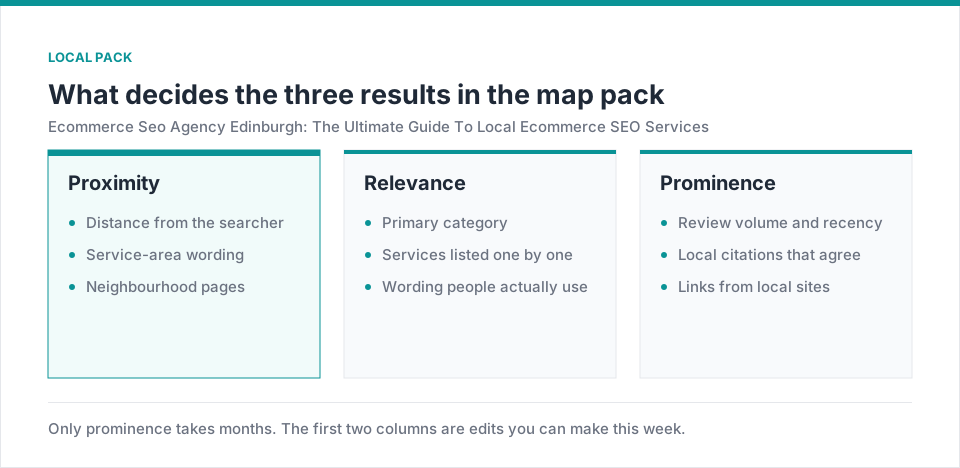
In practice, combine local imagery with district-level case studies or usage examples to create a topical content library that supports both discovery and decision-making, while enriching Knowledge Graph connections with district and service relationships.
4) Content governance and Translation Provenance IDs
Content governance is the backbone of scalable localisation in Edinburgh. TPIDs enable consistent terminology across languages and dialects, while Licensing Context tracks imagery rights as content flows between Local Pages, GBP, and KG edges. Establish a living TPID glossary for Edinburgh districts and product families, and maintain a licensing catalog for imagery used in all district assets. This governance discipline supports EEAT by ensuring accuracy, provenance, and rights management are visible and auditable as campaigns scale.
Practical steps include creating a district-specific content calendar, aligning TPIDs with every asset, and linking licensing entries to imagery used on GBP, Local Pages, and KG. Internal templates and governance artefacts in the Edinburgh SEO Services hub provide a starting point for district portfolios.
5) Editorial workflow and measurement alignment
Editorial teams should operate within a governance framework that ties content publication to KPI tracking. Use district briefs, TPID-aligned metadata, and licensing records to keep publishing auditable. Integrate buying guides, category hubs, and multimedia content into a single editorial calendar that aligns with Edinburgh events and delivery patterns. Cross-surface measurement should connect on-page engagement with Local Page health, GBP activity, and Knowledge Graph signals to demonstrate district-level ROI. For reference, Google’s guidance on structured data and local search best practices provides a credible benchmark for governance quality.
Tools And Technologies Taught In An Edinburgh Ecommerce SEO Academy
An Edinburgh-focused ecommerce SEO academy blends district-aware pedagogy with industry-grade tooling, ensuring learners graduate with practical, governance-led capabilities. The core emphasis remains on Translation Provenance IDs (TPIDs) and Licensing Context, so localisation travels with assets across Local Pages, GBP, Maps, and Knowledge Graph surfaces. The Edinburgh framework centres on district hubs and suburb interconnections, equipping teams to implement scalable, auditable campaigns that drive measurable ROI in Scotland’s capital.
1) Audits And Site Assessment Tools
Audit tooling in Edinburgh begins with a district-centric crawl of hubs, Local Pages, and GBP integrations. Practitioners learn to identify crawl inefficiencies, indexability gaps, and duplicate-content risks that threaten district-level discovery. The methodology emphasises a TPID-enabled taxonomy and Licensing Context from the outset, ensuring terminology and licensing rights stay coherent as content scales across Old Town, Leith, Stockbridge, and surrounding districts.
Learners document findings in district dashboards, capturing issues such as canonical misalignment, broken interlinks between hub pages and Local Pages, and inconsistent NAP data. The goal is to produce a live, auditable trail that informs governance reviews and KPI reporting for Edinburgh campaigns.
2) GBP Management And Local Pack Readiness Tools
Managing Google Business Profiles in Edinburgh requires district-aware briefs, hours, attributes, and service categories that reflect real city life. Learners simulate Local Pack experiments for Old Town, Leith, New Town, and nearby suburbs to quantify proximity and relevance signals. TPIDs underpin consistent terminology during GBP updates, while Licensing Context ensures imagery rights travel with GBP content as assets scale across districts.
Practical outputs include a library of district GBP briefs, Local Pack experiment playbooks, and a ready-to-deploy Local Pages set that mirrors Edinburgh’s district hierarchies and services offered.
3) Content Governance And Editorial Workflow Tools
Content governance is the backbone of scalable localisation in Edinburgh. Learners build editorial calendars, district briefs, and governance checklists that manage localisation at scale. TPIDs structure district terminology across languages, while Licensing Context governs imagery used in hub pages and Local Pages. Version control practices are introduced to track changes by district, ensuring publishing remains auditable and compliant with EEAT standards.
Deliverables include district-focused content briefs, TPID-aligned metadata templates, and cross-surface calendars coordinating GBP posts, Local Page updates, and KG entries.
4) Analytics, Dashboards, And Data Modelling Tools
Analytics literacy sits at the heart of Edinburgh campaigns. Learners configure GA4- or Looker Studio-inspired dashboards to monitor district hub health, Local Pack visibility, and district-level conversions such as online purchases, store pickups, or service inquiries. Dashboards merge GBP, Local Pages, and KG signals with TPIDs ensuring stable terminology across languages, while Licensing Context tracks imagery rights throughout cross-surface reporting.
Outcomes include a library of district dashboards, cross-surface attribution templates, and governance notes that document data lineage and TPID usage for auditability in Edinburgh campaigns.
5) Structured Data And Knowledge Graph Tools
Structured data and Knowledge Graph work form the connective tissue between Edinburgh districts, suburbs, services, and events. Learners generate and validate LocalBusiness, Product, and FAQPage schemas with district-specific attributes, reinforcing proximity signals and KG relationships for Edinburgh buyers and visitors. TPIDs stabilise terminology as content scales, while Licensing Context ensures imagery rights travel with assets across GBP, Local Pages, and KG edges.
Practical exercises include mapping district entities to suburb pages, validating KG edge relationships, and testing schema implementations against Edinburgh queries. Governance artefacts such as TPID glossaries and licensing catalogs are maintained to provide auditable provenance as campaigns scale locally.
6) Translation Provenance IDs (TPIDs) And Licensing Context Management
TPIDs and Licensing Context are the backbone of localisation discipline in Edinburgh. Learners maintain glossaries mapping district terms to language variants, track translation provenance, and ensure licensing rights travel with assets as content moves across GBP posts, Local Pages, and KG edges. Templates support TPID mappings, licensing catalogs, and provenance notes, enabling auditable governance as assets multiply across surfaces.
Deliverables include a living TPID glossary, a licensing registry for imagery, and governance logs that record decisions and terms for Edinburgh assets. This practice substantively supports EEAT by preserving accuracy and rights consistency across districts and languages.
7) Collaboration, Version Control And Teamflow
Team collaboration mirrors agency workflows, enabling multiple learners to plan, execute, and review district-led campaigns. Learners use shared briefs, project boards, and version-controlled assets to coordinate tasks across GBP, Local Pages, and KG. Clear version histories, peer reviews, and mentor feedback loops reinforce governance and ensure consistency as Edinburgh district hubs expand.
Outcomes include hub-to-suburb project plans, district content calendars, and a repository of governance artefacts that learners can reference in future roles.
8) Compliance, Privacy, And Ethical Tool Use
Privacy and ethical data handling underpin the Edinburgh programme. Learners implement consent-driven analytics, data minimisation, and governance around licensing. The curriculum emphasises EEAT and regulatory alignment, ensuring reporting is transparent and rights-compliant as content scales across district hubs and Local Pages. Templates and governance resources reflect guidance from authoritative sources such as Google and UK industry bodies, helping teams maintain integrity in all local-market activities.
Internal resources on our Edinburgh hub provide practical templates for governance artefacts, TPID glossaries, and licensing catalogs you can adapt to your district portfolio. For personalised guidance, reach out via the Contact Us page or explore our SEO Services hub for district-ready templates.
Site Structure And Navigation For Ecommerce
Effective site structure and intuitive navigation are foundational for Edinburgh-based ecommerce brands. After establishing governance around localisation, Translation Provenance IDs (TPIDs) and Licensing Context, the next step is to design a district-first information architecture that mirrors how Edinburgh buyers actually search, browse, and buy. A well-planned structure helps product discovery, supports local signals across GBP and Local Pages, and sustains a frictionless buyer journey from district hubs to individual product pages.
District hubs as gateways to local product discovery
Adopt a district-first hierarchy where each major Edinburgh district acts as a gateway to nearby Local Pages and product categories. For example, Old Town and Leith should have dedicated hub pages that interlink with Local Pages for surrounding suburbs and with primary product lists relevant to those communities. This approach elevates local relevance, improves crawlability, and strengthens Knowledge Graph connections by associating districts with services, events, and district-led promotions.
Clean and scalable URL architecture
URL structure should be predictable, descriptive, and friendly to both users and search engines. A practical Edinburgh pattern is to prefix district hubs with a clear Edinburgh path, followed by district name, and then the asset type. Examples include /edinburgh/old-town/ for district hubs and /edinburgh/old-town/equipment/ for category pages, with product detail pages living under the most relevant hub or category. Consistent slugs help search engines understand the site’s geography and the relationship between district hubs and Local Pages. Implement canonical signals to prevent duplicate content when filters or faceted navigation create multiple paths to the same product.
Internal linking and navigational ergonomics
Maintenance of a tight internal linking structure is essential for district-led campaigns. Primary navigation should expose district hubs, with secondary navigation revealing Local Pages and product categories within each district. In-text anchor links from district hubs should point to relevant Local Pages, category hubs, and flagship products. A well‑designed breadcrumb trail supports both user context and schema markup, enabling search engines to surface precise district-to-product relationships in Knowledge Graph and rich results.
Keep anchor text descriptive and localised. For example, link text like “Edinburgh Old Town products” or “Leith district guides” communicates intent clearly while reinforcing locality signals. TPIDs should be referenced in metadata workflows to ensure consistent terminology across languages and districts as content scales.
Faceted navigation: balance exploration with crawlability
Facets are powerful for product discovery but can lead to crawl inefficiencies if not managed carefully. Establish a governance policy that identifies high-value filter combinations and uses canonical or noindex where appropriate to avoid index bloat. For Edinburgh, align filters with district-level intents (such as delivery options, local promotions, or district-specific variants) and ensure that essential product pages remain crawlable. TPIDs guide terminology across districts and languages, preventing dilution of local relevance across surface changes.
Structured data and cross-surface signals
Structured data remains a key enabler of local visibility. Implement LocalBusiness, Product, and FAQPage schemas that encode district names, delivery options, and local events. Ensure TPIDs and Licensing Context are integrated into schema workflows so language variants and licensing rights travel with data as it appears in Local Pages, GBP, and Knowledge Graph edges. Align on-page content, hub pages, and Local Pages with KG relationships that reflect Edinburgh’s district ecosystem, strengthening proximity evidence for Edinburgh buyers and visitors alike.
Analytics, Measurement, And Reporting For Edinburgh Ecommerce SEO
With Edinburgh’s district-first ecommerce strategy in place, rigorous analytics and transparent reporting become the backbone of sustained growth. This part focuses on how to identify the right metrics, build robust attribution models, and establish a reporting rhythm that keeps stakeholders informed and confident. By binding data to Translation Provenance IDs (TPIDs) and Licensing Context, you preserve locale fidelity while revealing clear ROI across GBP health, Local Packs, Local Pages, Maps, and Knowledge Graph surfaces.
Key metrics for Edinburgh ecommerce success
A district-aware ecommerce programme in Edinburgh benefits from a focused set of metrics that connect local visibility to revenue. Primary indicators include traffic, conversions, average order value (AOV), and return on ad spend (ROAS), all measured with a local lens. In addition, monitor engagement signals such as on-page time, scroll depth on district hubs, and the adoption rate of Local Pages and GBP interactions. Secondary metrics—like bounce rate, page depth by district, and delivery or collection uptake—help diagnose frictions in the buyer journey and highlight opportunities for localisation improvements.
To keep reporting actionable, segment data by district hubs (Old Town, Leith, Stockbridge, etc.), surface (GBP, Local Pages, product pages), and device. This segmentation supports EEAT by showing authorities across contexts: a district-relevant, user-centric view that aligns with Edinburgh buyers’ behaviours and regulatory expectations.
Want the numbers behind this? The analytics guide shows how organic traffic and the queries GA4 hides are rebuilt in Semalt.
Attribution models that reflect Edinburgh’s buyer journeys
A robust Edinburgh attribution framework recognises the city’s multi-channel buyer journeys. While last-click attribution may capture certain conversions, a multi-touch model better represents how Edinburgh shoppers interact with district hubs, Local Pages, GBP posts, and KG surfaces before purchasing. Consider a blended approach that weighs assisted conversions from district hubs and Local Pages, with a look-back window aligned to your product category and average decision time in Edinburgh markets. Document the rationale for attribution choices in governance artefacts, including TPIDs, so language variants and district terminology stay coherent across surfaces.
Practical guidance includes defining look-back windows by district portfolio, validating the model with controlled experiments, and maintaining a clear audit trail for stakeholders who require explainability in local campaigns.
Dashboards and reporting cadence
Dashboards should unify data from Google Analytics 4 (GA4), Google Search Console, GBP insights, and KG signals into a cohesive narrative. In Edinburgh, create district health dashboards that track KPI health across Local Pages, GBP, and Local Pack visibility, then connect these signals to real-world conversions such as online purchases, store pickups, or event registrations. Use Looker Studio or similar tools to visualise cross-surface attribution, ensuring TPIDs anchor terminology and Licensing Context tracks imagery rights as assets flow between Local Pages and KG edges. Schedule cadence that matches stakeholder needs—monthly performance reviews supplemented by quarterly governance checks to validate TPIDs and licensing compliance.
Governance artefacts should be integral to dashboards, including a TPID glossary linked to district names and product families, plus a Licensing Context ledger that records imagery rights for every asset used in Edinburgh campaigns.
ROI, governance artefacts, and EEAT
Measuring ROI in Edinburgh hinges on cross-surface attribution that links district hub health and Local Page engagement to revenue. Present ROI not only as raw growth but as the impact of localised governance — TPIDs ensuring terminological consistency, Licensing Context safeguarding rights, and EEAT signals demonstrating experience, expertise, authority, and trust. Create quarterly ROI narratives that combine quantitative outcomes with governance insights: district-level TPID usage, licensing compliance, and cross-surface signal integrity should be front and centre when communicating results to stakeholders in Edinburgh.
Templates and governance resources from the Edinburgh SEO Services hub provide practical exemplars for dashboards, TPID glossaries, and licensing catalogs you can adapt to your portfolio. For tailored guidance, arrange a strategy session via the contact page.
Practical steps to implement analytics in Edinburgh campaigns
- Define district-specific success criteria: Agree on a set of district KPIs (e.g., Local Page engagement, GBP health, Local Pack impressions) tied to revenue goals, with look-back windows appropriate to Edinburgh buyer behaviour.
- Set up governance artefacts: Create a TPID glossary and Licensing Context ledger from the outset, ensuring all assets, language variants, and imagery rights travel across GBP, Local Pages, and KG.
- Architect cross-surface dashboards: Build dashboards that merge GBP, Local Pages, and Local Pack data, aligned by district and surface, so you can see holistic ROI by geography.
- Implement tagging and data layer discipline: Use district-level tagging, consistent event schemas, and TPID-linked metadata to preserve language-accurate interpretations across surfaces.
- Institutionalise reporting cadence: Establish a monthly review with a quarterly governance check, ensuring that findings translate into actionable optimisations for Edinburgh campaigns.
As you scale, maintain a living set of templates and artefacts in the Edinburgh SEO Services hub to ensure ongoing governance, compliance, and reproducible success across Local Pages, GBP, Local Packs, Maps, and Knowledge Graph.
Part 11: Measurement, Reporting, And ROI For Edinburgh Ecommerce SEO
Continuing the district‑first journey for Edinburgh, this part focuses on how to measure success, report with clarity, and demonstrate tangible ROI from ecommerce SEO activities. A disciplined measurement framework binds district hubs, Local Pages, GBP management, and cross‑surface signals into a coherent picture that stakeholders recognise as credible, accountably traceable, and actionable. The Edinburgh approach emphasises EEAT‑driven governance, Translation Provenance IDs (TPIDs), and Licensing Context to ensure data integrity travels with content as campaigns scale across city districts and visitor segments.
1) Defining a district‑oriented KPI framework
Edinburgh campaigns benefit from a two‑tier KPI model. The first tier tracks district hub health and on‑site engagement, including Local Page visits, time on page, and district navigation depth. The second tier focuses on revenue outcomes and cross‑surface conversions, such as online purchases, store pickups, and service inquiries attributed to district campaigns. Typical metrics include district revenue by hub, average order value by district, conversion rate per Local Page, and GBP engagement indicators like profile views and directions requests. A robust framework also monitors delivery reliability, return rates, and customer satisfaction signals tied to Edinburgh districts.
To operationalise this, align dashboards with your governance artefacts. Use TPIDs to stabilise terminology across districts and languages, and apply Licensing Context to imagery used in analytics and reporting assets. This alignment helps ensure the data layer remains bound to actual content and rights terms as you scale across Local Pages, GBP posts, and KG connections.
2) Cross‑surface attribution and modelling
Attribution in Edinburgh should reflect how shoppers move from discovery to purchase across multiple surfaces. Attribute signals from district hubs, Local Pages, GBP interactions, and Local Pack impressions to a unified conversion event. Leverage GA4 event data (view_item, add_to_cart, begin_checkout, purchase) linked to district identifiers and TPIDs, so language variants and district terminology remain coherent in reporting. Employ a blended attribution model that includes both first‑touch influence for awareness and last‑touch conversion signals for revenue accountability. This model supports a realistic picture of how Edinburgh buyers engage with your brand across surfaces.
Practical steps include tagging campaigns with district codes, establishing a data layer that carries district metadata, and creating a cross‑surface attribution schema in Looker Studio or your preferred BI tool. Regularly audit data provenance to ensure TPIDs and Licensing Context remain in sync with analytics events.
3) Dashboards and reporting cadence
Effective reporting blends real‑time visibility with periodic business reviews. Establish a cadence that includes weekly health checks for Local Pages and GBP performance, monthly district dashboards highlighting revenue and engagement by district, and quarterly ROI reviews that tie cross‑surface actions to financial outcomes. Key visuals should cover district hub health, Local Page speed and engagement, Local Pack impression share, and a cross‑surface attribution funnel that maps touchpoints to conversions. Ensure your dashboards reflect the governance framework, including TPIDs for terminology and Licensing Context for imagery assets used in reports.
For Edinburgh teams, a practical reporting template can be hosted within your SEO Services hub, with links to district briefs and governance artefacts. This facilitates consistent, auditable reporting that stakeholders can trust, while still allowing for flexible drill‑downs into individual districts like Old Town, Leith, or Stockbridge as needed.
4) Local experiments, incrementality, and ROI proof
Proof of ROI in Edinburgh hinges on disciplined experimentation that isolates the impact of district‑level optimisations. Run GBP experiments to test proximity signals, district hub content variations, and Local Page updates. Measure incremental lift in conversions attributed to specific district initiatives, while controlling for seasonal or event‑driven fluctuations. Incrementality tests help demonstrate that district investments yield measurable returns beyond baseline performance, an essential narrative when discussing budgets with stakeholders.
Document each experiment with a clear hypothesis, test duration, control‑and‑variant design, and a pre/post KPI comparison. Include a licensing and provenance check in the experiment notes to ensure imagery rights and terminology stay aligned as assets scale across surfaces.
5) Practical ROI scenarios for Edinburgh campaigns
Consider a district hub expansion in Leith. Baseline monthly revenue from Leith Local Pages and GBP activity is £45,000, with 2.8% conversion rate on product pages. After a three‑month district hub optimisation that includes improved local content, updated delivery options, and a GBP‑driven Local Pack experiment, the district shows a 12% uplift in Local Page engagement and a 0.6 percentage point rise in conversion rate, delivering an incremental £14,000 in monthly revenue. Over a 6‑month window, that uplift compounds to approximately £84,000 in incremental revenue, assuming stable traffic and seasonality. This scenario illustrates how localised governance, TPIDs, and licensing accuracy translate into measurable business outcomes in Edinburgh.
To scale such results, replicate the governance model across other districts, ensuring every new Local Page or hub inherits the same TPID mappings and licensing governance. The Edinburgh site’s templates and playbooks, accessible via our SEO Services hub, can accelerate this rollout. For tailored guidance, contact us through the Contact Us page.
6) Governance, EEAT, and data integrity in Edinburgh reporting
A credible Edinburgh measurement framework rests on governance that sustains EEAT across district campaigns. Maintain TPID glossaries and Licensing Context records to guarantee terminology and imagery terms remain consistent across Local Pages, GBP posts, and KG edges. Regular governance reviews ensure data provenance, licensing compliance, and language accuracy continue to support trust and expert positioning in Edinburgh's competitive local market.
Resources such as the Edinburgh SEO Services hub offer governance templates, TPID glossaries, and licensing catalogs that you can adapt for your district portfolio. For personalised assistance, reach out via the Contact Us page.
Common Red Flags To Avoid When Hiring An Edinburgh Ecommerce SEO Agency
Choosing an Edinburgh-based ecommerce SEO partner demands careful scrutiny to safeguard localisation fidelity, governance, and ROI. This guide highlights warning signs that frequently appear in proposals or engagements and explains how to assess them within the district-first framework used on edinburghseo.org. Look for clear evidence of Translation Provenance IDs (TPIDs), Licensing Context governance, district hub strategies, and a data-driven path to measurable outcomes before committing to any contract.
Red flags to watch for in Edinburgh-focused engagements
- Guarantees Of Rankings Or Instant Wins. No credible Edinburgh ecommerce SEO partner can guarantee top rankings or instant results; expect a transparent, milestone-driven roadmap anchored in district signals, governance maturity, and ongoing measurement.
- One-Size-Fits-All Packages Or Flat-Rate Promises. Generic packages fail to reflect Edinburgh’s district-by-district realities, TPID needs, and Licensing Context management, risking misalignment with surface complexity and budget expectations.
- Vagueness In Reporting And Dashboards. A credible proposal includes specific KPIs, data sources, and a published cadence for dashboards that tie district hub health, Local Pages, GBP performance, and cross-surface signals to ROI.
- Unethical Or Distracting Link-Building Claims. Mass link-building or private blog networks undermine long-term authority and risk penalties; ethical, locally grounded outreach and high-quality content should drive any outreach program, with TPIDs and Licensing Context guiding governance.
- Lack Of Edinburgh-Specific Experience Or District-Focused Approach. Vendors should present Edinburgh case studies, district-first strategies, and governance templates that translate to your market, not generic nationwide playbooks.
- No TPID Or Licensing Context Readiness. Without TPIDs and licensing governance, localisation fidelity cannot be scaled across Local Pages, GBP, Maps, and Knowledge Graph while preserving EEAT standards.
- Overpromising On Scale Without A Pragmatic Rollout. A staged approach with a two-anchor pilot and defined governance milestones is expected before city-wide expansion; absence signals risk and misalignment with Edinburgh’s pacing.
- Hidden Costs Or Rigid Contract Terms. Look for transparent pricing, predictable milestones, and flexible renewal terms rather than long lock-ins or undisclosed extras that erode ROI.
- Lack Of Transparency About Methodology Or Data Privacy. The proposal should explain data sources, measurement approaches, consent considerations, and how TPIDs and Licensing Context influence reporting across Local Pages and KG.
To distinguish credible options from risk quickly, request sample district dashboards, Edinburgh-specific case studies, and a TPID glossary aligned to your product families. Ask for licensing catalogs that cover imagery used in Local Pages and GBP activity, and insist on a governance cadence featuring quarterly reviews. Cross-check references on edinburghseo.org’s SEO Services hub for templates and artefacts you can adapt to your portfolio, and arrange a strategy session via the Contact Us page to discuss district-ready onboarding.
Ecommerce SEO Edinburgh: Key Takeaways And Next Steps
The Edinburgh ecommerce SEO journey culminates in a concise, actionable framework that can be operationalised today. The district-first mindset remains the north star, but the true value comes from disciplined governance: Translation Provenance IDs (TPIDs) and Licensing Context ensure localisation travels with every asset across Local Pages, GBP, Maps, and Knowledge Graph. This conclusion crystallises the practical steps, metrics, and governance milestones that empower Edinburgh retailers to extend district relevance into sustained revenue growth.
Below are the core takeaways distilled from the series, together with clear, deployable actions you can implement across Edinburgh’s diverse districts—from Old Town and Leith to Stockbridge and beyond.
Key takeaways for Edinburgh ecommerce SEO
- Adopt a district-first activation model that ties hub pages to Local Pages and product lists, ensuring signals align across GBP, Maps, and KG.
- Enforce Translation Provenance IDs (TPIDs) and Licensing Context from day one to preserve localisation fidelity as assets scale across surfaces.
- Synchronise Local Pages with district GBP profiles to improve Local Pack presence and Knowledge Graph relevance for Edinburgh shoppers and visitors alike.
- Use cross-surface attribution dashboards to link district hub health with revenue outcomes, updating KPIs regularly to reflect market shifts.
- Plan a pragmatic, two-anchor pilot followed by staged expansion, with governance milestones and transparent reporting to keep stakeholders informed.
How to translate takeaways into action
To move from theory to practice, begin with a district audit focused on hub pages, Local Pages, and GBP integrations. Confirm that TPIDs are established for core districts and that a Licensing Context ledger tracks imagery rights as assets scale. Build a two-anchor pilot in two representative Edinburgh districts, then measure both on-site engagement and cross-surface conversions. Use governance dashboards to monitor district health, GBP signals, and Local Page performance, ensuring terminology remains consistent across languages and dialects.
As you scale, extend the governance artefacts, TPID glossaries, and licensing catalogs to new districts, maintaining a rigorous cadence of reviews. For practical templates and governance resources that support district-ready activation, explore our SEO Services hub or Contact Us to discuss tailored onboarding.
Measurement, governance, and EEAT in Edinburgh
Robust measurement anchors district initiatives in EEAT terms. Use cross-surface dashboards that blend Local Pages, GBP, Local Packs, Maps, and KG signals, with TPIDs ensuring stable terminology and Licensing Context tracking imagery rights. Regular governance reviews verify content provenance, licensing compliance, and language accuracy as Edinburgh assets scale across surfaces. This approach underpins trustworthy reporting and supports stakeholder confidence in local campaigns.
Publish quarterly ROI narratives that combine quantitative outcomes with governance insights, detailing how TPIDs and licensing practices contributed to district-level performance. For practical templates, consult the Edinburgh hub’s governance artefacts and templates via the SEO Services hub or contact us for a tailored plan.
Next steps: onboarding and ongoing optimisation
- Audit and baseline: Validate TPIDs, licensing, and district hub architecture; establish baseline Local Page and GBP metrics for two anchor districts.
- Governance setup: Complete TPID glossaries and a licensing catalog for imagery used in Local Pages, GBP posts, and KG edges.
- Pilot deployment: Launch two-district pilots with district hub and Local Page rollouts, aligning content calendars to Edinburgh events and seasonal moments.
- Cross-surface measurement: Implement a cross-surface attribution model and district health dashboards to track ROI by geography and surface.
- Scale with confidence: Extend governance artefacts to additional districts, ensuring ongoing alignment with EEAT standards and regulatory requirements.
For practical onboarding templates and governance artefacts, visit our SEO Services hub or reach out through Contact Us to tailor a district-ready plan for your portfolio.