All SEO Company In Edinburgh: Local SEO Foundations For Edinburgh Businesses
Edinburgh hosts a diverse mix of local shops, professional services, tourism-driven experiences, and historic districts. For businesses aiming to improve visibility in search, choosing an all seo company in Edinburgh is more than a keyword task – it’s a localisation strategy. A truly effective Edinburgh SEO partner combines robust technical know-how with a nuanced understanding of city geography, calendar-driven demand, and district-level consumer behaviour. This Part 1 outlines why a local Edinburgh specialist matters, how governance-minded diffusion translates into practical actions, and where to start when engaging with EdinburghSEO.org as your guide.
Our approach emphasises credible, measurable outcomes. A local Edinburgh focus means content that speaks to readers in Edinburgh’s districts – from the Old Town and Royal Mile to Leith and Stockbridge – and signals that resonate with both residents and visitors. For established references on local search best practice, you can consult Google’s Local SEO guidelines, which offer a credible backdrop for the practical steps outlined here: Google Local SEO guidelines. On EdinburghSEO.org, our SEO Services hub presents a governance-forward playbook tailored to Edinburgh markets, while the Resources hub stores templates and dashboards to support consistent delivery. If you’d like to start a conversation, visit the Contact page.
Why Edinburgh deserves a district-aware SEO approach
Edinburgh isn’t a uniform market. Different districts carry distinct needs, visitor intents, and seasonal rhythms. The Old Town feet fear not just footfall but the careful management of local information, hours, and service areas. Leith’s waterfront businesses, Barnton’s professional services, and Morningside’s boutique retail all require content that acknowledges their unique contexts while maintaining a single, coherent spine_topic – the core value proposition your brand communicates across eight diffusion surfaces. In practice, a local Edinburgh partner translates broad SEO principles into district wrappers that surface at the right moment, ensuring local relevance without sacrificing message integrity.
EdinburghSEO.org frames this approach around practical diffusion: Maps, Local Pages, Knowledge Panels, Discover experiences, Copilots, Brand Stores, the Brand Website, and GBP health signals. The result is a cohesive presence that improves proximity, trust, and conversion likelihood for Edinburgh buyers. For concrete examples and governance-ready templates, explore our SEO Services hub and Resources hub, then schedule a strategy session via the Contact page.
What a local Edinburgh SEO partner should deliver
- District-focused keyword strategy that mirrors Edinburgh’s neighbourhoods while preserving the spine_topic.
- Local Page architectures that capture district calendars, hours, and services with strong, contextual copy.
- Structured data that enhances local appearances across Knowledge Panels and GBP health signals.
- Governance artefacts (CORA Trails, Translation Memories, RegExports By Design) to support auditable decision histories.
How Edinburgh businesses benefit in practice
Local relevance drives higher engagement because Edinburgh readers encounter information that’s timely and geographically meaningful. A district-aware approach supports seasonal events, cultural calendars, and tourism cycles unique to Edinburgh. It also helps ensure that your GBP (Google Business Profile) health signals stay aligned with district calendars and local promotions, reinforcing proximity in local search results. The governance-forward framework keeps each delta auditable, enabling your team to replay decisions language-by-language across surfaces when needed.
Getting started with Edinburgh diffusion
To begin, prepare a concise brief that identifies your target Edinburgh districts, the outcomes you want from digital visibility, and how you will measure progress. Request a diffusion plan that explains how eight surfaces will surface district signals without diluting the spine_topic. Ask for a governance playbook that includes CORA Trails, Translation Memories, and RegExports By Design to ensure regulator-ready exports accompany every delta. Early assets to share include Google Analytics access, GBP listings, and your CMS login so changes can be implemented quickly and responsibly.
Explore the Edinburgh SEO Services hub on edinburghseo.org and the Resources hub for governance templates and dashboards. To initiate a discussion, use the Contact page.
Core Services Offered By An Edinburgh SEO Company
Edinburgh businesses benefit from an SEO partner who understands the city’s districts, calendars, and purchasing journeys. The core services offered by a reputable Edinburgh SEO company are designed to surface local relevance across eight diffusion surfaces—Maps, Local Pages, Knowledge Panels, Discover experiences, Copilots, Brand Stores, the Brand Website, and GBP health signals—while preserving the central spine_topic. This Part 2 outlines the practical service areas you should expect when engaging with edinburghseo.org, and how each area contributes to credible, measurable results.
1) Strategic SEO Planning For Edinburgh
A solid Edinburgh strategy begins with a district-aware hypothesis. The plan identifies target neighbourhoods—Old Town, Leith, Stockbridge, Morningside, and beyond—and translates generic SEO principles into district wrappers that honour Edinburgh’s calendar of events, tourism rhythms, and resident behaviours. Deliverables include a district intent map, eight-surface diffusion roadmaps, and a governance brief that ties every delta to auditable provenance. The strategy remains faithful to the spine_topic while enabling district nuance to surface at the right moments across Maps, Local Pages, and GBP health signals.
Key outputs to expect from your Edinburgh partner include district keyword maps, Local Page briefs, and a content calendar that aligns with Edinburgh events and promotions. For governance-ready templates and dashboards, explore the Resources hub and the SEO Services hub.
2) SEO Audits And Baseline Assessment
Audits establish a credible baseline for Edinburgh’s diffusion programme. A comprehensive Edinburgh SEO audit covers technical health, site architecture, crawlability and indexation, on-page quality, content relevance, and external signals such as local backlinks and GBP health. The audit outputs per surface help prioritise fixes that unlock faster crawl, better rendering on mobile devices, and more trustworthy data across eight surfaces. Governance artefacts travel with each delta, enabling audit-ready replay and regulator-facing reporting.
- Technical health check: crawl errors, broken pages, indexing issues, and Core Web Vitals alignment.
- Content and architecture audit: ensure pillar content remains stable while district wrappers surface local intent.
- GBP health and local signals review: verify consistency of NAP, hours, categories, and district promotions.
3) On-Page Optimisation And Content Strategy
On-page optimisation in Edinburgh blends the spine_topic with district-specific signals. This includes crafting titles and H1s that pair the spine_topic with local references (for example seo Edinburgh with Old Town cues), writing benefit-led meta descriptions, and deploying a clear header structure that supports scanning. Content strategy should produce pillar guides that anchor the spine_topic across eight surfaces, paired with district wrappers such as FAQs and event calendars. Regular content cadences ensure Edinburgh readers encounter timely, locally resonant material while maintaining semantic integrity across surfaces.
Structured data plays a pivotal role here. Implement LocalBusiness, Event, and FAQ schemas to enrich Knowledge Panels and Local Pages, helping Edinburgh users surface with confidence. Internal links should guide readers from district wrappers to pillar topics on the Brand Website and back to GBP health updates as district calendars evolve.
4) Technical Foundations For Edinburgh Diffusion
The technical backbone ensures diffusion across Edinburgh’s eight surfaces remains fast, crawlable and trustworthy. Priorities include fast Local Pages, mobile optimisation, clean crawl paths, and a well-maintained sitemap that emphasises Local Pages and pillar content. Robots.txt should prevent cross-surface duplication, while Core Web Vitals targets should reflect Edinburgh’s user behaviour, such as event-driven traffic spikes. Structured data should describe LocalBusiness, events, and FAQs to surface rich results across surfaces.
- LCP under 2.5 seconds on core Edinburgh pages; CLS kept minimal during district navigation.
- Up-to-date sitemaps that mirror the eight-surface diffusion architecture and district priorities.
- Regular validation of structured data and regulator-ready exports for audits.
5) Link Building And Local PR
For Edinburgh, link-building should prioritise locally credible sources such as business associations, local press, universities, and cultural partners. Content-driven PR that ties to district wrappers and GBP activity strengthens proximity signals across eight surfaces. All outreach should be tracked in CORA Trails, with translations stored in Translation Memories and regulator-ready exports packaged in RegExports By Design for audits. The result is meaningful local mentions that boost Maps proximity, Local Pages relevance, and GBP health signals.
- Local-domain authority with district-level relevance; avoid generic, low-value links.
- Outreach aligned to district calendars and events to maximise local resonance.
- Per-district dashboards to reflect link-building progress and business outcomes.
Local SEO Mastery: Ranking In Edinburgh's Maps And Local Searches
Edinburgh presents a distinctive local search landscape where district identity, calendar-driven demand, and tourism rhythms influence how buyers discover services. A focused Edinburgh SEO approach recognises eight diffusion surfaces—Maps, Local Pages, Knowledge Panels, Discover experiences, Copilots, Brand Stores, the Brand Website, and GBP health signals—and organises activity so district nuance enhances, rather than fragments, the core spine_topic. This Part 3 translates the broader, governance-forward diffusion framework into Edinburgh-centric tactics that improve proximity, relevance, and measurable outcomes for all seo company in edinburgh and other local operators working with edinburghseo.org.
1) Mapping Local Intent Across Edinburgh Districts
Each Edinburgh district carries its own mix of resident needs, visitor interests, and seasonal spikes. Key areas include the Old Town and Royal Mile for visitor-facing services, Leith for hospitality and waterfront experiences, Stockbridge for boutique shopping, Morningside and Bruntsfield for local services and dining, Portobello for seaside activities, and Easter Road and Sighthill for everyday conveniences. Begin by crafting a district intent map that pairs common Edinburgh queries with user goals in each area. This map should surface the spine_topic across all eight surfaces while weaving district signals into the narrative at moments where users are most ready to engage.
Governance artefacts travel with every delta, ensuring changes are auditable from day one. Attach CORA Trails to capture inputs and decisions, Translation Memories to maintain locale-consistent phrasing, and RegExports By Design to support regulator-ready exports across surfaces. This discipline lays the groundwork for language-by-language replay and robust reporting that Edinburgh businesses can trust in governance reviews.
- Old Town and Royal Mile anchor near-me searches for historic and touristic services with high local intent.
- Leith görs a strong signal for waterfront dining, events, and hospitality experiences.
- Stockbridge and Dean Village support lifestyle, specialty retail, and professional services.
2) Core Edinburgh Keyword Clusters
Develop keyword clusters that reflect Edinburgh’s distinctive search terrain while protecting the spine_topic. Core brand terms include seo Edinburgh, edinburgh seo services, and edinburgh seo company. Layer district modifiers such as edinburgh city centre seo, edinburgh Leith local SEO, and edinburgh Morningside SEO services to surface near-term, district-specific intent. Pair these with service-focused clusters like technical SEO Edinburgh, local page optimisation Edinburgh, and GBP optimisation Edinburgh. These clusters should feed eight-surface roadmaps so Maps proximity, Local Pages relevance, and GBP health signals reinforce one coherent authority.
- Core Edinburgh brands: seo Edinburgh, Edinburgh seo services, Edinburgh SEO company.
- District-level intent: Edinburgh city centre seo, Leith local SEO, Portobello SEO services.
- Service-specific clusters: technical SEO Edinburgh, local page optimisation Edinburgh, GBP optimisation Edinburgh.
Link each cluster to the eight-surface diffusion plan. All governance artefacts travel with every delta to enable auditable provenance and regulator-ready reporting as Edinburgh expands its diffusion footprint.
3) Local Pages And GBP Health Signals
District-specific Local Pages act as gateways to Edinburgh services, events, and FAQs. Each Local Page should feature an Edinburgh district calendar, local hours, and service variations, linking back to pillar topics on the Brand Website and supporting GBP health strategies to improve Local Pack visibility. Maintain consistent NAP data across Edinburgh directories and ensure wrapper content aligns with the spine_topic so readers experience a coherent, district-aware journey.
- NAP consistency across major Edinburgh directories and GBP listings strengthens proximity signals.
- District calendars and events feed Local Pages and GBP posts for timely, context-rich experiences.
- FAQPage markup on Local Pages surfaces common Edinburgh questions and reduces friction in the journey.
4) Technical Foundations For Diffusion In Edinburgh
The technical backbone ensures diffusion across Edinburgh’s eight surfaces remains fast, crawlable and trustworthy. Priorities include fast Local Pages, mobile optimisation, clean crawl paths, and a sitemap that emphasises Local Pages and pillar content. Robots.txt should prevent cross-surface duplication, while Core Web Vitals targets reflect Edinburgh’s user behaviour, such as event-driven traffic spikes and district-specific navigation paths. Structured data should describe LocalBusiness, events, and FAQs to surface rich results across surfaces.
- LCP under 2.5 seconds on core Edinburgh pages and Local Pages in district contexts.
- Up-to-date sitemaps that mirror the eight-surface diffusion architecture and district priorities.
- Regular validation of structured data and regulator-ready exports for audits.
5) Link Building And Local PR
Local link-building in Edinburgh should prioritise credible, district-relevant sources: business associations, local press, universities, and cultural partners. Content-driven PR tied to district wrappers and GBP activity strengthens proximity signals across eight surfaces. All outreach should be tracked in CORA Trails, with translations stored in Translation Memories and regulator-ready exports packaged in RegExports By Design for audits. A focus on per-district relevance yields higher-quality links that boost Maps proximity, Local Pages relevance, and GBP health signals.
- Local-domain authority with district-level relevance; avoid generic, low-value links.
- Outreach aligned to Edinburgh calendars and events to maximise local resonance.
- Per-district dashboards to reflect link-building progress and business outcomes with provenance attached to every delta.
The Typical Engagement Process With An Edinburgh SEO Partner
Businesses in Edinburgh benefit from a governance-forward engagement that translates strategy into repeatable, district-aware actions across Maps, Local Pages, Knowledge Panels, Discover experiences, Copilots, Brand Stores, the Brand Website, and GBP health signals. The goal is steady, auditable progress that preserves the core spine_topic while surfacing district nuance in Edinburgh's unique neighbourhoods. All deliverables travel with provenance artefacts so leadership can replay decisions language-by-language across surfaces and time. For practical references, consult Google’s Local SEO guidelines and our Edinburgh Services hub for governance-ready templates.
1) Discovery And Alignment
Begin with a concise discovery brief that identifies target Edinburgh districts, expected outcomes, and how progress will be measured. Define the eight-diffusion surfaces explicitly and align them to the spine_topic so the core message remains stable as district wrappers surface with local intent. Establish governance expectations, including artefacts that travel with every delta: CORA Trails for inputs and decisions, Translation Memories for locale-consistent phrasing, and RegExports By Design for regulator-ready exports. Early assets to share include access to Google Analytics, GBP listings, and your CMS credentials so changes can be implemented quickly and responsibly. Link to the Edinburgh SEO Services hub for a governance-ready starter kit and the Resources hub for practical templates.
2) Diagnostic Audit And Baseline
Conduct a comprehensive baseline audit across the eight surfaces to establish current health, content alignment, and local signal strength. Focus areas include technical health, site architecture, crawlability and indexation, on-page relevance, Local Page completeness, GBP health signals, and local backlinks. Prioritise fixes that unlock fast crawling, reliable rendering on mobile, and consistent data across district wrappers. Each delta should be accompanied by governance artefacts to enable regulator-ready replay and auditable reporting across surfaces.
- Technical health check: crawl issues, indexing status, and Core Web Vitals alignment.
- GBP health review: consistency of NAP, hours, categories, and district promotions.
3) Strategy, Roadmap And Governance
Translate insights into a district-aware diffusion roadmap that preserves the spine_topic while surfacing local intent. Develop per-district keyword maps, Local Page briefs, and a content calendar aligned to Edinburgh events and promotions. Define per-surface KPIs and a governance schedule that accompanies every delta, with ROUTEs (CORA Trails) and Translation Memories to ensure language-by-language provenance across eight surfaces. Use regulator-ready exports wherever needed and link roadmaps to GBP health and Local Page development to maintain a cohesive Edinburgh narrative.
- Eight-surface diffusion roadmaps linked to district calendars and events.
- Per-district keyword maps that feed Local Pages and pillar content.
4) Implementation Across Eight Surfaces
Put the roadmap into action with disciplined delivery across Maps, Local Pages, Knowledge Panels, Discover experiences, Copilots, Brand Stores, the Brand Website, and GBP health signals. Prioritise Local Pages for district calendars and hours, GBP posts for district promotions, and pillar content that anchors the spine_topic across surfaces. Implement structured data for LocalBusiness, Event, and FAQ to surface rich results on Knowledge Panels and Local Pages. Maintain strict internal linking strategies to guide readers from district wrappers to pillar topics and back to GBP health updates as district calendars evolve.
- Local Pages with district calendars, hours, and service variations.
- Structured data implementation to support local appearances.
5) Content Calendar And Local Page Strategy
Synchronise a district-focused content calendar with Edinburgh events to capture peak interest. Produce pillar content that anchors the spine_topic across all eight surfaces, and pair it with district wrappers such as FAQs and event calendars. Ensure content blocks diffuse across Maps, Local Pages, and GBP updates, maintaining a clear narrative and a strong call to action that guides readers toward the Brand Website or GBP interactions. Governance artefacts travel with every delta to support regulator-ready reporting and language-by-language replay across surfaces.
For practical templates, access the Edinburgh Services hub and Resources hub, and book a strategy session via the Contact page to tailor Edinburgh-centric diffusion with auditable provenance.
Part 5: Local SEO And Google Maps Optimisation In Edinburgh
Continuing from the groundwork laid in Part 4, Edinburgh businesses advance their diffusion plan by placing Maps proximity, Local Pages nuance, and GBP health signals at the centre of an eight-surface framework. A local Edinburgh SEO partner translates core strategies into district-aware actions that surface reliably on Maps, Local Pages, Knowledge Panels, Discover experiences, Copilots, Brand Stores, the Brand Website, and GBP health signals. This Part 5 renders the Edinburgh-specific actions, calendar-aware optimisations, and governance practices necessary to sustain durable visibility across Edinburgh’s distinctive quarters and seasons, with auditable provenance baked into every delta.
1) Aligning Maps and GBP For Edinburgh Districts
Proximity remains a defining factor in Edinburgh’s local packs. Prioritise accurate business data across Google Business Profile (GBP) and prominent Edinburgh directories, ensuring NAP consistency, correct hours, and service areas mirror district calendars. Quarterly checks should confirm that seasonal offerings and district promotions are reflected in GBP posts and Local Pages wrappers. A disciplined approach guarantees that a user searching for a service in Old Town, Leith, Stockbridge, or Morningside encounters synchronised information across surfaces, reinforcing trust and immediacy.
Practically, develop district-focused GBP posts that spotlight local events, quick-access services, and district-specific promotions. Attach comprehensive attributes to each GBP listing, then map these updates to the corresponding Local Pages sections so the diffusion narrative remains cohesive across eight surfaces. For governance-ready templates and dashboards, explore the Edinburgh SEO Services hub and the Resources hub, then schedule a strategy session via the Contact page.
2) District Pages Strategy For Edinburgh
Local Pages act as gateway pages for Edinburgh’s districts. Each Local Page should present a concise district overview, contact options, updated hours, and a calendar of local events or district promotions. Link Local Pages to pillar topics on the Brand Website to retain spine_topic continuity while letting district wrappers surface around local intent. Prioritise FAQs, service variations, accessibility details, and district-specific promotions to meet reader expectations in each area.
Governance artefacts travel with every delta to preserve auditable provenance. Attach CORA Trails to capture inputs and decisions, Translation Memories to maintain locale-consistent phrasing, and RegExports By Design for regulator-ready data packaging as you expand across Edinburgh’s districts.
3) GBP Health Signals And Local Page Optimisation
Google Business Profile health signals must reflect Dr Edinburgh’s district calendars and local promotions. Synchronise GBP updates with Local Page calendars, ensuring events, hours, and attributes align across surfaces. Implement Event, LocalBusiness, and FAQ schemas to strengthen knowledge panel appearances and Local Pack proximity. Regularly audit NAP data across major Edinburgh directories to minimise inconsistencies that could undermine trust and click-through rates.
Per-district dashboards should track GBP changes, Local Page engagement, and event-driven spikes. These dashboards provide a visible link between district marketing activity and surface-level outcomes, helping leadership understand how Edinburgh-specific diffusion translates into inquiries and conversions.
4) Technical Foundations For Edinburgh Diffusion
The technical backbone must support diffusion across eight surfaces with speed and accuracy. Priorities include fast Local Pages and district pages, mobile optimisation, clean crawl paths, and sitemaps that emphasise Local Pages and pillar content. Robots.txt should prevent cross-surface duplication, while Core Web Vitals targets should reflect Edinburgh readers’ behaviours, including district event surges and travel patterns. Structured data should describe LocalBusiness, events, and FAQs to surface rich results across surfaces and enhance Knowledge Panels.
- LCP targets under 2.5 seconds for core Edinburgh pages and District Local Pages.
- CLS kept minimal during district navigation to maintain stable layouts.
- Regular validation of structured data and regulator-ready exports for audits.
5) Governance Artefacts And Per-District Dashboards
Governance artefacts travel with every delta to support replay and regulator-ready reporting. Attach CORA Trails for inputs, Translation Memories for locale consistency, and RegExports By Design for compliant data packaging. Establish per-district dashboards that reflect surface health and business outcomes, then attach governance artefacts to each delta to preserve auditable provenance across Maps, Local Pages, Knowledge Panels, Discover experiences, Copilots, Brand Stores, the Brand Website, and GBP health signals.
Outputs include a Edinburgh district intent map, per-district keyword maps, and a governance-backed content brief playbook that travels with every delta. Link district activity to on-page optimisations, GBP posts, and Local Pages to ensure coherence across surfaces. For templates and artefacts, visit the Edinburgh SEO Services hub on edinburghseo.org, review the Resources hub for governance templates, and book a strategy session via the Contact page to tailor Edinburgh-focused diffusion with regulator-ready provenance across surfaces.
Part 6: Content quality, technical SEO and user experience in Edinburgh markets
In Edinburgh's local market, delivering high-quality content, robust technical foundations, and a seamless user experience is the triad that transforms visibility into tangible engagement. Grounded in the eight-surface diffusion model, Edinburgh content should reinforce the spine_topic while surfacing district nuance across Maps, Local Pages, Knowledge Panels, Discover experiences, Copilots, Brand Stores, the Brand Website, and GBP health signals. All outputs travel with auditable provenance so governance can replay decisions language-by-language across surfaces. For recognised Local SEO practices, refer to Google’s Local guidelines as a credibility anchor for practical steps in Edinburgh’s distinctive districts.
1) Elevating content quality for Edinburgh districts
Quality content begins with precise, up-to-date local details that resonate with Edinburgh readers. For instance, district-specific service descriptions, hours, contact pathways, and integration with local events calendars should sit alongside the core spine_topic. Pillar content anchored to seo Edinburgh should be complemented by district wrappers addressing common questions, seasonal promotions, and district-specific benefits. Edits and updates must retain readability, accessibility, and a clear call to action that nudges readers toward Local Pages or the Brand Website. Across surfaces, maintain a consistent voice that reflects Edinburgh’s character—from the historic Old Town to modern Leith.
Read next: Choosing an Edinburgh SEO services firm · SEO freelancer Edinburgh: what to expect
Governance artefacts travel with every delta: CORA Trails capture inputs and decisions, Translation Memories preserve locale-consistent phrasing, and RegExports By Design ensure regulator-ready exports accompany changes for audits. This discipline makes it possible to replay language decisions and verify provenance during governance reviews.
2) Technical SEO foundations for Edinburgh diffusion
The technical backbone must sustain diffusion across Edinburgh’s eight surfaces with speed and accuracy. Priorities include fast Local Pages, mobile-optimised experiences, clean crawl paths, and a sitemap that emphasises Local Pages and pillar content. Core Web Vitals targets should reflect Edinburgh reader behaviour, including event-driven traffic spikes and district navigation patterns. Structured data should describe LocalBusiness, events, and FAQs to surface rich results across Knowledge Panels and Local Pages. Robust canonical handling and proper robots.txt rules prevent cross-surface duplication that could dilute signal quality.
- LCP targets under 2.5 seconds on core Edinburgh pages; CLS kept minimal during district navigation.
- Up-to-date sitemaps that mirror the eight-surface diffusion architecture and district priorities.
- Regular validation of structured data and regulator-ready exports for audits.
3) User experience: guiding Edinburgh readers from search to action
UX decisions should mirror how Edinburgh readers browse locally. Prominent local phone numbers, live chat options, and intuitive mapping between Maps, Local Pages, and the Brand Website reduce friction. District calendars, event highlights, and local trust signals (reviews and GBP updates) should cascade across surfaces to reinforce legitimacy and relevance. Ensure consistent navigation pathways so a reader landing on a district Local Page can seamlessly access pillar content, GBP postings, and Local Page FAQs without losing context.
As with other parts of the diffusion model, governance artefacts travel with every delta to support regulator-ready replay and maintain a language-consistent narrative across eight surfaces.
4) Practical steps for Edinburgh teams
- Audit spine_topic fidelity and ensure district wrappers surface local intent without diluting the core message.
- Publish Local Pages for high-potential Edinburgh districts with FAQs and calendars linked to pillar topics.
- Deploy consistent structured data and GBP health signals across Edinburgh directories and Local Pages wrappers.
- Monitor user flows with a central dashboard that aggregates eight surfaces, including per-district detail.
5) Governance, artefacts and measurement
Content governance in Edinburgh should be underpinned by artefacts that travel with every delta. Attach CORA Trails for decisions, Translation Memories for locale-consistent phrasing, and RegExports By Design for regulator-ready exports. Develop per-district dashboards that reveal how eight-surface diffusion supports spine_topic fidelity and district-level engagement. Regular governance reviews ensure content remains timely, locally relevant, and compliant with Edinburgh’s expectations.
Internal links to explore: the SEO Services hub for content templates, the Resources hub for governance artefacts, and the Contact page to discuss Edinburgh-driven diffusion with regulator-ready provenance across eight surfaces.
Part 7: Content Marketing For Glasgow Markets
Building on the content quality and technical foundations explored in Part 6, a Glasgow-focused content marketing approach translates reader intent into timely, local, and actionable material. The spine_topic remains seo marketing Glasgow, while district wrappers surface authentic Glaswegian needs across eight diffusion surfaces: Maps, Local Pages, Knowledge Panels, Discover experiences, Copilots, Brand Stores, the Brand Website, and GBP health signals. Every output travels with auditable provenance so governance can replay decisions language-by-language across surfaces and over time.
1) Define Glasgow-centric content goals aligned to districts
Set district-driven objectives that harmonise with the spine_topic. For Glasgow, City Centre priorities might emphasise nightlife-led experiences and rapid services, while West End content concentrates on retail-to-culture journeys and university life. Finnieston and Merchant City present mixed demand for dining, events, and professional services, whereas the South Side and Govan reflect housing, transport, and community initiatives. Each district target should map to eight-diffusion surfaces so readers encounter coherent messages whether they land on Maps, Local Pages, or the Discover experiences. This governance-forward approach ensures every content piece travels with auditable provenance from day one.
Concrete outcomes to aim for include increased district-specific Local Pages engagement, higher GBP post resonance linked to district calendars, and stronger Brand Website conversions driven by district-conscious call-to-actions. Attach district KPIs to a central spine_topic dashboard so leadership can review progress in parallel with overall branding stability.
- City Centre Glasgow: prioritise nightlife, quick services, and cultural experiences across eight surfaces.
- West End and Merchant City: balance dining, arts, and university-life content to surface district-specific value.
- South Side and Govan: emphasise community services, transport access, and housing-related offerings.
2) Choose Glasgow-friendly content formats
Develop a modular content system that can diffuse across eight surfaces while remaining recognisable to readers. Core formats include pillar guides anchored to the spine_topic, district wrappers with local FAQs and event calendars, case studies featuring Glasgow businesses, and evergreen how-to content about navigating the city. Pair evergreen material with timely event-driven assets for Glasgow festivals, football fixtures, and university calendars to capture peaks in search interest across districts.
Structure content so it can be repurposed across surfaces. A walking-tour guide in City Centre, for example, can become a Local Page, a Knowledge Panel data block, and a Discover experience entry, all linking back to pillar topics on the Brand Website. Governance artefacts travel with every delta to support regulator-ready reporting.
- Pillar guides anchored to the spine_topic surface across Maps, Local Pages, and GBP health signals.
- District wrappers with local FAQs and event calendars to capture near-term intent.
- Case studies and how-to content that illustrate practical Glaswegian scenarios.
3) District wrappers: surface local intent without fracturing the spine_topic
District wrappers are contextual layers that surface local needs while keeping the spine_topic intact. Create Local Pages for Glasgow City Centre, West End, Merchant City, Finnieston, Southside, and Govan, each with district-specific FAQs, calendars, and service listings. Ensure wrappers reference the core services in a way that resonates locally, while the eight-diffusion surfaces collectively reinforce Glasgow’s overall value proposition.
Attach structured data to describe local services and events. Governance artefacts should travel with every delta, enabling regulator-ready reporting and auditable provenance across Maps, Local Pages, Knowledge Panels, Discover experiences, Copilots, Brand Stores, the Brand Website, and GBP health signals.
4) Content calendars and local relevance
Synchronise Glasgow-focused campaigns with a content calendar that blends pillar themes and district events. Schedule content around local markets, cultural happenings, and football fixtures to surface district-specific details while maintaining spine_topic fidelity. Ensure each content block diffuses across the eight surfaces, surfacing district-specific details such as City Centre experiences or West End cultural hotspots, and tie these to GBP health signals and event calendars.
Coordinate calendars with GBP health updates so that timely posts align with local hours, service areas, and promotions. Governance artefacts accompany every delta to support regulator-ready reporting and provide a clear audit trail across eight surfaces.
5) Distribution and cross-surface diffusion
Plan deliberate diffusion across eight surfaces. Maps benefit from proximity-forward content like district roundups and local walking routes; Local Pages surface district FAQs and calendars; Knowledge Panels reflect local service data and snippets; Discover experiences showcase Glasgow activities; Copilots guide readers through district journeys; Brand Stores highlight district-specific offerings; the Brand Website converts visitors to leads; GBP health signals remain aligned with on-page content. Each content piece should include a clear path back to the spine_topic and district wrappers.
Maintain an auditable provenance trail for every delta, using CORA Trails to log inputs and decisions, Translation Memories for locale-consistent phrasing, and RegExports By Design to package regulator-ready exports for audits across eight surfaces.
6) Governance, artefacts And Measurement
Content governance in Glasgow should be underpinned by artefacts that travel with every delta. Attach CORA Trails for decisions, Translation Memories for locale-consistent phrasing, and RegExports By Design for regulator-ready exports. Implement district content calendars and dashboards that reveal how eight-surface diffusion supports spine_topic fidelity and district-level engagement. Regular governance reviews help ensure content remains timely, relevant, and compliant with local expectations.
Internal links: explore our SEO Services hub for content templates, the Resources hub for governance artefacts, and the Contact page to discuss Glasgow-driven diffusion with regulator-ready provenance.
7) Knowledge transfer, training, and continuity
Long-term success depends on internal capability. Integrate a structured knowledge-transfer programme that trains teams on CORA Trails, Translation Memories, and RegExports By Design. Provide ready-to-use templates for Local Pages scaffolds, wrapper content blocks, and per-surface dashboards so client teams can sustain diffusion independently while maintaining governance discipline. Offer ongoing coaching through the Glasgow SEO Services hub and ensure the Resources hub hosts up-to-date governance artefacts, dashboards, and translation tools.
A well-documented handover reduces risk and accelerates value delivery as the diffusion expands across more districts. Consider two-district pilots to validate workflows before broader rollout and embed a simple ROI narrative in governance dashboards that leadership can review regularly.
8) Practical next steps
If you’re ready to scale Glasgow content operations, start with a readiness assessment and a spine_topic blueprint. Access governance templates, CORA Trails, Translation Memories, and RegExports By Design via our SEO Services hub, review the Resources hub for governance templates, and book a strategy session via the Contact page to tailor Glasgow-centric diffusion with auditable provenance.
Part 8: Pricing models and value for Glasgow freelance SEO
Pricing for Glasgow-focused freelance SEO should reflect eight-surface diffusion across Maps, Local Pages, Knowledge Panels, Discover experiences, Copilots, Brand Stores, the Brand Website, and GBP health signals. A governance-forward approach means you invest in systems, artefacts, and momentum that translate visibility into qualified leads and measurable growth for Glasgow businesses. Transparent pricing helps you compare proposals on outcomes rather than assurances, which is especially important in Glasgow’s competitive local market. This Part translates pricing philosophy into practical packages, value calculations, and negotiation guardrails so your organisation can buy with confidence. For Edinburgh readers seeking an all seo company in edinburgh, the governance framework remains the same, with localisation tuned to Edinburgh districts while preserving eight-surface diffusion across markets.
Common pricing models used by Glasgow freelance providers
- Monthly retainers: The standard structure for sustained progress across Maps, Local Pages, GBP health, and the Brand Website. Retainers cover strategy, ongoing optimisation, reporting, and governance artefacts that travel with every delta.
- Project-based pricing: Suitable for a defined scope such as a Local Pages rebuild for key districts or a technical SEO overhaul. This model offers predictability for shorter diffusion phases but may require renewal planning as district wrappers expand.
- Hybrid or blended models: A base retainer with performance-linked components tied to predefined KPI milestones (for example, proximity improvements or GBP health signals). This aligns incentives with durable outcomes while maintaining governance provenance across surfaces.
What should a Glasgow proposals package include?
- Scope that embraces eight-diffusion surfaces: Maps, Local Pages, Knowledge Panels, Discover experiences, Copilots, Brand Stores, the Brand Website, and GBP health signals.
- Governance artefacts: CORA Trails for decision inputs, Translation Memories for locale-consistent phrasing, and RegExports By Design for regulator-ready exports with every delta.
- Deliverables by surface: Local Pages for districts, GBP health calendars, and surface-specific content blocks aligned to the spine_topic fidelity.
- Measurement plans: KPI targets, dashboards, and ROI narratives connecting activity to business outcomes.
- Timelines and milestones: defined sprints and governance cadences that scale with district rollout.
Value calculation: estimating return on a Glasgow SEO investment
ROI for a Glasgow diffusion programme combines proximity, district relevance and conversions on the Brand Website. Start with baseline metrics such as current local pack visibility, Local Pages engagement, and GBP health signals. Then estimate lift from eight-surface diffusion, considering district calendars, events, and service variations. A straightforward example: incremental revenue equals incremental leads per month times average order value times closing rate.
Example: 6 additional qualified inquiries per month, average order value £500, and 20% close rate yields £600 of incremental revenue per month. If the monthly retainer or blended price is £1,500, the payback period is around 2.5 months, after which diffusion activity contributes to profit. Real-world ROI will vary, but this framework enables auditable provenance for governance reviews and regulator-ready reporting across eight surfaces.
Pricing ranges you’ll typically see in Glasgow
Prices scale with district reach, diffusion surface breadth, and governance requirements. Typical Glasgow ranges for SMEs are as follows (GBP per month), subject to district count and activity level:
- Starter packages for 1–2 districts: £800–£1,600 per month, focusing on Maps proximity, GBP basics, and Local Pages scaffolds.
- Growth packages covering 3–5 districts: £1,500–£3,000 per month, including Local Pages, GBP calendars, and foundational diffusion governance across eight surfaces.
- Scale packages for 6+ districts: £4,000–£8,000+ per month, delivering full diffusion across all eight surfaces with comprehensive governance artefacts and detailed ROI reporting.
These ranges reflect typical market realities in Glasgow. The final price should capture district complexity, data governance needs, and the depth of reporting required to demonstrate auditable provenance across surfaces.
What to watch for when negotiating with a Glasgow partner
- Clear deliverables per diffusion surface: explicit expectations for spine_topic fidelity and district wrappers across all eight surfaces.
- Governance artefacts attached to every delta: CORA Trails, Translation Memories, and RegExports By Design to support regulator-ready audits.
- Transparent per-surface cost breakdown: a defined change-control policy and renewal terms to handle scope evolution.
- Language-by-language ROI reporting: dashboards that connect surface activity to district outcomes, not vanity metrics.
- Onboarding and knowledge transfer plans: ensure continuity when teams change or partnerships pivot.
Part 9: Local SEO Audits: Assessing And Prioritising Improvements
A formal Local SEO audit for Edinburgh businesses provides a disciplined baseline across the eight-surface diffusion framework: Maps, Local Pages, Knowledge Panels, Discover experiences, Copilots, Brand Stores, the Brand Website, and GBP health signals. This audit is not a one-off snapshot; it starts a continuous improvement loop that preserves the spine_topic fidelity while surfacing district nuances from district wrappers. On EdinburghSEO.org we treat audits as auditable artefacts that travel with every delta, ensuring regulator-ready provenance from day one.
1) Establishing the audit objective and scope
Begin with a precise spine_topic fidelity: all seo company in edinburgh. Define the Edinburgh districts that matter most to your business (for example, Old Town, New Town, Leith, Stockbridge, and Morningside) and determine what performance should look like across each diffusion surface. The audit maps current signals to eight-surface outcomes and identifies where district wrappers help or hinder the core message. Document governance expectations from the outset so stakeholders can replay decisions language-by-language across Maps, Local Pages, Knowledge Panels, Discover experiences, Copilots, Brand Stores, the Brand Website, and GBP health signals.
Practical outputs to expect from the audit include a district diffusion map, per-surface health checks, and a governance brief that ties every delta to auditable provenance. Align these artefacts with the Edinburgh SEO Services hub and Resources hub to provide a reusable framework for ongoing audits. For reference on local search governance, consult Google Local guidelines as a credibility anchor for practical steps in Edinburgh’s distinctive districts.
2) Data collection across eight surfaces
Gather baseline data from all eight surfaces to form a comprehensive starting point. Capture Maps impressions by district, Local Pages engagement, GBP health status, Knowledge Panel completeness, Discover experiences resonance, Copilots guided journeys, Brand Stores interactions, and Brand Website conversions. Ensure data hygiene by aligning terminology, language variants, and time windows so comparisons are meaningful for governance reviews. Attach provenance artefacts to each data pull so leadership can replay how decisions were reached as reader behaviour evolves.
Central to Edinburgh’s diffusion is ensuring that data across surfaces remains coherent. Use consistent date ranges, cross-surface tagging, and a shared glossary of terms to maintain comparability as you expand into additional districts or update calendars. Governance artefacts should travel with every data pull to enable regulator-ready replay and auditable reporting across eight surfaces.
3) Local signals and NAP consistency audit
Audit Name, Address, and Phone (NAP) consistency across Edinburgh directories, GBP listings, Local Pages wrappers, and district posts. Check that hours, service areas, and categories align across surface data blocks. Any discrepancy should trigger a documented delta with corrective actions and regulator-ready packaging. Cross-check GBP health posts against Local Pages calendars to ensure events and promotions are visible on GBP and Local Pages surfaces, reinforcing audience expectations across districts.
Per-district checks help prevent signal fragmentation that could confuse customers. When inconsistencies appear, log them with provenance notes and plan corrective actions within the governance framework so teams can replay decisions later if needed.
4) On-page content and structural integrity audit
Review the spine_topic across pages and ensure district wrappers surface local intent without diluting the Edinburgh message. Examine titles, meta descriptions, headers, and on-page copy for district relevance, while keeping the eight-diffusion surface semantics intact. Audit Local Pages for FAQs, event calendars, and service listings tied to district calendars and GBP activity. Validate structured data for LocalBusiness, Organisation, and Event markup, ensuring accurate district affiliations and real-world data accuracy across eight surfaces.
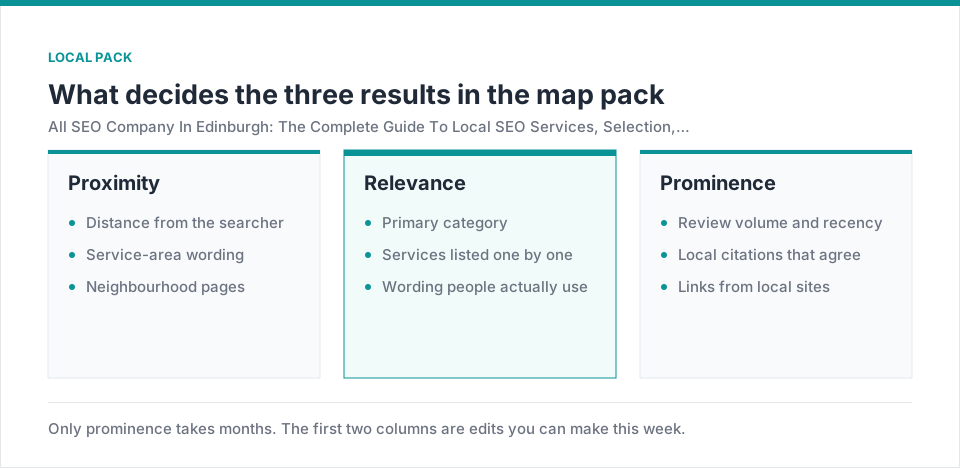
Regularly refresh pillar content to maintain authority while enabling district wrappers to surface timely, locally relevant details. Governance artefacts should accompany each delta to support regulator-ready reporting and auditable provenance.
5) Technical readiness and performance baseline
Assess crawlability, mobile speed, Core Web Vitals, and structured data health. Identify page-level performance gaps that hinder diffusion, such as slow Local Page load times or misconfigured schema. Establish baseline performance for each district wrapper and surface so improvements can be measured over time. Link technical findings to the governance framework, ensuring that every delta is accompanied by CORA Trails and translation tooling that preserve provenance across languages and surfaces.
- LCP targets under 2.5 seconds for core Edinburgh pages and Local Pages tailored to district contexts.
- Maintain clean crawl paths that respect the eight-surface diffusion architecture.
- Regularly validate structured data and regulator-ready exports for audits.
6) Prioritisation framework
Employ a practical scoring model that weighs impact on near-me visibility, district relevance, and GBP health against effort and risk. Priorities typically include NAP harmonisation, GBP health stability, Local Page gaps, and critical structured data corrections. Create a 90-day improvement plan with per-surface milestones and district targets. A simple rubric can assess impact, ease of fix, market risk, and regulatory considerations, surfacing items with the highest combined score for immediate action.
7) Creating the actionable improvement plan
Translate audit findings into concrete actions: per-district Local Pages scaffolds, GBP health improvements, district calendars alignment, and updated schema. Assign owners, set deadlines, and attach CORA Trails, Translation Memories, and RegExports By Design to each delta. This governance-forward package enables regulator-ready reporting and language-by-language replay across eight surfaces. Link district activity to on-page optimisations, GBP posts, and Local Pages to ensure coherence across surfaces.
8) Collaboration, governance cadence, and documentation
Set up recurring governance rituals: weekly surface health standups, monthly regulator-ready exports, and quarterly audits. Define roles clearly: Edinburgh SEO Lead, District Owners, Content Lead, Technical Lead, and Governance Manager. Ensure every delta travels with CORA Trails, Translation Memories, and RegExports By Design to enable language-by-language replay and regulator-ready reporting across Maps, Local Pages, Knowledge Panels, Discover experiences, Copilots, Brand Stores, the Brand Website, and GBP health signals. Maintain a central repository for artefacts to support reviews and future scaling.
9) Next steps for Edinburgh teams and partner readiness
Prepare a concise audit brief to share with potential partners. Include target districts, eight-surface diffusion goals, current baseline metrics, and the governance artefacts you expect to travel with each delta. Request a demo of per-surface dashboards, a sample CORA Trails log, and a RegExports By Design export to validate regulator-ready packaging from day one. To keep momentum, plan a two-district pilot as a minimal viable diffusion and attach a simple ROI narrative that your finance team can review in governance meetings. Internal links to our resources: explore the SEO Services hub, the Resources hub, and the Contact page to schedule Edinburgh-focused audit discussions.
Governance Readiness Checklist
- Spine_topic clearly defined and stable across eight surfaces.
- District wrappers created for target Edinburgh suburbs without semantic drift.
- CORA Trails, Translation Memories, and RegExports By Design attached to every delta.
- Per-surface roadmaps and Local Pages scaffolds ready for rapid deployment.
- Per-district dashboards with surface-level metrics and ROI narratives.
Part 10: Common Pitfalls And Myths When Hiring An Edinburgh SEO Partner
Engaging an Edinburgh-based SEO partner requires a disciplined eye for governance, provenance, and district nuance. This Part highlights the most common missteps and persistent myths that can derail an Edinburgh diffusion programme. By spotting these signals early, Edinburgh businesses can safeguard eight-surface diffusion across Maps, Local Pages, Knowledge Panels, Discover experiences, Copilots, Brand Stores, the Brand Website, and GBP health signals, ensuring durable growth rather than a temporary ranking spike.
Top pitfalls to watch when hiring an Edinburgh partner
- Overpromising rankings and quick wins. Claims of dramatic, rapid ranking surges across all eight surfaces are rarely credible. A credible Edinburgh diffusion plan prioritises steady improvement in proximity, Local Page engagement, and GBP health signals, avoiding a single, unsustainable spike.
- Lack of auditable governance artefacts. Without CORA Trails for inputs and decisions, Translation Memories for locale-consistent phrasing, and RegExports By Design for regulator-ready exports, leadership cannot replay decisions or demonstrate provenance in governance reviews.
- One-surface focus. A partner fixated on Maps or GBP alone neglects the eight-surface diffusion model that sustains durable Edinburgh visibility across districts.
- Opaque ROI and reporting. Proposals should show per-surface roadmaps and dashboards, linking activity to tangible outcomes rather than vanity metrics.
- Poor district literacy. Edinburgh districts differ in rhythms and needs. A credible partner demonstrates knowledge of Old Town, Leith, Stockbridge, and Morningside, and shows how district calendars influence diffusion across surfaces.
- Rushed rollouts. A hurried organisation-wide deployment without a two-district pilot creates avoidable risk. Start with a controlled pilot to validate workflows before scaling.
- Unclear ROI methodology. Expect a transparent ROI narrative that ties diffusion activity to real inquiries, bookings or conversions, not superficial metrics.
- Unregulated automation. Automation can scale, but governance reviews are essential to preserve locality and nuance across Edinburgh districts.
- Inadequate onboarding and access. Without timely access to GBP, Google Analytics, and the CMS, a partner cannot responsibly implement changes or report progress across eight surfaces.
Mitigating these risks: practical checks before signing
Request a diffusion roadmap that demonstrates eight-surface coverage without diluting the spine_topic, and ask for samples of governance artefacts such as CORA Trails, Translation Memories, and RegExports By Design. Propose a two-district pilot with governance cadences and a clear ROI narrative. Insist on per-surface dashboards that reveal Maps proximity, Local Pages engagement, GBP health signals, and Brand Website conversions. Ensure artefacts travel with every delta to support regulator-ready reporting.
Concrete questions to include in your evaluations
- Can you provide a district-focused diffusion roadmap showing how eight surfaces surface Edinburgh districts without diluting the spine_topic?
- Will CORA Trails, Translation Memories, and RegExports By Design be attached to every delta?
- Can you share sample per-surface dashboards that demonstrate momentum across Maps, Local Pages, and GBP health?
- Do you have a two-district pilot plan with governance cadences and an explicit ROI narrative?
- Could you present Edinburgh case studies or comparable market experiences with measurable outcomes?
How to negotiate effectively and protect your organisation
Negotiate a clear per-surface scope, a change-control policy, and regulator-ready export packaging from day one. Ensure the contract specifies data ownership and access controls, plus a renewal framework aligned to district ROI milestones. A governance-forward agreement should attach per-district dashboards and auditable provenance for every delta across Maps, Local Pages, Knowledge Panels, Discover experiences, Copilots, Brand Stores, the Brand Website, and GBP health signals. For templates and guidance, visit our SEO Services hub and the Resources hub, then book a strategy session via the Contact page to tailor an Edinburgh-focused diffusion with auditable provenance across surfaces.
Taking the next step with Edinburgh SEO
If you’re evaluating Edinburgh-based SEO options, begin with a concise brief that outlines target districts, eight-surface diffusion goals, and governance expectations. Ask for a two-district pilot proposal, governance artefacts, and regulator-ready exports attached to every delta. For practical templates and district guidance, access the SEO Services hub and Resources hub, then book a strategy session via the Contact page to initiate a governance-forward Edinburgh diffusion with auditable provenance across surfaces.
Part 11: Budgeting And Choosing A Glasgow Freelance SEO Partner
A robust budgeting approach for Glasgow-focused freelance SEO blends governance discipline with practical delivery. The aim is eight-surface diffusion that surfaces district nuance while preserving spine_topic fidelity across Maps, Local Pages, Knowledge Panels, Discover experiences, Copilots, Brand Stores, the Brand Website, and GBP health signals. From day one, every delta should travel with auditable provenance so leadership can replay decisions language-by-language during governance reviews. Understanding cost structure early helps you compare proposals by outcomes rather than promises, and it sets the stage for scalable diffusion as Glasgow markets evolve.
In Glasgow, budgets should reflect district complexity, the breadth of diffusion surfaces, and the governance artefacts required to maintain auditability. A disciplined framework enables you to forecast ROI, align stakeholders, and sustain momentum as you expand from two or three districts to a city-wide diffusion plan. The guidance below translates those principles into practical budgeting, partner-selection criteria, and a concrete onboarding pathway that keeps spine_topic integrity intact while surfacing local Glasgow nuances. Edinburgh SEO governance references provide a credible baseline for eight-surface diffusion that you can adapt to Glasgow markets.
1) Budgeting for Glasgow SEO: what to expect
Costs vary by district reach, diffusion surface breadth, and governance requirements. A typical Glasgow engagement begins with discovery and baseline auditing, followed by an eight-surface diffusion programme. For small to mid-market Glasgow businesses, monthly retainers commonly range from £1,000–£2,500, while larger programmes spanning several districts and delivering comprehensive governance across all eight surfaces can rise to £4,000–£8,000 per month, depending on Local Pages wrappers, GBP health optimisations, and the breadth of content calendars required to surface local relevance.
Plan for upfront setup costs to establish Local Pages scaffolds, district calendars, and schema deployments, plus quarterly governance reviews that produce regulator-ready exports. Insist on a transparent per-surface breakdown so leadership can see exactly where resources are allocated and how diffusion activities map to district outcomes. For governance artefacts, expect CORA Trails to capture inputs and decisions, Translation Memories to maintain locale-consistent phrasing, and RegExports By Design to support regulator-ready data packaging with every delta.
2) Choosing A Glasgow Partner: key criteria
When evaluating Glasgow-based freelance SEOs, prioritise governance maturity, district literacy, and demonstrable ROI. A strong candidate should present a clear plan for eight-surface diffusion, with district wrappers that surface local intent without diluting the spine_topic. Look for transparent pricing with a per-surface breakdown, a documented onboarding process, and a path to regulator-ready reporting. A credible partner will also provide per-district dashboards, samples of CORA Trails, Translation Memories, and RegExports By Design, ensuring auditable provenance from day one.
Assess governance instruments and collaboration models. Do they offer a two-district pilot to validate workflows? Can they attach artefacts to every delta and maintain language-by-language provenance across surfaces? Do they have credible references from Glasgow or similar UK cities with district-level success? These questions help ensure you invest in a partner who can scale responsibly while preserving spine_topic fidelity.
3) What a Glasgow diffusion proposal should include
- Per-surface roadmaps that surface eight-surface diffusion while protecting the spine_topic.
- District wrappers with Local Pages scaffolds, district calendars, FAQs, and service variations that remain faithful to the core message.
- CORA Trails for inputs, Translation Memories for locale-consistent phrasing, and RegExports By Design for regulator-ready exports.
- Per-district dashboards showing surface health and business outcomes.
- ROI narrative linking diffusion activity to inquiries, bookings, and conversions.
- Onboarding plan with a two-district pilot and a staged rollout path.
4) The first 90 days: momentum with governance
Initiate with spine_topic stability and two high-potential Glasgow districts. Publish Local Pages wrappers, align GBP health signals with district calendars, and deploy starter schema to support eight-surface diffusion. Create per-district dashboards that translate surface health into business outcomes and attach CORA Trails, Translation Memories, and RegExports By Design to every delta. Early wins include NAP harmonisation across directories and launching district-focused Local Pages content that answers district-specific questions and showcases local events.
Use the governance artefacts as a central spine, ensuring every delta travels with auditable provenance. This framework supports regulator-ready replay and paves the way for broader rollout across additional Glasgow districts as confidence grows.
5) Negotiation insights: contract language and renewal
Codify a decision framework that values spine_topic fidelity, district responsiveness, and governance maturity. Require a per-surface roadmap, a defined renewal cadence, and a clear change-control protocol. Ensure the contract includes data ownership, access controls, and regulator-ready export packaging. Tie renewals to per-district ROI narratives and surface health improvements, with regular governance reviews that produce auditable evidence across Maps, Local Pages, Knowledge Panels, Discover experiences, Copilots, Brand Stores, the Brand Website, and GBP health signals. For ongoing guidance, consult the Glasgow SEO Services hub and the Resources hub, and book a strategy session via the Contact page to align on a Glasgow diffusion plan with auditable provenance across surfaces.
Approach budgeting and partner selection with clarity and governance-minded discipline, so Glasgow businesses secure predictable delivery, meaningful district impact, and sustainable growth that endures beyond the initial rollout.
Sustaining Growth — Measurement, Renewal, and Scaling Edinburgh Diffusion
In Edinburgh's dynamic local market, sustaining growth from an eight-surface diffusion programme hinges on a disciplined renewal cadence, rigorous measurement, and a governance framework that scales with district nuance. This Part translates the governance-forward approach into ongoing optimisation practices that protect the spine_topic integrity while surfaces surface district-specific signals across Maps, Local Pages, Knowledge Panels, Discover experiences, Copilots, Brand Stores, the Brand Website, and GBP health signals. With auditable provenance attached to every delta, renewal becomes a strategic lever rather than a cost of scale for the best all seo company in edinburgh engagements. For practical foundations, refer to our governance templates and dashboards in the Resources hub and the SEO Services hub on EdinburghSEO.org.
1) Renewal Cadence And Governance Alignment
Establish a formal cadence that mirrors your organisation's decision cycles. Implement quarterly governance reviews to assess district wrappers, surface health, and parity across the eight diffusion surfaces. Each review should compare outcomes against the spine_topic anchor and validate that local nuance remains tethered without semantic drift. Every delta travels with governance artefacts — CORA Trails for inputs and decisions, Translation Memories for locale-consistent phrasing, and RegExports By Design for regulator-ready exports — so leadership can replay decisions language-by-language across Maps, Local Pages, Knowledge Panels, Discover experiences, Copilots, Brand Stores, the Brand Website, and GBP health signals.
Practical outputs from these cadences include an updated Edinburgh diffusion map, refreshed district calendars, and revised per-surface roadmaps. The renewal package should accompany every delta to preserve auditable provenance and support regulator reviews as Edinburgh's districts evolve.
2) Per-Surface KPIs And ROI Narrative
Each diffusion surface requires a crisp ROI narrative that translates surface health into district-level outcomes. Establish per-surface KPIs that feed a unified executive dashboard, then roll data up to a district-aware and regulator-ready ROI story. Example metrics include Maps proximity by district, Local Pages engagement, GBP health stability, Knowledge Panel completeness, Discover experiences resonance, Copilots guided journeys, Brand Stores interactions, and Brand Website conversions. Dashboards should connect improvements to tangible outcomes such as inquiries, bookings, or sales, with a clear line of sight back to the spine_topic.
- Maps proximity and near-me visibility by Edinburgh district.
- Local Pages engagement metrics tied to district calendars and events.
- GBP health signals aligned with district promotions and hours.
- Brand Website conversions attributed to district wrappers and Local Pages.
3) Language-By-Language Replay And Auditability
Auditability remains a design principle. Ensure every delta travels with language-by-language provenance across the eight surfaces, with CORA Trails capturing inputs and decisions, Translation Memories preserving locale-consistent phrasing, and RegExports By Design packaging regulator-ready exports. Maintain a central artifact repository where surface-specific updates are logged, validated, and linked to district wrappers. This architecture supports precise replay in audits and protects against drift as Edinburgh's districts evolve.
Leadership can trace the impact of every change, defend ROI with regulator-ready documentation, and ensure continuity when team compositions shift across the Edinburgh diffusion footprint.
4) Renewal Playbooks For District Wrapping
Develop renewal playbooks that define per-district Local Pages scaffolds, event calendars, and wrapper content blocks aligned to target suburb clusters. Each renewal delta should be accompanied by governance artefacts and a per-surface action plan to ensure consistency, timeliness, and regulatory compliance. Start with two-district refresh cycles as a practical pilot, then scale outward once signals prove stable.
When executed well, renewal playbooks reduce rework, speed time-to-publish, and maintain eight-surface parity while allowing Edinburgh's districts to respond to local calendars and user intents.
5) Data Hygiene, Privacy, And Compliance In Renewal
Renewal cycles must respect data governance, privacy, and regulatory expectations. Maintain consistent NAP data, GBP health signals, and schema fidelity across all eight surfaces. Update data-handling disclosures and ensure regulator-ready exports accompany each delta. Build a living privacy and compliance checklist that aligns with UK data guidelines and evolving expectations to keep governance robust as Edinburgh's diffusion footprint grows.
Regularly refresh data provenance artefacts to reflect policy changes and market evolution. Use the CORA Trails, Translation Memories, and RegExports By Design trio as the backbone for governance, ensuring auditability and trust across stakeholders.
6) Knowledge Transfer, Training, And Continuity
Long-term success depends on internal capability. Integrate a structured knowledge-transfer programme that trains teams on CORA Trails, Translation Memories, and RegExports By Design. Provide ready-to-use templates for Local Pages scaffolds, wrapper content blocks, and per-surface dashboards so client teams can sustain diffusion independently while maintaining governance discipline. Offer ongoing coaching through the Edinburgh SEO Services hub and ensure the Resources hub hosts up-to-date governance artefacts, dashboards, and translation tools.
A well-documented handover reduces risk and accelerates value delivery as the diffusion expands across more Edinburgh districts. Consider two-district pilots to validate workflows before broader rollout and embed a simple ROI narrative in governance dashboards that leadership can review regularly.
7) Next Steps For Edinburgh Diffusion Maturity
To advance maturity, schedule renewal-focused strategy sessions, review the diffusion map, and confirm governance cadences align with decision-making rhythms in your organisation. Use the Edinburgh Resources hub for governance templates and CORA Trails, and book a strategy session via the Contact page to tailor Edinburgh-focused diffusion with auditable provenance across eight surfaces. Ground decisions in Google Local guidance and credible industry references to anchor your strategy in verifiable standards.
Want the numbers behind this? The analytics guide shows how organic traffic and the queries GA4 hides are rebuilt in Semalt.
8) Collaboration, Governance Cadence, And Documentation
Collaboration is essential to sustaining diffusion. Establish recurring governance rituals: weekly surface health standups with district leads, monthly regulator-ready exports, and quarterly audits. Define roles clearly: Edinburgh SEO Lead, District Owners, Content Lead, Technical Lead, and Governance Manager. Ensure every delta travels with CORA Trails, Translation Memories, and RegExports By Design to enable language-by-language replay and regulator-ready reporting across Maps, Local Pages, Knowledge Panels, Discover experiences, Copilots, Brand Stores, the Brand Website, and GBP health signals. Maintain a central repository for artefacts to support reviews and future scaling, and use existing project-management tools to sustain momentum while preserving governance discipline across Edinburgh's districts.
9) Practical Next Steps
If you’re ready to lock in renewal-driven improvements, start with a renewal-focused readiness assessment and a spine_topic blueprint. Access governance templates, CORA Trails, Translation Memories, and RegExports By Design via our SEO Services hub, review the Resources hub for artefacts, and book a strategy session through the Contact page to tailor an Edinburgh diffusion plan that preserves spine_topic fidelity while surfacing Edinburgh-local nuance.
Governance Readiness Checklist
- Spine_topic clearly defined and stable across eight surfaces.
- District wrappers created for target Edinburgh suburbs without semantic drift.
- CORA Trails, Translation Memories, and RegExports By Design attached to every delta.
- Per-surface roadmaps and Local Pages scaffolds ready for rapid deployment.
- Per-district dashboards with surface-level metrics and ROI narratives.
Part 13: Common Myths And Misconceptions About Edinburgh SEO
Local markets like Edinburgh frequently encounter a chorus of myths around search engine optimisation. A governance-forward diffusion approach—rooted in eight surfaces (Maps, Local Pages, Knowledge Panels, Discover experiences, Copilots, Brand Stores, the Brand Website, and GBP health signals)—demands a careful, evidence-based view rather than shortcuts. By debunking these myths, Edinburgh businesses can make smarter decisions about who to hire, how to implement eight-surface diffusion, and how to measure true impact in the Edinburgh context. For practical, Edinburgh-focused guidance, consult our SEO Services hub and the Resources hub on EdinburghSEO.org. You can also verify local-process norms in Google’s own Local SEO guidelines here: Google Local SEO guidelines.
Myth 1: SEO delivers instant results and requires little ongoing effort
Seo in Edinburgh is a long game. Even with district-aware strategies that surface eight surfaces, visible gains typically emerge over weeks to months, not days. A credible Edinburgh plan aligns the spine_topic with district wrappers, and then sustains momentum through ongoing content refinement, technical optimisations, and governance artefacts that travel with every delta. Short-term spikes may occur, but durable visibility comes from consistent, auditable activity across Maps, Local Pages, and GBP health signals.
In practice, expect a visible ascent in local proximity and page authority only after a rhythm of weekly updates and monthly governance reviews. For guidance on sustainable pacing, reference our Edinburgh diffusion cadences in the SEO Services and Resources hubs.
Myth 2: Local SEO is less important than national SEO
Local signals drive near-term visibility in Edinburgh, where district identity, event calendars, and GBP health significantly influence the local pack. The eight-surface diffusion model requires local wrappers and district pages to surface alongside pillar topics on the Brand Website. Neglecting local nuances can dilute the spine_topic and reduce proximity signals across Maps and Local Pages, diminishing overall relevance for Edinburgh buyers and visitors.
Edinburgh-focused strategies routinely show that well-executed Local Pages, accurate GBP health signals, and district calendars produce stronger clicks and inquiries than generic national optimisations alone. See how our governance-forward approach ties local signals to eight surfaces, maintaining coherence across Edinburgh markets.
Myth 3: GBP health signals alone determine local visibility
Google Business Profile health is essential, but it works best when integrated with Local Pages, Local Pages calendars, and structured data across eight surfaces. GBP updates, hours, and posts should reinforce the district wrappers and Local Page content, not stand alone. The diffusion framework ensures GBP health signals are routinely fed by district calendars and event data, creating a cohesive Edinburgh narrative that supports proximity and trust.
Align GBP activity with Local Pages schemas (Event, LocalBusiness, FAQ) and ensure consistent NAP data across Edinburgh directories. Governance artefacts accompany each delta to deliver regulator-ready provenance for audits and updates.
Myth 4: You can buy or exchange links to boost rankings
In Edinburgh, high-quality, locally credible links matter more than volume. Link-building should prioritise district-relevant sources such as local business associations, Edinburgh press, universities, and cultural partners. Content-driven PR tied to district wrappers and GBP activity strengthens proximity signals across eight surfaces. Low-value links or purchased links risk penalties and reputational harm, which defeats the governance-driven diffusion approach.
Outreach should be measured with provenance and align with a per-district ROI narrative. In practice, we recommend maintaining CORA Trails for outreach inputs, Translation Memories for locale-consistent phrasing, and RegExports By Design for regulator-ready exports to support audits. This approach safeguards signal integrity as Edinburgh expands diffusion across districts.
Myth 5: All Edinburgh SEO agencies are the same
The market contains a spectrum of capabilities. The Edinburgh specialist that truly delivers uses a governance-forward framework, eight-surface diffusion, and auditable artefacts (CORA Trails, Translation Memories, RegExports By Design) to support long-term, regulator-ready reporting. A generic agency may prioritise quick wins or surface-only optimisations, which can erode spine_topic fidelity and district coherence over time. When evaluating partners, request per-surface roadmaps, sample governance artefacts, and a clear ROI narrative showing how eight surfaces interact to move the needle for Edinburgh districts.
Ask for two-district pilots, dashboards that demonstrate momentum, and references from similar Edinburgh markets. For a credible starting point, browse our Governance and Diffusion playbooks in the Edinburgh Services hub and Resources hub, then arrange a strategy session via the Contact page.
Practical steps to hire an Edinburgh SEO partner
establish the durable core message and the eight-surface diffusion that will surface in Maps, Local Pages, and GBP health signals. CORA Trails, Translation Memories, and RegExports By Design should accompany all proposals. validate workflows, data hygiene, and auditable provenance before broader rollout. ensure transparency on momentum and ROI across eight surfaces. look for demonstrated local success in districts similar to yours.
For a practical starting package and governance-ready artefacts, visit the SEO Services hub and the Resources hub on EdinburghSEO.org, then book a strategy session via the Contact page to tailor Edinburgh-focused diffusion with auditable provenance across surfaces.
Part 14: Tools, Workflows And Collaboration For Edinburgh SEO Content Teams
To scale Edinburgh-focused content for all eight diffusion surfaces—Maps, Local Pages, Knowledge Panels, Discover experiences, Copilots, Brand Stores, the Brand Website, and GBP health signals—teams must run a tightly choreographed set of editorial tools and workflows. This Part translates Melbourne-style editorial discipline into an Edinburgh context, emphasising governance artefacts (CORA Trails, Translation Memories, RegExports By Design) as the backbone of auditable, regulator-ready provenance from day one. The objective is to keep the spine_topic intact while surface-specific district nuance surfaces consistently across eight surfaces, ensuring near-term relevance and long-term authority for all seo company in edinburgh engagements via edinburghseo.org.
Editorial Systems That Scale Edinburgh Content
Central to scale is a repeatable content brief system. Each brief anchors the spine_topic, pairs a target district wrapper, defines the user intent, prescribes formats (landing pages, Local Pages, blogs, FAQs, case studies), and sets tone and success metrics. Writers and editors rely on structured briefs to maintain consistency as Edinburgh districts proliferate—from the Old Town and New Town to Leith and Stockbridge—without fracturing the core message. Governance artefacts travel with every delta, ensuring inputs and decisions are captured for language-by-language replay and regulator-ready reporting across eight surfaces.
Practical templates cover: content briefs, per-surface templates, district wrappers reference sheets, and audit-ready export packs. When teams start with solid templates, the diffusion workflow becomes a repeatable rhythm rather than a one-off effort, reducing rework and accelerating time-to-publish across Edinburgh districts.
Content Briefs, Formats And Temporal Cadence
Briefs translate strategy into actionable writing tasks for Edinburgh audiences. Each brief includes: spine_topic, district_wrapper, target_district, user_intent, formats, tone, word count guidelines, and a success metric. Writers produce drafts aligned with the brief, while editors ensure accuracy, readability, and accessibility. Cadence matters: weekly editorial sprints, a monthly governance review, and quarterly audits align publishing velocity with quality controls and regulator-ready provenance across eight surfaces.
Integrated calendars link topic clusters to district event calendars, ensuring content stays timely and locally relevant. The calendars surface upcoming Edinburgh events readers want to know about, increasing dwell time and engagement while preserving spine_topic fidelity across surfaces.
Localization, Translation, And Provenance Workflows
Edinburgh’s diversity makes translation and localization essential. Translation Memories ensure terminology consistency and reduce turnaround times, while CORA Trails capture language-specific decisions and inputs. RegExports By Design bundles regulator-ready exports, supporting audits across eight surfaces. Localization is an ongoing discipline that creates high-quality, district-specific variants without compromising the spine_topic. Regular QA checks verify consistency across districts, languages, and surfaces, while preserving accessibility and semantic integrity.
Onboarding New Districts And Replicating Workflows
Onboarding districts is a repeatable, auditable process. Start with a two to four district pilot that validates spine_topic fidelity, governance artifacts, and eight-surface diffusion. Create district wrappers that surface local nuance for the chosen areas, then scale outward as confidence grows. A reusable onboarding playbook includes district mapping, template adoption, translation throughput, and export packaging. Clients can access governance templates, CORA Trails, Translation Memories, and RegExports By Design via our Resources hub, and schedule strategy sessions through the SEO Services hub or the Contact page to tailor a Edinburgh rollout with regulator-ready provenance across surfaces.
Collaboration Rituals That Drive Consistency
Collaboration is as important as the content itself. Establish cross-functional rituals that keep eight-surface parity intact: weekly standups with district leads, a monthly governance review, and quarterly audits. Roles must be explicit: Edinburgh SEO Lead, District Owners, Content Lead, Writers, Editors, Localization Specialist, and Compliance Liaison. Each delta is accompanied by governance artefacts, enabling language-by-language replay and regulator-ready reporting. A central repository for artefacts ensures every asset, from briefs to export packs, travels with the project and remains accessible for reviews and future iterations across Maps, Local Pages, Knowledge Panels, Discover experiences, Copilots, Brand Stores, the Brand Website, and GBP health signals.
To sustain momentum, integrate project management tools and content-creation platforms that your team already uses. This reduces friction and speeds up handoffs, while the governance layer ensures accountability and auditability across Edinburgh's districts.
Practical Next Steps
If you’re ready to structure your Edinburgh content operations for scale, start with a readiness assessment and a spine_topic blueprint. Use the Resources hub to access templates and governance artefacts, then book a strategy session via the SEO Services hub or the Contact page to tailor an eight-surface diffusion plan that preserves spine_topic integrity while surfacing Edinburgh-specific nuance. For ongoing guidance, review best practices in the Resources hub and align with Google’s local guidance to ensure regulator-ready provenance across surfaces.
Getting Started With An Edinburgh SEO Partner
For Edinburgh businesses aiming to improve visibility for all seo company in edinburgh, a structured, governance-forward rollout is essential. This final part translates eight-surface diffusion into a practical Edinburgh implementation that delivers auditable provenance, district-aware value, and measurable outcomes across Maps, Local Pages, Knowledge Panels, Discover experiences, Copilots, Brand Stores, the Brand Website, and GBP health signals. The spine_topic remains the central anchor, while district wrappers surface local nuance without compromising semantic integrity. The edinburghseo.org framework provides templates, CORA Trails, Translation Memories, and RegExports By Design to support language-by-language provenance from day one.
Executive Implementation Roadmap
- Phase 1 – Readiness And Alignment: Define the spine_topic all seo company in edinburgh as the stable core that travels across Maps, Local Pages, Knowledge Panels, Discover experiences, Copilots, Brand Stores, the Brand Website, and GBP health signals. Identify target Edinburgh districts such as Old Town, New Town, Leith, Stockbridge, and Morningside, and establish district wrappers that reflect local calendars, events, and reader queries. Attach governance artefacts like CORA Trails for inputs and decisions, Translation Memories for locale-consistent phrasing, and RegExports By Design for regulator-ready exports to enable auditable replay from day one. Link to the SEO Services hub, the Resources hub, and the Contact page to begin the Edinburgh rollout.
- Phase 2 – Baseline And Materials: Build modular diffusion content maps that anchor the spine_topic while surface wrappers surface local calendars, hours, events, and FAQs. Create Local Page templates for major Edinburgh districts, establish per-surface dashboards, and configure translation and export tooling to ensure provenance across deltas.
- Phase 3 – Pilot Cohorts: Run two Edinburgh district pilots (for example, Old Town and Leith) to validate diffusion workflows, data hygiene, and governance cadences. Capture inputs and decisions with CORA Trails, test translations in Translation Memories, and package regulator-ready exports with RegExports By Design for audits. Measure near-term ROI signals and refine roadmaps accordingly.
- Phase 4 – Scale Plan: Expand diffusion to additional Edinburgh districts, while preserving eight-surface parity. Implement per-district dashboards and district calendars, ensuring Local Pages, GBP health, and pillar content remain cohesive with the spine_topic across eight surfaces.
- Phase 5 – Knowledge Transfer And Maturation: Build internal capability through structured knowledge transfer. Provide Local Page templates, wrapper content blocks, and per-surface dashboards. Deliver ongoing coaching via the Edinburgh SEO Services hub, and maintain governance artefacts to support scaling as districts evolve.
What to prepare before engaging
Begin with a compact briefing that defines target Edinburgh districts, desired outcomes, and how progress will be measured. Request a diffusion plan that explains how eight surfaces surface district signals without diluting the spine_topic. Ask for a governance playbook that includes CORA Trails, Translation Memories, and RegExports By Design to ensure regulator-ready exports accompany every delta. Early assets to share include Google Analytics access, GBP listings, and CMS credentials so changes can be implemented quickly and responsibly. For practical templates, explore the SEO Services hub and the Resources hub, then book a strategy session via the Contact page.
Governance, artefacts, and dashboards
Attach CORA Trails for inputs, Translation Memories for locale-consistent phrasing, and RegExports By Design for regulator-ready data packaging to every delta. Create per-district dashboards that reflect surface health and business outcomes, then link district activity to Local Pages and GBP posts to maintain a cohesive Edinburgh narrative. These artefacts provide auditable provenance, enabling language-by-language replay during governance reviews and regulator-ready reporting across Maps, Local Pages, Knowledge Panels, Discover experiences, Copilots, Brand Stores, the Brand Website, and GBP health signals.
Next steps for Edinburgh practitioners
With the Edinburgh diffusion framework in place, initiate a two-district pilot to validate workflows, data hygiene, and governance cadences. Use per-district roadmaps and Local Pages scaffolds to surface local intent while preserving the spine_topic. Schedule governance cadences and attach artefacts to every delta to support regulator-ready reporting. For templates and artefacts, visit the SEO Services hub and the Resources hub, then arrange a strategy session via the Contact page to tailor an Edinburgh rollout with auditable provenance across eight surfaces.
Final guidance and readiness checklist
Ensure your team has a clearly defined spine_topic, district wrappers prepared for target Edinburgh suburbs, and governance artefacts attached to every delta. Confirm eight-surface diffusion parity across Maps, Local Pages, Knowledge Panels, Discover experiences, Copilots, Brand Stores, the Brand Website, and GBP health signals. Validate translation pipelines in Translation Memories and regulator-ready packaging in RegExports By Design. Build per-district dashboards that reflect local calendars and patient questions, backed by auditable CORA Trails. Start with a two-district pilot to demonstrate workflows before broader rollout, and anchor decisions with a transparent ROI narrative that leadership can review regularly. For templates and governance artefacts, access the SEO Services hub and the Resources hub, then book a strategy session via the Contact page.