Edinburgh SEO Agency: Local Expertise For Edinburgh Businesses
Edinburgh's search landscape is shaped by its historic districts, universities, and a thriving local economy. An Edinburgh-based SEO agency combines technical rigour with street-level city knowledge to ensure your business appears where Edinburgh residents actually search. At edinburghseo.org, our approach prioritises local relevance, robust technical health, and transparent governance that makes optimisation auditable, scalable, and investment-ready. This Part 1 lays the groundwork for understanding what a true Edinburgh-focused SEO partner delivers and why local context matters for sustainable outcomes.
The Edinburgh Advantage: Local Signals That Drive Visibility
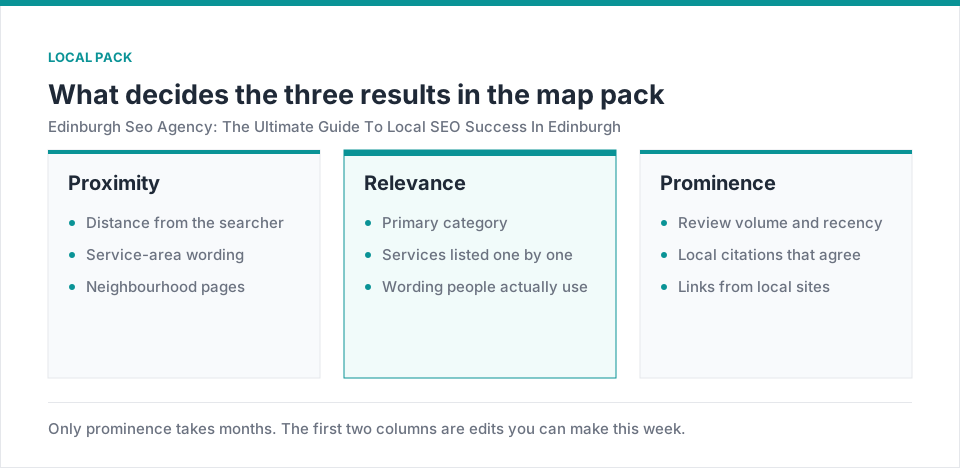
Local search in Edinburgh hinges on a handful of district-level signals that map to how residents look for services across the city’s neighbourhoods. A seasoned Edinburgh specialist concentrates on: GBP health for district hubs and key suburbs, absolute NAP consistency across maps and directories, a district-to-suburb content topology, and reputation signals that reflect Edinburgh's living communities. When these elements are tightly aligned, Google’s local surfaces — including Google Business Profile, Maps, Local Pages, and Knowledge Graph — respond with stronger proximity visibility and credible engagement.
- GBP health and district hub optimisation to surface in near-me queries around Edinburgh.
- Nap consistency across Maps, directories, and GBP-linked assets to avoid misalignment.
- Structured district hub content that links to relevant Edinburgh suburbs and services.
- Authentic reputation management built on locally aware responses and case studies.
Internal reference: explore Edinburgh-focused governance assets and starter playbooks on the Edinburgh SEO Services hub at edinburghseo.org/services/.
Core Services You Should Expect From An Edinburgh SEO Expert
A credible Edinburgh-focused partner delivers a cohesive, district-aware suite of services designed to lift proximity visibility and local engagement. The following offerings form the backbone of a practical Edinburgh programme:
- Local SEO and GBP Optimisation: district hubs and key suburb pages optimised for proximity and relevance, with GBP health monitoring and local post strategies.
- Technical SEO And Site Health: crawlability, mobile performance, Core Web Vitals, and structured data hygiene aligned to Edinburgh’s districts.
- On-Page Optimisation And Localised Content: district hub pages and suburb clusters with locally informed metadata and terminology.
- Content Strategy And Calendar: a district-first content plan reflecting Edinburgh’s events, services, and community life.
- Link Building And Local Authority: targeted outreach with Edinburgh-relevant signals from local organisations and associations.
- Analytics, Governance, And Reporting: dashboards and regular reviews that connect activity to local ROI and district KPIs.
These services are delivered with TPID governance and Licensing Context for imagery to ensure localisation fidelity travels across GBP, Maps, Local Pages, and Knowledge Graph. For practical examples and templates, visit the Edinburgh SEO Services hub on edinburghseo.org/services/.
How An Edinburgh SEO Expert Works With You
Working with an Edinburgh specialist is a governance-driven partnership. The process typically begins with a discovery that captures district footprint, target suburbs, service lines, and conversion goals; followed by a baseline audit, a district-first roadmap, and a pilot that tests two anchor districts before scaling. The aim is not merely to chase a handful of keywords but to create authentic local journeys that connect district hubs, suburb pages, and cross-surface signals into a coherent proximity narrative. Governance artefacts such as dashboards, SLAs, TPID glossaries, and Licensing Context catalogs anchor this approach and protect localisation integrity as you grow.
- Discovery and data access: GBP, analytics, and CMS connections set up for district routing.
- Baseline audit: quick wins for district hubs and suburb pages to unlock near-term gains.
- Roadmap and governance: a district-first plan with TPIDs and licensing in place.
- Pilot deployment: two Edinburgh anchor districts to validate the approach.
- Full-scale rollout: based on pilot learnings, with ongoing governance and reporting.
Getting Started With An Edinburgh SEO Expert
To begin, plan a strategy session through the Edinburgh SEO Support channel. Prepare access to GBP, Google Analytics, and a basic content map. You’ll receive a district-first plan with two anchor districts, TPID and Licensing Context readiness, and a governance calendar that maps activities to measurable ROI. Internal resources and starter templates can be found on the Edinburgh SEO Services hub at edinburghseo.org/services/, and you can book a strategy session via edinburghseo.org/contact/.
For additional credibility, reference authoritative guidelines on local search and structured data, such as Google's local search documentation. Google's local search guidelines help reinforce an Edinburgh consultant’s approach while ensuring compliance and best-practice alignment across GBP, Maps, Local Pages, and Knowledge Graph. To explore practical Edinburgh-focused offerings, visit the Edinburgh SEO Services hub on edinburghseo.org, or arrange a strategy session through the Edinburgh SEO Support page.
Understanding The Edinburgh Local Search Landscape
Edinburgh’s search environment blends historic districts, academic life, and a thriving local economy. A true Edinburgh-focused SEO partner recognises the city’s unique neighbourhoods, rhythms, and consumer journeys, translating them into local signals that search engines understand. At edinburghseo.org, we emphasise local relevance, technical health, and transparent governance so optimization outcomes are auditable, scalable, and investment-ready. This Part 2 builds on Part 1 by detailing the Edinburgh-specific local search landscape, the signals you should prioritise, and the practical steps to align your site with Edinburgh residents’ intent across GBP, Maps, Local Pages, and Knowledge Graph.
Edinburgh Local Signals That Drive Visibility
Local search in Edinburgh hinges on signals that reflect the city’s geography, institutions, and everyday life. A district-aware approach centres on: robust GBP health for district hubs, unwavering NAP consistency across Maps and directories, a district-to-suburb content topology, and reputation signals grounded in Edinburgh’s communities. When these elements are harmonised, Google surfaces GBP, Maps, Local Pages, and Knowledge Graph respond with stronger proximity visibility and credible engagement.
- GBP health and district hub optimisation to surface in near-me Edinburgh searches.
- NAP consistency across Maps, directories, and GBP-linked assets to prevent signal drift.
- Structured district hub content that links to relevant Edinburgh suburbs and services.
- Authentic reputation management shaped by locally aware responses and case studies.
Internal reference: explore Edinburgh-focused governance assets and starter playbooks on the Edinburgh SEO Services hub at edinburghseo.org/services/.
Two Anchor Districts And Suburb Networks For Edinburgh
A practical Edinburgh programme is typically anchored by two districts that act as central authorities, then expands to nearby suburbs. For Edinburgh, consider Old Town and Leith as two anchor districts. Old Town anchors the historic core, public institutions, and tourism flow, while Leith anchors the harbour and growing residential/business clusters. This two-anchor strategy creates a scalable localisation framework where hub pages in these districts feed linked suburb pages, events calendars, and district-specific offers. TPIDs (Translation Provenance IDs) are used to lock terminology across languages, ensuring consistency as Edinburgh content scales into multilingual audiences. Licensing Context governs imagery rights so assets move cleanly across GBP assets, Maps, Local Pages, and Knowledge Graph.
- Establish Old Town and Leith as district hubs with dedicated service areas and district-level FAQs.
- Create suburb clusters around nearby areas such as Stockbridge, Grassmarket, and Portobello with clear navigation to the district hubs.
- Lock terminology with TPIDs across languages, and apply Licensing Context to imagery for rights management.
- Spin up governance artefacts (dashboards, glossaries, licences) to support auditable execution.
Technical Foundations For Edinburgh Local SEO
A technically sound foundation is essential for durable Edinburgh visibility. Start with a lightweight, district-focused technical audit covering crawlability, mobile performance, Core Web Vitals, and structured data hygiene aligned to district hubs and suburb clusters. Focus on fast, accessible pages that communicate Edinburgh locality clearly to users and search engines. Prioritise fixes such as optimised district hub pages, validated canonical structures to avoid signal conflicts within clusters, and a live health dashboard that links technical changes to local performance. TPIDs extend to structured data and imagery, ensuring localisation fidelity travels across GBP, Maps, Local Pages, and Knowledge Graph.
- Crawlability and indexation health for district hubs and suburb pages.
- Mobile performance and Core Web Vitals aligned to Edinburgh user behaviour.
- Structured data hygiene with LocalBusiness, Service, and FAQ schemas.
- Canonical governance to protect district anchors from signal conflicts.
Content Planning For Edinburgh Markets
A district-first content plan anchors topics to Edinburgh’s events, services, and neighbourhood life. Develop a governance-driven content calendar that cadence-publishes district hub content, suburb-side supports, and district guides. TPIDs lock terminology, and Licensing Context governs imagery rights as content moves across GBP, Maps, Local Pages, and Knowledge Graph. The objective is to create authentic Edinburgh voices that answer real local questions and drive meaningful engagement across surfaces.
- District hub content: core pages with district-specific services, hours, and FAQs.
- Suburb content: neighbourhood guides, testimonials, and local CTAs.
- Event-driven topics: guides tied to Edinburgh’s calendar and community collaborations.
Measurement, Governance, And Edinburgh Campaigns
Measurement turns activity into action. Establish dashboards that translate district activity into ROI, focusing on proximity visibility, hub-to-suburb engagement, and local conversions. TPID parity and Licensing Context dashboards ensure localisation fidelity remains intact as you scale. Regular governance cadences—monthly health checks and quarterly strategy reviews—keep the Edinburgh proximity narrative coherent across GBP, Maps, Local Pages, and Knowledge Graph.
- District KPI dashboards covering proximity visibility, engagement, and local conversions.
- TPID parity dashboards to monitor translation fidelity across languages.
- Licensing status dashboards for imagery across GBP, Maps, Local Pages, and KG.
- Governance cadences that align with district expansion and content calendars.
Core Services Offered By An Edinburgh SEO Agency
Edinburgh’s local search landscape blends historic districts, a thriving university ecosystem, and a dynamic small-business scene. An Edinburgh-focused SEO agency combines city-specific market intelligence with rigorous technical discipline to surface your offerings where Edinburgh residents actually search. This Part 3 outlines the core services you should expect from a partner that understands the Edinburgh context, from GBP health to data-driven reporting. The emphasis remains on local relevance, governance, and transparent measurement that makes optimisation auditable and scalable across Edinburgh’s districts and suburbs.
1) Local SEO And Google Business Profile Optimisation For Edinburgh
Local SEO in Edinburgh starts with a robust Google Business Profile (GBP) framework for each district hub and its key suburbs. A disciplined Edinburgh partner ensures GBP health is high, service-area definitions are precise, and category selections reflect the city’s distinctive service landscape. Regular GBP posts tied to Edinburgh events, hours, and local offers help surfaces in near-me queries and Maps. Translation Provenance IDs (TPIDs) lock district terminology across languages when Edinburgh businesses publish multilingual content, while Licensing Context governs imagery rights so assets move smoothly across GBP, Maps, Local Pages, and Knowledge Graph. This groundwork creates a dependable proximity narrative that informs every downstream activity.
- District hub GBP profiles with accurate service areas and consistent NAP data.
- Regular, locally relevant GBP posts and photo assets to boost engagement.
- TPID-enabled terminology to support multilingual Edinburgh audiences.
- Licensing Context applied to imagery used on GBP and local assets.
Internal reference: explore Edinburgh-focused governance assets and starter playbooks on the Edinburgh SEO Services hub at edinburghseo.org/services/.
2) Technical SEO And Site Health For Edinburgh
A technically sound foundation is essential for durable Edinburgh visibility. Begin with a district-focused technical audit covering crawlability, mobile performance, Core Web Vitals, and structured data hygiene. Prioritise fast, accessible district hub pages and suburb clusters, with clear canonical structures that prevent signal conflicts within clusters. A live health dashboard ties technical changes to local performance metrics, while TPIDs extend to structured data and imagery to preserve localisation fidelity as Edinburgh content scales. Licensing Context ensures imagery rights are tracked across GBP, Maps, Local Pages, and Knowledge Graph, preventing licensing gaps as assets proliferate.
- Crawlability and indexation health for district hubs and suburb pages.
- Mobile-first optimisation and Core Web Vitals aligned to Edinburgh user behaviour.
- Structured data hygiene using LocalBusiness, Service, and FAQ schemas relevant to Edinburgh.
- Canonical governance to protect signals within district clusters.
3) On-Page Optimisation And Localised Content For Edinburgh
On-page optimisation in Edinburgh hinges on district-aware content that mirrors how residents search for services within the city. This includes locally informed metadata, titles, and headings that feature Edinburgh terminology and nearby suburb references. Develop a district-first content grid that connects district hubs to suburb pages, with clear calls-to-action that reflect local intent. TPIDs lock linguistic consistency across languages, while Licensing Context governs imagery used in on-page blocks. Maintain a steady cadence of content updates tied to Edinburgh’s events, academic calendar, and community programmes to keep pages fresh and relevant for both users and search engines.
- District hub pages as authoritative anchors with suburb-cluster navigation.
- Locale-aware metadata and headings reflecting Edinburgh’s districts and services.
- TPID governance to preserve terminology across languages and dialects.
- Licensing Context applied to imagery on all local pages.
4) Content Strategy And Calendar For Edinburgh Marketing
A district-first content strategy anchors topics to Edinburgh’s events, services, and neighbourhood life. Create a governance-driven content calendar that cadence-publishes district hub content, suburb-side supports, and district guides. TPIDs lock terminology, and Licensing Context governs imagery rights as content moves across GBP, Maps, Local Pages, and Knowledge Graph. The objective is to craft authentic Edinburgh voices that answer real local questions and drive engagement across surfaces, with a clear plan for updating district hubs, suburb pages, and event-driven content.
- District hub content: core pages with district-specific services, hours, and FAQs.
- Suburb content: neighbourhood guides, testimonials, and local CTAs.
- Event-driven topics: guides tied to Edinburgh’s calendar and community collaborations.
5) Link Building And Local Authority Signals In Edinburgh
In Edinburgh, establishing durable local authority signals relies on ethical, district-aware outreach. Build editorial partnerships with local outlets, universities, councils, and community organisations to earn credible editorial mentions and resource links that carry authority. Co-create district guides and neighbourhood resources that partners can publish with consistent terminology and licensing terms. TPIDs support multilingual Edinburgh markets, while Licensing Context ensures imagery rights travel with outreach assets. A disciplined, district-first approach reduces risk and boosts proximity signals across GBP, Maps, Local Pages, and Knowledge Graph.
- Editorial link-building campaigns with Edinburgh-based outlets and institutions.
- Resource pages and district guides that attract natural backlinks from local sources.
- Co-created content with local businesses and charities to earn trusted mentions.
- Licensing Context applied to imagery used in outreach assets to protect rights as content travels.
6) Analytics, Governance, And Reporting
Measurement turns activity into insight. Implement dashboards that map district hubs to suburb engagements and local conversions, linking proximity signals to ROI. Ensure TPID parity across languages and maintain Licensing Context for imagery as assets circulate across GBP, Maps, Local Pages, and Knowledge Graph. Establish a cadence of monthly health checks and quarterly strategy reviews, with district-focused reports that translate activity into tangible business outcomes for Edinburgh stakeholders.
- District KPI dashboards tracking GBP health, proximity visibility, and local conversions.
- TPID parity dashboards to ensure translation fidelity across language editions.
Internal resources and governance templates are available on the Edinburgh SEO Services hub at edinburghseo.org/services/. For personalised onboarding and to discuss a district-first plan tailored to your Edinburgh portfolio, book a strategy session via the edinburghseo.org/contact/ page.
Local SEO Tactics For Edinburgh Businesses
Edinburgh’s local search landscape rewards campaigns that understand the city’s districts, events, and everyday customer journeys. Part 4 of our Edinburgh-focused guide translates theory into practical tactics you can apply now, with TPID-backed terminology andLicensing Context governing imagery to preserve localisation fidelity as you scale. The aim is to establish a durable, district-aware technical and content framework that surfaces in GBP, Maps, Local Pages, and Knowledge Graph across Edinburgh’s neighbourhoods—from Old Town and Leith to Stockbridge and Portobello.
1) Site Architecture And Crawlability In Edinburgh
A district-first architecture maps Edinburgh’s districts to a clean, scalable URL structure. Create district hubs such as /edinburgh/district-name/ that anchor nearby suburb pages and service blocks. Use a well-considered sitemap prioritising district hubs and clustered suburb pages to optimise crawl budget and indexation for high-value assets. Implement a robust robots.txt file that permits access to GBP-linked assets while excluding low-value pages that could dilute signals. Canonical tags should consolidate signals within each district cluster to prevent dilution across pages. Translation Provenance IDs (TPIDs) lock district terminology across languages when Edinburgh content expands, and Licensing Context governs imagery rights so assets travel cleanly across GBP, Maps, Local Pages, and Knowledge Graph.
- District hubs with explicit parent-child relationships to suburb pages and service blocks.
- Prioritised XML sitemap emphasising district pages and key suburb clusters.
- Canonical and noindex strategies to prevent duplicate signals within clusters.
- Robots.txt rules and internal linking that nurture crawl efficiency for Edinburgh-local assets.
2) Mobile Performance And Core Web Vitals In Edinburgh Context
Edinburgh residents expect fast, reliable experiences on mobile. A district-focused technical plan should target Core Web Vitals and user patterns typical of Edinburgh’s districts. Prioritise optimising above-the-fold content on district hubs, reduce render-blocking resources, and enable lazy loading for off-screen images. Focus on efficient font loading, compression, and server response times to improve LCP, CLS, and TBT for visitors moving between districts like Old Town, Leith, and Leith Walk. Regular Lighthouse and PageSpeed Insights checks should connect technical improvements to tangible local engagement metrics such as map clicks and appointment requests.
- Maintain LCP under 2.5 seconds for district hub pages and critical suburb pages.
- Minimise CLS with stable, district-specific layouts on image-heavy pages.
- Reduce TBT by deferring non-critical JavaScript for district networks.
- Execute mobile-first audits aligned with Edinburgh user behaviour and devices.
3) Indexation, Canonicalisation, And Duplicate Content Across District Hubs
Within Edinburgh, district hubs and suburb pages can risk overlapping content. Establish clear canonical relationships within each district cluster to consolidate signals, and use 301 redirects for moved assets or restructured pages. Avoid duplicating shared service descriptions and local calendars across district landing pages; instead, tailor suburb pages with unique, locality-specific details. Ensure dynamic parameters for events do not generate duplicates that confuse search engines. TPIDs help maintain terminology consistency across languages, while Licensing Context protects imagery rights as pages scale across GBP, Maps, and Local Pages.
- Distinct district landing templates with district-specific content blocks.
- Canonical routes to consolidate signals within each district cluster.
- 301 redirects for restructured assets to preserve link equity.
- Managed language variants with TPIDs to prevent terminology drift.
4) Structured Data And Local Signals For Edinburgh
Structured data acts as the authoritative language for Edinburgh’s locality. Implement LocalBusiness, Service, and FAQ schemas with district- and suburb-level properties. Attach TPIDs to lock terminology across languages, and pair imagery with Licensing Context to preserve rights as assets surface on GBP, Maps, Local Pages, and Knowledge Graph. Rich results from LocalBusiness and Service schemas help Edinburgh residents discover nearby services quickly, while FAQ schemas answer common district-specific questions, boosting visibility in knowledge panels and local packs.
- LocalBusiness and Service schemas aligned to district hubs and suburb clusters.
- FAQ schemas addressing district-specific questions to capture rich results.
- TPIDs to preserve translation fidelity across languages and dialects.
- Licensing Context attached to imagery within schema blocks for rights management.
5) Content Planning And Local Edinburgh Market
A district-first content plan anchors topics to Edinburgh’s events, services, and neighbourhood life. Develop a governance-driven content calendar that cadence-publishes district hub content, suburb-side supports, and district guides. TPIDs lock terminology, and Licensing Context governs imagery rights as content moves across GBP, Maps, Local Pages, and Knowledge Graph. The objective is to create authentic Edinburgh voices that answer real local questions and drive engagement across surfaces, with a clear plan for updating district hubs, suburb pages, and event-driven content.
- District hub content: core pages with district-specific services, hours, and FAQs.
- Suburb content: neighbourhood guides, testimonials, and local CTAs.
- Event-driven topics: guides tied to Edinburgh’s calendar and community collaborations.
Internal resources and governance templates are available on the Edinburgh SEO Services hub at edinburghseo.org/services/. For personalised onboarding and to discuss a district-first plan tailored to your Edinburgh portfolio, book a strategy session via edinburghseo.org/contact/.
Link Building And Local Authority Signals In Edinburgh
In Edinburgh, the power of local SEO rests on genuine local authority signals. A disciplined Edinburgh-focused link-building programme strengthens proximity signals across Google surfaces, while TPIDs (Translation Provenance IDs) and Licensing Context ensure terminology and imagery rights travel consistently as content scales through GBP, Maps, Local Pages, and Knowledge Graph. This Part 5 from the Edinburgh SEO Agency series translates theory into actionable practices that align with the city’s districts, universities, councils, and community networks. It emphasises ethical outreach, local partnership leveraging, and governance that keeps Edinburgh’s localisation fidelity intact as campaigns expand.
1) Local Partnerships And Editorial Opportunities In Edinburgh
Effective Edinburgh link-building begins with purposeful partnerships that residents recognise. Prioritise collaborations with district chambers of commerce, the University of Edinburgh and other campuses, city councils, business associations, and trusted regional outlets. These relationships yield editorial mentions, co-authored guides, and locally relevant resources that carry genuine authority. Align content calendars with Edinburgh’s events and academic cycles to produce timely resources which partners can publish with accurate attribution. TPIDs secure district terminology across languages, while Licensing Context tracks imagery rights so assets can move between GBP posts, Maps, Local Pages, and Knowledge Graph without licensing friction.
- Map district partners by relevance to target audiences within Old Town, Leith, Stockbridge, and surrounding communities.
- Develop co-created district guides and local resources that partners can publish with consistent terminology and licensing terms.
- Coordinate editorial calendars around Edinburgh events, university terms, and community programmes.
- Apply TPIDs to lock terminology across languages and ensure imagery rights travel with outreach content.
Internal reference: explore Edinburgh-focused governance assets and starter playbooks on the Edinburgh SEO Services hub at edinburghseo.org/services/.
2) Local Link Building Strategy For Edinburgh Districts And Suburbs
Quality Edinburgh links emerge from district hubs that act as credible authorities and from suburb pages that anchor local journeys. Focus on editorial placements from district outlets, university newsrooms, and community organisations, then extend to resource pages and local business guides that attract natural backlinks. Use TPIDs to maintain consistent terminology across languages, and Licensing Context to ensure imagery rights accompany outreach assets as they travel across GBP, Maps, Local Pages, and KG. A disciplined, district-first approach reduces risk and yields sustainable proximity signals across Edinburgh’s surfaces.
- Editorial link-building campaigns with Edinburgh-based outlets, universities, and civic bodies.
- Resource pages and district guides that attract credible, locally relevant backlinks.
- Co-created content with local businesses and charities to earn trusted mentions.
- Licensing Context applied to imagery used in outreach assets to protect rights as content travels.
3) Outreach Best Practices In Edinburgh
Edinburgh outreach should be respectful, data-informed, and locally resonant. Build targeted contact lists of editors and influencers who cover Edinburgh districts and neighbourhoods. Personalise outreach with district-specific value propositions and provide ready-to-publish assets that match local language and terminology. Avoid blanket mass-email campaigns; instead, propose concrete collaboration ideas such as district data stories, events calendars, or co-branded guides. Track outreach effectiveness with district-level KPIs and ensure TPID-consistent attribution to understand what drives referral traffic and local engagement.
- Tailored outreach to Edinburgh editors, university communications offices, and local outlets.
- Provide ready-to-publish assets and clear attribution to maintain licensing integrity.
- Monitor responses, accepted collaborations, and subsequent link placements by district.
- Use TPIDs to align language and terminology across outreach materials.
4) Managing Links And Local Authority Signals Across GBP, Maps, Local Pages, KG
Link-building activity in Edinburgh should complement a coherent proximity narrative across Google surfaces. Track district hub links, suburb page mentions, and local authority signals to maintain consistent anchor text and relevance. Ensure every link mirrors district terminology via TPIDs and licensing terms via Licensing Context so imagery rights are visible as assets move through GBP posts, Maps listings, Local Pages blocks, and Knowledge Graph edges. A well-governed programme reduces penalties and strengthens EEAT signals by demonstrating genuine local authority and relevance.
- Cross-surface alignment of anchor text and district terminology using TPIDs.
- Licensing Context applied to imagery across assets to protect rights.
- Regular audits of backlink profiles by district to identify and disavow harmful links.
- Clear governance on how links influence GBP health, Map proximity, and Local Pages blocks.
5) Governance, Measurement, And Risk
Governance anchors Edinburgh’s link-building programme. Establish a district-centric framework with a TPID glossary and licensing catalogs to safeguard terminology and imagery rights as assets travel across GBP, Maps, Local Pages, and Knowledge Graph. Implement dashboards that reveal district KPIs such as GBP health, proximity visibility, and local conversions, with language editions broken out for multilingual Edinburgh markets. Schedule monthly health checks, quarterly strategy reviews, and annual licensing audits to maintain localisation fidelity while scaling to additional districts or languages.
- District KPI dashboards tracking GBP health, proximity, and local conversions.
- TPID parity dashboards to ensure translation fidelity across languages.
- Licensing status dashboards for imagery used in outreach and on local assets.
- Governance cadences that align with district expansion plans and content calendars.
Internal resources and governance templates are available on the Edinburgh SEO Services hub at edinburghseo.org/services/. For personalised onboarding and to discuss a district-first plan tailored to your Edinburgh portfolio, book a strategy session via edinburghseo.org/contact/.
Content Strategy For Edinburgh Audiences
Edinburgh’s content strategy must reflect the city’s unique districts, events, and everyday life. A district-first approach, combined with Translation Provenance IDs (TPIDs) and Licensing Context for imagery, ensures your Edinburgh content travels with fidelity across Google Business Profile, Maps, Local Pages, and Knowledge Graph. This Part 6 extends the Edinburgh-focused narrative by detailing how to map Edinburgh’s districts to hub content, design formats that scale locally, and build a scalable calendar that stays relevant for residents and search engines alike.
Two Anchor Districts And Suburb Networks For Edinburgh
A practical Edinburgh content strategy begins with two anchor districts that serve as authority hubs. For Edinburgh, Old Town anchors the historic core, public institutions, and tourism flow, while Leith anchors the harbour and expanding residential and business clusters. This two-anchor framework creates scalable localisation by feeding district hubs with linked suburb pages, events calendars, and district-specific offers. TPIDs lock terminology across languages, and Licensing Context governs imagery so assets move smoothly across GBP assets, Maps, Local Pages, and Knowledge Graph. Governance artefacts like dashboards, glossaries, and licences keep the localisation narrative auditable as you grow.
- Establish Old Town and Leith as district hubs with dedicated service areas and district-level FAQs.
- Create suburb clusters around nearby areas such as Stockbridge, Grassmarket, and Portobello with clear navigation to the district hubs.
- Lock terminology with TPIDs across languages, and apply Licensing Context to imagery for rights management.
- Spin up governance artefacts (dashboards, glossaries, licences) to support auditable execution.
Mapping Edinburgh Keywords To District Hubs
Begin with a district-to-suburb keyword map that ties core Edinburgh terms to local vernacular. Start with broad Edinburgh terms (for example, "Edinburgh SEO" or "SEO Edinburgh"), then combine district- and suburb-specific phrases (for instance, "Old Town SEO" or "Leith shop SEO"). Build topic clusters around each district hub that reflect user intent: services, neighbourhood life, events, and seasonal offers. Each cluster fuels district pages, suburb pages, and Local Pages, while TPIDs ensure terminology stays cohesive across languages. Licensing Context accompanies imagery to maintain rights as content scales across GBP, Maps, Local Pages, and Knowledge Graph.
- District-centric keywords mapped to hub pages and suburb clusters.
- Local vernacular and dialect-aware terminology guided by TPIDs.
- Structured data and imagery licensing aligned with district workflows.
Internal reference: explore Edinburgh-focused governance assets on the Edinburgh SEO Services hub at /services/.
Content Formats That Drive Local Relevance
Prioritise formats that scale while preserving a local voice. Use district hub landing pages as core anchors, with suburb-support pages that dive into neighbourhood details, case studies, and authentic testimonials. Localised blog topics should reflect Edinburgh’s events, services, and community life, published on a cadence that matches district calendars. TPIDs lock terminology across languages, while Licensing Context ensures imagery rights travel with content as it surfaces on GBP, Maps, Local Pages, and Knowledge Graph.
- District hub pages: Core district entries with tailored services, hours, and FAQs, aligned to hub-level TPIDs.
- Suburb support pages: Neighborhood guides, testimonials, and local CTAs extending from hub content.
- Event-driven topics: Guides and round-ups tied to Edinburgh’s calendar and community collaborations.
Content Calendar And Local Events Alignment
A disciplined calendar aligns content with Edinburgh’s rhythm. Schedule district hub content and suburb-side supports around university terms, cultural events, markets, and neighbourhood initiatives. TPIDs preserve terminology across languages, while Licensing Context governs imagery rights as assets circulate across GBP, Maps, Local Pages, and Knowledge Graph. This alignment ensures a coherent proximity narrative and improves user confidence when residents encounter district content across surfaces.
- District hub content: district-focused services, hours, and FAQs.
- Suburb content: neighbourhood guides, testimonials, and local CTAs.
- Event-driven topics: guides tied to Edinburgh’s calendar and community collaborations.
Gap Analysis And Competitor Benchmarking In Edinburgh
Identify content gaps by district and suburb where user demand exceeds current coverage. Benchmark against visible Edinburgh competitors to uncover opportunities in services, events, and neighbourhood guides. Use TPIDs to compare translated content parity and ensure language-specific pages reflect local intent. Conduct a licensing audit of imagery used in top-performing pages to ensure rights are clear as you scale. A rigorous gap analysis informs a prioritised content roadmap that targets high-ROI pages first, then expands to adjacent districts and language editions.
- District- and suburb-level content gaps in services, FAQs, and events.
- Content gaps revealed by competitor district hubs and suburb pages.
- TPID parity checks to confirm translation fidelity across language editions.
- Licensing audits to guarantee imagery rights across amplified content networks.
Internal reference: for governance templates and TPID-enabled workflows, consult the Edinburgh SEO Services hub at /services/.
Internal resources and governance templates are available on the Edinburgh SEO Services hub at /services/. For personalised onboarding and to discuss a district-first plan tailored to your Edinburgh portfolio, book a strategy session via /contact/.
Link Building And Local Authority Signals In Edinburgh
In Edinburgh’s competitive local ecosystem, link building hinges on authentic district signals and credible local partnerships. This Part 7 outlines a governance-driven approach to acquiring high-quality, locally relevant backlinks and ensuring signals travel across Google Business Profile, Maps, Local Pages, and Knowledge Graph. It emphasises Translation Provenance IDs (TPIDs) for terminological consistency and Licensing Context for imagery rights as Edinburgh content scales across districts from Old Town to Leith and beyond.
1) Local Partnerships And Editorial Opportunities In Edinburgh
Effective Edinburgh link-building starts with purposeful partnerships that residents recognise. Prioritise relationships with district-level organisations such as chambers of commerce, the University of Edinburgh and Heriot-Watt University newsrooms, city councils, business associations, and trusted community outlets. These collaborations yield editorial mentions, co-authored guides, and locally relevant resources that carry genuine authority. Align content calendars with Edinburgh’s events and academic cycles to produce timely resources partners can publish with accurate attribution. TPIDs lock terminology across languages when Edinburgh-based partners publish multilingual content, while Licensing Context tracks imagery rights so assets travel smoothly across GBP, Maps, Local Pages, and Knowledge Graph.
- Map district partners by relevance to target audiences within Old Town, Leith, Stockbridge, and surrounding communities.
- Develop co-created district guides and neighbourhood resources that partners can publish with consistent terminology and licensing terms.
- Coordinate editorial calendars around Edinburgh events, university terms, and community programmes.
- Apply TPIDs to lock terminology across languages and ensure imagery rights travel with content.
Internal reference: explore Edinburgh-focused outreach assets on the Edinburgh SEO Services hub at edinburghseo.org/services/.
2) Local Link Building Strategy For Edinburgh Districts And Suburbs
Quality Edinburgh links come from district hubs that act as credible authorities and from suburb pages that anchor local journeys. Focus on editorial placements from district outlets, universities, councils, and community organisations, then extend to resource pages and local business guides that attract natural backlinks. Use TPIDs to maintain consistent terminology across languages, and Licensing Context to ensure imagery rights accompany outreach assets as they travel across GBP, Maps, Local Pages, and Knowledge Graph. A disciplined, district-first approach reduces risk and yields sustainable proximity signals across Edinburgh’s surfaces.
- Editorial link-building campaigns with Edinburgh-based outlets, universities, and civic bodies.
- Resource pages and district guides that attract credible, locally relevant backlinks.
- Community-driven content that earns trusted mentions from local institutions.
- Licensing Context applied to imagery used in outreach assets to protect rights as content travels.
Internal reference: Edinburgh-focused outreach templates are available in the Edinburgh SEO Services hub at edinburghseo.org/services/.
3) Outreach Best Practices In Edinburgh
Outreach in Edinburgh should be respectful, data-informed, and locally resonant. Build targeted contact lists of editors and influencers who cover Edinburgh districts and neighbourhoods. Personalise outreach messages to reflect the recipient’s audience and provide ready-to-publish assets that match local language and terminology. Avoid generic mass-email campaigns; instead, propose concrete collaboration ideas such as district data stories, events calendars, or co-branded guides. Track outreach effectiveness with district-level KPIs and TPID-consistent attribution to understand what drives referral traffic and local engagement.
- Tailored outreach to Edinburgh editors, university communications offices, and local outlets.
- Provide ready-to-publish assets and clear attribution to maintain licensing integrity.
- Monitor responses, accepted collaborations, and subsequent link placements by district.
- Use TPIDs to align language and terminology across outreach materials.
Internal reference: practical outreach templates and case studies are available on the Edinburgh SEO Services hub at edinburghseo.org/services/.
4) Managing Links And Local Authority Signals Across GBP, Maps, Local Pages, KG
Link-building activity in Edinburgh should reinforce a coherent proximity narrative across Google surfaces. Track district hub links, suburb page mentions, and local authority signals to maintain consistent anchor text and relevance. Ensure every link mirrors district terminology via TPIDs and licensing terms via Licensing Context so imagery rights are visible as assets move through GBP posts, Maps listings, Local Pages blocks, and Knowledge Graph edges. A disciplined programme reduces penalties and strengthens EEAT signals by demonstrating genuine local authority and relevance.
- Cross-surface alignment of anchor text and district terminology using TPIDs.
- Licensing Context applied to imagery across assets to protect rights.
- Regular audits of backlink profiles by district to identify and disavow harmful links.
- Clear governance on how links influence GBP health, Map proximity, and Local Pages blocks.
5) Governance, Measurement, And Risk
Governance underpins successful Edinburgh link-building programmes. Establish a district-centric framework with a TPID glossary and licensing catalogs to safeguard terminology and imagery rights as assets travel across GBP, Maps, Local Pages, and Knowledge Graph. Implement dashboards that reveal district KPIs such as GBP health, proximity visibility, and local conversions, with language editions broken out for multilingual Edinburgh markets. Schedule monthly health checks, quarterly strategy reviews, and annual licensing audits to maintain localisation fidelity while scaling to additional districts or languages.
- District-level backlink dashboards tracking health, relevance, and conversions.
- TPID parity dashboards to ensure translation fidelity across languages.
- Licensing status dashboards for imagery used in outreach assets.
- Governance cadences that align with district expansion plans and content calendars.
Internal resources and governance templates are available on the Edinburgh SEO Services hub at edinburghseo.org/services/. For personalised onboarding and to discuss a district-first plan tailored to your Edinburgh portfolio, book a strategy session via edinburghseo.org/contact/.
Audits, Reporting, And Transparency In Edinburgh Local SEO Campaigns
Edinburgh’s local SEO governance requires rigorous audits, clear reporting, and transparent decision-making to sustain proximity visibility across GBP, Maps, Local Pages, and Knowledge Graph. This Part 8 continues the Edinburgh-focused narrative by outlining a practical audit framework, how to structure monthly reporting, and the governance practices that keep localisation fidelity intact as campaigns scale across Edinburgh’s districts and suburbs. By foregrounding TPIDs and Licensing Context, your optimisation becomes auditable, reproducible, and defensible to stakeholders.
Internal resources and governance templates can be accessed through the Edinburgh SEO Services hub, which hosts dashboards, audit checklists, and two-anchor pilot playbooks to support ongoing transparency and accountability for Edinburgh-based campaigns. For immediate engagement, book a strategy session via the Edinburgh Contact page to tailor these practices to your portfolio.
1) Audit Foundations For Edinburgh Local SEO Health
A robust audit begins with a district-centric lens. Start with GBP health for district hubs and key suburbs, ensuring categories, service areas, and NAP data stay aligned across Edinburgh’s Maps ecosystem. Verify that district hub pages are discoverable and that suburb pages link back to their respective hubs, forming a clear district-to-suburb topology. Validate structured data hygiene, including LocalBusiness, Service, and FAQ schemas, and confirm TPIDs are attached to district terminology to support multilingual audiences. Finally, audit imagery rights with Licensing Context so assets remain rights-clear as content scales across GBP, Maps, Local Pages, and Knowledge Graph.
- GBP health checks for each district hub and major suburb, with post cadence and category alignment.
- NAP consistency across Maps, directories, and GBP-linked assets to prevent signal drift.
- Structured data integrity for LocalBusiness, Service, and FAQ schemas tied to Edinburgh districts.
- TPID governance to lock terminology across languages and dialects within district content.
- Licensing Context audits ensuring imagery rights accompany all local assets used publicly.
Practically, begin with a district hub health snapshot, then map gaps to actionable optimisations on the Edinburgh SEO Services hub at edinburghseo.org/services/.
2) Building A Practical Monthly Reporting Cadence
Reporting translates activity into insight. Establish dashboards that crystallise district-level ROI, proximity visibility, and local conversions. Tie metrics to tangible outcomes like clinic visits, store footfall, booking requests, or consultations, depending on the client’s service mix in Edinburgh. Ensure language editions and TPIDs are reflected in reports to maintain bilingual or multilingual comparability. Licensing Context should be integrated into dashboards that track imagery usage and licensing status across GBP posts, Maps listings, Local Pages blocks, and KG edges.
- Dashboard anatomy: GBP health, proximity signals, hub-to-suburb engagement, and local conversions by district.
- Language edition breakdowns to compare terminology fidelity across translations.
- Licensing context visibility: imagery rights status integrated with reporting.
- Cadence: monthly health checks, quarterly strategy reviews, and annual licensing audits.
Leverage the Edinburgh Services hub for template dashboards and reporting frameworks, and book a strategy session via edinburghseo.org/contact/ to tailor dashboards to your portfolio.
3) Cross-Surface Transparency, Language Governance, And Data Stewardship
Transparency requires disciplined governance across language variants and asset classes. Maintain Translation Provenance IDs (TPIDs) to preserve district terminology as content is translated and republished. Licensing Context ensures imagery rights travel with assets as they surface on GBP posts, Maps, Local Pages, and Knowledge Graph. Create a central governance repository that houses glossaries, consent notes, licensing catalogs, and dashboards that show provenance propagation across surfaces. Regularly validate that TPIDs align with district hubs and that imagery rights remain current during updates and expansions.
- TPID glossary living alongside district hubs, with language variant mappings.
- Licensing Context catalog integrated with asset metadata, visible in dashboards.
- Provenance dashboards that trace content from hub to suburb to local surface.
- Audits of translation fidelity and licensing status during quarterly reviews.
Find governance templates and TPID-enabled workflows in the Edinburgh SEO Services hub, and arrange a governance alignment call via the Edinburgh Support page.
4) Case-Inspired Onboarding: Audit-To-Action Workflow
Applying audits in Edinburgh should move from discovery to action with minimal friction. Start with a compact audit report: district footprint, GBP health snapshot, and licensing readiness. Then convert findings into a two-anchor pilot plan that defines district hubs, TPID registration, and a licensing-ready imagery inventory. The onboarding package should include starter dashboards, a district hub sitemap, and a cadence for governance reviews. Use these artefacts to guide initial optimisations that can be scaled to additional districts as results validate the approach.
- Compact audit report pinpoints quick wins for Edinburgh districts.
- Two-anchor pilot plan with TPID and licensing readiness.
- Starter dashboards and governance calendar to track progress.
- Scalability blueprint for adding more districts while maintaining localisation fidelity.
For practical onboarding templates and two-anchor pilot playbooks, visit the Edinburgh Services hub and book a strategy session via edinburghseo.org/contact/.
5) The Roadmap To Transparent, Measurable Local SEO
Concluding the audit-and-reporting framework, the Edinburgh roadmap centres on auditable governance, TPID-backed terminology, and licensing discipline. Create a cadence that blends monthly data reviews with quarterly strategic realignments, ensuring all assets—landing pages, GBP posts, Maps entries, Local Pages, and Knowledge Graph edges—adhere to consistent terminology and licensing terms. The ultimate objective is to deliver visible proximity gains, stronger local engagement, and a solid ROI narrative for Edinburgh stakeholders.
- Monthly data reviews with district-specific ROI insights.
- Quarterly governance realignments to adapt to district changes.
- Maintained TPID parity and licensing integrity across all surfaces.
- District-level storytelling that reinforces authentic Edinburgh local journeys.
To access practical governance resources, dashboards, and templates, visit the Edinburgh SEO Services hub. For tailored onboarding and ongoing support, book a strategy session via edinburghseo.org/contact/.
How To Choose The Right Edinburgh SEO Agency
Selecting an Edinburgh SEO partner is about more than chasing keywords. It requires a local-first mindset, a governance-led approach, and a clear path to measurable proximity gains across Edinburgh’s districts and suburbs. At edinburghseo.org, we emphasise district knowledge, transparent forecasting, and a scalable framework that carries Translation Provenance IDs (TPIDs) and Licensing Context through every asset. This Part 9 outlines practical criteria and a decision-making framework to help Edinburgh businesses identify an agency that aligns with your local-market objectives, budget, and governance standards.
1) Local Market Experience And Edinburgh Footprint
The first metric is proven experience within Edinburgh’s unique districts. Look for demonstrable work in core areas such as Old Town, New Town, Leith, Stockbridge, and Portobello, with a track record of improving proximity visibility, GBP health, and local engagement. The agency should articulate how they tailor strategies to Edinburgh’s calendar of events, academic terms, and community life, rather than applying a generic, one-size-fits-all approach. Request case studies that show district-to-suburb content strategies, health signals across GBP and Maps, and outcomes tied to real Edinburgh goals. TPIDs should be used to maintain terminology fidelity across languages, and Licensing Context should be in place for imagery used in local assets.
- Proven Edinburgh district coverage, including Old Town, Leith, and surrounding suburbs.
- District-to-suburb content deployment with clear signal flows to GBP and Maps.
- Evidence of tangible outcomes such as proximity visibility improvements and local conversions.
- TPID and Licensing Context readiness demonstrated in past Edinburgh projects.
2) Governance, Transparency, And Reporting
A credible Edinburgh partner operates with auditable governance. Seek clear SLAs, regular reporting cadences, and dashboards that map activity to local ROI. The agency should maintain a TPID glossary and a Licensing Context catalogue so terminology and imagery rights stay consistent as content scales across Edinburgh’s districts. Expect regular updates that translate district activity into actionable insights, such as district health, hub-to-suburb engagement, and near-me conversions, rather than abstract metrics alone.
- Defined governance artefacts: dashboards, glossaries, licensing catalogs, and SLAs.
- Monthly and quarterly reporting cycles tailored to Edinburgh districts.
- Clear attribution of local activities to ROI and district KPIs.
- Visibility of TPID usage and language consistency across surfaces.
3) Technical Capabilities And Edinburgh-First Approach
Technical proficiency specific to Edinburgh is essential. The agency should demonstrate robust site architecture suitable for district hubs and suburb clusters, a mobile-first strategy aligned with Edinburgh user behaviour, and a disciplined approach to structured data for LocalBusiness, Service, and FAQs. Pay attention to how they manage cross-surface signals, canonical structures within district clusters, and a live health dashboard linking technical changes to local performance metrics. Licensing Context should accompany imagery across GBP, Maps, Local Pages, and Knowledge Graph so rights are clearly tracked as content scales.
- District-focused site architecture supporting hub and suburb pages.
- Mobile performance and Core Web Vitals tuned to Edinburgh users.
- Structured data hygiene with district-specific LocalBusiness, Service, and FAQ schemas.
- Canonical governance and licensing for imagery across surfaces.
4) Case Studies And Local Validation
Evidence of success is the strongest differentiator. Look for Edinburgh-focused case studies showing improvements in district hubs, suburb pages, and local conversions, with TPID and Licensing Context implementation clearly described. The best case studies reveal not only traffic gains but also tangible improvements in GBP health, Maps proximity, and Local Page engagement. Prioritise agencies that present before-and-after dashboards, along with qualitative outcomes such as community engagement and event-driven traffic uplift.
- Two-anchor district pilots with documented ROI and learning.
- District-to-suburb topology that sustains cross-surface signals.
- Clear TPID and licensing narratives that allowed scale without drift.
5) Pricing Models, Contracts, And Value Alignment
pricing clarity matters as much as performance. Expect a mix of fixed-fee elements for discovery, audits, and governance artefacts, plus milestone-based payments tied to pilot launches and dashboard activations. A value-driven approach ties pricing to outcomes such as proximity visibility improvements, hub-to-suburb engagement, and local conversions. Confirm what is included in the package—TPID setup, licensing context for imagery, governance cadences, and ongoing reporting—and whether there is flexibility to scale districts or languages. Ensure the agreement permits transparent revisions if target districts evolve or new regulations affect data handling.
- Clear scope with district hubs, suburb clusters, and GBP health tasks.
- Pricing that reflects governance artefacts, dashboards, and reporting.
- Scalability provisions to add more Edinburgh districts or language editions.
- Explicit TPID and Licensing Context commitments as part of the contract.
Ready to evaluate Edinburgh partners with a disciplined, governance-focused lens? Browse the Edinburgh SEO Services hub for starter templates, or book a strategy session via edinburghseo.org/contact/ to discuss a district-first plan tailored to your portfolio. You can also explore service details at edinburghseo.org/services/ to understand how TPID and imagery licensing are integrated into practical campaigns.
What To Expect In An Edinburgh SEO Campaign: Timelines And Milestones
Edinburgh-based SEO campaigns demand a disciplined, district-aware approach. This Part 10 translates strategy into a concrete timeline, milestones, and governance that keeps localisation fidelity intact while driving measurable ROI across Edinburgh's GBP, Maps, Local Pages, and Knowledge Graph surfaces. We lean on Translation Provenance IDs (TPIDs) and Licensing Context to ensure terminology and imagery rights travel consistently as your Edinburgh presence scales.
Want the numbers behind this? The analytics guide shows how organic traffic and the queries GA4 hides are rebuilt in Semalt.
1) Core Campaign Phases For Edinburgh
A successful Edinburgh programme follows five interconnected phases: Discovery and baseline data capture; Technical and content audits; Strategy development; Implementation and activation; and Ongoing optimisation with governance. Each phase is mapped to district hubs and suburb networks to preserve the city’s local context while enabling scalable growth. TPIDs lock terminology across languages and Licensing Context governs imagery so assets remain rights-clear as they circulate through GBP, Maps, Local Pages, and KG.
- Discovery and baseline data capture for Edinburgh districts and key suburbs.
- Technical and content audits to establish a clean, district-rooted foundation.
- Strategy development with district hubs, suburb clusters, and cross-surface signals.
- Implementation and activation of two anchor districts as a practical pilot.
- Ongoing optimisation with governance and ROI tracking.
2) A Realistic Timeline For Edinburgh Campaigns
Typical Edinburgh campaigns run on a 12-week cycle, with two-week sprints that density-test localisation signals. Week 1–2 focus on discovery, GBP health checks, and establishing district hub topology. Week 3–4 cover baseline audits, TPID registration, and imagery licensing readiness. Week 5–8 deliver strategy and content mapping for district hubs and suburb clusters. Week 9–12 implement changes, publish updates, and begin initial reporting. This cadence supports rapid learning in Edinburgh’s districts while maintaining a clear governance framework.
- Weeks 1–2: Discovery, baseline GBP health, and district-to-suburb topology setup.
- Weeks 3–4: Audit completion, TPID plus licensing readiness, and initial content planning.
- Weeks 5–8: Strategy finalisation, content calendar, and hub–suburb interlinking.
- Weeks 9–12: Deployment, publishing, and first ROI reporting.
3) Attribution, ROI And Cross-Surface Signals
Edinburgh campaigns require a coherent attribution model that recognises activity across GBP, Maps, Local Pages, and Knowledge Graph. Use a multi-touch framework that weights touchpoints by recency and relevance and assigns district and suburb contributions to outcomes such as inquiries, bookings, or visits. TPIDs preserve terminology fidelity, while Licensing Context governs imagery in conversion paths. Analysing data from GA4, GBP Insights, and Maps provides a holistic view of how Edinburgh signals drive local ROI.
- Multi-touch attribution across GBP, Maps, Local Pages, and KG.
- District-to-suburb signal mapping to clarify conversion paths.
- TPID-lodged terminology to ensure language consistency in reporting.
- Licensing Context attached to imagery in conversion paths.
4) Governance And Reporting Cadence
Regular governance cycles anchor Edinburgh campaigns. Establish monthly health checks, quarterly strategy reviews, and annual licensing audits. Dashboards should present district-level KPIs such as GBP health, proximity visibility, suburb engagement, and local conversions. Ensure language editions and TPIDs are visible in reports, maintaining consistency across surfaces against a single, auditable narrative.
- Monthly performance reviews with district fingerprints on ROI.
- Quarterly strategy alignments to adapt to Edinburgh’s events and programmes.
- Annual TPID and licensing audits to prevent drift across languages and imagery rights.
5) Onboarding, Proposals And What To Prepare
When engaging an Edinburgh SEO agency, ask for a transparent onboarding package that includes a two-anchor pilot, TPID registration, Licensing Context readiness, and a governance calendar showing ROI milestones. Prepare copies of GBP access, analytics, and a basic content map; you’ll receive a district-first plan with two anchor districts, and a schedule with clear milestones. For practical engagement, review the Edinburgh SEO Services hub at edinburghseo.org/services/, and book a strategy session via edinburghseo.org/contact/.
Measurement, Governance, And Optimisation Maturity For Edinburgh SEO Campaigns
A sustainable Edinburgh SEO programme relies on a disciplined measurement framework, robust governance, and a clear path to optimisation maturity. This Part 11 continues the Edinburgh-focused narrative by detailing how to structure data, establish accountability, and run disciplined experimentation that scales cleanly across Edinburgh’s districts and suburbs. With TPIDs (Translation Provenance IDs) and Licensing Context governing terminology and imagery, you can translate local insight into durable proximity signals that inform GBP health, Maps visibility, Local Pages, and Knowledge Graph edges.
1) Building A Solid Measurement Framework For Edinburgh
A district-aware framework starts with clearly defined outcomes tied to Edinburgh’s locality. Establish district-level objectives that align with overall business goals, such as increasing near-me searches in Old Town or driving reservation requests from Leith. Define KPIs that connect activity to value, including proximity visibility, GBP health, local conversion rates, phone calls, form submissions, and store visits (where trackable). Map each KPI to the corresponding surface—GBP, Maps, Local Pages, and Knowledge Graph—to ensure all channels contribute to the same local narrative.
- Proximity visibility metrics that reflect district hub performance in near-me queries.
- GBP health indicators including profile completeness, post engagement, and service-area accuracy.
- Local conversions such as form submissions and call tracking with district attribution.
- Cross-surface engagement signals from Maps, Local Pages, and KG that reinforce the proximity narrative.
2) Data Governance For Multilingual Edinburgh Markets
Data governance in Edinburgh must safeguard accuracy, privacy, and linguistic consistency as you scale. Implement a data lineage that tracks TPIDs from language editions through to GBP posts, Maps listings, Local Pages blocks, and KG edges. Enforce UK GDPR compliance, data minimisation, and audit trails for all user data used in segmentation and optimisation. Establish a central TPID glossary and Licensing Context catalogue so terminology and imagery rights remain consistent across districts such as Old Town, Leith, Stockbridge, and Portobello.
- TPIDs standardise district terminology across languages and dialects.
- Licensing Context ensures imagery rights travel with content as it crosses surfaces.
- Data access controls and audit trails for attribution and compliance.
- District-specific data governance policies reflected in dashboards and reports.
3) Attribution Modelling Across GBP, Maps, Local Pages, And KG
Attribution in Edinburgh should attribute district-to-suburb journeys with clarity. Choose a hybrid model that recognises first-touch signals in district hubs while crediting subsequent interactions across Maps, Local Pages, and KG. Use data-driven approaches where possible to quantify the contribution of district hubs to conversions, including offline interactions such as phone calls or in-person visits where trackable. Align attribution with TPIDs so that translated content preserves its value attribution across languages and surfaces.
- Hybrid attribution: weigh district hub influence and cross-surface interactions.
- District-to-suburb journey mapping to identify meaningful touchpoints.
- Data-driven attribution to reflect real conversion paths in Edinburgh.
- TPID-enabled attribution consistency across language editions.
4) Dashboards, Reports, And Cadences
Effective governance requires a cadence that suits Edinburgh stakeholders. Create district-focused dashboards that roll up to a city-wide view, highlighting GBP health, proximity trends, and local conversions. Establish monthly health checks and quarterly strategy reviews, with language editions broken out to monitor TPID parity. Reports should translate activity into actionable insights for district managers, local partners, and the executive team, ensuring visibility into how optimisation moves the needle in Old Town, Leith, and beyond.
- District dashboards tracking GBP health, presence in local packs, and hub-to-suburb engagement.
- Cross-surface metrics showing Maps interactions, Local Page clicks, and KG connections.
- Regular governance cadences with clear owners and SLAs.
- Multilingual reporting with TPID parity checks to maintain terminology fidelity.
5) Experimentation, Testing, And Optimisation Maturity
To grow responsibly, implement a formal testing programme that prioritises local signals. Start with small, district-focused experiments such as variant pages for Old Town versus Leith, GBP post timing aligned to Edinburgh events, or different call-to-action copy on district hubs. Use a statistically sound framework, predefined sample sizes, and stopping rules to avoid misleading results. Tie experiments to district KPIs, such as increased proximity clicks or higher local conversion rates. Document learnings in governance artefacts and adjust TPIDs and Licensing Context as needed to reflect validated insights across Edinburgh surfaces.
- District-level A/B tests on hub pages, navigation, and local CTAs.
- GBP post timing experiments aligned to Edinburgh events and campus calendars.
- Variant testing for metadata and headings with district terminology tweaks.
- Result logging in governance dashboards to inform scalable iterations.
For practical onboarding and to review a district-first measurement and governance plan tailored to your Edinburgh portfolio, visit the Edinburgh SEO Services hub at edinburghseo.org/services/. To discuss implementation details or book a strategy session, use edinburghseo.org/contact/.
Case Studies And Expected Outcomes For Edinburgh Ecommerce SEO
Building on the district-first framework outlined across the Edinburgh-focused series, this part examines practical case studies that illustrate how TPIDs, Licensing Context, and cross-surface signals translate into real-world outcomes for Edinburgh ecommerce brands. Drawing on two-anchor district pilots and suburb-network expansions, these examples demonstrate how governance-driven local optimisation can deliver measurable proximity visibility, engagement, and revenue improvements across Google Business Profile, Maps, Local Pages, and Knowledge Graph. All examples reflect the Edinburgh market context and the governance principles championed on edinburghseo.org.
Case Study A: District Hub Launch Drives Proximity And Local Conversions In Edinburgh
Two anchor districts were elevated into central hubs with clearly defined service areas and district-focused content, then linked to surrounding suburbs. TPIDs locked Edinburgh terminology across languages, while Licensing Context governed imagery rights as assets circulated between GBP posts, Maps listings, Local Pages blocks, and Knowledge Graph edges. Over a 12-week window, district hub traffic rose significantly, with proximity queries in Old Town and Leith increasing by a third and nearby suburb conversions climbing by a similar margin. GBP health improvements followed clearer category definitions and more accurate service-area data, reinforcing reliable proximity signals in Maps. Governance dashboards captured ROI tied to district-level engagement and local conversions, validating the two-anchor approach as scalable groundwork for broader expansion.
- 12-week uplift: district hub traffic +40–60%; proximity searches in anchor districts up; local conversions +20–30%.
- GBP health: improved profile completeness and near-me post relevance for district hubs.
- Cross-surface signals: districts’ signals reinforced across GBP, Maps, Local Pages, KG.
Internal reference: see practical onboarding templates and two-anchor pilot playbooks on the Edinburgh SEO Services hub at edinburghseo.org/services/.
Case Study B: Suburb Network Expansion And Local Offerings
This case extends from two anchor districts to additional suburb networks while preserving TPID governance and Licensing Context. Suburb pages were populated with locally specific hours, services, and event calendars, then interlinked to district hubs to create cohesive user journeys. Within the same 12-week frame, suburb-page traffic improved by 30–50%, local inquiries rose 12–22%, and Local Pack visibility strengthened as the district-to-suburb topology matured. GBP health remained robust due to consistent NAP updates and disciplinedcitations within the Edinburgh network. The expansion demonstrated that scalable localisation, when governed by TPIDs and licensing, sustains signal quality as more districts join the framework.
- Suburb pages populated with district-aligned service data and calendars.
- Interlinked hub-to-suburb navigation that preserves a coherent proximity narrative.
- License-context imagery maintained across expanded assets and surfaces.
Internal reference: see governance artefacts and expansion templates in the Edinburgh SEO Services hub at edinburghseo.org/services/.
Case Study C: Reputation And Local Signals Across Edinburgh Districts
A multi-district reputation programme integrated GBP reviews, Maps ratings, and suburb-page testimonials into district hubs. Reviews were gathered in locally understood languages, translations safeguarded by TPIDs, and imagery rights controlled via Licensing Context. The governance framework ensured every review point traced to a district TPID, preserving localisation fidelity as campaigns expanded. The result was stronger EEAT signals, higher click-through on local listings, and a measurable uptick in local conversions, with residents more likely to engage after encountering a trusted district hub with authentic testimonials.
- Enhanced EEAT signals across Edinburgh districts
- Higher engagement on Local Pages and Maps through trusted district narratives
- Consistent imagery rights governance enabling scalable social-proof assets
Internal reference: governance artefacts and TPID-enabled review workflows are available on the Edinburgh SEO Services hub at edinburghseo.org/services/.
What These Case Studies Teach Us
Across Edinburgh campaigns, several practical truths emerge. District hubs act as credible authorities that seed nearby suburbs with structured data and signals, creating coherent journeys across surfaces. TPIDs ensure terminology fidelity as content scales across languages, while Licensing Context guarantees imagery rights remain transparent. Cross-surface signalling binds GBP, Maps, Local Pages, and Knowledge Graph into a single proximity narrative that Edinburgh audiences recognise and trust. Early pilots demonstrate that a disciplined two-anchor approach provides a safe, scalable path to broader district coverage without compromising localisation integrity.
- Start with two anchor districts to validate the model and TPID readiness.
- Maintain language consistency with TPIDs and licensing visibility using Licensing Context.
- Synchronise GBP, Maps, Local Pages, and KG signals through a district-to-suburb topology.
- Track district ROI via dashboards that connect proximity visibility to local conversions and revenue.
For practitioners seeking ready-to-run templates and dashboards to support Edinburgh case studies, visit the Edinburgh SEO Services hub at edinburghseo.org/services/. To discuss how these case studies translate to your portfolio, book a strategy session via edinburghseo.org/contact/.